Ghost Fitness/Collagen/What should you look for in type 2 collagen for joints?
What should you look for in type 2 collagen for joints?
The short answer
Five tells separate the two products sharing the name: the word undenatured, a 40mg dose, a standardised form named, no hydrolysed blend around it, and honest wording. Miss the first four and you are holding ordinary peptides in cartilage costume.
- Tell onethe word undenatured or native: the story's load-bearing adjective
- Tell two40mg: the research dose, tiny on purpose
- Tell threea standardised form named: the trials used one
- Tells four and fiveno hydrolysed blend around it; no borrowed claim wording
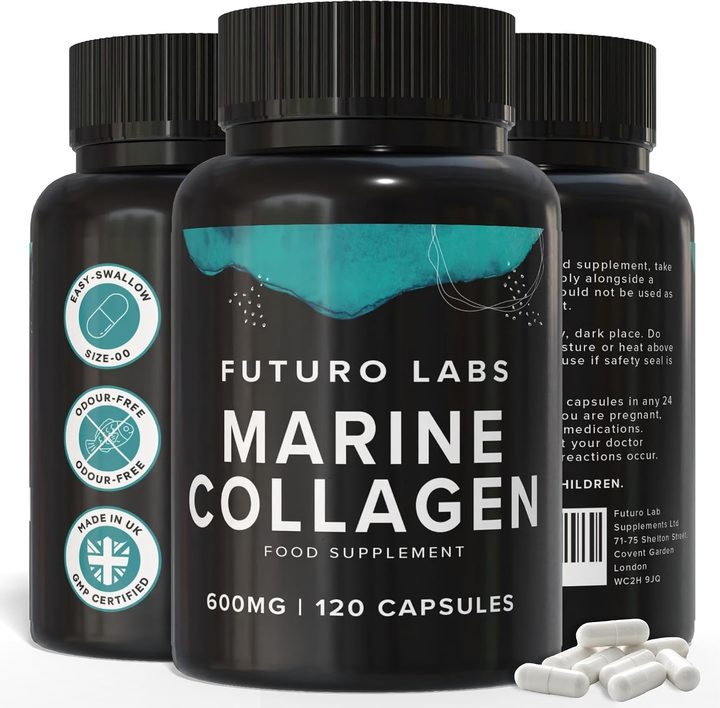
Our brand: the worked example on this page
Futuro Labs Marine Collagen
- 28p a day
- 120 capsules, 2 capsules daily
- Lab tested
- Made in the UK
This site's worked example is the other shelf entirely, and says so: Futuro Labs Marine Collagen on Amazon UK, 1200mg hydrolysed type 1 with vitamin C at 15% NRV, £16.99 for 60 days at 28p, no type 2 story aboard. Full label breakdown. The worth verdict is on the type 2 worth page; the blend self-defeat on the 1-2-3 page.
The inspection card: five tells, read in under a minute
Two entirely different products share the name type 2 collagen, and this page is the inspection card that separates them at the shelf in under a minute. Tell one, the adjective: the genuine research story requires the word undenatured or native on the label, because its proposed mechanism, oral tolerance, small regular exposures teaching the immune system at the gut level, depends on the collagen's intact triple-helix structure, and a label that says type 2 without that adjective has already told you the structure is not the point of the product. Tell two, the dose, and it runs backwards from every intuition this aisle trains: the undenatured research used 40 milligrams, tiny on purpose, tolerance being a signalling story rather than a building-material one, so 40mg is the lane marker, while a type 2 line boasting hundreds of milligrams is advertising that it belongs to the other product, ordinary hydrolysed peptides wearing the numeral. Tell three, the standardisation: the trials were run on a specific standardised undenatured preparation, so a serious product names its standardised form and often its trademark, an anonymous type 2 powder claiming the research's coat-tails without its material. Tells four and five complete the card overleaf, but three tells in, most shelves have already sorted themselves.
Tells four and five, the expectations set honestly, and the card's closing stamp
Tell four, the company it keeps: undenatured type 2 inside a hydrolysed multi-collagen blend is a self-contradiction printed in one panel, because hydrolysis is precisely the process that destroys the undenatured structure the mechanism requires, the 1-2-3 page's self-defeating organ, so the genuine article travels alone or beside non-collagen ingredients, never dissolved into the thing that un-makes it. Tell five, the wording: the type 2 story holds no authorised claims, its evidence being small, largely sponsor-funded trials moving joint comfort scores, so an honest label speaks in food-supplement modesty while a label promising joint repair, cartilage rebuilding or clinically proven relief has exited lawful vocabulary and taken your trust with it. Card complete, the expectations deserve their plain paragraph: a product passing all five tells is still a claim-free research bet, the worth page's flat-expectations verdict, defensible at a modest price as participation in an unfinished story, never a treatment, never a substitute for the strengthening, weight management and GP pathway that own painful joints, and priced against that honesty, a fiver-a-month experiment being a different proposition from a premium-priced promise. And the closing stamp for the majority reader who arrived here from a general joint search: the claims tier remains where it always was, vitamin C and manganese holding the aisle's only authorised sentences, vitamin D beside the muscles crossing the joint, all mostly diet-met, and the type 2 shelf, either version, sitting behind them in every honest ranking, the inspection card existing so that whichever bet you place, you at least know which product is in your hand.
| The tell | Pass | Fail |
|---|---|---|
| The adjective | Undenatured or native, stated | Bare type 2: structure is not the product's point |
| The dose | 40mg: the research lane marker | Hundreds of mg: hydrolysed peptides in costume |
| Standardisation | A named standardised form | Anonymous powder on the research's coat-tails |
| The company | Travels alone or with non-collagens | Inside a hydrolysed blend: self-defeating by process |
| The wording | Food-supplement modesty | Repair and rebuild promises: unlawful vocabulary |
| The expectation | A flat-odds research bet, priced like one | Never a treatment; the claims tier still outranks it |
The verdict, stamped on the card
What should you look for in type 2 collagen for joints: the five tells that separate the two products sharing the name, the undenatured adjective, the deliberately tiny 40mg dose, a named standardised form, freedom from the hydrolysed blends that un-make it, and wording that stays inside the law, with anything failing the card being ordinary peptides in cartilage costume and anything passing it being an honest, claim-free research bet priced for flat expectations behind the claims tier and the strengthening that actually serve joints. This site's worked example belongs to the other shelf and says so plainly: Futuro Labs Marine Collagen, 1200mg hydrolysed type 1 with 12mg vitamin C at 15% NRV, lab tested, UK made, £16.99 for 60 days at 28p a day, no type 2 story aboard, which, after this card, is its own kind of pass.
What to check on the label
- Undenatured is load-bearing: without the adjective, the story is absent.
- 40mg is the lane marker: big type 2 numbers mean the other product.
- A standardised form is named: the trials used one, honest labels say so.
- Never inside a hydrolysed blend: the process un-makes the mechanism.
- Expectations stay flat: a research bet behind the claims tier, priced like one.
Our brand
The worked example: Futuro Labs Marine Collagen
Futuro Labs Marine Collagen: 2 capsules daily, 1200mg hydrolysed type 1 marine collagen with 12mg vitamin C and 1.5mg zinc (15% NRV each), 120 capsules for £16.99, 60 days at 28p a day, lab-tested, UK GMP made. Slim veggie-shell capsules, odour free. Fish derived: pescatarian, not vegetarian or vegan.
- Collagen per serving
- 1200mg hydrolysed type 1 marine (fish)
- Co-factors
- vitamin C 12mg (15% NRV), zinc 1.5mg (15% NRV)
- Serving
- 2 capsules a day
- Bottle
- 120 capsules, 60 days
- Price
- £16.99 (28p a day)
- Capsule
- slim size 00, veggie shell, odour free
Questions people also ask
What is the difference between the two type 2 products?
Ordinary hydrolysed type 2, pooled peptides like any collagen, and undenatured type 2 at 40mg, a separate oral-tolerance research story that depends on intact structure: five label tells separate them.
Why is the undenatured dose only 40mg?
The proposed mechanism is signalling, not supply: small regular exposures at the gut level, which is why the research dose is tiny and why big milligram numbers indicate the other product.
Does undenatured type 2 actually work for joints?
Its trials are small, largely sponsor-funded and move comfort scores: no claims exist, so a passing product is a flat-expectations research bet, never a treatment.
Can I get the type 2 benefit inside a multi-collagen blend?
No: hydrolysis destroys the undenatured structure the story requires, so type 2 inside a hydrolysed blend is self-defeating by process.
What outranks the whole type 2 question for joints?
The standing hierarchy: strengthening the muscles crossing the joint, weight management, the GP for flags, and the claims tier of vitamin C, manganese and vitamin D, mostly diet-met.
Sources
- The undenatured type II collagen (UC-II) trial literature: small randomised studies at 40mg daily against joint outcomes, a different mechanism and dose to hydrolysed collagen, with no authorised claim resulting. PubMed record
- EFSA Panel on Dietetic Products, Nutrition and Allergies. Scientific Opinion on the substantiation of health claims related to magnesium. EFSA Journal 2010;8(10):1807. https://efsa.onlinelibrary.wiley.com/doi/10.2903/j.efsa.2010.1807
- Futuro Labs Marine Collagen listing and label: 1200mg hydrolysed type 1 marine collagen per 2-capsule serving with 12mg vitamin C and 1.5mg zinc at 15% NRV each, 120 capsules, independently lab tested, UK made. https://www.amazon.co.uk/dp/B0C2J7N364
- The collagen peptide trial literature: randomised controlled studies of hydrolysed collagen supplementation across skin, joint and connective-tissue outcomes, typically at 2.5g to 15g daily, with small effects and frequent industry funding. PubMed record