Ghost Fitness/Collagen/What should you look for in type 1 collagen for tendon repair?
What should you look for in type 1 collagen for tendon repair?
The short answer
Reverse-engineer the study itself: the protocol used about 15g of ordinary food-grade gelatine with roughly 50mg of vitamin C an hour before loading. Buy what the paper bought, budget gelatine or a plain hydrolysate, never a premium numeral.
- The materialordinary food-grade gelatine: the study's own line
- The doseabout 15g, with roughly 50mg vitamin C
- The timingaround an hour before the loading session
- The price of fidelitysupermarket gelatine money: the cheapest look-for page here
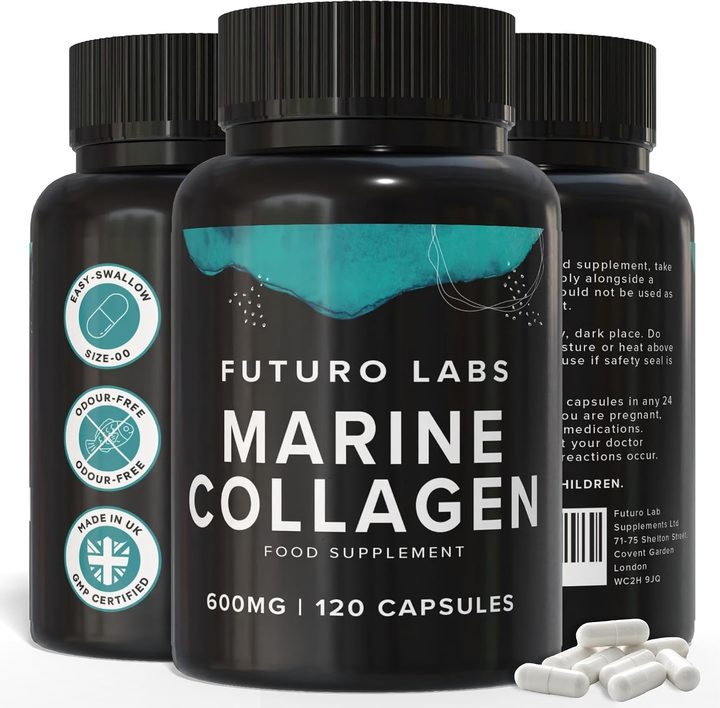
Our brand: the worked example on this page
Futuro Labs Marine Collagen
- 28p a day
- 120 capsules, 2 capsules daily
- Lab tested
- Made in the UK
The habit-scale alternative, protocol stated honestly beside it: Futuro Labs Marine Collagen on Amazon UK, 1200mg hydrolysed type 1 with 12mg vitamin C at 15% NRV, £16.99 for 60 days at 28p, its capsule scale printed plainly below the 15g band. Full label breakdown. The full protocol context is on the tendon repair page; the gelatine decode on the spec page.
The methods section as shopping list: what the study actually bought
Every look-for page in this territory answers from principles; this one answers from the source, because the purest shopping list for a research-anchored purchase is the research's own methods section, reverse-engineered line by line. Line one, the material: the foundational pre-loading work in the Baar lineage used gelatine, ordinary food-grade gelatine, the supermarket setting-agent, not a premium hydrolysate, not a type-branded peptide, not anything the beauty aisle sells, a detail the marketing has spent a decade politely forgetting because it prices the protocol at pennies, and the first shelf instruction follows directly, the study's material is the cheapest item in the category, plain beef gelatine or, for the reader wanting cold-dissolving convenience, a plain unflavoured hydrolysate, the chemical near-twin the spec page licenses, either one type 1 by default since that is what the raw materials are, the numeral arriving unbidden and unpaid-for. Line two, the dose: roughly 15 grams, a heaped tablespoon territory serving, gram scale and therefore powder territory outright, the 25-capsule arithmetic excluding every blister strip. Line three, the pairing: about 50 milligrams of vitamin C alongside, deliberately, the cofactor chemistry the enzymes require, hit by a cheap tablet, a formulated tub, or a piece of fruit per the logistics card. Line four, the timing: around an hour before the loading session, the window built on collagen's digestion-and-circulation curve, generous rather than precise.
The lines the methods do not contain, and the fidelity checklist assembled
Equally instructive is what the methods section does not say, because every absence prices a premium at zero. It does not specify a type: the material was gelatine, typeless in marketing terms, so tendon-branded type 1 premiums are charging for a word the study never used. It does not specify a species: bovine gelatine by supply-chain default, with no marine-versus-bovine arm ever run, so the source draw resolves by diet and pence as everywhere. It does not specify daltons, peptide fractions, or delivery technologies: hydrolysis fineness was not a variable, retiring the molecular-weight shelf. And it does not promise repair: the outcomes were synthesis markers in small samples, stop two of the evidence pipeline, which is why this page's title word stays in quotation marks throughout the section and why the physiotherapist's loading programme remains the treatment the protocol merely accompanies. The fidelity checklist assembles accordingly, buy what the paper bought and verify what any food deserves: plain gelatine or unflavoured hydrolysate at a price that divides to pennies per 15g serving; the C arranged, tub, tablet or satsuma, toward the 50mg pairing; third-party testing and honest dating on whichever tub, the standing safety floor; a physiotherapist told, since the adjunct rides a programme; and every tendon-worded premium left on the shelf, the study having out-priced them all in advance. The look-for, reverse-engineered, turns out to be the least expensive instruction this section has ever printed.
| The methods line | What the study used | The shelf instruction |
|---|---|---|
| The material | Ordinary food-grade gelatine | Supermarket gelatine, or a plain hydrolysate twin |
| The dose | About 15g per session | Powder territory: the 25-capsule arithmetic excludes strips |
| The pairing | Roughly 50mg vitamin C | A cheap tablet, the tub's inclusion, or fruit |
| The timing | Around an hour before loading | Generous window: no stopwatch required |
| What it never specified | No type, species, daltons or technology | Every such premium priced at zero by absence |
| What it never promised | Markers, not repair: stop two | The physio's programme remains the treatment |
The verdict, bought straight from the paper
What should you look for in type 1 collagen for tendon repair: the study's own methods section, reverse-engineered, ordinary food-grade gelatine or its plain hydrolysate twin at about 15g, roughly 50mg of vitamin C alongside, an hour or so before the physiotherapist's loading session, at supermarket money, with every tendon-branded, type-branded and dalton-branded premium priced at zero by the paper's silence and repair itself never promised by anyone honest, the markers being stop two and the programme being the treatment. The worked example serves the other scale with the same fidelity: Futuro Labs Marine Collagen, 1200mg hydrolysed type 1 stating its capsule scale plainly below the protocol band, 12mg vitamin C at 15% NRV, lab tested, UK made, £16.99 for 60 days at 28p a day, honest about being the habit lane, beside a protocol whose truest look-for was always the receipt.
What to check on the label
- Shop the methods section: the study used ordinary gelatine.
- 15g with about 50mg C: powder scale, an hour before loading.
- Absences price the premiums: no type, species or dalton was specified.
- Markers, never repair: stop two, with the programme as the treatment.
- The receipt is the fidelity test: pennies per serving, as the paper paid.
Our brand
The worked example: Futuro Labs Marine Collagen
Futuro Labs Marine Collagen: 2 capsules daily, 1200mg hydrolysed type 1 marine collagen with 12mg vitamin C and 1.5mg zinc (15% NRV each), 120 capsules for £16.99, 60 days at 28p a day, lab-tested, UK GMP made. Slim veggie-shell capsules, odour free. Fish derived: pescatarian, not vegetarian or vegan.
- Collagen per serving
- 1200mg hydrolysed type 1 marine (fish)
- Co-factors
- vitamin C 12mg (15% NRV), zinc 1.5mg (15% NRV)
- Serving
- 2 capsules a day
- Bottle
- 120 capsules, 60 days
- Price
- £16.99 (28p a day)
- Capsule
- slim size 00, veggie shell, odour free
Questions people also ask
What collagen did the tendon studies actually use?
Ordinary food-grade gelatine, about 15g with roughly 50mg of vitamin C around an hour before loading: the supermarket setting-agent, not a premium peptide.
Can I use a hydrolysate instead of gelatine for the protocol?
Yes: the spec page licenses the chemical near-twin, plain unflavoured hydrolysate dissolving cold where gelatine blooms, at the same 15g scale and pairing.
Do I need a specific type 1 product for tendons?
The study specified no type: gelatine is typeless in marketing terms and type 1 arrives by raw-material default, so type-branded premiums charge for a word the paper never used.
Does this protocol repair tendons?
No one honest says so: the outcomes were synthesis markers in small samples, stop two of the pipeline, and the physiotherapist's graded loading programme remains the treatment.
What should the whole protocol cost?
Pennies per session: supermarket gelatine money plus a cheap vitamin C, which is why the truest look-for on this page is the receipt itself.
Sources
- The gelatin and vitamin C pre-exercise research (Shaw, Baar and colleagues): 15g gelatin with vitamin C taken about an hour before loading, studied for markers of collagen synthesis, the protocol behind the tendon-training conversation. PubMed record
- The type III collagen literature: type III co-occurs with type I in skin and vessels and features prominently in early granulation tissue during healing, remodelling toward type I with maturity. PubMed record
- Futuro Labs Marine Collagen listing and label: 1200mg hydrolysed type 1 marine collagen per 2-capsule serving with 12mg vitamin C and 1.5mg zinc at 15% NRV each, 120 capsules, independently lab tested, UK made. https://www.amazon.co.uk/dp/B0C2J7N364
- The collagen peptide trial literature: randomised controlled studies of hydrolysed collagen supplementation across skin, joint and connective-tissue outcomes, typically at 2.5g to 15g daily, with small effects and frequent industry funding. PubMed record