Ghost Fitness/Collagen/What is the best collagen for tendons and ligaments in the UK?
What is the best collagen for tendons and ligaments in the UK?
The short answer
The tissue-matched spec: hydrolysate or gelatin, both delivering the same glycine-rich peptides, with vitamin C aboard, at powder scale for the pre-loading protocol or capsule scale for the habit. No repair claim exists; the checks and the rehab decide.
- Hydrolysate or gelatinthe same amino acids: the protocol's original studies used gelatin
- The practical splitgelatin sets and blooms; hydrolysate dissolves cold
- The two scales~15g powder for the protocol; 1-2g capsules for the habit
- 0 repair claimsexpectations set by the tendon pages, always
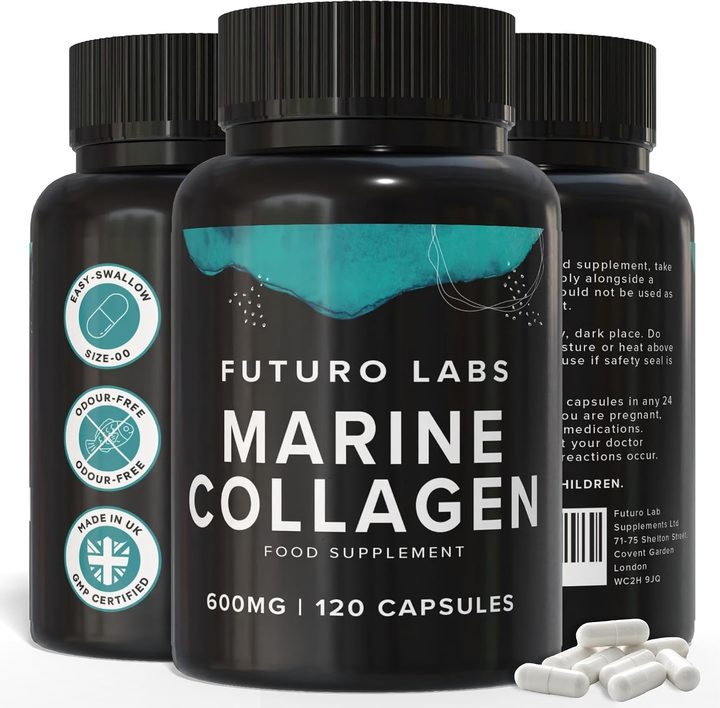
Our brand: the worked example on this page
Futuro Labs Marine Collagen
- 28p a day
- 120 capsules, 2 capsules daily
- Lab tested
- Made in the UK
The capsule-scale spec, met: Futuro Labs Marine Collagen on Amazon UK, 1200mg hydrolysed type 1 with vitamin C at 15% NRV, stated plainly below the protocol band, £16.99 for 60 days at 28p. Full label breakdown. The honest expectations live on the tendons-and-ligaments ledger; the protocol detail on the tendon repair page.
The spec sheet, for the reader who has read the honest pages first
This page assumes its reader arrives from the ledger and protocol pages already knowing the frame, no repair claim exists, the rehab programme is the treatment, the research is small and marker-based, and writes the one thing those pages defer: the exact product specification for the reader who, expectations set, still wants the collagen half of the pre-loading conversation. The spec: hydrolysed collagen or gelatin, type 1 by default since tendons, ligaments and nearly the whole shelf agree on the numeral anyway; a stated per-serving dose, in grams for powders with the scoop supplied, in milligrams for capsules with front and panel agreeing; vitamin C accounted for, aboard the label at 15% NRV or supplied alongside for pennies, the cofactor the original protocol paired deliberately; a one-line or near-one-line ingredients list, unflavoured by default at powder scale; named third-party testing, heavy metals and microbiology, dated; a single declared source, the marine-bovine blend premium having been declined on its own page; and the division, pence per 10g for powders, pence per day for capsules, run before any pouch is admired. Nothing in the spec is tissue-magic, which is the point: it is the section's standard checks wearing the tendon page's flattened expectations.
The gelatin question answered properly, and the two scales assigned
The choice the spec leaves open, hydrolysate or gelatin, deserves the proper answer this section has not yet written down. Chemically they are near-twins: gelatin is collagen partially broken by cooking, hydrolysate is gelatin taken further by enzymes, and both deliver the same glycine-proline-hydroxyproline-rich amino acids to the same unaddressed pool, with the detail worth knowing that the original pre-loading studies used plain gelatin, the hydrolysate equivalence coming in later work, so neither form outranks the other on the evidence and the decision is entirely practical: gelatin blooms in cold liquid and sets, wanting hot dissolution and a little kitchen patience, and is frequently the cheapest collagen per 10g in the building, sold as unflavoured cooking gelatine; hydrolysate dissolves instantly hot or cold into coffee, shakes or juice, costs more for the convenience, and travels better; capsules package hydrolysate at habit scale with zero preparation. Which assigns the two scales cleanly: the protocol reader, running roughly 15g with about 50mg of vitamin C an hour before physio-prescribed loading, buys powder, gelatin if price leads and dissolution patience exists, hydrolysate if convenience does, plus a cheap C source; the habit reader, wanting the daily label with the claim-holders aboard and no kitchen involved, takes the capsule lane, where the worked example states its 1200mg truthfully below the protocol band and carries the C at threshold built in. Both scales answer to the same governing sentence, unchanged from every tendon page: the loading programme is the intervention, and this purchase, either form, either scale, rides alongside it or not at all.
| The format | The practical truth | Who takes it |
|---|---|---|
| Gelatin (cooking gelatine, unflavoured) | Blooms and sets; wants hot dissolution; often cheapest per 10g | The protocol reader led by price: the original studies' form |
| Hydrolysate powder | Dissolves instantly hot or cold; travels; costs the convenience | The protocol reader led by convenience |
| Capsules (the worked example)Ours | Zero preparation; 1-2g scale stated honestly; C built in at 15% NRV | The habit reader: the claim-holders travel inside |
| Vitamin C, either route | The deliberately paired cofactor and claim-holder | Aboard the label, or pennies alongside the scoop |
| Any format's expectations | Marker studies, no claim, rehab is the treatment | Everyone: the tendon pages' frame, unchanged |
The verdict, and the spec signed off at both scales
What is the best collagen for tendons and ligaments in the UK: the one matching the spec this page finally writes down, type 1 hydrolysate or gelatin with the dose stated, vitamin C accounted for, a single declared source, testing shown and the price divided, bought at the scale the reader's actual plan requires, roughly 15g of powder with C for the physio-adjacent protocol, gelatin the budget-honest original, hydrolysate the convenient twin, or the capsule habit where the worked example holds the lane: Futuro Labs Marine Collagen, 1200mg hydrolysed type 1 stated plainly below the protocol band, 12mg vitamin C at 15% NRV and zinc beside it, lab tested, UK made, £16.99 for 60 days at 28p a day. Signed off, as every tendon page signs off, under the same last line: the rehab is the treatment, and this spec rides alongside it.
What to check on the label
- The spec is the standard checks: type, dose, C, source, testing, price.
- Gelatin and hydrolysate are near-twins: the original studies used gelatin.
- Practicality decides the powder: gelatin's price vs hydrolysate's convenience.
- Capsules serve the habit scale: 1-2g stated honestly, C built in.
- The rehab remains the treatment: every format rides alongside, or not at all.
Our brand
The worked example: Futuro Labs Marine Collagen
Futuro Labs Marine Collagen: 2 capsules daily, 1200mg hydrolysed type 1 marine collagen with 12mg vitamin C and 1.5mg zinc (15% NRV each), 120 capsules for £16.99, 60 days at 28p a day, lab-tested, UK GMP made. Slim veggie-shell capsules, odour free. Fish derived: pescatarian, not vegetarian or vegan.
- Collagen per serving
- 1200mg hydrolysed type 1 marine (fish)
- Co-factors
- vitamin C 12mg (15% NRV), zinc 1.5mg (15% NRV)
- Serving
- 2 capsules a day
- Bottle
- 120 capsules, 60 days
- Price
- £16.99 (28p a day)
- Capsule
- slim size 00, veggie shell, odour free
Questions people also ask
Is gelatin as good as collagen peptides for tendons?
Chemically near-twins delivering the same amino acids, and the original pre-loading studies used plain gelatin: the choice is practical, gelatin's price against hydrolysate's cold-dissolving convenience.
What exact product does the tendon protocol need?
Roughly 15g of unflavoured gelatin or hydrolysate with about 50mg of vitamin C, an hour before physio-prescribed loading: powder scale, single source, tested, priced per 10g.
Can capsules do the tendon job?
Not at protocol scale: 15g is a scoop, not a capsule count. Capsules serve the daily habit honestly at 1-2g with the vitamin C claim-holder built in.
Does type matter for tendons and ligaments?
Barely: the tissues and the shelf are both type 1 anyway, and digestion pools every numeral. The dose, the C and the testing decide, as everywhere.
What are the honest expectations for any of this?
The tendon pages' frame: small marker-based research, no repair claim, and a loading programme that is the actual treatment this purchase merely accompanies.
Sources
- The gelatin and vitamin C pre-exercise research (Shaw, Baar and colleagues): 15g gelatin with vitamin C taken about an hour before loading, studied for markers of collagen synthesis, the protocol behind the tendon-training conversation. PubMed record
- Review literature on tendinopathy management: progressive, load-based rehabilitation is the established core of treatment, typically guided by a physiotherapist, with passive approaches and complete rest performing worse. PubMed record
- Futuro Labs Marine Collagen listing and label: 1200mg hydrolysed type 1 marine collagen per 2-capsule serving with 12mg vitamin C and 1.5mg zinc at 15% NRV each, 120 capsules, independently lab tested, UK made. https://www.amazon.co.uk/dp/B0C2J7N364
- The collagen peptide trial literature: randomised controlled studies of hydrolysed collagen supplementation across skin, joint and connective-tissue outcomes, typically at 2.5g to 15g daily, with small effects and frequent industry funding. PubMed record