Ghost Fitness/Collagen/Collagen protein vs marine collagen: which should lifters take?
Collagen protein vs marine collagen: which should lifters take?
The short answer
The phrase means three different labels: plain collagen peptides, whey-collagen blends, and clear drinks. Plain collagen versus marine collapses to a source choice, blends dilute the whey, and for protein goals a lifter buys whey either way.
- Label oneplain collagen peptides sold as collagen protein: the same product
- Label twowhey-collagen blends: every collagen gram displaces a whey gram
- Label threeclear collagen protein drinks: peptides in flavoured water
- The lifter's constantfor muscle, whey; for the protocol, either source works
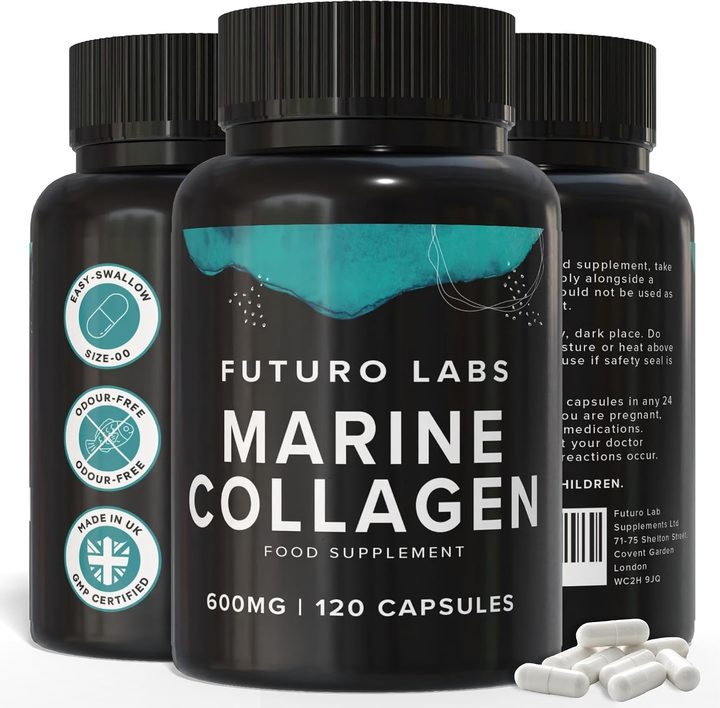
Our brand: the worked example on this page
Futuro Labs Marine Collagen
- 28p a day
- 120 capsules, 2 capsules daily
- Lab tested
- Made in the UK
The plain-peptides lane, honestly labelled: Futuro Labs Marine Collagen on Amazon UK, 1200mg hydrolysed type 1 marine with vitamin C and zinc at 15% NRV, £16.99 for 60 days at 28p. Full label breakdown. The source draw is on the bovine-or-marine page; the blend dilution audit on the collagen protein powder page.
The decode first: three labels hiding behind one phrase
This comparison cannot be scored until its first term is pinned down, because collagen protein is not one product, it is a phrase that appears on three different labels, and which one the reader is holding changes the entire question. Label one, and the commonest: plain hydrolysed collagen peptides marketed with the word protein for shelf appeal, an accurate word technically, collagen is a protein, and a marketing word practically, since the tub contains exactly what a tub saying marine collagen or bovine collagen contains, peptides from one animal source, meaning the comparison collagen protein versus marine collagen collapses into the source question the bovine-or-marine page already scored as a draw decided by diet, allergy, testing and price. Label two: the whey-collagen blend, collagen protein powders formulated as protein-shake replacements, where the honest arithmetic is the dilution audit its own page runs, every collagen gram in the scoop displacing a whey gram, dragging the blend's leucine and completeness below plain whey at a similar price, a worse protein sold on a beauty word. Label three: the clear collagen protein drinks and juice-style shakes, hydrolysed peptides in flavoured water at ready-to-drink prices, the liquid-shot arithmetic in sportier packaging. Three labels, one phrase, and the reader's first job is simply reading the ingredients line to learn which of the three they were actually asked to compare.
The lifter's verdict for each label, and the two-tub answer that survives
Cleaned up, the verdict writes itself per label. Holding label one, plain peptides called protein: the comparison is source-versus-source, marine and bovine being the same type 1 peptides through the same pooled digestion with no crowning trial, so pick by diet and allergy, fish-free readers to bovine, beef-free and pescatarian readers to marine, then testing and pence per 10g, and stop overthinking a draw. Holding label two, the blend: put it back, because a lifter's protein money buys leucine and completeness, the blend has diluted both, and the honest configuration is two separate products doing their actual jobs. Holding label three, the clear drink: run the pence-per-10g division against a plain tub and pay the multiple only knowingly, for the ritual, never the peptides. Which leaves the lifter's standing two-tub answer, unchanged by any phrasing of this query: whey, or another complete protein, for the muscle goal, carrying the register's actual protein claims, muscle mass maintenance and growth wording that collagen may never borrow, dosed around training and daily targets at 1.2 to 2.2g per kilogram; and collagen, either source, for the two honest reasons its own pages allow, the daily habit at capsule scale with the vitamin C and zinc claim-holders aboard, or the 15g pre-loading protocol at powder scale for the connective-tissue reader with a physio in the loop. Different tubs, different jobs, and no label wording that merges them survives its own ingredients line.
| The label | What it actually is | The lifter's verdict |
|---|---|---|
| Plain peptides sold as collagen protein | Identical to any marine or bovine collagen tub | The comparison collapses to source: a diet-and-price draw |
| Whey-collagen blends | Every collagen gram displaces a whey gram | Diluted leucine at whey prices: put it back |
| Clear collagen protein drinks | Peptides in flavoured water | Run the pence-per-10g division, buy knowingly or not at all |
| The muscle job | Leucine, completeness, the protein claims | Whey or another complete protein, always |
| The collagen job | The habit's claim-holders or the 15g protocol | Either source, honestly labelled and tested |
| The two-tub answer | Separate products, separate jobs | The configuration no blend improves |
The verdict, with the phrase retired
Collagen protein vs marine collagen for lifters: the phrase dissolves before the contest starts, meaning either the same product under a different word, a diluted blend, or an expensive drink, and once each label is read as what it is, the standing answer reappears intact, whey for the muscle goal it holds claims for, collagen from either source for the habit or the protocol, bought on the checks rather than the vocabulary. The worked example serves the plain-peptides lane exactly as described: Futuro Labs Marine Collagen, 1200mg hydrolysed type 1 marine with 12mg vitamin C and 1.5mg zinc at 15% NRV, lab tested, UK made, £16.99 for 60 days at 28p a day, a collagen sold as collagen, which turned out to be the whole decode.
What to check on the label
- Read the ingredients line first: the phrase covers three different labels.
- Plain peptides collapse to the source draw: diet, allergy, testing, pence.
- Blends dilute the whey: leucine and completeness dragged below plain whey.
- Clear drinks price water: divide per 10g before admiring the bottle.
- Two tubs, two jobs: whey for muscle, collagen for habit or protocol.
Our brand
The worked example: Futuro Labs Marine Collagen
Futuro Labs Marine Collagen: 2 capsules daily, 1200mg hydrolysed type 1 marine collagen with 12mg vitamin C and 1.5mg zinc (15% NRV each), 120 capsules for £16.99, 60 days at 28p a day, lab-tested, UK GMP made. Slim veggie-shell capsules, odour free. Fish derived: pescatarian, not vegetarian or vegan.
- Collagen per serving
- 1200mg hydrolysed type 1 marine (fish)
- Co-factors
- vitamin C 12mg (15% NRV), zinc 1.5mg (15% NRV)
- Serving
- 2 capsules a day
- Bottle
- 120 capsules, 60 days
- Price
- £16.99 (28p a day)
- Capsule
- slim size 00, veggie shell, odour free
Questions people also ask
Is collagen protein the same as marine collagen?
Often literally yes: plain collagen peptides are frequently sold under the protein word, and then the only difference left is the source, marine or bovine, a draw decided by diet, allergy, testing and price.
Are collagen protein blends good for lifters?
No: every collagen gram in a whey blend displaces a complete gram, dragging leucine below plain whey at similar prices. Buy the two products separately for their separate jobs.
Which is better for building muscle?
Neither collagen: whey and other complete proteins hold the register's muscle claims and around three times collagen's leucine per serving, which is the entire contest.
When does collagen earn a place in a lifter's routine?
Two honest lanes: the capsule habit carrying vitamin C and zinc at 15% NRV, or the 15g-with-C pre-loading protocol before connective-tissue work, raised with a physio.
Marine or bovine for the collagen lane?
A draw: same type 1 peptides, same pooled digestion, no crowning trial. Fish allergy excludes marine, beef-free diets exclude bovine, then testing and pence decide.
Sources
- Comparative protein research: the leucine content of a protein drives its muscle protein synthesis response, with whey outperforming collagen in direct comparisons. PubMed record
- The protein quality literature: scoring systems such as PDCAAS and DIAAS rate proteins by essential amino acid completeness and digestibility, with collagen scoring at or near zero for lacking tryptophan. PubMed record
- Review literature on protein intake and muscle mass in older adults: higher protein intakes support the maintenance of muscle in ageing, the evidence base behind the register's protein and muscle-mass claims mattering more with age. PubMed record
- Futuro Labs Marine Collagen listing and label: 1200mg hydrolysed type 1 marine collagen per 2-capsule serving with 12mg vitamin C and 1.5mg zinc at 15% NRV each, 120 capsules, independently lab tested, UK made. https://www.amazon.co.uk/dp/B0C2J7N364