Ghost Fitness/Collagen/Marine vs bovine collagen powder: which is better?
Marine vs bovine collagen powder: which is better?
The short answer
The lab already scored the draw, so judge the powders at the kitchen bench: bovine is usually cheaper and reliably neutral, marine costs a little more and varies from neutral to faintly fishy by processing quality.
- The lab's verdictsame type 1 peptides, no head-to-head, no claims: a draw
- The taste truthwell-made powders of both run near-neutral; fishiness signals processing
- The pence divisionbovine usually cheaper per 10g; marine's premium modest
- The hard splitsfish allergy excludes marine; beef-free routes to it
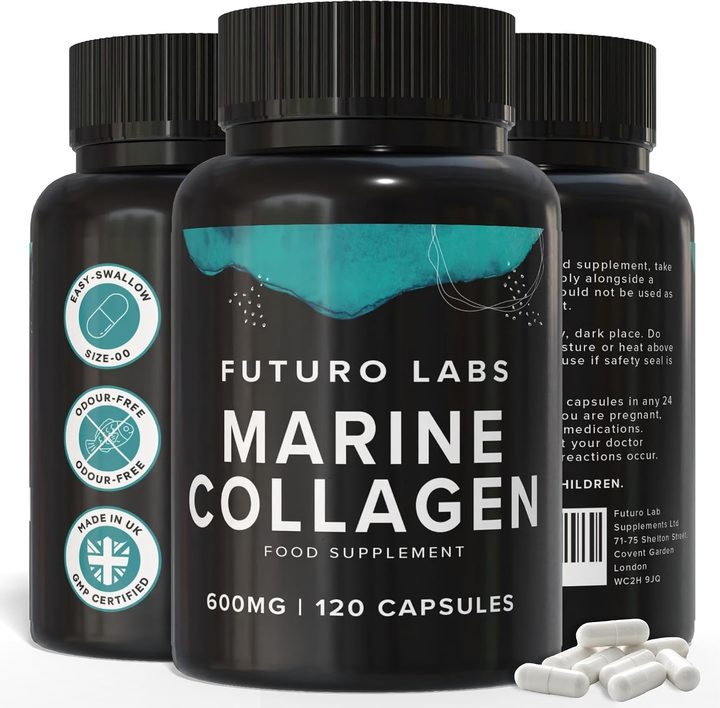
Our brand: the worked example on this page
Futuro Labs Marine Collagen
- 28p a day
- 120 capsules, 2 capsules daily
- Lab tested
- Made in the UK
The marine bench candidate in capsule form, odour engineered out: Futuro Labs Marine Collagen on Amazon UK, 1200mg hydrolysed type 1 marine, odour-free shells, vitamin C and zinc at 15% NRV, £16.99 for 60 days at 28p. Full label breakdown. The outcome rounds are on the adjudication page; the source draw on the bovine-or-marine page.
Why this page moves to the kitchen, and the bench tests that actually separate powders
The laboratory half of this contest is settled on its sibling pages and imports in a sentence: marine and bovine are the same type 1 peptides through the same pooled digestion, no head-to-head trial crowns either, neither holds a claim, and the hard splits are dietary, fish allergy excluding marine, beef-free and pescatarian readers routing to it. What remains, and what the word powder in this query is really asking about, is the kitchen bench, the daily experience of actually using the stuff, and here honest differences exist worth reviewing like equipment. Taste and smell first, the marine question everyone whispers: well-processed powders of both sources run near-neutral, faintly savoury at most in plain water and undetectable in coffee, porridge or a smoothie, while a genuinely fishy marine powder is telling you about its processing, deodorisation and purification being manufacturing steps that cost money and show up in the glass, so fishiness is a quality signal about the specific product, not a destiny of the source, and bovine's advantage here is consistency rather than superiority, the commodity supply chain rarely producing a rogue batch. Solubility next: both dissolve readily in warm liquids as any hydrolysate does, with fineness of grind mattering more than species, clumping in cold liquids being a milling question. Colour, for the aesthetes: both run cream to pale amber, invisible in anything opaque.
The pence division, the bench scorecard, and the buy that follows
The bench review's final station is the till, and the pattern is stable enough to state: bovine powder, riding the beef industry's enormous hide supply, usually lands cheaper per 10g at commodity scale, while marine carries a modest premium reflecting a smaller raw-material stream and the extra deodorisation work above, a gap the pence-per-10g division makes concrete in seconds and the buyer's diet then interprets, the premium being irrelevant to the pescatarian who cannot take bovine anyway and a fair question for the omnivore who can take either. Assembled, the bench scorecard reads: taste, near-tie with a quality asterisk on marine; mixing, tie; price, bovine by a nose; diet fit, personal and decisive; testing, the source-blind essential, with marine's heavy-metals panel the non-negotiable line its raw material earns and bovine's traceability worth a glance; and the claims column, empty on both sides forever. The buy that follows is the section's constant with a bench note attached: whichever source your diet permits, choose the specific product by the checks, stated dose, vitamin C at 15% NRV, single declared source, per-batch testing shown, honest dates, fair pence, and for marine specifically, favour products confident enough to mention their deodorisation or purity work, or, for the reader who wants marine without any kitchen gamble at all, take the capsule lane, where an odour-free shell settles the taste question by never asking it.
| The station | Marine | Bovine |
|---|---|---|
| Taste and smell | Near-neutral when well-made; fishiness flags processing | Reliably neutral: commodity consistency |
| Mixing and solubility | Fine: grind matters more than species | Fine: identical hydrolysate behaviour |
| Price per 10g | A modest premium | Usually cheaper: the hide supply's scale |
| Diet fit | Pescatarian and beef-free routes here; fish allergy excludes | Fish-allergic route here; beef-free excludes |
| Testing emphasis | Heavy-metals panel non-negotiable | Traceability worth a glance |
| Claims | None | None: the permanent tie |
The verdict, scored at the bench
Marine vs bovine collagen powder: the lab's draw stands, so the bench decides, and the bench says bovine for the budget-led omnivore wanting commodity consistency at the lowest pence per 10g, marine for the pescatarian, the beef-free and anyone whose chosen product proves its deodorisation, with fishiness read always as a processing report card rather than a species verdict, and the checks, testing above all, outranking both columns. The worked example resolves the whole bench a third way: Futuro Labs Marine Collagen, 1200mg hydrolysed type 1 marine sealed in slim odour-free capsules with 12mg vitamin C and 1.5mg zinc at 15% NRV, heavy-metal and microbiology panels passed, UK made, £16.99 for 60 days at 28p a day, marine chosen for the diet, the kitchen gamble removed by the shell, and the draw left exactly where the lab scored it.
What to check on the label
- The lab scored a draw: same peptides, no head-to-head, no claims.
- Fishiness is a report card: processing quality, not species destiny.
- Bovine wins the till narrowly: commodity scale, lowest pence per 10g.
- Diet decides the hard cases: allergy and beef-free before any bench test.
- Capsules retire the taste question: an odour-free shell never asks it.
Our brand
The worked example: Futuro Labs Marine Collagen
Futuro Labs Marine Collagen: 2 capsules daily, 1200mg hydrolysed type 1 marine collagen with 12mg vitamin C and 1.5mg zinc (15% NRV each), 120 capsules for £16.99, 60 days at 28p a day, lab-tested, UK GMP made. Slim veggie-shell capsules, odour free. Fish derived: pescatarian, not vegetarian or vegan.
- Collagen per serving
- 1200mg hydrolysed type 1 marine (fish)
- Co-factors
- vitamin C 12mg (15% NRV), zinc 1.5mg (15% NRV)
- Serving
- 2 capsules a day
- Bottle
- 120 capsules, 60 days
- Price
- £16.99 (28p a day)
- Capsule
- slim size 00, veggie shell, odour free
Questions people also ask
Does marine collagen powder taste fishy?
Well-made marine powder runs near-neutral and vanishes in coffee or porridge: genuine fishiness is a processing quality signal about that specific product, not a destiny of the source.
Is bovine collagen powder better value?
Usually by a nose: the hide supply's commodity scale lands it cheaper per 10g, with marine's modest premium either irrelevant to your diet or a fair pence-division question.
Do marine and bovine powders mix differently?
No: both are hydrolysates that dissolve readily, with fineness of grind mattering more than species, and cold-liquid clumping being a milling question either way.
Which needs more careful testing?
Marine earns the non-negotiable heavy-metals panel from its raw material, bovine a traceability glance: either way, per-batch certificates outrank every bench impression.
How do I get marine without any taste risk at all?
The capsule lane: sealed odour-free shells settle the kitchen question by never asking it, the worked example's exact construction at 28p a day.
Sources
- The collagen peptide trial literature: randomised controlled studies of hydrolysed collagen supplementation across skin, joint and connective-tissue outcomes, typically at 2.5g to 15g daily, with small effects and frequent industry funding. PubMed record
- The collagen and skin trial literature: randomised studies of oral collagen peptides on skin elasticity and hydration, mostly small, short and industry funded, with no authorised claim resulting. PubMed record
- Futuro Labs Marine Collagen listing and label: 1200mg hydrolysed type 1 marine collagen per 2-capsule serving with 12mg vitamin C and 1.5mg zinc at 15% NRV each, 120 capsules, independently lab tested, UK made. https://www.amazon.co.uk/dp/B0C2J7N364
- EFSA Panel on Dietetic Products, Nutrition and Allergies. Scientific Opinion on the substantiation of health claims related to magnesium. EFSA Journal 2010;8(10):1807. https://efsa.onlinelibrary.wiley.com/doi/10.2903/j.efsa.2010.1807