Ghost Fitness/Collagen/Marine collagen vs bovine collagen: which is better for skin?
Marine collagen vs bovine collagen: which is better for skin?
The short answer
For skin, another draw: the classic trials ran on bovine and porcine peptides, the newer ones on marine, no study raced them, and neither holds a skin claim. Marine's beauty positioning is ocean imagery, priced accordingly.
- The evidence splitclassic skin trials mammalian; newer ones marine: same profile
- Head-to-heads for skinzero: the race was never run
- Skin claims heldnone, either source, any dose
- The positioning decodebeauty collagen equals marine by convention, not chemistry
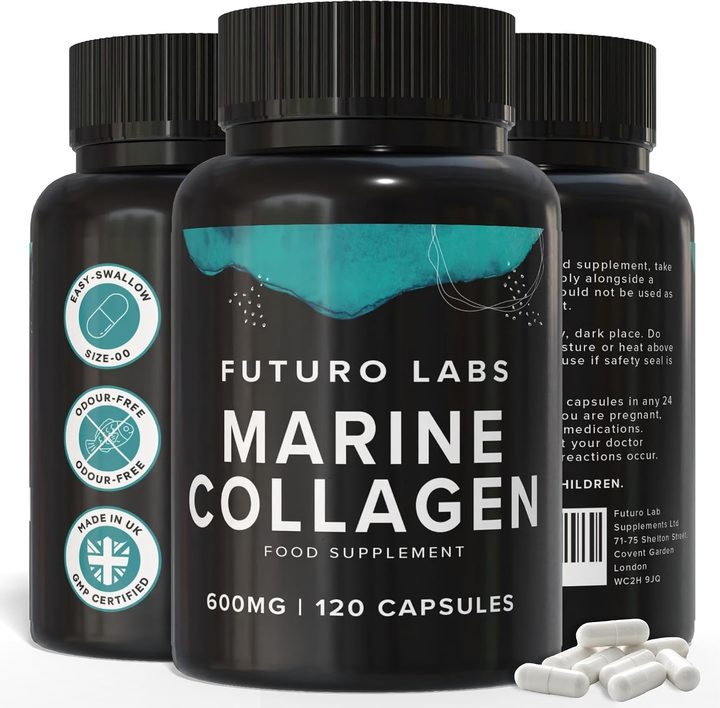
Our brand: the worked example on this page
Futuro Labs Marine Collagen
- 28p a day
- 120 capsules, 2 capsules daily
- Lab tested
- Made in the UK
Marine chosen for diet, priced without the ocean premium: Futuro Labs Marine Collagen on Amazon UK, 1200mg hydrolysed type 1 marine with vitamin C, the skin claim-holder, and zinc at 15% NRV, £16.99 for 60 days at 28p. Full label breakdown. The two literature stacks are on the studies page; the skin frame on the sagging page.
The skin round replayed at full length: what each corner's evidence actually is
The adjudication grid scored this round a draw in a row; this page replays it at full length because the skin version is the one readers actually bet money on. Bovine's corner first, with porcine beside it: the classic skin trial literature, the 2.5-to-10g elasticity and hydration studies of the 2010s that built the category's reputation, ran overwhelmingly on mammalian hydrolysates, several on trademarked bovine or porcine peptide preparations with manufacturer funding, producing the profile every skin page here summarises, small samples, short durations, instrument-measured surrogates, modest results, and no authorised claim at the end of any of it. Marine's corner: the newer stack, fish-peptide skin studies arriving as the marine market grew, matching the mammalian profile line for line, same sizes, same durations, same sponsor patterns, same modest cutometer findings, same regulatory silence. Between the corners, the shelf that would decide this page sits empty, no randomised trial anywhere has put marine against bovine on skin endpoints, the one-horse logic applying across species since both hydrolyse to near-identical type 1 peptide pools and a comparison designed to find nothing attracts no funding. Replayed slowly, the round ends where the grid scored it, a draw by absence of contest, with sunscreen standing over both corners exactly as the face pages rank it.
The ocean-imagery decode, and the skin purchase that survives the marketing
What the full replay adds is the decode the grid had no room for: why, if the evidence draws, does the beauty aisle equate skin collagen with marine so uniformly, and the answer is positioning, not chemistry. Marine arrived second to a market bovine's commodity image had already defined, and it differentiated the only way premium products can, by story, ocean purity, pristine waters, glass-skin adjacency borrowed from beauty culture, pescatarian and beef-free compatibility as genuine footholds, and the smaller-peptide absorption pitch the daltons page retired as table stakes dressed as a tier, a positioning so successful that beauty collagen now means marine by pure convention, priced accordingly, the ocean imagery riding on tubs whose peptides digest identically to the hide next door's. Decoded, the skin purchase resolves on the standing terms with one skin-specific addition: the sources draw, so diet and allergy split the hard cases as everywhere, fish allergy excluding marine, pescatarian and beef-free readers routing to it; the certificates decide trust, marine's heavy-metals panel non-negotiable; the pence-per-10g division prices the ocean story at its true cost; and the skin-specific line, the only lawful skin vocabulary on any collagen tub belongs to its micronutrients, vitamin C contributing to normal collagen formation for the normal function of skin and zinc maintaining normal skin, hair and nails, both at 15% NRV, sentences that ride marine and bovine with perfect indifference, which is the round's real result printed small: for skin, the source never mattered, the cofactors always did, and the sunscreen still outranks the lot.
| The item | The finding | The read |
|---|---|---|
| Bovine's evidence | The classic mammalian skin trials | Modest, small, sponsor-heavy: the category's founding stack |
| Marine's evidence | The newer fish-peptide studies | Same profile line for line: no advantage, no deficit |
| Head-to-head trials | None exist for skin | A draw by absence: the race was never funded |
| Skin claims | Zero, either source | The register's silence covers both corners |
| The beauty positioning | Marine equals skin by convention | Ocean imagery and second-mover differentiation, priced in |
| The lawful skin lines | Vitamin C and zinc at 15% NRV | Ride either source with perfect indifference |
The verdict, and the round closed with the imagery priced
Marine vs bovine collagen for skin: a draw replayed in full, the classic mammalian stack and the newer marine one sharing a single modest profile, no head-to-head ever run, no skin claim held by either corner, and the beauty aisle's marine-equals-skin convention decoded as second-mover positioning, ocean imagery priced into tubs whose peptides digest identically, while the only lawful skin vocabulary, vitamin C's and zinc's sentences, rides either source without preference and sunscreen outranks the entire ring. The worked example takes the marine corner for dietary reasons and skips the imagery premium: Futuro Labs Marine Collagen, 1200mg hydrolysed type 1 with 12mg vitamin C, the skin claim-holder, and 1.5mg zinc at 15% NRV, lab tested, UK made, £16.99 for 60 days at 28p a day, an ocean product priced like a land one, which is the only honest way to win a drawn round.
What to check on the label
- The round replays as a draw: two stacks, one profile, no race.
- No skin claim either corner: the register's silence is total.
- Beauty-equals-marine is convention: second-mover positioning, not chemistry.
- The lawful lines ride both: C and zinc at 15% NRV, source-indifferent.
- Sunscreen stands over the ring: as every face page ranks it.
Our brand
The worked example: Futuro Labs Marine Collagen
Futuro Labs Marine Collagen: 2 capsules daily, 1200mg hydrolysed type 1 marine collagen with 12mg vitamin C and 1.5mg zinc (15% NRV each), 120 capsules for £16.99, 60 days at 28p a day, lab-tested, UK GMP made. Slim veggie-shell capsules, odour free. Fish derived: pescatarian, not vegetarian or vegan.
- Collagen per serving
- 1200mg hydrolysed type 1 marine (fish)
- Co-factors
- vitamin C 12mg (15% NRV), zinc 1.5mg (15% NRV)
- Serving
- 2 capsules a day
- Bottle
- 120 capsules, 60 days
- Price
- £16.99 (28p a day)
- Capsule
- slim size 00, veggie shell, odour free
Questions people also ask
Is marine collagen better than bovine for skin?
No: the classic trials ran on mammalian peptides, the newer ones on marine, both with the same modest profile, no head-to-head exists, and neither source holds any skin claim.
Why is marine collagen marketed as the beauty one?
Positioning: it arrived second and differentiated by story, ocean imagery and smaller-peptide pitches, a convention so successful it now defines the shelf, priced accordingly.
Which source did the famous skin studies use?
The founding stack was bovine and porcine, several on trademarked preparations: marine's matching studies came later, with the same sizes, sponsors and modest findings.
What actually carries the lawful skin benefits on a collagen tub?
The micronutrients: vitamin C's normal-skin-function sentence and zinc's skin, hair and nails line, both at 15% NRV, riding marine and bovine with perfect indifference.
So how should I choose for skin?
By the standing draw: diet and allergy split the hard cases, certificates decide trust, the pence-per-10g division prices the ocean story, and sunscreen outranks the whole decision.
Sources
- The collagen and skin trial literature: randomised studies of oral collagen peptides on skin elasticity and hydration, mostly small, short and industry funded, with no authorised claim resulting. PubMed record
- The collagen peptide trial literature: randomised controlled studies of hydrolysed collagen supplementation across skin, joint and connective-tissue outcomes, typically at 2.5g to 15g daily, with small effects and frequent industry funding. PubMed record
- Futuro Labs Marine Collagen listing and label: 1200mg hydrolysed type 1 marine collagen per 2-capsule serving with 12mg vitamin C and 1.5mg zinc at 15% NRV each, 120 capsules, independently lab tested, UK made. https://www.amazon.co.uk/dp/B0C2J7N364
- EFSA Panel on Dietetic Products, Nutrition and Allergies. Scientific Opinion on the substantiation of health claims related to magnesium. EFSA Journal 2010;8(10):1807. https://efsa.onlinelibrary.wiley.com/doi/10.2903/j.efsa.2010.1807