Ghost Fitness/Collagen/Marine collagen vs bovine collagen: which is better for joints?
Marine collagen vs bovine collagen: which is better for joints?
The short answer
The joint checklist is species-blind: the lawful cartilage and connective-tissue sentences ride vitamin C and manganese on either source, and the aisle's joint-marketed type 2 comes from chicken, a third animal entirely. Diet and testing decide.
- The species-blind checklistevery joint-relevant line ignores the fish-or-cow question
- The lawful joint vocabularyC's cartilage sentence, manganese's connective tissue: cofactor cargo
- The third-animal revealthe aisle's own joint story, type 2, is chicken sternum
- What serves jointsexercise, weight management, the professional pathway
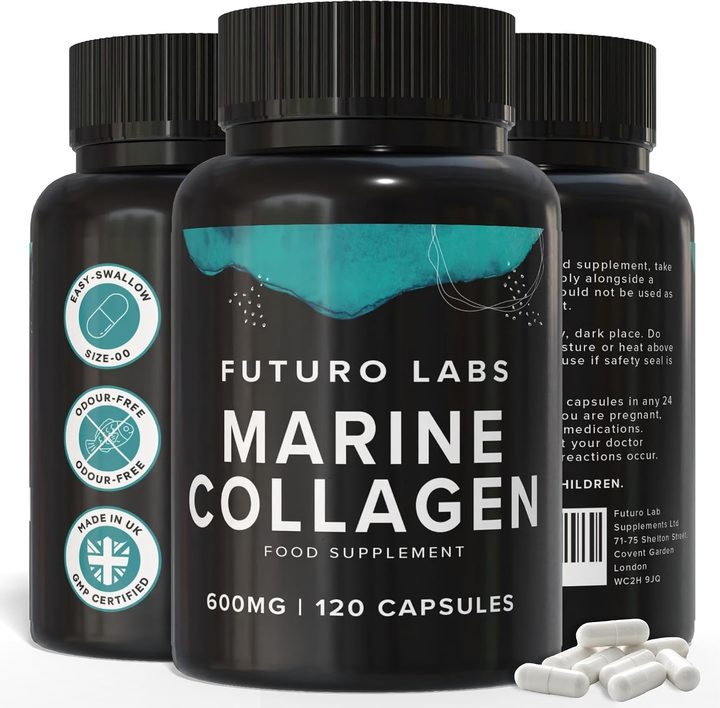
Our brand: the worked example on this page
Futuro Labs Marine Collagen
- 28p a day
- 120 capsules, 2 capsules daily
- Lab tested
- Made in the UK
The cartilage sentence carried on a marine label: Futuro Labs Marine Collagen on Amazon UK, 1200mg hydrolysed type 1 with vitamin C at 15% NRV, the collagen-formation-for-cartilage line lawfully aboard, £16.99 for 60 days at 28p. Full label breakdown. The type 2 inspection card is on the type 2 joints page; the format question on the joints format page.
The checklist run species-blind: every joint-relevant line, tested against the fish-or-cow fork
Take the joint reader's honest checklist and run every line through the marine-or-bovine fork, watching whether the fork ever matters. Line one, claims: no collagen holds a joint, cartilage or mobility claim, and the register's silence is source-indifferent, a fish peptide and a cow peptide equally unlicensed to speak, fork irrelevant. Line two, the lawful joint-adjacent vocabulary: vitamin C contributing to normal collagen formation for normal cartilage function, manganese to normal connective tissue formation, sentences that belong to the cofactors and ride whichever tub carries them at 15% NRV, cargo any species can haul, fork irrelevant. Line three, mechanism: pooled digestion dissolves every swallowed peptide's origin before a knee is consulted, fork irrelevant by chemistry. Line four, evidence: no trial races the sources on any joint endpoint, both stacks silent, fork irrelevant by absence. Line five, the first-line care that actually serves joints, strengthening the muscles crossing the joint, weight management, education and the professional pathway for flags, fork magnificently irrelevant. Five lines, five shrugs at the species, and the checklist's verdict is that the question has smuggled in a premise, that some collagen source carries a joint advantage, which no line of the audit can locate.
The third-animal reveal, and the buy that survives the dissolved premise
Then the reveal that dissolves the premise entirely, and it is this page's one genuinely delicious fact: the supplement aisle's own joint story, the one collagen product actually marketed at joints with an actual research file, is undenatured type 2, and undenatured type 2 comes from chicken sternum cartilage, a third animal neither half of this question names, meaning the reader agonising between fish and cow for their joints is choosing between the two species that do not even host the aisle's joint narrative, both marine and bovine tubs being type 1 hydrolysates whose joint credentials are identical because both are nil. The type 2 lane itself then takes its standing referrals in a sentence: a separate 40mg oral-tolerance research bet, claim-free, judged by the five-tells inspection card on its own page, never a hydrolysate contest entrant and never improved by which mammal or fish it is standing next to. Which leaves the buy exactly where the species-blind checklist left it: for the joint reader who wants a supplement at all, the honest configuration is the first-line trio in place, then a tub chosen by the standing rules, diet and allergy splitting marine from bovine as they always do, fish allergy excluding one and beef-free routing to it, per-batch testing shown with marine's heavy-metals panel non-negotiable, the cofactors genuinely aboard at 15% NRV so the label's joint-adjacent sentences are lawfully earned, and the pence divided last, the species carrying, for joints specifically, precisely the weight this audit found it carrying everywhere: none.
| The line | The finding | Does the fork matter? |
|---|---|---|
| Claims | No joint claim from any collagen | No: silence is source-indifferent |
| Lawful vocabulary | C's cartilage line, manganese's connective tissue | No: cofactor cargo rides either species |
| Mechanism | Pooled digestion erases origin | No: chemistry shrugs |
| Evidence | No source-vs-source joint trial exists | No: both stacks silent |
| The joint story itself | Undenatured type 2 is chicken sternum | No: a third animal hosts it entirely |
| What serves joints | Exercise, weight, the professional pathway | No: magnificently irrelevant |
The verdict, with the premise dissolved
Marine vs bovine collagen for joints: the checklist runs species-blind on every line, claims silent, vocabulary belonging to the cofactors, mechanism pooling, evidence absent, and the premise dissolves completely at the reveal, the aisle's own joint-marketed collagen being chicken-derived type 2, a third animal the question never named, so the choice resolves on the standing rules, diet, allergy, testing and pence, while joints themselves are served by the loading, weight and professional care no species carries. The worked example hauls the lawful cargo on a marine label: Futuro Labs Marine Collagen, 1200mg hydrolysed type 1 with 12mg vitamin C at 15% NRV, the cartilage-function sentence honestly aboard, plus 1.5mg zinc, heavy-metal tested per batch, UK made, £16.99 for 60 days at 28p a day, chosen for its paperwork, because the species was never the joint question.
What to check on the label
- The checklist is species-blind: five lines, five shrugs at the fork.
- The lawful vocabulary is cofactor cargo: C and manganese, either source.
- The joint story is a third animal: undenatured type 2 is chicken sternum.
- Diet and testing still decide: allergy splits, certificates verify.
- Joints are served by loading: exercise, weight, the professional pathway.
Our brand
The worked example: Futuro Labs Marine Collagen
Futuro Labs Marine Collagen: 2 capsules daily, 1200mg hydrolysed type 1 marine collagen with 12mg vitamin C and 1.5mg zinc (15% NRV each), 120 capsules for £16.99, 60 days at 28p a day, lab-tested, UK GMP made. Slim veggie-shell capsules, odour free. Fish derived: pescatarian, not vegetarian or vegan.
- Collagen per serving
- 1200mg hydrolysed type 1 marine (fish)
- Co-factors
- vitamin C 12mg (15% NRV), zinc 1.5mg (15% NRV)
- Serving
- 2 capsules a day
- Bottle
- 120 capsules, 60 days
- Price
- £16.99 (28p a day)
- Capsule
- slim size 00, veggie shell, odour free
Questions people also ask
Is marine or bovine collagen better for joint health?
Neither: no joint claim exists for either, the lawful cartilage and connective-tissue sentences belong to vitamin C and manganese riding either source, and no trial races the species.
Which collagen type is actually marketed for joints?
Undenatured type 2, from chicken sternum: a third animal entirely, running its own 40mg oral-tolerance research bet judged by the five-tells card, never a marine-versus-bovine question.
Do the joint-relevant cofactors care about the source?
No: vitamin C's cartilage-function sentence and manganese's connective-tissue line activate at 15% NRV on any honest tub, fish or cow alike.
So how do I choose for my joints?
First-line care first, exercise, weight management and a professional pathway for flags, then the standing rules: diet and allergy split the species, per-batch testing and pence decide.
Does anything make marine safer or riskier for joints?
Joints specifically, no: the differences are the general ones, fish as a declared allergen and the heavy-metals panel marine's raw material earns per batch.
Sources
- Futuro Labs Marine Collagen listing and label: 1200mg hydrolysed type 1 marine collagen per 2-capsule serving with 12mg vitamin C and 1.5mg zinc at 15% NRV each, 120 capsules, independently lab tested, UK made. https://www.amazon.co.uk/dp/B0C2J7N364
- The undenatured type II collagen (UC-II) trial literature: small randomised studies at 40mg daily against joint outcomes, a different mechanism and dose to hydrolysed collagen, with no authorised claim resulting. PubMed record
- The collagen peptide trial literature: randomised controlled studies of hydrolysed collagen supplementation across skin, joint and connective-tissue outcomes, typically at 2.5g to 15g daily, with small effects and frequent industry funding. PubMed record
- EFSA Panel on Dietetic Products, Nutrition and Allergies. Scientific Opinion on the substantiation of health claims related to magnesium. EFSA Journal 2010;8(10):1807. https://efsa.onlinelibrary.wiley.com/doi/10.2903/j.efsa.2010.1807