Ghost Fitness/Collagen/Bovine collagen vs marine collagen studies: which is better?
Bovine collagen vs marine collagen studies: which is better?
The short answer
Read both stacks of papers: bovine holds most of the older skin trials, marine the newer fish-peptide studies, both modest, small and sponsor-heavy, and the head-to-head shelf is empty. Neither stack ever produced a claim.
- The bovine stackthe older, larger pile: most classic skin and joint trials
- The marine stacknewer and smaller: fish-peptide studies, same profile
- The head-to-head shelfempty: no study ever raced the sources
- Both stacks' outputmodest instrument-measured changes; zero claims
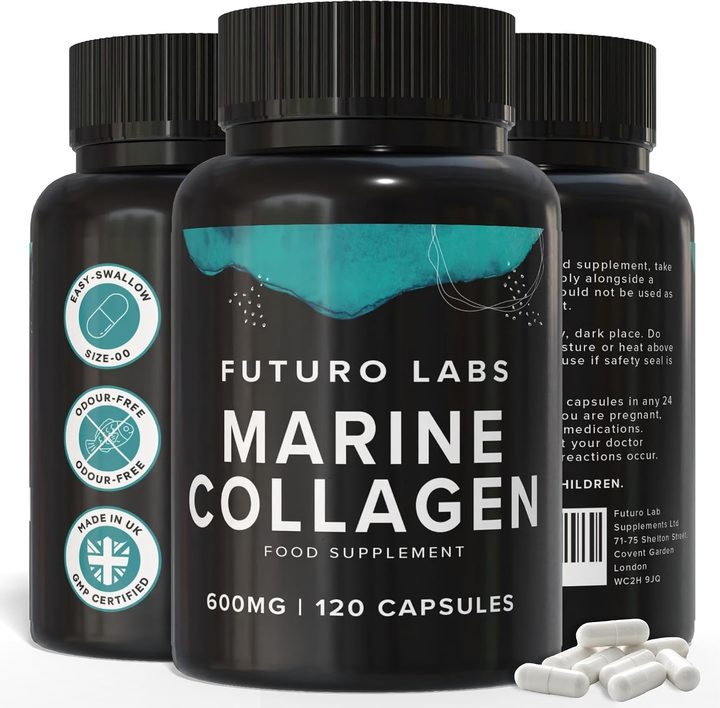
Our brand: the worked example on this page
Futuro Labs Marine Collagen
- 28p a day
- 120 capsules, 2 capsules daily
- Lab tested
- Made in the UK
From the marine stack's material, labelled without inflation: Futuro Labs Marine Collagen on Amazon UK, 1200mg hydrolysed type 1 marine with vitamin C and zinc at 15% NRV, £16.99 for 60 days at 28p. Full label breakdown. The kitchen-bench taste review is on the powder page; the trial-grade frame on the sagging page.
Walking the bovine stack, then the marine stack, spine by spine
This query asks for the literatures themselves, so walk both stacks honestly. The bovine and porcine stack is the older and taller pile: most of the classic skin trials this section grades, the 2.5-to-10g elasticity and hydration studies of the 2010s, ran on mammalian hydrolysates, several on specific trademarked bovine or porcine peptide preparations whose manufacturers funded the work, and the joint-adjacent and bone-adjacent studies of the same era drew from the same supply, meaning the pile's spines read as a decade of small, short, sponsor-heavy trials on instrument-measured endpoints, cutometer elasticity, corneometer hydration, comfort questionnaires, with results the sagging and skin pages summarise in one standing word, modest. The marine stack is newer and shorter: fish-peptide studies arriving as marine collagen's market grew, skin trials of the same shape and size, some absorption and peptide-characterisation work the daltons decode already priced, and a scattering of exploratory papers, the pile's profile matching the bovine one line for line, small samples, short durations, sponsor involvement, surrogate endpoints, modest findings. Two stacks, one profile, different heights for a mundane reason, bovine's industry is older and bigger, its research budget arrived earlier, and paper count tracks marketing history rather than biological merit.
The empty shelf between them, what each stack actually proves, and the studied-source pitch decoded
Between the stacks sits the shelf this query really wants stocked, head-to-head comparisons, bovine versus marine randomised on the same endpoints, and it is empty: no trial anywhere has raced the sources against each other on skin, joints or anything else, the one-horse logic of the type pages applying across species too, since both materials hydrolyse to near-identical type 1 peptide pools and a comparison built to find no difference attracts no funding. So what does each stack actually prove, stated with the shown-test page's discipline: both demonstrate that gram-scale hydrolysed collagen can move instrument-measured skin surrogates modestly in small sponsored trials, neither demonstrates outcomes at the standard a claim requires, which is why the register carries no collagen claim from either species and why both stacks, for all their spines, end at the same regulatory silence. The decode this leaves for the shelf: the clinically studied badge on a tub is stack membership dressed as proof, honest when a product actually contains a specific studied preparation at the studied dose, and borrowed when a generic hydrolysate gestures at a literature it never appeared in, the checkable version being a named peptide preparation and dose matching a citable study, the uncheckable version being decoration. And the taste variant takes its one line en route to the bench page: the studies never measured flavour, the kitchen review lives elsewhere, and fishiness remains a processing report card. The purchase, as ever, ignores stack height for the checks, dose, cofactor, testing, pence, on whichever source the reader's diet permits.
| The shelf | What sits on it | What it proves |
|---|---|---|
| The bovine and porcine stack | The older, taller pile: classic skin and joint trials | Modest surrogate changes in small sponsored studies |
| The marine stack | Newer fish-peptide studies, same shape | The same profile: modest, small, sponsor-heavy |
| The head-to-head shelf | Empty: no source-versus-source trial exists | The contest was never run, and never funded |
| The regulatory outcome | Zero claims from either stack | Both literatures end at the same silence |
| The studied badge | Stack membership dressed as proof | Honest only with a named preparation at a studied dose |
| Stack height | Tracks industry age and budget | Marketing history, not biological merit |
The verdict, filed between two stacks and an empty shelf
Bovine vs marine collagen studies: read spine by spine, the bovine stack is taller because its industry is older, the marine stack matches its profile paper for paper, both deliver the same modest, small, sponsor-heavy findings on surrogate endpoints, the head-to-head shelf between them is empty by rational neglect, and neither literature ever produced a claim, which settles better at exactly the draw every sibling page scored. The worked example draws from the marine stack's material without inflating it: Futuro Labs Marine Collagen, 1200mg hydrolysed type 1 from fish with 12mg vitamin C and 1.5mg zinc at 15% NRV, lab tested, UK made, £16.99 for 60 days at 28p a day, a product citing its panel rather than a pile, which is the only honest bibliography this aisle has.
What to check on the label
- Two stacks, one profile: modest, small, sponsor-heavy, both species.
- Height tracks industry age: bovine's budget simply arrived first.
- The head-to-head shelf is empty: the contest was never run or funded.
- Neither stack produced a claim: both end at the register's silence.
- Studied badges need a named preparation: otherwise stack-borrowing decoration.
Our brand
The worked example: Futuro Labs Marine Collagen
Futuro Labs Marine Collagen: 2 capsules daily, 1200mg hydrolysed type 1 marine collagen with 12mg vitamin C and 1.5mg zinc (15% NRV each), 120 capsules for £16.99, 60 days at 28p a day, lab-tested, UK GMP made. Slim veggie-shell capsules, odour free. Fish derived: pescatarian, not vegetarian or vegan.
- Collagen per serving
- 1200mg hydrolysed type 1 marine (fish)
- Co-factors
- vitamin C 12mg (15% NRV), zinc 1.5mg (15% NRV)
- Serving
- 2 capsules a day
- Bottle
- 120 capsules, 60 days
- Price
- £16.99 (28p a day)
- Capsule
- slim size 00, veggie shell, odour free
Questions people also ask
Do studies show bovine or marine collagen works better?
No study compares them: the head-to-head shelf is empty, and each literature separately shows the same modest surrogate changes in small sponsored trials, with zero claims from either.
Why are there more bovine collagen studies?
Industry age: the mammalian gelatine business and its research budgets arrived decades earlier, so its stack is taller. Paper count tracks marketing history, not biological merit.
What did the marine collagen studies find?
The same profile as bovine's: small, short, sponsor-involved skin trials moving instrument-measured elasticity and hydration modestly, nothing at claim standard.
Is clinically studied on a label meaningful?
Only when checkable: a named peptide preparation at a dose matching a citable study is honest stack membership, while a generic hydrolysate gesturing at the literature is decoration.
So how do I choose between the sources?
By the standing draw: diet and allergy split the hard cases, then testing and pence per 10g decide, with fishiness read as a processing report card on the bench page.
Sources
- The collagen and skin trial literature: randomised studies of oral collagen peptides on skin elasticity and hydration, mostly small, short and industry funded, with no authorised claim resulting. PubMed record
- The collagen peptide trial literature: randomised controlled studies of hydrolysed collagen supplementation across skin, joint and connective-tissue outcomes, typically at 2.5g to 15g daily, with small effects and frequent industry funding. PubMed record
- Futuro Labs Marine Collagen listing and label: 1200mg hydrolysed type 1 marine collagen per 2-capsule serving with 12mg vitamin C and 1.5mg zinc at 15% NRV each, 120 capsules, independently lab tested, UK made. https://www.amazon.co.uk/dp/B0C2J7N364
- EFSA Panel on Dietetic Products, Nutrition and Allergies. Scientific Opinion on the substantiation of health claims related to magnesium. EFSA Journal 2010;8(10):1807. https://efsa.onlinelibrary.wiley.com/doi/10.2903/j.efsa.2010.1807