Ghost Fitness/Collagen/Which is better, marine or bovine collagen?
Which is better, marine or bovine collagen?
The short answer
Adjudicate by use case and every round draws: no head-to-head crowns either for skin, wrinkles or joints, and neither holds claims. The real deciders are diet, fish allergy, testing and price, with both sources being honest byproducts.
- Rounds contestedskin, wrinkles, joints, hair: the variants' own list
- Head-to-head trialsnone: no study ever raced the sources against each other
- Claims held by eitherzero, in every round
- The actual decidersdiet, allergy, testing, pence per 10g
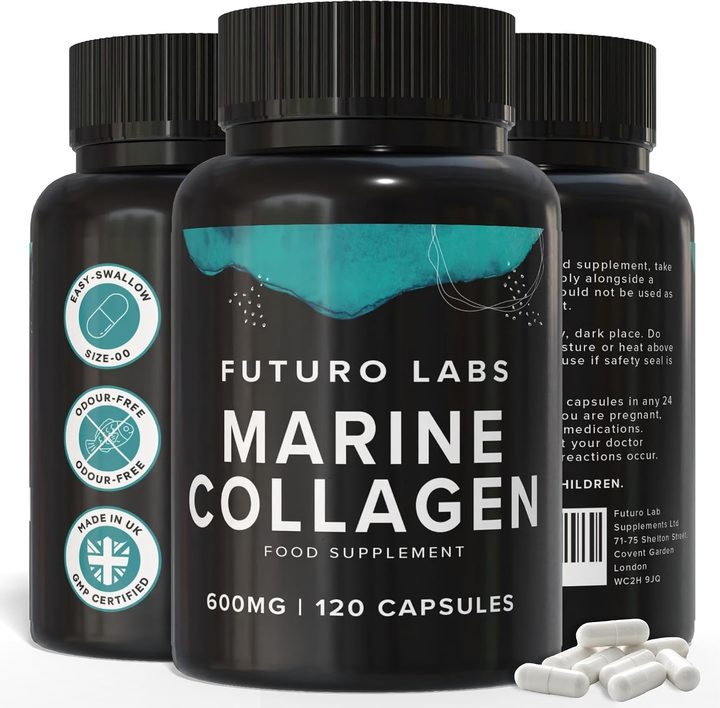
Our brand: the worked example on this page
Futuro Labs Marine Collagen
- 28p a day
- 120 capsules, 2 capsules daily
- Lab tested
- Made in the UK
The marine corner, labelled without a crown: Futuro Labs Marine Collagen on Amazon UK, 1200mg hydrolysed type 1 marine with vitamin C and zinc at 15% NRV, £16.99 for 60 days at 28p. Full label breakdown. The full source draw is on the bovine-or-marine page; the quality lines on the quality page.
The grid, scored round by round, exactly as the variants ask
This query arrives with its use cases attached, is marine or bovine better for skin, for wrinkles, for joints, so adjudicate the grid honestly, round by round. Skin: both sources have appeared in the modest trial literature, bovine and marine hydrolysates alike populating the 2.5-to-10g elasticity studies, and no study anywhere has raced them head to head on skin outcomes, so the round scores a draw by absence of contest, with the standing frame over both corners, no collagen of any source holds any skin claim. Wrinkles: the same round in older make-up, the drivers being sun, volume and time per the face pages, sunscreen outranking both corners, draw. Joints: neither source holds a joint, mobility or cartilage claim, the lawful vocabulary belonging to vitamin C and manganese whoever's peptides carry it, and the source of a claim-free product cannot break a tie that does not exist, draw. Hair and nails: zinc's claim territory, source-indifferent, draw. Absorption: hydrolysis solved it at the factory for both, and the smaller-marine-peptides pitch is the daltons decode wearing a snorkel, table stakes dressed as a tier, draw. Five rounds, five draws, and the honest scorecard says the sources were never competing on outcomes because outcomes were never on either label.
The deciders that actually split them, and the sustainability footnote both corners earn
What genuinely separates the corners is a short practical list, and it decides real purchases daily. Diet and allergy first, the only hard splits: a fish allergy excludes marine absolutely, the allergen declaration being a label line worth respecting; beef-free, halal-uncertain and kosher-uncertain readers route to marine or to specifically certified bovine; pescatarians take marine; and vegetarians take neither, per the vegetarian page's plain exclusion. Testing second, source-blind in principle and decisive in practice: marine raw material makes the heavy-metals panel non-negotiable, bovine makes traceability and origin worth a look, and either corner's honest product shows its certificates rather than its scenery. Price third: bovine typically lands cheaper per 10g at commodity scale, marine carries a modest premium the pence-per-day division either justifies or doesn't, the worked example's 28p sitting comfortably in range. And the footnote both corners earn, stated once because the marketing tells it selectively: each source is a byproduct economy, marine collagen upcycling fish skins the fillet industry would otherwise discard, bovine collagen doing the same for hide, neither corner farming animals for collagen, both turning existing side-streams into product, which retires the sustainability one-upmanship in a sentence and returns the decision to the list above. Better, answered as the grid scored it: the one your diet permits, your allergy allows, your certificate trusts and your pence approve, worn by either fish or cow with identical modesty.
| The round | The score | Why |
|---|---|---|
| Skin and wrinkles | Draw | Both ran modest trials; no head-to-head; no claims either side |
| Joints | Draw | Neither holds a claim; C and manganese own the vocabulary |
| Hair and nails | Draw | Zinc's territory, source-indifferent |
| Absorption | Draw | Factory-solved for both; small-peptide pitches are theatre |
| Diet and allergy | The real split | Fish allergy excludes marine; beef-free routes to marine |
| Testing and pence | The finishers | Certificates shown, then pence per 10g divided |
The verdict, delivered without a crown
Which is better, marine or bovine collagen: neither, by honest adjudication, every outcome round drawing for want of head-to-head trials and claims on either side, and the contest resolving on the practical list the marketing skips, diet and allergy as the only hard splits, certificates as the trust test with marine's heavy-metals panel non-negotiable, and pence per 10g as the finisher, with both corners sharing the byproduct footnote that retires the sustainability duel. The marine corner's worked example wears exactly that modesty: Futuro Labs Marine Collagen, 1200mg hydrolysed type 1 from fish with 12mg vitamin C and 1.5mg zinc at 15% NRV, heavy-metal and microbiology panels passed, UK made, £16.99 for 60 days at 28p a day, better than bovine for the pescatarian and the beef-free, worse for the fish-allergic, and identical for everyone else, which is the whole truthful answer.
What to check on the label
- Every outcome round draws: no head-to-head, no claims, either corner.
- Diet and allergy split hard: fish allergy excludes marine, full stop.
- Certificates are the trust test: marine's heavy-metals panel especially.
- Pence per 10g finishes it: bovine usually cheaper, marine's premium divided.
- Both are byproduct economies: the sustainability duel retires in a sentence.
Our brand
The worked example: Futuro Labs Marine Collagen
Futuro Labs Marine Collagen: 2 capsules daily, 1200mg hydrolysed type 1 marine collagen with 12mg vitamin C and 1.5mg zinc (15% NRV each), 120 capsules for £16.99, 60 days at 28p a day, lab-tested, UK GMP made. Slim veggie-shell capsules, odour free. Fish derived: pescatarian, not vegetarian or vegan.
- Collagen per serving
- 1200mg hydrolysed type 1 marine (fish)
- Co-factors
- vitamin C 12mg (15% NRV), zinc 1.5mg (15% NRV)
- Serving
- 2 capsules a day
- Bottle
- 120 capsules, 60 days
- Price
- £16.99 (28p a day)
- Capsule
- slim size 00, veggie shell, odour free
Questions people also ask
Is marine or bovine collagen better for skin?
A draw: both sources populated the modest skin trials, no study raced them against each other, and neither holds any skin claim, with sunscreen outranking both corners.
Is marine or bovine better for joints?
Neither: no joint claim exists for any collagen, the lawful vocabulary belongs to vitamin C and manganese, and a claim-free product's source cannot break a tie that does not exist.
Does marine collagen absorb better than bovine?
No: hydrolysis solved absorption at the factory for both, and smaller-peptide marketing is the daltons pitch, a specification restated as a tier.
Who should definitely pick one over the other?
The hard splits: a fish allergy excludes marine absolutely, beef-free and pescatarian readers route to marine, and vegetarians take neither.
What actually decides between two honest tubs?
Certificates and pence: the heavy-metals and microbiology panels shown, traceability stated, and the price divided per 10g or per day, the 28p benchmark in hand.
Sources
- The collagen and skin trial literature: randomised studies of oral collagen peptides on skin elasticity and hydration, mostly small, short and industry funded, with no authorised claim resulting. PubMed record
- The collagen peptide trial literature: randomised controlled studies of hydrolysed collagen supplementation across skin, joint and connective-tissue outcomes, typically at 2.5g to 15g daily, with small effects and frequent industry funding. PubMed record
- Futuro Labs Marine Collagen listing and label: 1200mg hydrolysed type 1 marine collagen per 2-capsule serving with 12mg vitamin C and 1.5mg zinc at 15% NRV each, 120 capsules, independently lab tested, UK made. https://www.amazon.co.uk/dp/B0C2J7N364
- EFSA Panel on Dietetic Products, Nutrition and Allergies. Scientific Opinion on the substantiation of health claims related to magnesium. EFSA Journal 2010;8(10):1807. https://efsa.onlinelibrary.wiley.com/doi/10.2903/j.efsa.2010.1807