Ghost Fitness/Collagen/Marine collagen vs collagen: which is better?
Marine collagen vs collagen: which is better?
The short answer
A member versus its set: plain collagen on a UK label is usually bovine, found on the allergen and source lines, so the contest is marine versus unmarked bovine, the same draw as ever, decided by diet, allergy and testing.
- The category errormarine collagen is a kind of collagen: a member versus its set
- The unmarked defaulta tub saying just collagen is usually bovine
- Where the truth hidesthe ingredients and allergen lines name the animal
- The restated drawdiet, allergy, testing and pence decide, as ever
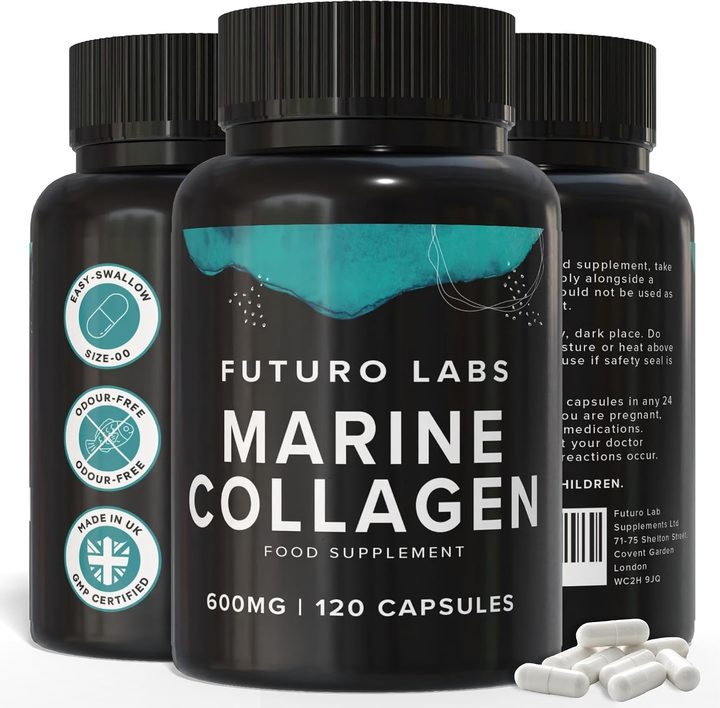
Our brand: the worked example on this page
Futuro Labs Marine Collagen
- 28p a day
- 120 capsules, 2 capsules daily
- Lab tested
- Made in the UK
A label that names its animal in the title: Futuro Labs Marine Collagen on Amazon UK, 1200mg hydrolysed type 1 marine, source stated up front, vitamin C and zinc at 15% NRV, £16.99 for 60 days at 28p. Full label breakdown. The source draw is on the bovine-or-marine page; the animal question on the made-from-animals page.
The category error named, and the unmarked default that makes the question real
Taken literally, this comparison is a category error, marine collagen being a kind of collagen the way a granny smith is a kind of apple, and a strictly logical page would end there, but the question survives because shoppers meet it in a real form on real shelves: one tub says marine collagen, the next says only collagen, and the honest decode is that the unmarked tub is not sourceless, it is usually bovine, the commodity default of the category, hide-derived collagen so standard that many brands see no need to say so on the front. Which converts the question from philosophy into label forensics, and the finding technique takes thirty seconds: turn the unmarked tub around and read two lines, the ingredients list, where the law requires the material to be named, hydrolysed bovine collagen, bovine collagen peptides, occasionally porcine, and the allergen declaration, where fish must be emphasised if present, meaning a tub with no fish allergen flagged and collagen in the ingredients is beef or pork by elimination, while the rare tub that genuinely will not say is telling you something about its documentation worth acting on, an unnamed animal being a traceability failure the quality page's checklist already rejects. Decoded, the contest becomes the one this site has scored twice already: marine versus, in practice, unmarked bovine.
The draw restated with the unmarked twist, and the naming rule worth keeping
Restated for the real matchup, the verdicts import cleanly: the peptides are the same type 1 through the same pooled digestion, no head-to-head crowns either, neither holds a claim for skin, joints or anything else, and the deciders are the practical list, diet and allergy as the hard splits, fish allergy excluding marine and beef-free, pescatarian, and beef-uncertain readers excluding the unmarked default, testing as the trust test with marine's heavy-metals panel non-negotiable, and pence per 10g as the finisher, bovine's commodity pricing usually winning the division narrowly. The unmarked twist adds one genuinely useful rule to that standing list, and it is this page's contribution: prefer the label that names its animal without being asked, because source transparency is a free and telling quality signal, a brand confident of its supply chain putting bovine or marine on the front while a brand hiding behind the bare word is either assuming you will not care or hoping you will not check, and for the dietary reader, the halal-uncertain, the kosher-uncertain, the pescatarian, the fish-allergic, the bare word is not a neutral default but a question the label refused to answer. So the buying sequence for anyone holding an unmarked tub runs: find the animal on the back, apply the diet splits, then run the standing checks, stated dose at true scale, vitamin C at 15% NRV, per-batch testing, honest dates, fair pence, and let the named-animal rule break any remaining tie in favour of the tub that told you first.
| The step | The finding | The action |
|---|---|---|
| The category error | Marine is a kind of collagen: member versus set | Translate to the real matchup: marine vs the unmarked tub |
| The unmarked default | A bare collagen label is usually bovine | Not sourceless: hide is the category's commodity |
| The thirty-second forensics | Ingredients line names the material; allergen line flags fish | No fish flag plus collagen equals beef or pork by elimination |
| The refusal case | An animal the label will not name | A traceability failure: the quality checklist rejects it |
| The restated draw | Same peptides, no claims, no head-to-head | Diet, allergy, testing and pence decide |
| The naming rule | Transparency is a free quality signal | Prefer the tub that told you its animal first |
The verdict, and the bare word sent to the back label
Marine collagen vs collagen: a member versus its set until the shelf makes it real, where the unmarked tub decodes, almost always, to bovine, findable in thirty seconds on the ingredients and allergen lines, and the contest collapses into the standing source draw, same peptides, no claims, diet and allergy splitting the hard cases, testing and pence finishing the rest, with this page's addition being the naming rule, prefer the label that states its animal unprompted, transparency being the cheapest quality signal in the aisle. The worked example applies the rule to itself in its own title: Futuro Labs Marine Collagen, the animal named up front, 1200mg hydrolysed type 1 with 12mg vitamin C and 1.5mg zinc at 15% NRV, lab tested, UK made, £16.99 for 60 days at 28p a day, a member of the set that never made you turn the tub around.
What to check on the label
- Marine is a kind of collagen: the real matchup is marine vs the unmarked tub.
- Unmarked usually means bovine: the category's commodity default.
- Thirty seconds finds the animal: ingredients line plus allergen line.
- An unnamed animal fails traceability: the quality checklist rejects it.
- Prefer the label that told you first: transparency is a free quality signal.
Our brand
The worked example: Futuro Labs Marine Collagen
Futuro Labs Marine Collagen: 2 capsules daily, 1200mg hydrolysed type 1 marine collagen with 12mg vitamin C and 1.5mg zinc (15% NRV each), 120 capsules for £16.99, 60 days at 28p a day, lab-tested, UK GMP made. Slim veggie-shell capsules, odour free. Fish derived: pescatarian, not vegetarian or vegan.
- Collagen per serving
- 1200mg hydrolysed type 1 marine (fish)
- Co-factors
- vitamin C 12mg (15% NRV), zinc 1.5mg (15% NRV)
- Serving
- 2 capsules a day
- Bottle
- 120 capsules, 60 days
- Price
- £16.99 (28p a day)
- Capsule
- slim size 00, veggie shell, odour free
Questions people also ask
Is marine collagen different from regular collagen?
It is a kind of it: the unmarked regular tub is usually bovine, and the two are the same type 1 peptides through the same digestion, with no claims or head-to-head trials either side.
How do I find out what an unlabelled collagen is made from?
Turn it around: the ingredients line must name the material, and the allergen line must flag fish, so no fish flag plus collagen reads as beef or pork by elimination.
Which is better, then?
The standing draw: diet and allergy split the hard cases, fish allergy excluding marine and beef-free readers excluding the default, then testing and pence per 10g finish it.
Why does the source naming matter if the peptides are identical?
For diets, allergies and certification it is decisive, and beyond that it is a free quality signal: a brand confident of its supply chain names its animal unprompted.
What if a label genuinely won't say its source?
Walk past: an unnamed animal is a traceability failure, and the quality checklist rejects it before taste, price or packaging get a vote.
Sources
- The collagen peptide trial literature: randomised controlled studies of hydrolysed collagen supplementation across skin, joint and connective-tissue outcomes, typically at 2.5g to 15g daily, with small effects and frequent industry funding. PubMed record
- Futuro Labs Marine Collagen listing and label: 1200mg hydrolysed type 1 marine collagen per 2-capsule serving with 12mg vitamin C and 1.5mg zinc at 15% NRV each, 120 capsules, independently lab tested, UK made. https://www.amazon.co.uk/dp/B0C2J7N364
- EFSA Panel on Dietetic Products, Nutrition and Allergies. Scientific Opinion on the substantiation of health claims related to magnesium. EFSA Journal 2010;8(10):1807. https://efsa.onlinelibrary.wiley.com/doi/10.2903/j.efsa.2010.1807
- EFSA Panel on Dietetic Products. Scientific opinion on Dietary Reference Values for fats: Adequate Intake of 250mg combined EPA and DHA per day for adults. EFSA Journal 2010;8(3):1461. https://www.efsa.europa.eu/en/efsajournal/pub/1461