Ghost Fitness/Collagen/Is collagen made from animals?
Is collagen made from animals?
The short answer
Yes, always: collagen is animal structural tissue from fish, cattle, pigs or chicken, with no plant version existing. The follow-ups matter more, which animal is in your tub, and whether even the capsule shell is gelatine.
- The yesalways animal: fish, cattle, pigs, chicken, no exceptions
- The shell gotchacapsule shells are classically gelatine: check the shell too
- The vegan decodevegan collagen products contain no collagen at all
- The byproduct factskins and hides are side-streams: nothing farmed for collagen
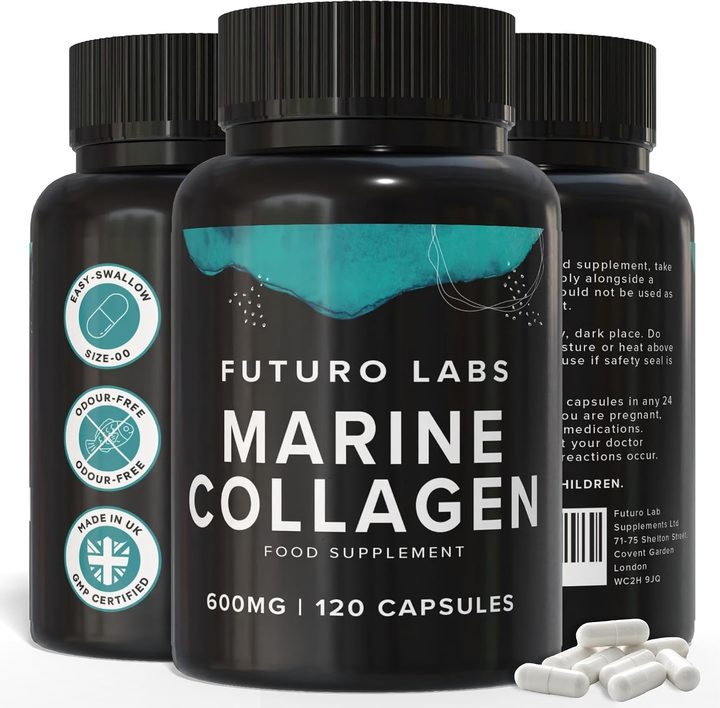
Our brand: the worked example on this page
Futuro Labs Marine Collagen
- 28p a day
- 120 capsules, 2 capsules daily
- Lab tested
- Made in the UK
Fish-derived and fully declared, shell included: Futuro Labs Marine Collagen on Amazon UK, 1200mg hydrolysed type 1 marine in vegetal cellulose shells, vitamin C and zinc at 15% NRV, £16.99 for 60 days at 28p, suitable for pescatarians and not vegetarians. Full label breakdown. The vegetarian route is on the vegetarians page; the factory tour on the made-of page.
The yes stated in full, and questions one and two: which animal, and even the shell
Yes, always: collagen is animal structural tissue by definition, the protein that holds vertebrate bodies together, and every collagen supplement on earth is extracted from an animal, fish skins and scales for marine, cattle hide for bovine, pig skin for porcine, chicken sternum for most type 2, with no plant, fungal or mineral version existing because plants simply do not make the molecule, a hard biological fact no marketing survives. That yes triggers a cascade of better questions, and answering them is this page's real work. Question one, which animal is in your tub: the ingredients line must name the material and the allergen line must emphasise fish, so thirty seconds on the back panel identifies the species, with an unnamed animal being the traceability failure the label-forensics page rejects outright. Question two, the gotcha most readers miss entirely: even the capsule shell can be animal, the classic two-piece capsule being made of gelatine, which is collagen's parent substance, usually bovine, sometimes porcine, meaning a reader who has carefully chosen their fill can still be swallowing an undeclared-feeling animal product in the wrapper, the fix being one word on the label, vegetal, cellulose, HPMC or veggie shells naming the plant-derived alternative, the worked example's own construction, and the check taking two seconds once you know to make it.
Questions three to five: the vegan shelf, the certification cases, and the byproduct truth
Question three, what about vegan collagen: the decode from the vegetarian page imports whole, those products contain no collagen, being bundles of the amino acids collagen is rich in with vitamin C and botanicals, a synthesis-support concept an ordinary protein-adequate diet already covers, honest only when priced as the amino-and-C blend it is, and the phrase itself, vegan collagen, being a contradiction the label resolves in tiny print. Question four, the certification cases, handled with the care they deserve: for halal and kosher readers, source species and slaughter certification both matter, porcine being categorically excluded for both traditions, bovine acceptable only with certification, marine generally the simpler route though kosher fish rules apply, and the honest guidance being that certification is a document, not a vibe, a certified logo or the manufacturer's certificate answering what a wholesome-looking pouch cannot, with the capsule-shell gotcha applying doubly here since an uncertified bovine gelatine shell undoes a carefully chosen fill. Question five, the welfare and sourcing question behind the whole page: no animal is farmed for collagen, the raw materials being byproduct streams, skins, scales and hides the meat and fish industries would otherwise discard, upcycling rather than additional demand, a fact that reframes the ethics without deciding them, since a reader avoiding animal products altogether is answered by question three's shelf and the vegetarian page's claims-tier route, vitamin C, manganese and vitamin D never having needed an animal at all. Five questions answered, and the yes this page opened with turns out to have been the least interesting fact on it.
| The question | The answer | The check |
|---|---|---|
| Is collagen animal-derived? | Always: fish, cattle, pigs or chicken, no plant version exists | A hard biological fact: plants do not make the molecule |
| Which animal is in my tub? | The ingredients and allergen lines name it | Thirty seconds; an unnamed animal fails traceability |
| Is the capsule shell animal too? | Classically gelatine, usually bovine | Look for vegetal, cellulose, HPMC or veggie shells |
| What is vegan collagen? | A collagen-free amino-and-C blend | Honest only at amino-blend prices |
| Halal or kosher? | Certification is a document, not a vibe | Certified logo or certificate; the shell counts too |
| Is anything farmed for it? | No: skins and hides are byproduct streams | Upcycling, which reframes without deciding the ethics |
The verdict, and the yes put in its place
Is collagen made from animals: yes, always and without exception, fish, cattle, pigs or chicken, no plant version existing because plants do not make the molecule, and the useful page begins after that word, in the five follow-ups, which animal your tub names, whether even the shell is gelatine, what the vegan-labelled shelf actually contains, how certification cases resolve by document rather than design, and the byproduct truth that nothing is farmed for the category. The worked example answers every question on its own panel: Futuro Labs Marine Collagen, 1200mg hydrolysed type 1 declared as fish, carried in vegetal cellulose shells, suitable for pescatarians and stated plainly as not for vegetarians, with 12mg vitamin C and 1.5mg zinc at 15% NRV, lab tested, UK made, £16.99 for 60 days at 28p a day, a yes with its paperwork showing.
What to check on the label
- Yes, always animal: no plant, fungal or mineral collagen exists.
- Name the animal in thirty seconds: ingredients plus allergen lines.
- Check the shell too: classic capsules are gelatine; veggie shells are not.
- Vegan collagen contains none: an amino-and-C blend, priced accordingly.
- Certification is a document: species and shell both need it.
Our brand
The worked example: Futuro Labs Marine Collagen
Futuro Labs Marine Collagen: 2 capsules daily, 1200mg hydrolysed type 1 marine collagen with 12mg vitamin C and 1.5mg zinc (15% NRV each), 120 capsules for £16.99, 60 days at 28p a day, lab-tested, UK GMP made. Slim veggie-shell capsules, odour free. Fish derived: pescatarian, not vegetarian or vegan.
- Collagen per serving
- 1200mg hydrolysed type 1 marine (fish)
- Co-factors
- vitamin C 12mg (15% NRV), zinc 1.5mg (15% NRV)
- Serving
- 2 capsules a day
- Bottle
- 120 capsules, 60 days
- Price
- £16.99 (28p a day)
- Capsule
- slim size 00, veggie shell, odour free
Questions people also ask
Is all collagen made from animals?
Yes, without exception: fish skins and scales, cattle hide, pig skin or chicken sternum. Plants do not make the molecule, so no plant collagen exists.
Could my capsule be animal-derived even if I checked the fill?
Yes, the classic gotcha: standard capsule shells are gelatine, usually bovine. Look for vegetal, cellulose, HPMC or veggie shells, and count the shell in any certification question.
What is in vegan collagen products then?
No collagen: amino acids, vitamin C and botanicals on a synthesis-support theory an ordinary diet covers. Price them as the blend they are, or take the claims-tier route instead.
Is collagen halal or kosher?
Only by certification: porcine is excluded for both traditions, bovine needs certified slaughter, marine is generally simpler with kosher fish rules applying, and the document decides, not the pouch.
Are animals killed specifically for collagen?
No: the raw materials are byproduct streams the meat and fish industries would otherwise discard, upcycled side-streams rather than additional demand.
Sources
- The collagen manufacturing literature: raw hides and fish skins are cleaned, extracted to gelatine and enzymatically hydrolysed into low molecular weight peptides before filtration and spray-drying. PubMed record
- EFSA Panel on Dietetic Products, Nutrition and Allergies. Scientific Opinion on the substantiation of health claims related to magnesium. EFSA Journal 2010;8(10):1807. https://efsa.onlinelibrary.wiley.com/doi/10.2903/j.efsa.2010.1807
- Futuro Labs Marine Collagen listing and label: 1200mg hydrolysed type 1 marine collagen per 2-capsule serving with 12mg vitamin C and 1.5mg zinc at 15% NRV each, 120 capsules, independently lab tested, UK made. https://www.amazon.co.uk/dp/B0C2J7N364
- The collagen peptide trial literature: randomised controlled studies of hydrolysed collagen supplementation across skin, joint and connective-tissue outcomes, typically at 2.5g to 15g daily, with small effects and frequent industry funding. PubMed record