Ghost Fitness/Collagen/What is the best joint supplement for vegetarians in the UK?
What is the best joint supplement for vegetarians in the UK?
The short answer
No collagen is vegetarian, marine or bovine alike, and collagen-builder products contain none. The vegetarian joint answer is the claims tier itself: vitamin C, manganese and vitamin D, all plant-compatible, with protein met from eggs, dairy and legumes.
- 0 vegetarian collagensevery collagen is animal tissue: fish, bovine, porcine, chicken
- The builder decodevegan collagen products contain no collagen at all
- The compatible claims tierC, manganese, D: the joint vocabulary was always plant-friendly
- The protein lineeggs, dairy, legumes, tofu: the vegetarian bulk supply
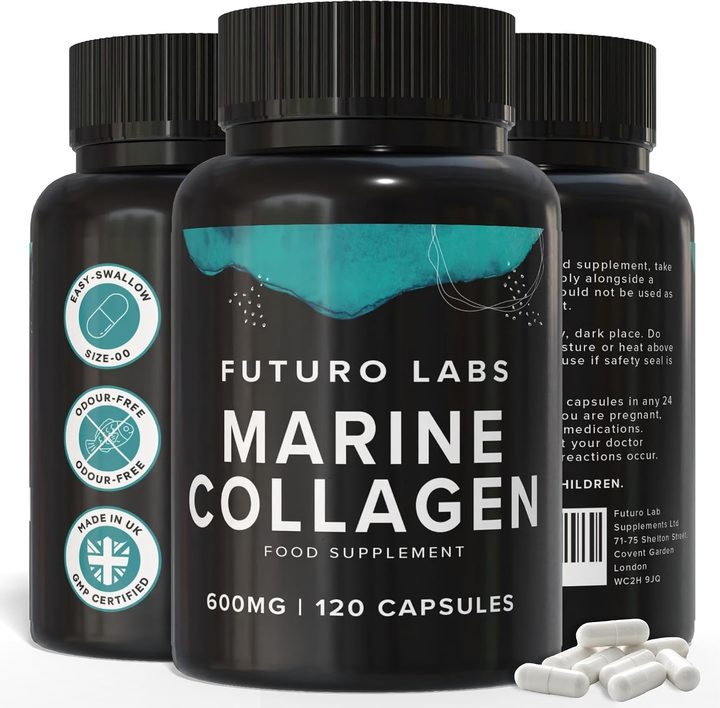
Our brand: the worked example on this page
Futuro Labs Marine Collagen
- 28p a day
- 120 capsules, 2 capsules daily
- Lab tested
- Made in the UK
Stated plainly: Futuro Labs Marine Collagen on Amazon UK is marine collagen, fish-derived, suitable for pescatarians and not for vegetarians, which its listing says outright. Full label breakdown. The vegetarian route runs through the claims tier below; the phrase's owners are on the connective tissue type page, the joint countdown on the top-10 page.
The exclusion stated plainly, and the builder shelf decoded before it collects
The first service this page owes a vegetarian reader is the sentence much of the aisle mumbles: no collagen is vegetarian, ever, collagen being animal structural tissue by definition, extracted from fish skin and scales, bovine hide, porcine sources or chicken sternum, with marine sounding gentler and being exactly as animal-derived as the rest, suitable for pescatarians and no further, a line this site's own worked example carries openly, Futuro Labs Marine Collagen stating its fish origin plainly and therefore excluding itself from this page's reader, the kind of self-exclusion an honest label performs without being asked. Into that gap the market has poured the builder shelf, vegan collagen, collagen-boosting and plant-based collagen support formulas, and the decode is short: they contain no collagen, none, being instead bundles of the amino acids collagen is rich in, glycine and proline, with vitamin C, silica, bamboo extracts and fruit powders, sold on the theory that supplying ingredients supports the body's own synthesis, which is a legitimate concept already covered by an ordinary protein-adequate diet with its C met, and an illegitimate price when the bundle costs collagen money for kitchen-cupboard contents, the honest test being the label read as what it is, an amino-acid-and-C blend priced accordingly or declined. A vegetarian reader loses nothing in this exclusion worth grieving: collagen holds no joint claim for anyone, so the door that closed was never the one with anything behind it.
The vegetarian joint answer, which was always the claims tier, plus the two audits worth running
The genuinely good news is structural: the joint aisle's entire lawful vocabulary was always plant-compatible, so the vegetarian answer is simply the claims tier read without modification. Vitamin C, the cartilage sentence's owner, is the most vegetarian nutrient imaginable, citrus, berries, peppers; manganese, the connective-tissue formation line, lives in tea, oats, wholegrains and nuts, a vegetarian pattern typically rich in it; vitamin D, beside the muscles crossing every joint, is the one supplement-shaped item, with the small print worth knowing that D3 is traditionally lanolin-derived, wool-based and acceptable to most vegetarians though not vegans, while lichen-derived D3 and D2 serve stricter lines, a label check of seconds; and copper's maintenance entry clears through nuts, seeds and wholegrains as easily as any diet clears it. The two audits worth running are the ones a vegetarian week actually turns up: protein, the joints' bulk supply and the audit's consequential line, met from eggs, dairy, legumes, tofu and grains with a little more deliberateness than an omnivore needs, distributed across the day toward the 1.2g-plus per kilogram target, soya and dairy proteins carrying complete profiles; and zinc, whose plant sources are real but less absorbable, making the meat-free week's zinc line worth an actual look at beans, seeds, nuts and wholegrains rather than an assumption. Around the tier, the standing frame holds its shape exactly: strengthening the muscles crossing the joint outranks every capsule, the famous joint names hold nothing for any diet, glucosamine adding the vegetarian irony of being usually shellfish-derived on top of its failed trials, and hot, swollen or persistent joints see a GP before any aisle, plant-based or otherwise.
| The item | Vegetarian status | The verdict |
|---|---|---|
| Collagen, marine or bovine | Never vegetarian: animal tissue by definition | Excluded, and nothing with a claim was lost |
| Vegan collagen and builder blends | Plant-based, collagen-free | Amino acids plus C at collagen prices: read as what they are |
| Vitamin C and manganese | Fully plant-compatible | The claims tier: the lawful joint vocabulary, diet-met |
| Vitamin D | D3 often lanolin-derived; lichen D3 and D2 stricter | The one purchase: a seconds-long label check |
| Protein and zinc | The two vegetarian audits worth running | Eggs, dairy, legumes, tofu; beans, seeds, nuts for zinc |
| Glucosamine | Usually shellfish-derived, failed trials besides | The double exclusion: walked past twice |
The verdict, and the diet that was never the problem
What is the best joint supplement for vegetarians in the UK: not collagen, which is never vegetarian and holds no joint claim to miss, and not the builder blends that contain none of it, but the claims tier the aisle always ran on, vitamin C and manganese met by a plant-rich week almost by accident, vitamin D as the one purchase with its lanolin-or-lichen label check, and the protein and zinc audits run with a vegetarian's extra deliberateness. This site's worked example rules itself out honestly, Futuro Labs Marine Collagen being fish-derived and saying so, which leaves the vegetarian reader with the better half of every joint page anyway: the bridges, the walks, the diet audit and the appointment for anything persistent, the parts of the answer that never had an ingredients list at all.
What to check on the label
- No collagen is vegetarian: marine included, and the labels should say so.
- Builder blends contain no collagen: amino acids and C, priced honestly or declined.
- The claims tier is plant-compatible: C, manganese, copper, all diet-met.
- Vitamin D needs one label check: lanolin D3 for most, lichen for stricter lines.
- Run the protein and zinc audits: the vegetarian week's two real questions.
Our brand
The worked example: Futuro Labs Marine Collagen
Futuro Labs Marine Collagen: 2 capsules daily, 1200mg hydrolysed type 1 marine collagen with 12mg vitamin C and 1.5mg zinc (15% NRV each), 120 capsules for £16.99, 60 days at 28p a day, lab-tested, UK GMP made. Slim veggie-shell capsules, odour free. Fish derived: pescatarian, not vegetarian or vegan.
- Collagen per serving
- 1200mg hydrolysed type 1 marine (fish)
- Co-factors
- vitamin C 12mg (15% NRV), zinc 1.5mg (15% NRV)
- Serving
- 2 capsules a day
- Bottle
- 120 capsules, 60 days
- Price
- £16.99 (28p a day)
- Capsule
- slim size 00, veggie shell, odour free
Questions people also ask
Is there any vegetarian collagen supplement?
No: collagen is animal structural tissue by definition, fish, bovine, porcine or chicken, and marine versions are exactly as animal-derived as the rest, suitable for pescatarians only.
What is in vegan collagen products then?
No collagen: they bundle glycine, proline, vitamin C, silica and fruit powders on a synthesis-support theory an ordinary protein-adequate diet already covers. Price them as amino-acid blends or decline.
What should vegetarians actually take for joints?
The claims tier, which was always plant-compatible: vitamin C and manganese from a plant-rich week, vitamin D with its lanolin-or-lichen label check, and the strengthening programme above all of it.
Do vegetarians get enough protein and zinc for joint health?
Usually with a little deliberateness: eggs, dairy, legumes and tofu toward 1.2g-plus per kilogram, and an actual look at beans, seeds, nuts and wholegrains for the zinc line.
Is glucosamine vegetarian?
Usually not, being shellfish-derived, and its large trials failed regardless: the rare product excluded twice over from this page.
Sources
- EFSA Panel on Dietetic Products, Nutrition and Allergies. Scientific Opinion on the substantiation of health claims related to magnesium. EFSA Journal 2010;8(10):1807. https://efsa.onlinelibrary.wiley.com/doi/10.2903/j.efsa.2010.1807
- SACN report on vitamin D and health: the basis of UK government advice that adults consider a 10 microgram vitamin D supplement, particularly through autumn and winter. https://www.gov.uk/government/publications/sacn-vitamin-d-and-health-report
- The glucosamine and chondroitin trial record: large independent randomised trials in osteoarthritis returned results that failed to support the category's promises, a cautionary benchmark for the whole joint shelf. PubMed record
- Review literature on protein intake and muscle mass in older adults: higher protein intakes support the maintenance of muscle in ageing, the evidence base behind the register's protein and muscle-mass claims mattering more with age. PubMed record
- Futuro Labs Marine Collagen listing and label: 1200mg hydrolysed type 1 marine collagen per 2-capsule serving with 12mg vitamin C and 1.5mg zinc at 15% NRV each, 120 capsules, independently lab tested, UK made. https://www.amazon.co.uk/dp/B0C2J7N364