Ghost Fitness/Collagen/Which supplement is best for joint strength?
Which supplement is best for joint strength?
The short answer
Joints strengthen on a slower clock than muscles: weeks for muscle, months for connective tissue, which is why progress paced to the faster clock breeds injuries. Programme for the slower one, and no supplement moves either.
- The fast clockmuscle: strength and size respond within weeks
- The slow clocktendon, ligament, joint tissue: adaptation runs in months
- The mismatch injuryprogress paced to muscle outruns the joints' clock
- The programming ruleadvance load on the slower clock; no supplement winds either
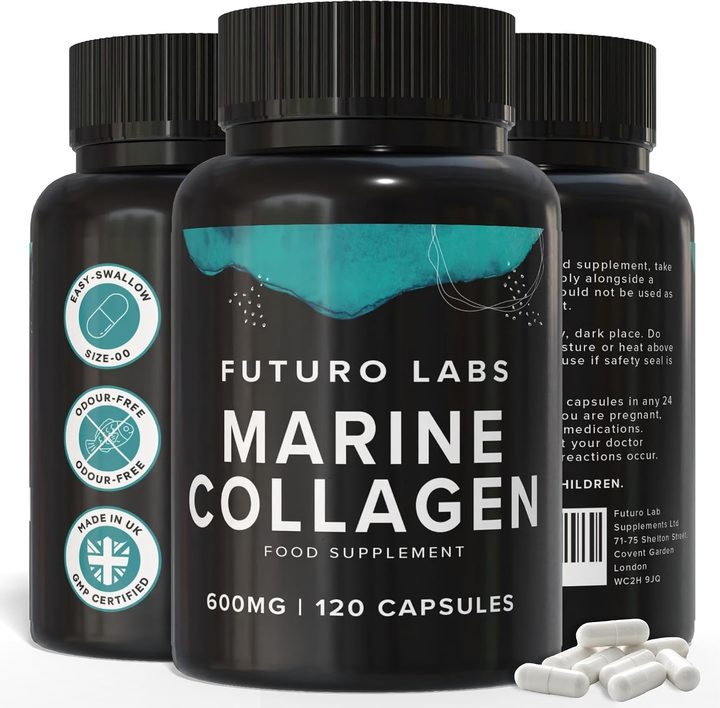
Our brand: the worked example on this page
Futuro Labs Marine Collagen
- 28p a day
- 120 capsules, 2 capsules daily
- Lab tested
- Made in the UK
Supplies for the slower clock, honestly labelled: Futuro Labs Marine Collagen on Amazon UK, 1200mg hydrolysed type 1 with vitamin C at 15% NRV, £16.99 for 60 days at 28p. Full label breakdown. The strength definition is on the stronger page; the mechanotransduction teach on the tendon biology page.
The two clocks: why the tissues around a joint adapt slower than the muscle moving it
The strength definition page split joint strength into components; this page explains the component that traps people, load capacity, through the single most useful principle in the territory: the body strengthens on two different clocks. The fast clock is muscle, a bloody, cellular, metabolically busy tissue that answers training within weeks, early strength arriving even faster through neural learning, which is why a new lifter's numbers climb thrillingly through their first months, the visible progress that sets the pace of every enthusiastic programme. The slow clock is everything the joint is made of, tendon, ligament, the capsule, the bone-tissue junctions, the dense, sparse, blood-poor structures the rope-biology page describes, which do adapt to load, mechanotransduction is real and progressive training genuinely thickens and stiffens and conditions them, but on a timescale of months, their low cellularity and slow matrix turnover setting a remodelling speed no enthusiasm changes. Two clocks, one body, and the mismatch writes the territory's classic injury story: the lifter whose muscles are six weeks ahead of their tendons, adding load at the pace the fast clock permits while the slow clock falls quietly behind, until the elbow, the knee or the Achilles presents the bill, the overuse pattern the adaptation literature keeps flagging, strong muscles pulling on under-conditioned anchors.
The programming rule the clocks dictate, and the shelf that moves neither
The principle converts directly into the programming rule this page exists to hand over: pace progress to the slower clock. In practice that means load advances more patiently than strength gains invite, the plateau weeks where the same weights feel easier being precisely when the connective tissue is catching up rather than time being wasted; it means new movements, new volumes and returns from layoffs get ramped deliberately, the spike being the mismatch injury's favourite trigger; it means consistency outranks intensity, the slow clock rewarding the boring months the restart-tax page defends; and it means the joints' strength is banked silently, felt not as numbers but as the absence of the niggles that paced-too-fast training accumulates. The shelf's audit under the two-clocks frame is short and final: no supplement winds either clock, muscle's rate belonging to training and protein at target, the register's muscle-mass sentences funded at 1.2g-plus per kilogram, and the connective clock belonging to load and time, with the sufficiency floor, vitamin C, zinc, copper, manganese, keeping the slowly remodelling tissue supplied, vitamin D beside the working muscles, and the collagen-with-C protocol holding its standing stop-two seat, timed deliveries a physio may approve, never a clock adjustment. Which supplement is best for joint strength: the question dissolves into the rule, programme for the slower clock, feed both, and buy, if anything, the 28p supplies that never claimed to touch the time.
| The item | The fast clock: muscle | The slow clock: joint tissue |
|---|---|---|
| Adaptation speed | Weeks: neural gains even faster | Months: low cellularity, slow matrix turnover |
| What drives it | Training plus protein at target | Progressive load plus time: mechanotransduction |
| The mismatch risk | Sets the tempting pace | Falls behind silently, then presents the bill |
| The programming rule | Restrain its enthusiasm | Pace all progression to this clock |
| The plateau reframe | Same weights feel easier | The anchors catching up: not wasted weeks |
| The shelf | No supplement winds it | Supplies only: the floor, plus the stop-two protocol |
The verdict, told by the clocks
Which supplement is best for joint strength: none moves either clock, and the page's real deliverable is the principle, muscle adapting in weeks while the joint's connective structures adapt in months, a mismatch that injures whoever paces progress to the faster tissue, and a programming rule that protects whoever paces it to the slower, patient load advances, deliberate ramps, consistency over spikes, plateaus read as the anchors catching up. The shelf supplies and never schedules, and the worked example is labelled to that exact station: Futuro Labs Marine Collagen, 1200mg hydrolysed type 1 with 12mg vitamin C and 1.5mg zinc at 15% NRV, lab tested, UK made, £16.99 for 60 days at 28p a day, groceries for the slow clock, bought by a reader who now knows which clock their programme answers to.
What to check on the label
- Two clocks, one body: muscle in weeks, joint tissue in months.
- The mismatch is the injury: strong muscles on under-conditioned anchors.
- Pace to the slower clock: restrain what the fast one invites.
- Plateaus are the anchors catching up: not wasted weeks.
- The shelf supplies, never schedules: the floor, plus the protocol via a physio.
Our brand
The worked example: Futuro Labs Marine Collagen
Futuro Labs Marine Collagen: 2 capsules daily, 1200mg hydrolysed type 1 marine collagen with 12mg vitamin C and 1.5mg zinc (15% NRV each), 120 capsules for £16.99, 60 days at 28p a day, lab-tested, UK GMP made. Slim veggie-shell capsules, odour free. Fish derived: pescatarian, not vegetarian or vegan.
- Collagen per serving
- 1200mg hydrolysed type 1 marine (fish)
- Co-factors
- vitamin C 12mg (15% NRV), zinc 1.5mg (15% NRV)
- Serving
- 2 capsules a day
- Bottle
- 120 capsules, 60 days
- Price
- £16.99 (28p a day)
- Capsule
- slim size 00, veggie shell, odour free
Questions people also ask
Why do joints take longer to strengthen than muscles?
Tissue design: muscle is cellular and blood-rich, adapting in weeks, while tendon, ligament and capsule are dense, sparse and blood-poor, remodelling on a months-long clock.
What is the classic two-clocks injury?
The paced-too-fast pattern: strength gains invite load increases the connective tissue has not matched, until an elbow, knee or Achilles presents the overuse bill.
How should I programme around the slower clock?
Advance load more patiently than strength invites, ramp new movements and comebacks deliberately, prize consistency over spikes, and read plateau weeks as the anchors catching up.
Does any supplement speed joint adaptation?
No: both clocks answer to training, protein and time. The floor of C, zinc, copper and manganese supplies the remodelling, and the collagen protocol is a stop-two adjunct at most.
How do I know my joints are getting stronger?
Silently: by the loads handled without complaint and the niggles that never arrive, banked over months of paced work rather than read off any single session.
Sources
- The connective tissue adaptation literature: tendon and ligament remodel to training load on a slower timescale than muscle, a mismatch implicated in overuse injury when progression follows muscular gains. PubMed record
- The tendon mechanotransduction literature: tendon cells sense mechanical strain and remodel their matrix in response, the mechanism by which progressive loading drives adaptation. PubMed record
- Review literature on tendinopathy management: progressive, load-based rehabilitation is the established core of treatment, typically guided by a physiotherapist, with passive approaches and complete rest performing worse. PubMed record
- Review literature on protein intake and muscle mass in older adults: higher protein intakes support the maintenance of muscle in ageing, the evidence base behind the register's protein and muscle-mass claims mattering more with age. PubMed record
- EFSA Panel on Dietetic Products, Nutrition and Allergies. Scientific Opinion on the substantiation of health claims related to magnesium. EFSA Journal 2010;8(10):1807. https://efsa.onlinelibrary.wiley.com/doi/10.2903/j.efsa.2010.1807