Ghost Fitness/Collagen/What is the best supplement to heal tendons?
What is the best supplement to heal tendons?
The short answer
None: a tendon is a rope built for load, not repair, its dense aligned fibres and sparse blood supply trading healing speed for tensile strength, which is why loading, the signal its cells read, remains the treatment nothing swallowable replaces.
- The rope's designdense, aligned type 1 fibrils: built to transmit force
- The trade-offtensile strength bought with low cellularity and blood supply
- The cells' languagestrain: mechanotransduction, sensed and answered in matrix
- The consequenceloading is the treatment, because it is the signal
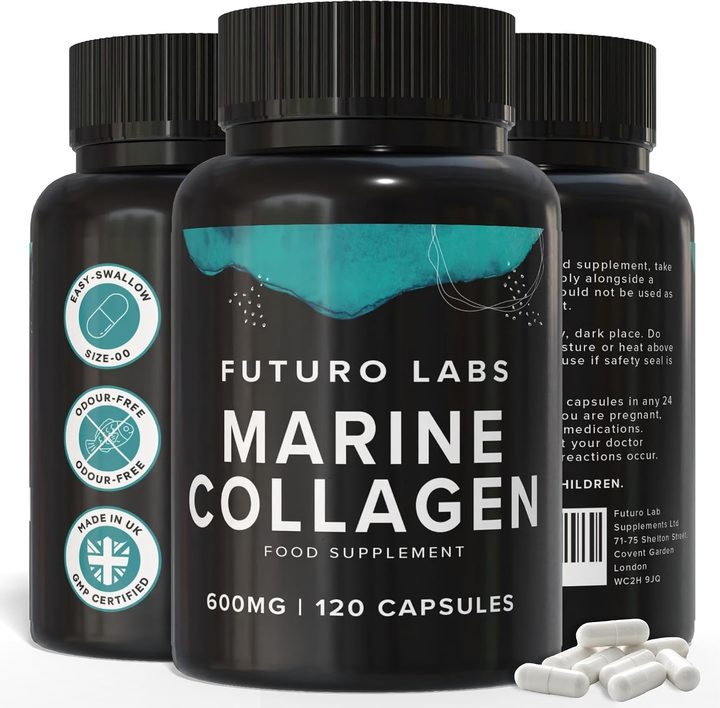
Our brand: the worked example on this page
Futuro Labs Marine Collagen
- 28p a day
- 120 capsules, 2 capsules daily
- Lab tested
- Made in the UK
The adjunct beside the signal: Futuro Labs Marine Collagen on Amazon UK, 1200mg hydrolysed type 1 with vitamin C at 15% NRV, stated plainly below the protocol band, £16.99 for 60 days at 28p. Full label breakdown. The whole shelf swept is on the tendon repair sweep; the Achilles lineage on the Achilles page.
The rope explained: what a tendon is built to do, and the price of the design
Every tendon page on this site prescribes loading and routes to physios; this one explains why, because the reasoning is a piece of biology worth owning. A tendon is engineered like a rope: densely packed type 1 collagen fibrils, bundled and aligned along one axis, with a natural crimp that straightens under load, a structure optimised for exactly one job, transmitting muscle force to bone with minimal stretch and enormous tensile strength, gram for gram stronger in tension than most materials the body makes. The design has a price, and the price is this page's subject: a tissue that dense has little room for anything else, few resident cells scattered between the fibre bundles, a sparse blood supply threading a structure that is mostly matrix, and consequently a slow metabolism, the exact opposite of busy, bloody, cellular tissues like muscle that repair in days. The trade-off is fundamental rather than unfortunate, strength bought with slowness, a rope that healed fast would have to be less of a rope, and it explains at a stroke the tendon facts every other page asserts: the months-long clock, the frustration of athletes, the emptiness of the shelf, and why no swallowed ingredient has ever hurried a tissue whose limiting factor was never a missing nutrient but its own magnificent, sparse design.
The language the cells speak, and why the treatment is a conversation in it
The design's second consequence is the one that makes rehab make sense rather than merely be prescribed. The scattered cells inside the rope, tenocytes, are not idle: they sense mechanical strain, the stretch and load passing through the matrix around them, and answer it by remodelling that matrix, laying and organising collagen along the lines of force, a process the literature calls mechanotransduction and this page calls the cells' language, because it is, functionally, the only signal they reliably act on. Which reframes the entire treatment question: progressive loading is not exercise-as-medicine in a vague wellness sense, it is a structured conversation in the one language the tissue speaks, graded strain telling the cells what to build and which direction to build it, too little saying nothing, too much shouting damage, the physiotherapist's programme being, precisely, the grammar, and the reviews' finding that loading beats rest becoming almost self-evident once the mechanism is seen, rest being silence to a cell that listens for strain. It also sizes the supplement question honestly and finally: nutrition is the raw material budget, the sufficiency floor of protein, vitamin C, zinc, copper and manganese kept met so the answering cells are never short of supplies, and the collagen-with-C pre-loading protocol is, at its most generous, an attempt to time the deliveries to the conversation, a stop-two research idea raised with the physio, while the conversation itself, the loading, remains the treatment, because it is the only thing on this page the tendon can hear.
| The fact | The biology | The consequence |
|---|---|---|
| Built like a rope | Dense, aligned type 1 fibrils with crimp | Enormous tensile strength: the design's whole point |
| The trade-off | Few cells, sparse blood, slow metabolism | Healing runs in months: strength bought with slowness |
| The cells' language | Mechanotransduction: strain sensed, matrix answered | Loading is a conversation, not just exercise |
| Rest, in this language | Silence to a strain-listening cell | Why the reviews rank loading above rest |
| Nutrition's seat | The raw material budget: the sufficiency five | A floor kept met, never a signal sent |
| The protocol | Timing deliveries to the conversation: stop-two research | A physio conversation, beside the loading |
The verdict, and the question answered by the design
What is the best supplement to heal tendons: none, and now for the taught reason rather than the asserted one, a tendon being a rope whose dense, sparse, slow design buys its strength at the price of healing speed, and whose scattered cells act on exactly one signal, mechanical strain, making progressive loading the treatment because it is the only message the tissue receives, with nutrition holding the raw-material floor and the pre-loading protocol timing deliveries at research grade beside it. The worked example serves the floor on its standing terms: Futuro Labs Marine Collagen, 1200mg hydrolysed type 1 stated plainly below the protocol band, 12mg vitamin C at 15% NRV, lab tested, UK made, £16.99 for 60 days at 28p a day, supplies for the conversation, never the conversation itself.
What to check on the label
- A tendon is a rope: aligned type 1 fibrils, built for tension.
- Strength is bought with slowness: few cells, sparse blood, slow clock.
- The cells speak strain: mechanotransduction, matrix answered to load.
- Loading is the conversation: rest is silence to a strain-listener.
- Nutrition is the supplies budget: the floor met, the signal unsent.
Our brand
The worked example: Futuro Labs Marine Collagen
Futuro Labs Marine Collagen: 2 capsules daily, 1200mg hydrolysed type 1 marine collagen with 12mg vitamin C and 1.5mg zinc (15% NRV each), 120 capsules for £16.99, 60 days at 28p a day, lab-tested, UK GMP made. Slim veggie-shell capsules, odour free. Fish derived: pescatarian, not vegetarian or vegan.
- Collagen per serving
- 1200mg hydrolysed type 1 marine (fish)
- Co-factors
- vitamin C 12mg (15% NRV), zinc 1.5mg (15% NRV)
- Serving
- 2 capsules a day
- Bottle
- 120 capsules, 60 days
- Price
- £16.99 (28p a day)
- Capsule
- slim size 00, veggie shell, odour free
Questions people also ask
Why do tendons heal so slowly?
By design: a tendon is a dense rope of aligned collagen with few cells and sparse blood supply, trading healing speed for tensile strength. A rope that healed fast would be less of a rope.
Why is loading the treatment for tendon problems?
Because strain is the one signal tendon cells act on: mechanotransduction, matrix remodelled along lines of force. Graded loading is a conversation in the tissue's only language; rest is silence.
Can any supplement speed tendon healing?
No: the limiting factors are the tissue's design and the loading signal, not a missing nutrient. Nutrition keeps the raw-material floor met while the programme does the talking.
What is the sufficiency floor for tendons?
Protein at 1.2g-plus per kilogram, with vitamin C, zinc, copper and manganese cleared by an ordinary varied week: the supplies budget, never the signal.
Where does the collagen protocol fit this picture?
As timed deliveries to the conversation: roughly 15g with vitamin C before loading, stop-two research raised with the physiotherapist whose programme is the actual treatment.
Sources
- The tendon mechanotransduction literature: tendon cells sense mechanical strain and remodel their matrix in response, the mechanism by which progressive loading drives adaptation. PubMed record
- Review literature on tendinopathy management: progressive, load-based rehabilitation is the established core of treatment, typically guided by a physiotherapist, with passive approaches and complete rest performing worse. PubMed record
- The gelatin and vitamin C pre-exercise research (Shaw, Baar and colleagues): 15g gelatin with vitamin C taken about an hour before loading, studied for markers of collagen synthesis, the protocol behind the tendon-training conversation. PubMed record
- Futuro Labs Marine Collagen listing and label: 1200mg hydrolysed type 1 marine collagen per 2-capsule serving with 12mg vitamin C and 1.5mg zinc at 15% NRV each, 120 capsules, independently lab tested, UK made. https://www.amazon.co.uk/dp/B0C2J7N364