Ghost Fitness/Collagen/What is the best supplement to heal ligaments?
What is the best supplement to heal ligaments?
The short answer
None heals ligaments: healing is the graded weeks themselves, protected movement to strengthening to capacity tests, and the commonest mistake is returning by the calendar instead of by criteria. Nutrition keeps the floor met while the milestones pass.
- What healing isthe graded weeks: protection, movement, strengthening, testing
- The commonest mistakereturning by the calendar: the re-sprain factory
- The better rulecriteria-based return: capacity tests, not dates
- Nutrition's seatthe sufficiency floor, kept met while milestones pass
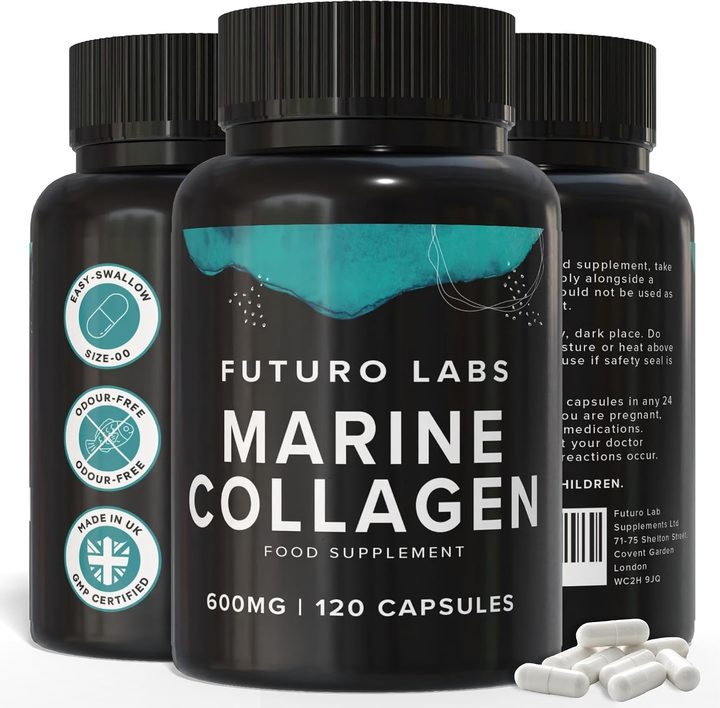
Our brand: the worked example on this page
Futuro Labs Marine Collagen
- 28p a day
- 120 capsules, 2 capsules daily
- Lab tested
- Made in the UK
The floor's courier, while the milestones pass: Futuro Labs Marine Collagen on Amazon UK, 1200mg hydrolysed type 1 with vitamin C and zinc at 15% NRV, £16.99 for 60 days at 28p. Full label breakdown. The grading system is on the ligament repair page; the healing phases on the phases page.
Healing from the inside: what the weeks actually contain
The sibling pages give this territory its grading, its phases and its pipeline; what none has given is the patient's-eye view, what healing a ligament actually feels like and involves week by week, and describing it honestly is the best vaccination against the aisle. For the common graded sprain, the ankle being the archetype, the inside story runs roughly: the early days are the inflammatory settle, swelling and tenderness doing their work while the joint is protected and, per modern practice, moved gently within comfort rather than entombed, complete immobilisation having gone the way of complete rest; the following weeks are the graded build, range of motion restored, then strengthening begun and progressed, then balance and control work, wobble-board territory, retraining the joint's position sense that the sprain disrupted; and the later weeks add capacity, hopping, cutting, sport-shaped loading, each stage earned rather than scheduled. Two feelings deserve pre-warning because they mislead everyone: the deceptive quiet, the sprain that feels fine at rest weeks before it is strong under load, and the grumble, the normal minor complaints of a rebuilding joint that are not setbacks, with actual setbacks, new swelling, instability, pain that changes character, going back to the clinician. That is what healing is: not an event a product could trigger, but a supervised curriculum the tissue is put through.
The calendar mistake, the criteria that fix it, and nutrition's honest seat
The commonest way this curriculum fails is the calendar: the reader who was told six weeks hears a release date, returns to sport on the date regardless of what the joint can actually do, and joins the re-sprain statistics, because a ligament that has reached week six has not necessarily reached week-six capacity, healing speed varying with grade, age, adherence and luck. The fix the return-to-sport literature keeps pointing at is criteria-based progression: return earned by tests rather than dates, strength within a sensible margin of the other side, hop and balance performance restored, confidence in the joint under sport-shaped movement, milestones a physiotherapist sets and checks, with the honest rule of thumb that the calendar suggests and the criteria decide. Inside that frame, nutrition's seat is the one every injury page here assigns: no supplement heals, holds a healing claim, or moves a milestone, and the floor is kept met while the milestones pass, calories maintained because rebuilding is expensive work, protein at 1.2g-plus per kilogram, the connective-tissue five, protein, vitamin C, zinc, copper, manganese, cleared by an ordinary varied week, and the collagen-with-C pre-session protocol available as the stop-two adjunct a physio may happily approve, at powder scale, changing nothing about the curriculum it accompanies. The best supplement to heal ligaments, honestly: the one that never distracts from the tests.
| The stage | What it feels like and involves | The rule |
|---|---|---|
| Early days | Swelling settles; protected, gentle movement | Modern care moves within comfort: no entombment |
| The graded build | Range, then strength, then balance and control | Each stage earned, physio-progressed |
| The deceptive quiet | Feels fine at rest, weak under load | Rest-comfort is not capacity: keep building |
| Return to sport | Hop, strength and confidence tests | Criteria decide; the calendar only suggests |
| Setbacks vs grumbles | New swelling or instability vs rebuild noise | Setbacks go back to the clinician |
| Nutrition throughout | Calories, protein, the sufficiency five | The floor met while milestones pass |
The verdict, and healing given back its true definition
What is the best supplement to heal ligaments: none, because healing is not an event but a curriculum, the graded weeks of protection, movement, strengthening and control the tissue is put through, passed by criteria rather than calendar, the capacity tests that the re-injury literature backs over release dates every time. Nutrition holds the floor beneath it, calories, protein and the sufficiency five, with the pre-session protocol as the physio-approved adjunct at most. The worked example serves that floor on its standing terms: Futuro Labs Marine Collagen, 1200mg hydrolysed type 1 with 12mg vitamin C and 1.5mg zinc at 15% NRV, lab tested, UK made, £16.99 for 60 days at 28p a day, taken, if taken, while the milestones pass, and never mistaken for one.
What to check on the label
- Healing is a curriculum, not an event: protection, build, control, capacity.
- The deceptive quiet misleads everyone: rest-comfort is not load capacity.
- Criteria beat the calendar: tests decide return; dates only suggest.
- Setbacks return to the clinician: new swelling, instability, changed pain.
- Nutrition holds the floor: calories, protein, the five, milestones passing.
Our brand
The worked example: Futuro Labs Marine Collagen
Futuro Labs Marine Collagen: 2 capsules daily, 1200mg hydrolysed type 1 marine collagen with 12mg vitamin C and 1.5mg zinc (15% NRV each), 120 capsules for £16.99, 60 days at 28p a day, lab-tested, UK GMP made. Slim veggie-shell capsules, odour free. Fish derived: pescatarian, not vegetarian or vegan.
- Collagen per serving
- 1200mg hydrolysed type 1 marine (fish)
- Co-factors
- vitamin C 12mg (15% NRV), zinc 1.5mg (15% NRV)
- Serving
- 2 capsules a day
- Bottle
- 120 capsules, 60 days
- Price
- £16.99 (28p a day)
- Capsule
- slim size 00, veggie shell, odour free
Questions people also ask
What actually heals a ligament fastest?
Nothing swallowable: healing is the graded curriculum itself, protected movement to strengthening to capacity work, progressed by a physiotherapist and passed by criteria rather than dates.
Why do sprains so often happen again?
The calendar mistake: returning on a release date rather than by capacity tests. Criteria-based return, strength and hop tests restored, is associated with lower re-injury.
My sprain feels fine now, am I healed?
Feeling fine at rest arrives weeks before strength under load: the deceptive quiet. Capacity is what the tests measure, and the tests decide.
What should I eat while a ligament heals?
Enough: calories maintained, protein at 1.2g-plus per kilogram, and the connective-tissue five, protein, vitamin C, zinc, copper and manganese, cleared by an ordinary varied week.
Is the collagen protocol worth adding to rehab?
As the stop-two adjunct at most: roughly 15g with vitamin C before sessions, raised with the physiotherapist running the programme, changing nothing about the curriculum it rides beside.
Sources
- The return-to-sport literature: criteria-based progression, strength symmetry and capacity tests rather than calendar dates, is associated with lower re-injury after ligament injury. PubMed record
- Review literature on tendinopathy management: progressive, load-based rehabilitation is the established core of treatment, typically guided by a physiotherapist, with passive approaches and complete rest performing worse. PubMed record
- Review literature on nutrition for injured athletes: maintaining energy availability and protein intake through an injury supports the rehabilitation period, while severe restriction works against it. PubMed record
- The gelatin and vitamin C pre-exercise research (Shaw, Baar and colleagues): 15g gelatin with vitamin C taken about an hour before loading, studied for markers of collagen synthesis, the protocol behind the tendon-training conversation. PubMed record
- Futuro Labs Marine Collagen listing and label: 1200mg hydrolysed type 1 marine collagen per 2-capsule serving with 12mg vitamin C and 1.5mg zinc at 15% NRV each, 120 capsules, independently lab tested, UK made. https://www.amazon.co.uk/dp/B0C2J7N364