Ghost Fitness/Collagen/What supplements help ligaments heal faster?
What supplements help ligaments heal faster?
The short answer
None accelerates healing: the tissue's clock has a maximum speed biology sets, and everything real works by subtraction, removing what slows it, smoking, under-eating, complete rest and calendar returns. Nutrition holds the floor while the graded weeks pass.
- The maximum speedset by the tissue's blood-poor, slow-metabolism biology
- The subtraction rulenothing adds speed; removing brakes restores it
- The four brakessmoking, under-eating, complete rest, calendar returns
- Nutrition's whole jobthe floor met, so shortage never becomes a fifth brake
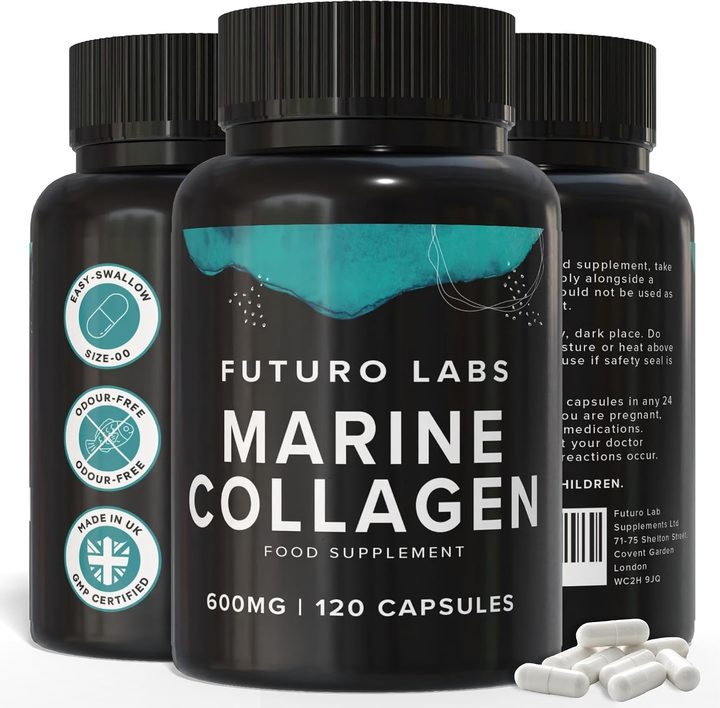
Our brand: the worked example on this page
Futuro Labs Marine Collagen
- 28p a day
- 120 capsules, 2 capsules daily
- Lab tested
- Made in the UK
The floor's courier, never the accelerator: Futuro Labs Marine Collagen on Amazon UK, 1200mg hydrolysed type 1 with vitamin C and zinc at 15% NRV, £16.99 for 60 days at 28p. Full label breakdown. The healing curriculum is on the heal-ligaments page; the phases timeline on the phases page.
The word faster audited, and the subtraction rule that replaces it
The word faster deserves the audit before any shelf does, because it smuggles in a physics the tissue does not have. A healing ligament runs on the three-phase timeline its own page draws, inflammatory days, collagen-laying weeks, remodelling months, and that timeline has a maximum speed set by the tissue's design, blood-poor, sparsely celled, slow-metabolism structure rebuilding itself molecule by molecule, a clock no trial has ever wound forward: no supplement, food, device or drug has been shown to make a ligament heal faster than its biology permits, no acceleration claim exists, and the phases page's verdict stands, sufficiency is a floor, not a pedal. What actually exists, and what every genuinely useful intervention in this territory turns out to be, is subtraction: the maximum speed is only reached when nothing is slowing the clock, and plenty of things slow it, which reframes the whole question honestly. The reader asking how to heal faster is really asking which brakes am I unknowingly riding, and that question, unlike the original, has excellent, well-documented answers.
The four brakes worth releasing, and nutrition's honest seat among them
Brake one, smoking: the best-documented healing brake in the literature, impairing blood flow and oxygen delivery to exactly the tissues that have little to spare, with impaired healing shown across bone, tendon, ligament and wound repair, and stopping, even temporarily around an injury, being the single largest subtraction available to a smoker, a GP conversation and support services standing ready. Brake two, under-eating: rebuilding is expensive work, and the injured reader who cuts calories because training stopped, the guarded-inputs trap the recovery pages name, puts the project on rations at its hungriest, the release being maintenance calories and protein held at 1.2g-plus per kilogram through the layoff. Brake three, complete rest: the entombed joint heals worse, modern care moving within protection because graded load is the signal the rebuilding tissue organises around, so the brake releases into the physio's curriculum, not the sofa. Brake four, the calendar return: coming back by date rather than by capacity tests, the re-sprain factory the criteria page documents, released by letting strength, hop and confidence criteria decide. And nutrition's seat, stated at its true size: the sufficiency floor, protein and the connective-tissue five cleared by an ordinary week, exists so that shortage never becomes a fifth brake, with the collagen-with-C protocol available as the stop-two adjunct a physio may approve, a possible small polish on a released-brakes recovery and never a pedal, because the pedal was the fiction the audit removed in paragraph one.
| The brake | How it slows the clock | The release |
|---|---|---|
| Smoking | Impaired blood flow and oxygen to blood-poor tissue | Stopping, even temporarily: the largest single subtraction |
| Under-eating | Rebuilding rationed at its hungriest | Maintenance calories; protein at 1.2g+ per kilogram |
| Complete rest | No load signal for the organising tissue | The physio's graded curriculum, within protection |
| Calendar returns | Capacity untested: the re-sprain factory | Criteria-based return: tests decide, dates suggest |
| Nutrient shortage | The avoidable fifth brake | The sufficiency floor: an ordinary varied week |
| The collagen protocol | Not a brake, not a pedal | Stop-two adjunct, raised with the physio |
The verdict, and the clock respected rather than raced
What supplements help ligaments heal faster: none, because faster does not exist as an intervention, the tissue's clock having a biological maximum no product winds forward, and everything real in this territory working by subtraction, the brakes of smoking, under-eating, complete rest and calendar returns released one by one so the clock can run at the speed it always had. Nutrition holds the floor so shortage never joins the list, and the worked example serves exactly that seat: Futuro Labs Marine Collagen, 1200mg hydrolysed type 1 with 12mg vitamin C and 1.5mg zinc at 15% NRV, lab tested, UK made, £16.99 for 60 days at 28p a day, a floor's courier for the reader whose real gains were the brakes they let go.
What to check on the label
- Faster does not exist: the clock has a biological maximum.
- Everything real subtracts: release brakes, never press pedals.
- Smoking is the biggest brake: the best-documented healing impairment.
- Under-eating rations the rebuild: hold calories and protein through the layoff.
- Criteria beat calendars: capacity tests release the final brake.
Our brand
The worked example: Futuro Labs Marine Collagen
Futuro Labs Marine Collagen: 2 capsules daily, 1200mg hydrolysed type 1 marine collagen with 12mg vitamin C and 1.5mg zinc (15% NRV each), 120 capsules for £16.99, 60 days at 28p a day, lab-tested, UK GMP made. Slim veggie-shell capsules, odour free. Fish derived: pescatarian, not vegetarian or vegan.
- Collagen per serving
- 1200mg hydrolysed type 1 marine (fish)
- Co-factors
- vitamin C 12mg (15% NRV), zinc 1.5mg (15% NRV)
- Serving
- 2 capsules a day
- Bottle
- 120 capsules, 60 days
- Price
- £16.99 (28p a day)
- Capsule
- slim size 00, veggie shell, odour free
Questions people also ask
Is there anything that genuinely speeds up ligament healing?
No: the tissue's clock has a maximum speed set by its biology, and no supplement or product winds it forward. Real gains come from removing what slows it.
What slows ligament healing the most?
Smoking leads the documented list, impairing blood flow and oxygen to already blood-poor tissue, followed by under-eating, complete rest and returning by calendar rather than capacity.
Should I eat more while a ligament heals?
Eat enough: maintenance calories rather than a training-stopped cut, protein at 1.2g-plus per kilogram, and the connective-tissue five cleared by an ordinary varied week.
Does the collagen protocol speed things up?
It is a stop-two adjunct, not an accelerator: synthesis-marker research at 15g with vitamin C before sessions, raised with the physiotherapist, polishing a recovery the brakes-release actually drives.
How do I know when the ligament is ready for sport?
By criteria, not dates: strength within a sensible margin of the other side, hop and balance restored, confidence under sport-shaped movement, tested by the physio running the programme.
Sources
- The smoking and tissue healing literature: smoking impairs blood flow, oxygen delivery and healing across bone, tendon, ligament and wound repair, one of the best-documented modifiable brakes on recovery. PubMed record
- The return-to-sport literature: criteria-based progression, strength symmetry and capacity tests rather than calendar dates, is associated with lower re-injury after ligament injury. PubMed record
- Review literature on nutrition for injured athletes: maintaining energy availability and protein intake through an injury supports the rehabilitation period, while severe restriction works against it. PubMed record
- Review literature on tendinopathy management: progressive, load-based rehabilitation is the established core of treatment, typically guided by a physiotherapist, with passive approaches and complete rest performing worse. PubMed record
- The gelatin and vitamin C pre-exercise research (Shaw, Baar and colleagues): 15g gelatin with vitamin C taken about an hour before loading, studied for markers of collagen synthesis, the protocol behind the tendon-training conversation. PubMed record