Ghost Fitness/Collagen/How to heal ligaments faster?
How to heal ligaments faster?
The short answer
Three phases, none of which a lifter can shorten, only avoid lengthening: protect for days, load progressively for weeks, return by tests over months. Eat 1.6 to 2.2g protein per kilo, do not smoke, treat the collagen protocol as research.
- Phase one, inflammatory, daysprotect, relative rest, movement within pain, no training through instability
- Phase two, proliferative, weekscontrolled progressive loading beats immobilisation for repair strength and alignment
- Phase three, remodelling, monthsthe scar matures toward type I; return by criteria, strength symmetry and capacity, not calendar
- The floor1.6 to 2.2g protein per kilo, adequate energy, no smoking; collagen protocol as research
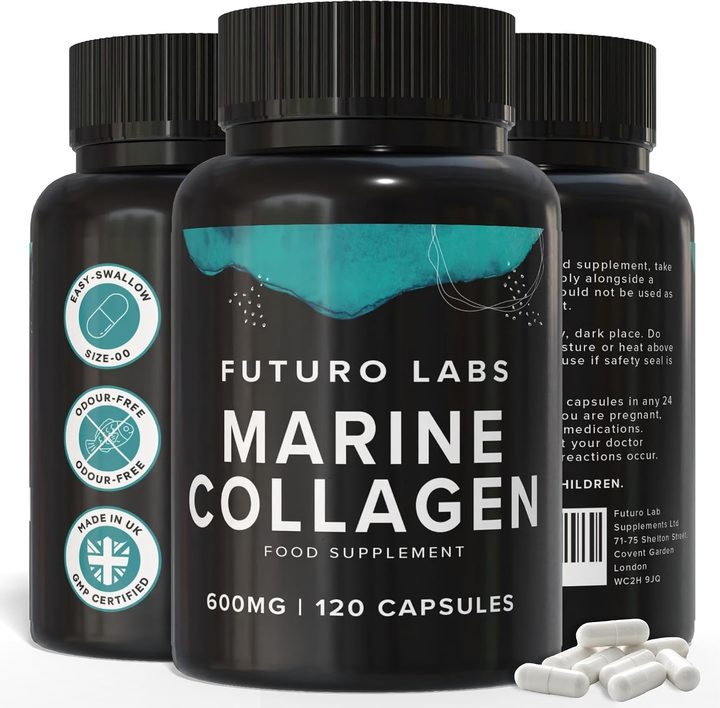
Our brand: the worked example on this page
Futuro Labs Marine Collagen
- 28p a day
- 120 capsules, 2 capsules daily
- Lab tested
- Made in the UK
The research adjunct on its true terms: Futuro Labs Marine Collagen on Amazon UK, 2 capsules, 1200mg hydrolysed type 1 marine collagen with 12mg vitamin C at 15% NRV plus zinc, 120 for £16.99, 28p a day, lab tested and UK made, below the ~15g pre-loading protocol and taken for vitamin C's collagen formation sentence during the months the phases take. Full label breakdown. The subtraction view is on the supplements for ligaments page; the collagen spec on the best collagen for ligament repair page.
Phases one and two: the days of protection and the weeks of loading
How to heal ligaments faster is a question biology answers with a firm no and a useful yes, and the honest page gives both: no, a lifter cannot shorten the phases a ligament heals in, which run on the tissue's clock and not the training log's; yes, a lifter can avoid lengthening them, which most injured lifters do at least once, and the way to avoid it is to know which phase the ligament is in and what that phase wants. Phase one is the inflammatory phase, the first days after a sprain or partial tear: the joint swells, the damaged fibres bleed and clot, and inflammatory cells clear the debris, which is necessary work and not something to suppress wholesale. What the phase wants is protection and relative rest rather than complete rest: the joint is kept from the movements that stress the torn fibres, a brace or tape if the joint is unstable, movement within pain for everything else, ice and elevation for comfort, and no attempt to train through instability, since a ligament re-torn in week one has restarted the clock. What it does not want is the old prescription of total immobilisation, which the healing literature has shown produces a weaker, less organised repair, nor the lifter's prescription of testing it to see, which produces a re-tear. Phase two is the proliferative phase, the following weeks: fibroblasts arrive and lay down new collagen, at first the disorganised type III kind, a scar rather than a ligament, and the volume of new tissue is large while its strength is low. What the phase wants is the healing literature's central finding, controlled, progressive loading, since ligament fibres align to the loads placed on them and a ligament loaded carefully through this phase ends up stronger and better organised than one rested through it, so a physiotherapist-guided programme starts early, with range and gentle loading in the first weeks and progressively more as the tissue tolerates it, the load guided by the joint's response during and after rather than by a date. This is the phase where collagen's research sits: around fifteen grams of gelatin or hydrolysed collagen with roughly 50mg of vitamin C an hour before the rehabilitation session roughly doubled a collagen synthesis marker in a small trial, the pre-loading protocol some physiotherapists use beside the programme, a marker result with no ligament outcome trial and no claim, an adjunct to the loading that does the work.
Phase three, the remodelling months, the floor under all three, and faster defined
Phase three is the remodelling phase, and it is the one lifters underestimate by the widest margin: over months, and for a serious ligament a year or more, the scar matures, type III collagen is replaced by type I, the fibres thicken and align to the loads placed on them, and the tissue slowly approaches, without fully reaching for a long time, the mechanical strength of the original ligament. What the phase wants is progressive loading toward the demands of the sport and a return governed by criteria rather than by the calendar, since the return-to-sport literature shows that lifters and athletes who come back when they pass tests, strength symmetry between the sides, hop and capacity tests, sport-specific movements without giving way, re-injure less than those who come back on a date, the date being the number the tissue does not know. A lifter who returns to full loading at the point the pain stopped, which is usually early in phase three, is loading a scar that looks healed and is not, and the re-injury restarts all three phases. The floor under all three phases is nutrition and habits, and it holds the clock at its maximum speed without accelerating it: protein at 1.6 to 2.2 grams per kilo a day from complete sources, since collagen synthesis and the rest of repair need amino acids the injured, less active lifter still has to eat; adequate energy rather than a cut, since healing on a deficit is slower and the injured lifter tempted to diet while unable to train has picked the worst month for it; sleep; and no smoking, which impairs blood flow, oxygen delivery and healing across bone, tendon, ligament and wound, the one habit with the clearest evidence of lengthening every phase. Collagen sits on this floor as research and the honest page keeps it there: the protocol above for the rehabilitation sessions, bought as gelatin or powder at fifteen grams, and the capsule for the reader who wants the vitamin C line through the months, stated on its true terms, two capsules, 1200mg hydrolysed type 1 marine collagen with 12mg vitamin C plus zinc, 120 for £16.99 at 28p a day, lab tested and UK made, below the protocol's grams and taken for vitamin C's collagen formation sentence, which the register grants and collagen does not hold. How to heal ligaments faster, then, means how not to heal them slower: protect in the days, load in the weeks, test in the months, eat and sleep under all of it, do not smoke, and let the physiotherapist set the pace the tissue can keep.
| The phase | Timescale | What is happening | What the lifter does |
|---|---|---|---|
| One: inflammatory | Days | Swelling, clotting, debris cleared | Protect, relative rest, movement within pain; no training through instability |
| Two: proliferative | Weeks | Fibroblasts lay down disorganised type III collagen | Controlled progressive loading, physiotherapist-guided; the collagen protocol as research |
| Three: remodelling | Months to a year or more | Scar matures toward type I and aligns to load | Return by criteria: symmetry, capacity, sport-specific tests, not a date |
| The floor | All three | Repair needs amino acids, energy, oxygen | 1.6 to 2.2g protein per kilo, no deficit, sleep, no smoking |
| The protocol | Phase two and three sessions | ~15g collagen with ~50mg vitamin C an hour before loading doubled a synthesis marker | Research beside the programme; no claim |
| The worked exampleOurs | The months | Two capsules, 1200mg marine collagen with 12mg vitamin C, 28p a day | Below the protocol; the vitamin C line |
What to check on the label
- Protect in the days: relative rest, not total rest, not a test.
- Load in the weeks: progressive, guided, early.
- Return by tests, not dates: symmetry and capacity.
- Hold the floor: 1.6 to 2.2g protein per kilo, no cut, no smoking.
- Keep collagen as the adjunct: the protocol beside the programme.
Our brand
The worked example: Futuro Labs Marine Collagen
Futuro Labs Marine Collagen: 2 capsules daily, 1200mg hydrolysed type 1 marine collagen with 12mg vitamin C and 1.5mg zinc (15% NRV each), 120 capsules for £16.99, 60 days at 28p a day, lab-tested, UK GMP made. Slim veggie-shell capsules, odour free. Fish derived: pescatarian, not vegetarian or vegan.
- Collagen per serving
- 1200mg hydrolysed type 1 marine (fish)
- Co-factors
- vitamin C 12mg (15% NRV), zinc 1.5mg (15% NRV)
- Serving
- 2 capsules a day
- Bottle
- 120 capsules, 60 days
- Price
- £16.99 (28p a day)
- Capsule
- slim size 00, veggie shell, odour free
Questions people also ask
How long does a ligament take to heal?
Through three phases: an inflammatory phase of days, a proliferative phase of weeks in which disorganised collagen is laid down, and a remodelling phase of months to a year or more in which the scar matures and aligns to load, the healed ligament remaining mechanically weaker than the original for a long time, which is why return is by tests rather than dates.
Should I rest a sprained ligament completely?
Not completely: the healing literature shows total immobilisation produces a weaker, less organised repair than controlled early loading, so the phase-one prescription is protection and relative rest, movement within pain and no training through instability, followed by progressive physiotherapist-guided loading from the early weeks.
Does collagen help ligaments heal faster?
Not faster: around fifteen grams of gelatin or hydrolysed collagen with roughly 50mg of vitamin C an hour before a loading session doubled a collagen synthesis marker in a small trial, the pre-loading protocol used beside a rehabilitation programme, a marker result with no ligament outcome trial and no claim, an adjunct to the loading that does the work.
What should I eat to heal a ligament?
Protein at 1.6 to 2.2 grams per kilo a day from complete sources, adequate energy rather than a cut, since healing on a deficit is slower, and the vitamin C that holds the register's collagen formation sentence, with no smoking, which impairs healing across every tissue, the floor that keeps the clock at its maximum speed without accelerating it.
When can I go back to lifting after a ligament injury?
When you pass the tests rather than when the calendar says: the return-to-sport literature shows criteria-based progression, strength symmetry between the sides, capacity tests and sport-specific movements without giving way, produces less re-injury than a date, and pain stopping is usually early in the remodelling phase, when the scar looks healed and is not.
Sources
- The ligament healing literature: healing proceeds through an inflammatory phase of days, a proliferative phase of weeks in which fibroblasts lay down disorganised type III collagen, and a remodelling phase of months to a year or more in which the scar matures toward type I collagen and aligns to load, with controlled early loading producing stronger repair than immobilisation and the healed ligament remaining mechanically inferior to the original for a long time. PubMed record
- The return-to-sport literature: criteria-based progression, strength symmetry and capacity tests rather than calendar dates, is associated with lower re-injury after ligament injury. PubMed record
- The smoking and tissue healing literature: smoking impairs blood flow, oxygen delivery and healing across bone, tendon, ligament and wound repair, one of the best-documented modifiable brakes on recovery. PubMed record
- The gelatin and vitamin C pre-exercise research (Shaw, Baar and colleagues): 15g gelatin with vitamin C taken about an hour before loading, studied for markers of collagen synthesis, the protocol behind the tendon-training conversation. PubMed record