Ghost Fitness/Collagen/How to heal ligaments faster in the knee?
How to heal ligaments faster in the knee?
The short answer
Which ligament first. The medial collateral heals well without surgery under a brace and loading. The lateral collateral often needs repair when complete. The posterior cruciate heals with bracing in many tears. The anterior cruciate does not reliably heal alone.
- The medial collateralthe knee's best healer: a hinged brace, early protected weight bearing, progressive loading; non-operative in most grades
- The lateral collateral and posterolateral cornerpoorer blood supply; complete tears often repaired surgically; a specialist early
- The posterior cruciateheals with bracing in many isolated tears; a programme protecting the shin from sagging back
- The anterior cruciatedoes not reliably heal to a functional ligament alone; reconstruction or structured rehabilitation decided case by case; a bracing protocol under study
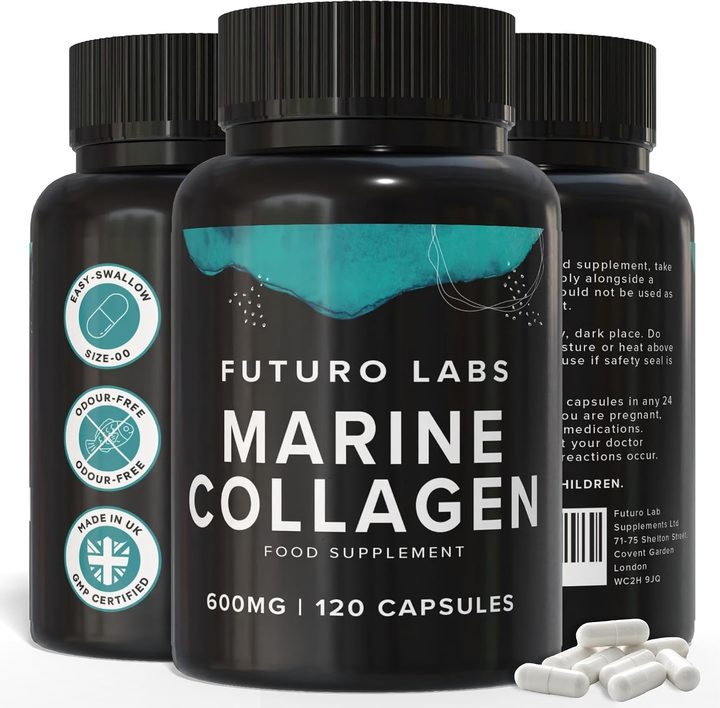
Our brand: the worked example on this page
Futuro Labs Marine Collagen
- 28p a day
- 120 capsules, 2 capsules daily
- Lab tested
- Made in the UK
The adjunct beside whichever ligament's programme: Futuro Labs Marine Collagen on Amazon UK, 2 capsules, 1200mg hydrolysed type 1 marine collagen with 12mg vitamin C at 15% NRV plus zinc, 120 for £16.99, 28p a day, lab tested and UK made, below the ~15g protocol and taken for vitamin C's collagen formation sentence through the months a knee ligament takes. Full label breakdown. The two columns of what can be sped up are on the speed up ligament healing page; the five knee structures on the knee repair page; walking on a torn knee ligament on the walking page.
The four ligaments and the four ways they heal
How to heal ligaments faster in the knee is a question that has to be answered four times, because the knee has four ligaments and they heal in four different ways, so that advice right for one is wrong for another and the first step toward faster is knowing which one is torn. The medial collateral ligament runs down the inner side of the knee and is torn by a blow to the outer knee or a valgus twist, the knee buckling inward, the commonest knee ligament injury in contact sport and the knee's best healer: it has a good blood supply, sits in soft tissue that supports its repair, and heals well without surgery in most grades under a hinged brace that blocks sideways stress, early protected weight bearing, and progressive loading, so a medial collateral tear is the ligament for which the standard non-operative programme works best and fastest, complete tears included in most cases. The lateral collateral ligament and the posterolateral corner run down the outer side and are torn by a blow to the inner knee or a hyperextension twist, less common and more serious: the lateral structures are smaller, have a poorer blood supply and sit in a corner of the knee where several structures work together, so complete tears there often fail to heal with enough stability on their own and are frequently repaired surgically, which makes a suspected complete lateral or posterolateral tear a specialist's decision early rather than a wait-and-see, since late repair does worse. The posterior cruciate ligament, inside the knee, is torn by a blow to the front of the shin, a dashboard injury or a fall onto a bent knee, and heals with bracing in many isolated tears, the brace holding the shin forward so the torn ends are not stretched by its sag, with a programme that strengthens the quadriceps and avoids hamstring-dominant loading early, so an isolated posterior cruciate tear is usually a non-operative ligament with a specific brace. The anterior cruciate ligament, also inside the knee, is torn by a pivot, a cut or a landing, often with a pop and a rapid swelling, and it is the knee's poorest healer: it does not reliably heal to a functional ligament on its own, its torn ends retracting in the joint fluid rather than approximating, so the decision is between surgical reconstruction with a graft and structured rehabilitation without surgery, made with a specialist on the knee's instability, the person's sport and age and their willingness to modify activity, with an emerging bracing protocol that holds the knee bent for weeks to approximate the torn ends and encourage healing under study and promising in early reports but not yet standard care. Four ligaments, four stories, and faster begins with the scan or the examination that says which.
What is accelerable in every knee ligament, what is not, and the adjunct beside the programme
Once the ligament is named, the accelerable parts are the same for all four and the honest page lists them. Assessment in days, not weeks: a knee that cannot bear weight for four steps, is tender over bone, locks, or swelled rapidly within hours is examined and imaged early, since the four-step rule marks a fracture until proved otherwise and rapid swelling marks bleeding into the joint that often means a cruciate or a meniscus. Protected early loading in the brace the ligament needs: the healing literature's finding that controlled loading produces a stronger repair than immobilisation applies to every knee ligament that is being managed without surgery, within the limits the brace and the physiotherapist set. Range of motion kept from the start, since a knee that stiffens after injury is a second problem on top of the first. Quadriceps and hamstring strength, the knee's active stabilisers, rebuilt from the early weeks on the muscle's clock, the quadriceps above all after an anterior cruciate injury, in which they switch off fastest and recover slowest without deliberate work. Proprioception, the joint's position sense, retrained with balance and landing work, since a knee ligament injury damages the nerve endings that tell the brain where the knee is and re-injury follows a knee that does not know. And return by criteria, strength symmetry, hop tests and sport-specific movement without giving way, which the return-to-sport literature finds re-injures less than a calendar return and often arrives sooner. What is not accelerable is the same in the knee as everywhere: the inflammatory days, the proliferative weeks and the remodelling months of the ligament itself, and for the anterior cruciate the additional truth that no programme makes a ligament heal that is not going to, which is why the specialist's decision is the knee's largest timeline question. Nutrition holds the floor, protein at 1.6 to 2.2 grams per kilo, energy, no smoking, and collagen sits beside whichever ligament's programme as the pre-loading protocol, around fifteen grams with roughly 50mg of vitamin C an hour before the session, a marker adjunct with one small ankle instability trial behind it and no knee ligament trial, speeding nothing and discussed with the physiotherapist. The worked example is that adjunct on its true terms: two capsules, 1200mg hydrolysed type 1 marine collagen with 12mg vitamin C plus zinc, 120 for £16.99 at 28p a day, lab tested and UK made, below the protocol's grams, taken for vitamin C's collagen formation sentence through the months. How to heal ligaments faster in the knee: name the ligament, because the medial collateral heals, the lateral often needs a surgeon, the posterior cruciate needs its brace and the anterior cruciate needs a decision, and then do the accelerable things for whichever it is.
| The ligament | How it is torn | How it heals | The faster path |
|---|---|---|---|
| Medial collateral | A blow to the outer knee; a valgus twist | Well, without surgery in most grades; good blood supply | Hinged brace, early protected weight bearing, progressive loading |
| Lateral collateral and posterolateral corner | A blow to the inner knee; hyperextension | Poorly when complete; often repaired surgically | A specialist early; late repair does worse |
| Posterior cruciate | A blow to the front of the shin; a fall on a bent knee | With bracing in many isolated tears | A brace holding the shin forward; quadriceps first, hamstrings later |
| Anterior cruciate | A pivot, a cut, a landing; a pop and rapid swelling | Does not reliably heal to a functional ligament alone | A specialist's decision: reconstruction or structured rehabilitation; a bracing protocol under study |
| Accelerable in all four | Any | Assessment in days; protected early loading; range; quadriceps and hamstring strength; proprioception; return by criteria | The physiotherapist's programme |
| Not accelerable in any | Any | The inflammatory days, proliferative weeks, remodelling months | Patience |
| The collagen protocol | Beside the sessions | ~15g with vitamin C an hour before loading; a marker and one small ankle trial; no knee ligament trial | An adjunct, speeding nothing |
| The worked exampleOurs | On its true terms | Two capsules, 1200mg marine collagen with 12mg vitamin C, 28p a day | The vitamin C line through the months |
What to check on the label
- Name the ligament first: four ligaments, four stories.
- Medial collateral: brace and load: the knee's best healer.
- Lateral or posterolateral: a specialist early: complete tears often need repair.
- Anterior cruciate: a decision, not a wait: reconstruction or structured rehab.
- Do the accelerable things for all four: range, quadriceps, balance, criteria.
Our brand
The worked example: Futuro Labs Marine Collagen
Futuro Labs Marine Collagen: 2 capsules daily, 1200mg hydrolysed type 1 marine collagen with 12mg vitamin C and 1.5mg zinc (15% NRV each), 120 capsules for £16.99, 60 days at 28p a day, lab-tested, UK GMP made. Slim veggie-shell capsules, odour free. Fish derived: pescatarian, not vegetarian or vegan.
- Collagen per serving
- 1200mg hydrolysed type 1 marine (fish)
- Co-factors
- vitamin C 12mg (15% NRV), zinc 1.5mg (15% NRV)
- Serving
- 2 capsules a day
- Bottle
- 120 capsules, 60 days
- Price
- £16.99 (28p a day)
- Capsule
- slim size 00, veggie shell, odour free
Questions people also ask
Which knee ligament heals fastest?
The medial collateral, on the inner side: it has a good blood supply, sits in supportive soft tissue and heals well without surgery in most grades under a hinged brace, early protected weight bearing and progressive loading, the knee ligament for which the standard non-operative programme works best.
Can a torn ACL heal on its own?
Not reliably: the anterior cruciate's torn ends retract in the joint fluid rather than approximating, so it does not usually heal to a functional ligament alone, and the decision between surgical reconstruction and structured rehabilitation is made with a specialist on the knee's instability, the sport and the person, with a bracing protocol that holds the knee bent to approximate the ends under study and not yet standard.
How do I heal an MCL tear faster?
By doing the accelerable things promptly: an assessment in days, a hinged brace that blocks sideways stress, early protected weight bearing and progressive loading within pain, range of motion kept from the start, quadriceps and hamstring strength and balance rebuilt from the early weeks, and a return by strength and capacity criteria, while the ligament's own phases run their course.
Do collagen supplements help knee ligaments heal?
No knee ligament trial exists: the pre-loading protocol, around fifteen grams with roughly 50mg of vitamin C an hour before a loading session, doubled a collagen synthesis marker in a small trial and one small six-month trial improved chronic ankle instability, so it is a marker adjunct beside the physiotherapist's sessions for whichever knee ligament is healing, speeding nothing.
When should a knee ligament injury see a specialist urgently?
When the knee cannot bear weight for four steps or is tender over bone, which marks a fracture until an X-ray proves otherwise; when it swelled rapidly within hours, which marks bleeding into the joint and often a cruciate or meniscus; when it locks; and when a complete lateral or posterolateral tear is suspected, since those often need early repair and do worse repaired late.
Sources
- The knee ligament healing literature: the medial collateral ligament heals well without surgery in most grades under bracing and progressive loading, the lateral collateral and posterolateral corner often require repair when completely torn, the posterior cruciate heals with bracing in many isolated tears, and the anterior cruciate does not reliably heal to a functional ligament on its own, with reconstruction or structured rehabilitation decided case by case and an emerging bracing protocol under study. PubMed record
- The ligament healing literature: healing proceeds through an inflammatory phase of days, a proliferative phase of weeks in which fibroblasts lay down disorganised type III collagen, and a remodelling phase of months to a year or more in which the scar matures toward type I collagen and aligns to load, with controlled early loading producing stronger repair than immobilisation and the healed ligament remaining mechanically inferior to the original for a long time. PubMed record
- The return-to-sport literature: criteria-based progression, strength symmetry and capacity tests rather than calendar dates, is associated with lower re-injury after ligament injury. PubMed record
- The gelatin and vitamin C pre-exercise research (Shaw, Baar and colleagues): 15g gelatin with vitamin C taken about an hour before loading, studied for markers of collagen synthesis, the protocol behind the tendon-training conversation. PubMed record