Ghost Fitness/Collagen/Is walking good for torn ligaments?
Is walking good for torn ligaments?
The short answer
Grade one or two ankle sprain: yes, early and protected. Cannot bear weight for four steps or tender over bone: X-ray first. Complete cruciate tear: as the clinician allows; giving way stops it. Always within pain, never through instability.
- Grade one or two ankle sprainyes, early: protected weight bearing within pain beats immobilisation on return and stability
- The four-step rulecannot bear weight for four steps, or tender at the Ottawa bony points: X-ray before walking
- Complete cruciate or grade three tearas the clinician allows, brace and perhaps crutches early; giving way is the stop sign
- Every gradewithin pain, never through instability; progress distance and surface under a physiotherapist
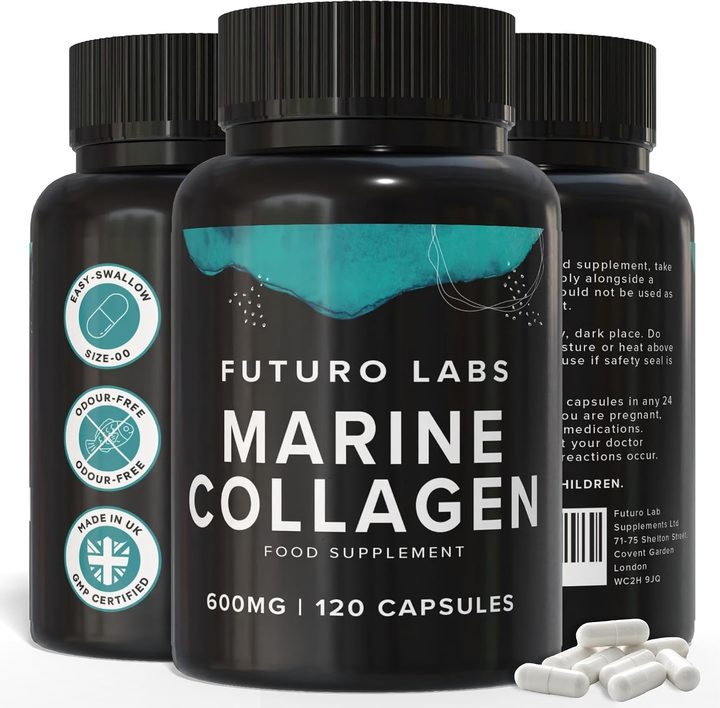
Our brand: the worked example on this page
Futuro Labs Marine Collagen
- 28p a day
- 120 capsules, 2 capsules daily
- Lab tested
- Made in the UK
The adjunct for the loading sessions, not the walk: Futuro Labs Marine Collagen on Amazon UK, 2 capsules, 1200mg hydrolysed type 1 marine collagen with 12mg vitamin C at 15% NRV plus zinc, 120 for £16.99, 28p a day, lab tested and UK made, below the ~15g protocol and taken for vitamin C's collagen formation sentence through the months a ligament takes. Full label breakdown. The healing phases are on the heal ligaments faster page; the word naturally audited on the naturally page; what a torn ligament wants from a supplement on the supplements for ligaments page.
The permission table: the ankle sprain that should walk, and the joint that should be imaged first
Is walking good for torn ligaments is a question that needs a table rather than a verdict, because the answer depends on which ligament, how badly torn and which day, and a reader who takes a yes meant for a sprained ankle onto a knee that cannot bear weight has been given the wrong permission, so the honest page writes the table. Row one is the commonest torn ligament there is, the grade one or two lateral ankle sprain, the ankle rolled under on a kerb or a landing, the outer ligaments stretched or partially torn, swollen and sore but able to take weight. For this row the answer is yes, and early: the ankle sprain literature compared functional treatment, protected weight bearing within pain from the first days with a brace or tape and a progressive exercise programme, against immobilisation in a cast, and found functional treatment returned people to work and sport faster with no worse ankle stability afterwards, so walking is not something a sprained ankle is allowed to do despite the injury, it is part of the treatment, the load telling the healing fibres which way to lie, the muscles around the joint staying awake and the swelling pumped away by the calf. The walk is within pain, on flat ground first, in supportive shoes with the brace or tape on, for short distances that lengthen as the days pass, and it is not a run, a hill or a turn until the physiotherapist says so. Row two overrides every other row and comes before it: any joint that cannot bear weight for four steps, both immediately after the injury and when it is assessed, or that is tender at the bony points the Ottawa ankle and knee rules define, the back edges and tips of the ankle bones, the base of the fifth metatarsal, the navicular, the head of the fibula, the kneecap, is imaged before it is walked on, because those signs mark a fracture until an X-ray proves otherwise and the Ottawa rules exist precisely so that fractures are not walked on under the belief that they are sprains. A reader who cannot take four steps does not have a walking question yet; they have an X-ray question, and the walking table resumes after it.
The complete tear, the rule for every grade, what walking is not, and where collagen sits
Row three is the complete tear, the grade three sprain in which a ligament has parted entirely, the anterior cruciate in a pivoting knee above all, and the grade three collateral tears of the knee and the high ankle sprain that involves the ligaments between the shin bones. For this row walking is as the clinician allows and not as the reader decides, usually with a brace and sometimes crutches in the first days, weight bearing progressing as the swelling settles and the muscles switch back on, and the stop sign is a knee that gives way, buckles or feels as if it will, because each giving-way episode in a cruciate-deficient knee risks the meniscus and the cartilage that the ligament was protecting, and those do not heal the way the ligament might; a reader with a complete cruciate tear walks under a physiotherapist's programme while the surgical conversation, reconstruction or structured rehabilitation, is had with a specialist on their knee and their sport, and does not walk through instability to prove a point. The rule for every row: walk within pain and never through instability. Pain within tolerance during and after is the ligament being loaded at a level it can use, the loading that the healing literature shows produces a stronger and better-aligned repair than rest, while sharp pain, a joint that shifts, catches or gives way, and swelling that returns after a walk are the tissue saying the load was too much, and the distance, the surface and the pace are progressed under a physiotherapist rather than by feel. What walking is not: it is not the whole rehabilitation, which adds strength work for the muscles around the joint, balance and proprioception training that a torn ligament has cost, and sport-specific movement before a criteria-based return; and it is not sped by anything swallowed, since walking loads the ligament and nothing in a tub loads anything. Where collagen sits, for completeness: around fifteen grams with roughly 50mg of vitamin C an hour before a loading session doubled a collagen synthesis marker in a small trial, so some physiotherapists use the pre-loading protocol beside the rehabilitation sessions, and the walk is a loading session of a kind, though the protocol is timed to the programme's exercises rather than to every walk to the shop, a marker adjunct with no ligament outcome trial and no claim. The worked example is that adjunct on its true terms: two capsules, 1200mg hydrolysed type 1 marine collagen with 12mg vitamin C plus zinc, 120 for £16.99 at 28p a day, lab tested and UK made, below the protocol's grams, taken for vitamin C's collagen formation sentence through the months a ligament takes, and moving no one off the table above. Is walking good for torn ligaments: for the sprained ankle, yes and early; for the joint that fails four steps, after the X-ray; for the complete tear, as allowed and never through giving way; and for all of them, within pain and under a programme.
| The row | The injury | Walk | The condition |
|---|---|---|---|
| One | Grade one or two ankle sprain | Yes, early and protected | Within pain, brace or tape, flat ground, distance progressed; part of the treatment |
| Two, overrides all | Cannot bear weight for four steps, or tender at the Ottawa bony points | Not yet | X-ray first; a fracture until proved otherwise |
| Three | Complete cruciate or grade three tear | As the clinician allows | Brace, perhaps crutches early; a giving-way knee is the stop sign |
| Every row | Any torn ligament | Within pain, never through instability | Sharp pain, shifting, catching, returning swelling mean too much |
| What walking is not | The whole rehabilitation | Strength, balance, sport-specific work added | Return by tests |
| The collagen protocol | The loading sessions | ~15g with vitamin C an hour before the programme's exercises | A marker adjunct; not timed to every walk |
| The worked exampleOurs | Two capsules, 1200mg marine collagen with 12mg vitamin C, 28p a day | Below the protocol | The vitamin C line; moves no one off this table |
What to check on the label
- Four steps first: cannot manage them, or tender on bone, get an X-ray.
- Sprained ankle: walk early and protected: brace or tape, within pain.
- Complete tear: walk as allowed: giving way is the stop.
- Progress under a physiotherapist: distance, surface, pace.
- Add the rest of the rehab: strength, balance, sport-specific work.
Our brand
The worked example: Futuro Labs Marine Collagen
Futuro Labs Marine Collagen: 2 capsules daily, 1200mg hydrolysed type 1 marine collagen with 12mg vitamin C and 1.5mg zinc (15% NRV each), 120 capsules for £16.99, 60 days at 28p a day, lab-tested, UK GMP made. Slim veggie-shell capsules, odour free. Fish derived: pescatarian, not vegetarian or vegan.
- Collagen per serving
- 1200mg hydrolysed type 1 marine (fish)
- Co-factors
- vitamin C 12mg (15% NRV), zinc 1.5mg (15% NRV)
- Serving
- 2 capsules a day
- Bottle
- 120 capsules, 60 days
- Price
- £16.99 (28p a day)
- Capsule
- slim size 00, veggie shell, odour free
Questions people also ask
Should I walk on a sprained ankle?
For a grade one or two sprain, yes and early: functional treatment with protected weight bearing within pain, a brace or tape and progressive exercise returns people to work and sport faster than a cast with no worse stability, so short flat walks from the first days are part of the treatment, provided the ankle can bear weight for four steps and is not tender over the bony points that call for an X-ray.
How do I know if a ligament injury needs an X-ray before I walk on it?
The Ottawa rules: inability to bear weight for four steps both immediately after the injury and at assessment, or tenderness at the defined bony points, the back edges and tips of the ankle bones, the base of the fifth metatarsal, the navicular, the fibular head or the kneecap, mean a fracture until an X-ray proves otherwise, and the walking question waits for it.
Can I walk with a torn ACL?
As the clinician allows and never through instability: weight bearing progresses with a brace and sometimes crutches early, under a physiotherapist's programme, while the decision between reconstruction and structured rehabilitation is made with a specialist, and a knee that gives way is the stop sign because each episode risks the meniscus and cartilage.
Does walking help ligaments heal faster?
It helps them heal better rather than faster: controlled loading within pain gives the healing fibres a tension to align to and produces a stronger, better-organised repair than rest, keeps the muscles around the joint working and moves swelling on, without shortening the inflammatory, proliferative and remodelling phases, which run on the tissue's clock.
Is walking enough to rehabilitate a torn ligament?
No: walking is the early loading, and the rehabilitation adds strength work for the muscles around the joint, balance and proprioception training that a torn ligament costs, sport-specific movement, and a return by strength and capacity tests rather than by pain or dates, all set and progressed by a physiotherapist.
Sources
- The ankle sprain management literature: for grade I and II lateral ankle sprains, functional treatment with early protected weight bearing, a brace or tape and progressive exercise produces faster return to work and sport and no worse stability than immobilisation in a cast, so early walking within pain is the recommended management, while grade III sprains and suspected fractures are assessed first. PubMed record
- The Ottawa ankle and knee rules: validated clinical decision rules for when an X-ray is needed after an ankle, foot or knee injury, based on bony tenderness at defined points and inability to bear weight for four steps both immediately and at assessment, highly sensitive for fracture and the reason an injured joint that cannot take four steps is imaged before it is walked on. PubMed record
- The ligament healing literature: healing proceeds through an inflammatory phase of days, a proliferative phase of weeks in which fibroblasts lay down disorganised type III collagen, and a remodelling phase of months to a year or more in which the scar matures toward type I collagen and aligns to load, with controlled early loading producing stronger repair than immobilisation and the healed ligament remaining mechanically inferior to the original for a long time. PubMed record
- The return-to-sport literature: criteria-based progression, strength symmetry and capacity tests rather than calendar dates, is associated with lower re-injury after ligament injury. PubMed record