Ghost Fitness/Collagen/Is collagen good for torn ligaments?
Is collagen good for torn ligaments?
The short answer
One ligament trial: 5g a day for six months in athletes with chronic ankle instability improved stability and cut sprains against placebo, small, manufacturer-funded. Beside it, the pre-loading protocol as marker adjunct. Loading repairs; a cruciate tear is a specialist's.
- The one ligament trial~50 athletes, chronic ankle instability, 5g specific peptides for six months: better stability scores, fewer sprains; manufacturer-funded
- The inflammatory daysno role for collagen: protect, nothing loaded
- The proliferative weeks and remodelling months~15g with ~50mg vitamin C an hour before the session: a synthesis marker doubled; stiffer engineered ligaments
- The repaircontrolled progressive loading under a physiotherapist; a complete cruciate tear is a specialist's decision
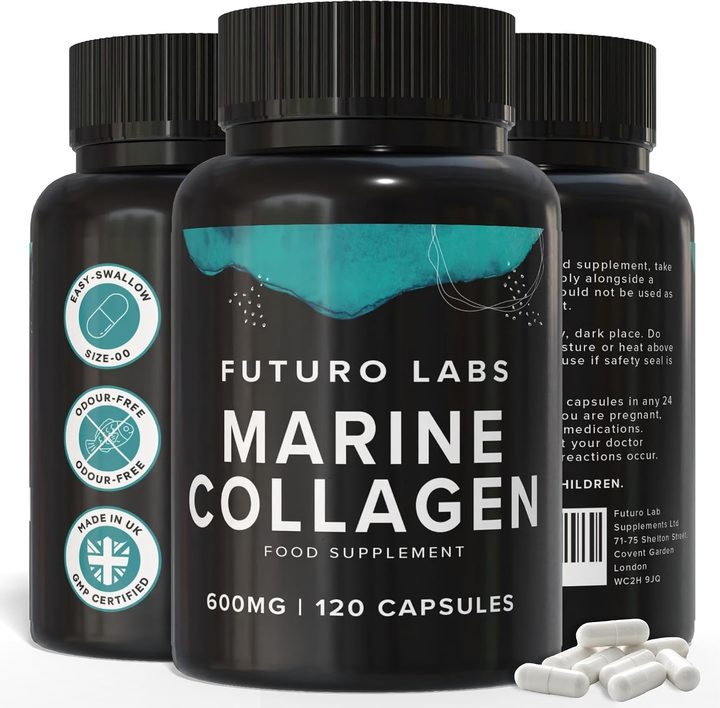
Our brand: the worked example on this page
Futuro Labs Marine Collagen
- 28p a day
- 120 capsules, 2 capsules daily
- Lab tested
- Made in the UK
The adjunct at a dose near the ankle trial's: Futuro Labs Marine Collagen on Amazon UK, 2 capsules, 1200mg hydrolysed type 1 marine collagen with 12mg vitamin C at 15% NRV plus zinc, 120 for £16.99, 28p a day, lab tested and UK made, below the trial's 5g and the protocol's 15g, taken for vitamin C's collagen formation sentence through the months a ligament takes. Full label breakdown. Whether collagen repairs ligaments is on the collagen repair ligaments page; the phases on the heal ligaments faster page; walking on a torn ligament on the walking page.
The one ligament trial, described exactly, and what it does and does not show
Is collagen good for torn ligaments is a question most collagen pages answer from the tendon marker trial and the amino acid table, and the honest page starts somewhere better, with the one collagen trial that was actually run in a ligament-related condition, because it exists, it is small, and it should be described exactly rather than either ignored or inflated. Around fifty athletes with chronic ankle instability, the condition in which repeated lateral ankle sprains have left the outer ligaments lax and the ankle prone to giving way and re-spraining, were randomised to five grams a day of specific collagen peptides or a placebo for six months, and the collagen group reported better scores on subjective ankle stability questionnaires at the end of the six months and fewer ankle sprains in the months that followed than the placebo group. That is a clinical outcome in a ligament condition, and it is worth three qualifications in the same breath. It was small, around fifty people, so its result is a signal to be repeated rather than a settled finding. It was funded by the manufacturer of the peptide tested, which does not make it wrong and does make it one result to weigh. And it was a trial in chronic laxity, ligaments that had healed loose after old sprains, and not in an acute tear, so it speaks to the reader whose ankle keeps going over and not directly to the reader whose ligament tore last week, whose healing runs through phases the trial did not study. It also gave collagen daily rather than timed to loading, at five grams rather than the protocol's fifteen, so the two collagen approaches to ligaments, the daily dose in this trial and the timed pre-loading protocol from the marker study, have not been compared and a reader may run either with the same honest uncertainty. What the trial shows, then, is that collagen may do something for a chronically unstable ligament over months, in one small manufacturer-funded study, and what it does not show is that collagen repairs a torn ligament, heals it faster or replaces the rehabilitation that the trial's athletes were presumably also doing, since the trial did not control their training.
The phases of a torn ligament and where collagen sits in each, and the shared answer for tendons
Set the trial against the phases a freshly torn ligament heals through and collagen's place in each becomes clear. The inflammatory phase, the first days: the torn fibres bleed, clot and are cleared, the joint is protected in a brace or with tape and relative rest, and collagen has no role, because there is nothing being built yet and no loading session to time a dose to, so a reader who starts collagen on the day of a sprain has started the habit early and nothing else. The proliferative phase, the following weeks: fibroblasts lay down disorganised type III collagen, controlled loading begins under a physiotherapist and the ligament healing literature's central finding applies, that loaded fibres align and rested fibres do not, and here collagen has its adjunct role, the pre-loading protocol, around fifteen grams of gelatin or hydrolysed collagen with roughly 50mg of vitamin C an hour before the rehabilitation session, which roughly doubled a blood marker of collagen synthesis in a small crossover trial that then grew engineered ligaments in the participants' serum and found them stiffer and richer in collagen, the one trial whose own tissue model was a ligament. The remodelling phase, months to a year: type I replaces type III, fibres align to load, the return is by tests rather than dates, and the same adjunct sits beside the same sessions. Across all three the repair is the loading, set and progressed by a physiotherapist, and the complete tear of a cruciate ligament in a pivoting athlete is a specialist's decision between reconstruction and structured rehabilitation that no supplement page has standing in. So the honest sentence is that collagen is good for torn ligaments in two narrow senses, one small trial in chronic ankle instability at five grams daily and one marker adjunct at fifteen grams timed to loading, and in no sense that replaces the assessment, the brace, the physiotherapist or, where it applies, the surgeon. The secondary search, collagen for tendons and ligaments, has the same answer because the tissues share a protein: both are type 1 collagen adapting to load over months, the marker trial's engineered ligaments and the protocol's tendon use are the same evidence read from two ends, and the one tendon outcome trial, 2.5 grams beside calf strengthening in Achilles tendinopathy, is the same size and shape as the one ligament outcome trial. The worked example is the adjunct at a dose near the ankle trial's: two capsules, 1200mg hydrolysed type 1 marine collagen with 12mg vitamin C plus zinc, 120 for £16.99 at 28p a day, lab tested and UK made, below the trial's five grams and the protocol's fifteen, taken for vitamin C's collagen formation sentence through the months a ligament takes, while a reader running either collagen approach buys the grams as powder. Is collagen good for torn ligaments: one small trial says it may help a chronically loose one, one marker study puts it beside the loading sessions, and the loading heals the tear.
| The item | What it is | What it shows | The note |
|---|---|---|---|
| The ankle instability trial | ~50 athletes, chronic ankle instability, 5g specific peptides daily for six months | Better stability scores; fewer sprains after; against placebo | Small, manufacturer-funded; chronic laxity, not an acute tear |
| The marker trial | ~15g gelatin with ~50mg vitamin C an hour before loading | A collagen synthesis marker doubled; engineered ligaments stiffer | The pre-loading protocol; no outcome trial |
| Inflammatory days | Bleeding, clotting, clearing; protected | No role for collagen | Nothing is being built; nothing to time a dose to |
| Proliferative weeks | Disorganised type III collagen laid down; controlled loading begins | The protocol beside the sessions | Loaded fibres align; rested fibres do not |
| Remodelling months | Type I replaces type III; fibres align; return by tests | The same adjunct beside the same sessions | A year or more for a serious ligament |
| Complete cruciate tear | A specialist's decision: reconstruction or structured rehabilitation | No supplement standing | Made on the knee and the sport |
| Tendons and ligaments | One protein, two attachments | The same evidence read from two ends | The one tendon outcome trial is the same size and shape |
| The worked exampleOurs | Two capsules, 1200mg marine collagen with 12mg vitamin C, 28p a day | Below the trial's 5g and the protocol's 15g | The vitamin C line through the months |
What to check on the label
- Know the one trial's terms: chronic ankle instability, 5g daily, six months, fifty people.
- Do nothing with collagen in the first days: protect the joint.
- Time the protocol to the sessions: ~15g with vitamin C an hour before.
- Let loading do the repair: under a physiotherapist, return by tests.
- Take a complete cruciate tear to a specialist: not to a tub.
Our brand
The worked example: Futuro Labs Marine Collagen
Futuro Labs Marine Collagen: 2 capsules daily, 1200mg hydrolysed type 1 marine collagen with 12mg vitamin C and 1.5mg zinc (15% NRV each), 120 capsules for £16.99, 60 days at 28p a day, lab-tested, UK GMP made. Slim veggie-shell capsules, odour free. Fish derived: pescatarian, not vegetarian or vegan.
- Collagen per serving
- 1200mg hydrolysed type 1 marine (fish)
- Co-factors
- vitamin C 12mg (15% NRV), zinc 1.5mg (15% NRV)
- Serving
- 2 capsules a day
- Bottle
- 120 capsules, 60 days
- Price
- £16.99 (28p a day)
- Capsule
- slim size 00, veggie shell, odour free
Questions people also ask
Is there any study of collagen for ligaments?
One with a clinical outcome: around fifty athletes with chronic ankle instability took five grams a day of specific collagen peptides or placebo for six months and the collagen group reported better stability scores and fewer sprains afterwards, a small, manufacturer-funded trial in chronic laxity rather than acute tears, plus the marker trial whose engineered ligaments came out stiffer after gelatin with vitamin C.
Should I take collagen after tearing a ligament?
Not in the first days, when the ligament is protected and nothing is loaded; from the proliferative weeks onward some physiotherapists use the pre-loading protocol, around fifteen grams with roughly 50mg of vitamin C an hour before the rehabilitation session, as a marker adjunct beside the loading that does the repair, while a complete cruciate tear is a specialist's decision first.
Does collagen help ligaments heal faster?
No trial shows faster healing: the phases run on the tissue's clock, the marker trial shows a synthesis signal an hour after a timed dose, and the ankle instability trial shows better stability scores over six months in chronically loose ligaments, so collagen is an adjunct beside controlled loading rather than an accelerator of the phases.
How much collagen for a torn ligament?
Two approaches, not compared: five grams a day of specific peptides for six months, the ankle instability trial's dose, or around fifteen grams of gelatin or hydrolysed collagen with roughly 50mg of vitamin C an hour before each rehabilitation session, the marker trial's protocol, either run beside the physiotherapist's programme with the same honest uncertainty.
Is collagen good for tendons and ligaments both?
The same answer for both, since they share a protein: type 1 collagen adapting to load over months, the marker trial's engineered ligaments and the protocol's tendon use being the same evidence read from two ends, and the one tendon outcome trial in Achilles tendinopathy the same size and shape as the one ligament outcome trial in ankle instability.
Sources
- The chronic ankle instability collagen trial: a six-month randomised placebo-controlled trial giving five grams a day of specific collagen peptides to athletes with chronic ankle instability reported improved subjective ankle stability scores and fewer ankle sprains in the following months than placebo, around fifty participants, manufacturer-funded, the one collagen trial in a ligament-related condition with a clinical outcome. PubMed record
- The gelatin and vitamin C pre-exercise research (Shaw, Baar and colleagues): 15g gelatin with vitamin C taken about an hour before loading, studied for markers of collagen synthesis, the protocol behind the tendon-training conversation. PubMed record
- The ligament healing literature: healing proceeds through an inflammatory phase of days, a proliferative phase of weeks in which fibroblasts lay down disorganised type III collagen, and a remodelling phase of months to a year or more in which the scar matures toward type I collagen and aligns to load, with controlled early loading producing stronger repair than immobilisation and the healed ligament remaining mechanically inferior to the original for a long time. PubMed record
- The Achilles tendinopathy collagen trial: a small randomised placebo-controlled trial giving 2.5 grams a day of specific collagen peptides alongside a calf-strengthening programme for six months reported greater improvement in a tendon function and pain score and earlier return to running than the exercise programme with placebo, around twenty participants, manufacturer-funded, the one collagen tendon trial with a clinical outcome, in tendinopathy alongside loading and not in rupture repair. PubMed record