Ghost Fitness/Collagen/Can collagen repair ligaments?
Can collagen repair ligaments?
The short answer
Two mechanisms tested. Substrate, that a ligament lacks glycine and proline: fails, the fed body has plenty. Signal, that surviving peptides tell fibroblasts to build: marker data, one small trial. Collagen does not repair; it may signal cells that do.
- Mechanism one, substrateglycine, proline and lysine from collagen powder: the fed body's pool is large; no healing ligament shown substrate-limited
- Mechanism two, signalprolyl-hydroxyproline surviving digestion acts on fibroblasts in cell work; a synthesis marker doubled in humans
- The human datathe marker trial's stiffer engineered ligaments; one small six-month ankle instability trial at 5g
- The repairfibroblasts under load through three phases; collagen an adjunct beside the sessions
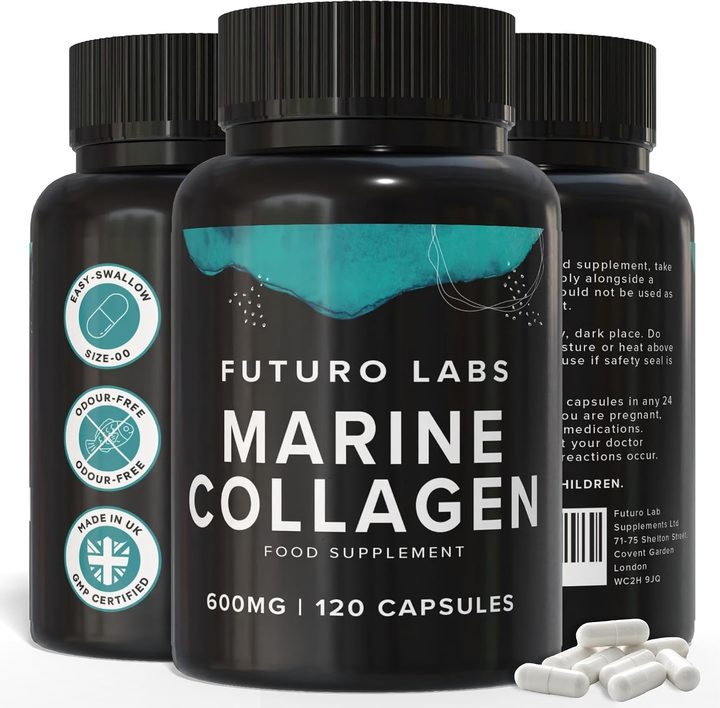
Our brand: the worked example on this page
Futuro Labs Marine Collagen
- 28p a day
- 120 capsules, 2 capsules daily
- Lab tested
- Made in the UK
The signal-sized dose on its true terms: Futuro Labs Marine Collagen on Amazon UK, 2 capsules, 1200mg hydrolysed type 1 marine collagen with 12mg vitamin C at 15% NRV plus zinc, 120 for £16.99, 28p a day, lab tested and UK made, below the protocol's 15g and the ankle trial's 5g, taken for vitamin C's collagen formation sentence beside the rehabilitation. Full label breakdown. The one ligament trial is on the collagen for torn ligaments page; the spec on the best collagen for ligament repair page; the phases on the heal ligaments faster page.
Mechanism one, substrate, and why it fails on inspection
Can collagen repair ligaments is a question the shelf answers with a picture of a ligament and the word building blocks, and the honest page answers by testing the only two mechanisms a swallowed collagen could work by, because if neither holds the answer is no and if one holds the answer is a specific and narrow yes. Mechanism one is substrate. The argument runs: a healing ligament is laying down new collagen, collagen is built from glycine at every third position with proline, hydroxyproline and lysine among the rest, collagen powder is rich in exactly those amino acids, so eating collagen supplies the raw material and more raw material builds more ligament. It sounds right and it fails on inspection at three points. First, the body's free amino acid pool is large and constantly replenished from every meal, so a fibroblast reaching for glycine or proline finds it whether or not the reader ate collagen that morning, and a complete protein diet at the 1.6 to 2.2 grams per kilo a lifter eats supplies glycine, proline and lysine in quantities that dwarf a ten-gram scoop. Second, glycine and proline are not essential amino acids: the body synthesises both from other amino acids, so a shortfall in the diet is met from within, and lysine, which is essential, is abundant in the complete proteins a lifter eats. Third, and decisively, no healing ligament in a fed adult has ever been shown to be substrate-limited, meaning that collagen synthesis in the tissue does not rise in proportion to the grams of collagen eaten, which is exactly what the flat dose-response across the collagen trials shows, 2.5 grams and 10 grams producing similar instrument changes in skin, and what the biology predicts, since fibroblasts make collagen at a rate set by their own signalling and the load they feel, not by how much substrate is queued outside. So the building blocks argument, which is the one on the tub, does not hold: a healing ligament in a lifter eating properly is not short of blocks, and eating more of them does not make the fibroblasts lay them faster. If collagen does anything for a ligament, it is not by being the material.
Mechanism two, signal, the evidence behind it, and the narrow yes it permits
Mechanism two is signal, and it is the honest reason the pre-loading protocol exists. When hydrolysed collagen is digested, most of it becomes free amino acids and joins the pool, but a fraction survives as small di- and tripeptides, prolyl-hydroxyproline and hydroxyprolyl-glycine above all, which the gut absorbs intact and which circulate in the blood for several hours after a dose, the collagen peptide absorption literature's consistent finding. Those peptides are peculiar to collagen, since hydroxyproline is found almost nowhere else, and in cell culture and animal work they act on fibroblasts and chondrocytes not as material but as a message, increasing the cells' production of collagen and other matrix components, the proposed mechanism by which hydrolysed collagen might do more than an equal weight of its free amino acids ever could. The human data sit on that mechanism and are two. The marker trial: around fifteen grams of gelatin with roughly 50mg of vitamin C an hour before six minutes of skipping roughly doubled a blood marker of collagen synthesis against placebo, and engineered ligaments grown in the participants' post-dose serum came out stiffer and richer in collagen than those grown in placebo serum, which is a signal effect on ligament-forming cells demonstrated in human serum, and not a repaired ligament in a human leg. And the one ligament outcome trial: around fifty athletes with chronic ankle instability given five grams a day of specific peptides for six months reported better stability scores and fewer sprains than placebo, small and manufacturer-funded, in chronic laxity rather than acute tears. So the signal mechanism has cell, animal and human marker evidence and one small clinical result, and it permits a narrow yes: collagen may signal the fibroblasts that repair a ligament to build a little more or a little better, when taken an hour before the loading that tells those fibroblasts where to build, as an adjunct beside the rehabilitation programme, as research, with no claim. It does not permit the wide yes on the tub, because repair is the fibroblasts' work under load through the inflammatory, proliferative and remodelling phases over months to a year, the loading aligns the fibres, the physiotherapist sets the loading and, for a complete cruciate tear, the specialist decides between reconstruction and rehabilitation, and collagen does none of those things. Collagen for ligament repair, the secondary search, is therefore a timed adjunct: the protocol's grams as powder an hour before the session, or the ankle trial's five grams daily, either with the same honest uncertainty, and never the repair. The worked example is the signal-sized dose on its true terms: two capsules, 1200mg hydrolysed type 1 marine collagen with 12mg vitamin C plus zinc, 120 for £16.99 at 28p a day, lab tested and UK made, below the protocol's fifteen grams and the ankle trial's five, taken for vitamin C's collagen formation sentence beside the rehabilitation, the vitamin C being the hydroxylase cofactor and the collagen a small daily signal rather than a supply of blocks. Can collagen repair ligaments: not as material, since the fed body has the blocks; possibly as a message to the cells that do the repairing, as research; and never instead of the loading that tells them where.
| The mechanism | The claim | The test | The verdict |
|---|---|---|---|
| Substrate | A healing ligament is short of glycine, proline and lysine; collagen supplies them | The fed body's pool is large; glycine and proline are made in the body; complete protein supplies lysine; no ligament shown substrate-limited; flat dose-response | Fails |
| Signal | Surviving peptides tell fibroblasts to make more matrix | Prolyl-hydroxyproline circulates for hours; acts on fibroblasts in cell and animal work | Plausible, with human marker data |
| The marker trial | ~15g gelatin with ~50mg vitamin C an hour before loading | A synthesis marker doubled; engineered ligaments grown in post-dose serum stiffer | A signal effect on ligament-forming cells; not a repaired ligament |
| The ankle instability trial | 5g specific peptides daily for six months | Better stability scores, fewer sprains; ~50 athletes; manufacturer-funded | One small clinical result in chronic laxity |
| The repair | Fibroblasts under load through three phases over months to a year | Loading aligns the fibres; a physiotherapist sets it; a specialist decides complete cruciate tears | Collagen does none of this |
| The narrow yes | Collagen may signal the cells that repair | An hour before the session, as research, no claim | An adjunct, never the repair |
| The worked exampleOurs | Two capsules, 1200mg marine collagen with 12mg vitamin C plus zinc, 28p a day | Below the protocol and the ankle trial dose | A small daily signal with the cofactor; the vitamin C line |
What to check on the label
- Drop the building blocks argument: the fed body has them.
- Keep the signal argument at its size: marker data and one small trial.
- Time the signal to the load: an hour before the session.
- Let the fibroblasts and the physio repair: over months, by tests.
- Take a complete cruciate tear to a specialist: no mechanism applies.
Our brand
The worked example: Futuro Labs Marine Collagen
Futuro Labs Marine Collagen: 2 capsules daily, 1200mg hydrolysed type 1 marine collagen with 12mg vitamin C and 1.5mg zinc (15% NRV each), 120 capsules for £16.99, 60 days at 28p a day, lab-tested, UK GMP made. Slim veggie-shell capsules, odour free. Fish derived: pescatarian, not vegetarian or vegan.
- Collagen per serving
- 1200mg hydrolysed type 1 marine (fish)
- Co-factors
- vitamin C 12mg (15% NRV), zinc 1.5mg (15% NRV)
- Serving
- 2 capsules a day
- Bottle
- 120 capsules, 60 days
- Price
- £16.99 (28p a day)
- Capsule
- slim size 00, veggie shell, odour free
Questions people also ask
Does eating collagen give your ligaments building blocks?
Not in any way that matters: the body's free amino acid pool is large, glycine and proline are made in the body and lysine comes from complete protein at the 1.6 to 2.2 grams per kilo a lifter eats, no healing ligament in a fed adult has been shown to be substrate-limited, and the flat dose-response across collagen trials shows synthesis does not scale with the grams eaten.
How could collagen help ligaments then?
As a signal rather than a material: small peptides such as prolyl-hydroxyproline survive digestion, circulate for hours and act on fibroblasts in cell and animal work as a message to make more matrix, a mechanism supported by a human trial in which gelatin with vitamin C an hour before loading doubled a synthesis marker and grew stiffer engineered ligaments in the participants' serum.
Is there any clinical evidence collagen helps ligaments?
One small trial: around fifty athletes with chronic ankle instability took five grams a day of specific collagen peptides for six months and reported better stability scores and fewer sprains than placebo, manufacturer-funded and in chronic laxity rather than acute tears, alongside the marker trial's engineered-ligament result.
Can collagen fix a torn ACL?
No: a complete anterior cruciate tear does not reliably heal to a functional ligament on its own and the decision between reconstruction and structured rehabilitation is made with a specialist on the knee and the sport, a decision no mechanism of collagen touches, with the protocol at most an adjunct to whatever rehabilitation follows.
When should I take collagen for a ligament injury?
An hour before the loading session, if at all: the signal mechanism depends on the peptides being in the blood when the load tells the fibroblasts where to build, so the protocol is around fifteen grams with roughly 50mg of vitamin C before the physiotherapist's session, or the ankle trial's five grams daily, either as research beside the programme and never in the inflammatory days before loading begins.
Sources
- The collagen peptide absorption literature: after oral hydrolysed collagen, small peptides such as prolyl-hydroxyproline and hydroxyprolyl-glycine appear in blood for several hours alongside free amino acids, and in cell and animal work these peptides act on fibroblasts and chondrocytes, the mechanism proposed for why hydrolysed collagen might do more than an equal quantity of its free amino acids, a hypothesis with human marker data behind it and no human outcome claim. PubMed record
- The amino acid kinetics literature: plasma amino acid and peptide levels rise within about 30 minutes of ingesting hydrolysed collagen or gelatine and peak around the hour, the pharmacokinetic basis for pre-loading timing. PubMed record
- The gelatin and vitamin C pre-exercise research (Shaw, Baar and colleagues): 15g gelatin with vitamin C taken about an hour before loading, studied for markers of collagen synthesis, the protocol behind the tendon-training conversation. PubMed record
- The chronic ankle instability collagen trial: a six-month randomised placebo-controlled trial giving five grams a day of specific collagen peptides to athletes with chronic ankle instability reported improved subjective ankle stability scores and fewer ankle sprains in the following months than placebo, around fifty participants, manufacturer-funded, the one collagen trial in a ligament-related condition with a clinical outcome. PubMed record