Ghost Fitness/Collagen/Does collagen help with knee repair?
Does collagen help with knee repair?
The short answer
Structure by structure. Cartilage: avascular, no collagen trial changes it; comfort trials only. Meniscus: surgical. Ligaments and patellar tendon: loading repairs, collagen with vitamin C a marker adjunct. Bone: load, protein, vitamin D; one collagen trial. No claim anywhere.
- Cartilageavascular, cannot repair; no imaging change in any collagen trial; comfort scores modestly better at ~10g over months
- Meniscusblood in the outer third only; healing is a surgical question; no nutrient reaches it
- Ligaments and patellar tendonphases and remodelling under progressive load over months; ~15g with vitamin C an hour before loading a marker adjunct
- Boneload, protein, calcium, vitamin D; one twelve-month collagen trial at 5g in postmenopausal women
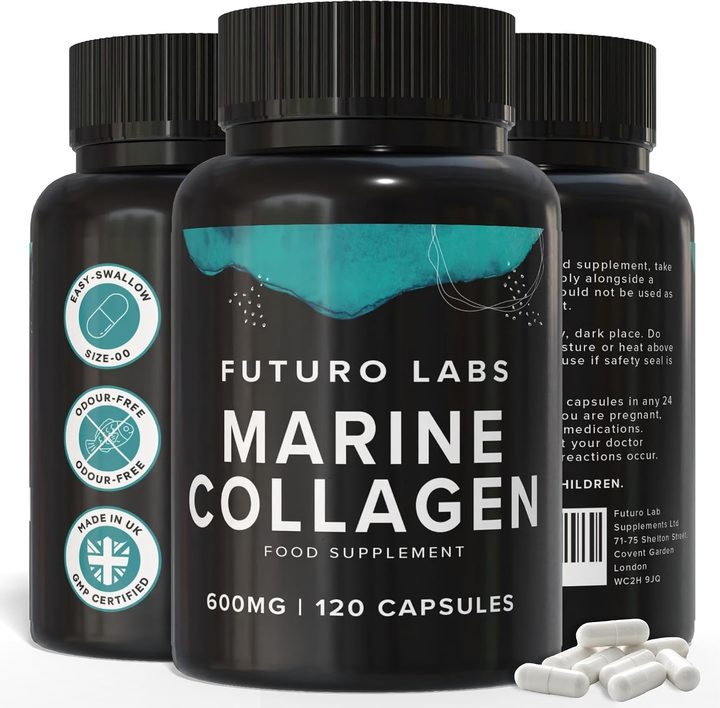
Our brand: the worked example on this page
Futuro Labs Marine Collagen
- 28p a day
- 120 capsules, 2 capsules daily
- Lab tested
- Made in the UK
The adjunct on its true terms: Futuro Labs Marine Collagen on Amazon UK, 2 capsules, 1200mg hydrolysed type 1 marine collagen with 12mg vitamin C at 15% NRV plus zinc, 120 for £16.99, 28p a day, lab tested and UK made, below the research doses and taken for vitamin C's collagen formation sentence, which names cartilage and bones, repairing nothing in the knee. Full label breakdown. The clinical knee-repair menu is on the best collagen for knee repair page; the cartilage surgery field on the knee cartilage repair page; the joint timetable on the collagen and joints page.
Cartilage and meniscus: the two structures collagen does nothing measurable for
Does collagen help with knee repair is a question that treats a knee as one thing, and a knee is at least five, so the honest page takes the structures in turn, because repair means something different in each and collagen's evidence, where it has any, attaches to specific tissues and not to the joint as a word. Articular cartilage first, the smooth surface on the ends of the femur and tibia and the back of the kneecap, and the tissue most readers mean by knee repair. Cartilage is avascular, has no nerve supply and is populated by sparse chondrocytes that cannot migrate to a defect, which gives it famously poor intrinsic repair capacity, the reason a cartilage injury in the twenties is still there in the forties and the reason cartilage repair, where it exists at all, is a surgical field of cell implants and grafts for focal defects in the right knees. No collagen trial has shown a change in cartilage structure by imaging, and none was designed to expect one; the joint comfort trials at around ten grams a day for twelve to twenty-four weeks measured how the knee felt under load by questionnaire and found modest gains against placebo in small, mostly industry-funded trials, which is a result about comfort and not about repair, and the undenatured type II collagen product at forty milligrams is a different molecule with its own small comfort trials and the same absence of structural change. So for cartilage the honest verb is none, with comfort as research, and the interventions that actually change a cartilage-worn knee's future are exercise, weight management and, at the far end, the surgical menu, all of which sit outside the tub. The meniscus second, the two crescent-shaped pads between the bones that spread load, and the structure a lifter tears twisting under a bar. The meniscus has a blood supply only in its outer third, the red zone, where tears can heal with time or be stitched, while the inner two thirds, the white zone, are avascular and tears there do not heal and are trimmed if they catch, a distinction that decides surgical management and that also explains why no nutrient reaches the tissue in any quantity, so collagen has no meniscus evidence and could not by anatomy, and a knee that locks, catches or swells after a twist is an assessment and a scan, not a scoop.
Ligaments, patellar tendon and bone: the structures load repairs, with collagen as the adjunct
The ligaments third, the four cords that hold the knee together, the cruciates inside and the collaterals at the sides, sprained and torn in sport. A ligament heals in three phases, an inflammatory phase of days, a proliferative phase of weeks in which fibroblasts lay down disorganised type III collagen, and a remodelling phase of months to a year in which the scar matures toward type I and aligns to load, and the ligament healing literature's central finding is that controlled progressive loading through those phases produces a stronger repair than immobilisation, so the repair is the rehabilitation programme and the return is by tests rather than dates, with a complete cruciate tear a surgical decision. Collagen's place here is the pre-loading protocol: around fifteen grams of gelatin or hydrolysed collagen with roughly 50mg of vitamin C an hour before the loading session roughly doubled a blood marker of collagen synthesis in a small trial, with engineered ligaments grown in the participants' serum coming out stiffer and richer in collagen, a marker adjunct beside the programme with no ligament outcome trial and no claim. The patellar tendon fourth, the lifter's knee complaint, pain just below the kneecap on squats and jumps with the warm-up pattern, which the biopsies show as a failed-healing picture that remodels under a physiotherapist's progressive loading programme over months, the established management, with the same fifteen-gram protocol an hour before each session as the same marker adjunct, so for the two collagen-rich cords of the knee the honest sentence is that load repairs and collagen with vitamin C may, as research, make the tissue's response to the load a little larger. The bone fifth, the femur, tibia and kneecap themselves, which adapt to load and are fed by protein, calcium and vitamin D, all holding bone sentences in the register, with one collagen trial at five grams a day for a year reporting small bone density gains in postmenopausal women with low density, a single manufacturer-linked result with no claim. The five totalled: cartilage, no repair and comfort as research; meniscus, surgical and unreachable; ligaments, load repairs with the protocol as adjunct; patellar tendon, the same; bone, load and diet with one collagen trial. Collagen holds no authorised claim for any of them, and the register's only knee-adjacent sentence is vitamin C's, that it contributes to normal collagen formation for the normal function of cartilage and bones, which is why the honest capsule pairs them. The worked example is the adjunct on its true terms: two capsules, 1200mg hydrolysed type 1 marine collagen with 12mg vitamin C plus zinc, 120 for £16.99 at 28p a day, lab tested and UK made, below the research doses, taken for vitamin C's sentence, while the protocol lifter buys the fifteen grams as powder for the hour before the physiotherapist's session. Does collagen help with knee repair: for two of the knee's five structures as a research adjunct to the load that does the repairing, for two not at all, and for the bone one trial, with no claim for any of it.
| The structure | What repair means there | Collagen's evidence | What actually repairs it |
|---|---|---|---|
| Articular cartilage | Almost nothing: avascular, sparse cells, poor intrinsic repair | No imaging change in any trial; comfort scores modestly better at ~10g over months | Exercise, weight management; surgical cell implants and grafts for focal defects |
| Meniscus | Healing only in the vascular outer third | None; no nutrient reaches it in quantity | Time or surgical repair in the red zone; trimming in the white |
| Ligaments | Three healing phases over months | ~15g with ~50mg vitamin C an hour before loading doubled a synthesis marker; an adjunct | Controlled progressive loading; surgery for complete cruciate tears |
| Patellar tendon | Remodelling of a failed-healing picture | The same protocol as adjunct; no outcome trial | A physiotherapist's loading programme over months |
| Bone | Adaptation to load; density | One 12-month trial at 5g in postmenopausal women: small gains | Load, protein, calcium, vitamin D |
| The register | What the tub may say | No collagen claim for any structure | Vitamin C's collagen formation for cartilage and bones |
| The worked exampleOurs | Two capsules, 1200mg marine collagen with 12mg vitamin C plus zinc, 28p a day | Below the research doses; the vitamin C sentence | Beside the programme, never instead |
What to check on the label
- Name the structure: cartilage, meniscus, ligament, tendon or bone.
- Cartilage and meniscus: no collagen answer: exercise, weight, a scan if it locks.
- Ligament and tendon: load repairs: the protocol beside it, as research.
- Bone: load and feed it: protein, calcium, vitamin D.
- Read the tub's knee line as vitamin C's: collagen holds none.
Our brand
The worked example: Futuro Labs Marine Collagen
Futuro Labs Marine Collagen: 2 capsules daily, 1200mg hydrolysed type 1 marine collagen with 12mg vitamin C and 1.5mg zinc (15% NRV each), 120 capsules for £16.99, 60 days at 28p a day, lab-tested, UK GMP made. Slim veggie-shell capsules, odour free. Fish derived: pescatarian, not vegetarian or vegan.
- Collagen per serving
- 1200mg hydrolysed type 1 marine (fish)
- Co-factors
- vitamin C 12mg (15% NRV), zinc 1.5mg (15% NRV)
- Serving
- 2 capsules a day
- Bottle
- 120 capsules, 60 days
- Price
- £16.99 (28p a day)
- Capsule
- slim size 00, veggie shell, odour free
Questions people also ask
Can collagen regrow knee cartilage?
No trial shows it and the anatomy explains why: articular cartilage is avascular with sparse cells that cannot migrate to a defect, no collagen trial has shown a change in cartilage by imaging, the joint trials measured comfort under load instead, and cartilage repair where it exists is a surgical field of cell implants and grafts.
Does collagen help a torn meniscus heal?
No: the meniscus has a blood supply only in its outer third, where tears can heal or be stitched, while the inner two thirds are avascular and do not heal, a surgical distinction no nutrient reaches, so a knee that locks, catches or swells after a twist is an assessment and a scan rather than a supplement.
Does collagen help knee ligaments and tendons repair?
As a research adjunct to the loading that does the repairing: ligaments heal in phases and tendons remodel under progressive load over months, and around fifteen grams of collagen with roughly 50mg of vitamin C an hour before a loading session doubled a collagen synthesis marker in one small trial, a marker with no outcome trial and no claim, used beside the physiotherapist's programme.
What is the best supplement for knee repair?
None repairs a knee: the register's only knee-adjacent sentence is vitamin C's, contributing to normal collagen formation for cartilage and bones, the collagen protocol is a marker adjunct for tendon and ligament rehabilitation, and the interventions with evidence are exercise, weight management, a physiotherapist's programme and, at the far end, surgery.
Does collagen help knee pain from squatting?
By complaint: pain at the patellar tendon below the kneecap with the warm-up pattern is tendon pain, where the protocol is research beside rehabilitation, a diffuse ache after volume is the ten-grams-over-months comfort research, and a knee that locks, swells or gives way is a structure and an assessment.
Sources
- The cartilage biology literature: articular cartilage is avascular with sparse chondrocytes, giving it famously poor intrinsic repair capacity compared with vascularised tissues like bone and tendon. PubMed record
- The meniscus vascularity literature: the knee's menisci have a blood supply only in their outer third, the red zone, where tears can heal or be repaired, while the inner two thirds, the white zone, are avascular and tears there do not heal, a distinction that decides surgical management and explains why no nutrient reaches the tissue in quantity. PubMed record
- The ligament healing literature: healing proceeds through an inflammatory phase of days, a proliferative phase of weeks in which fibroblasts lay down disorganised type III collagen, and a remodelling phase of months to a year or more in which the scar matures toward type I collagen and aligns to load, with controlled early loading producing stronger repair than immobilisation and the healed ligament remaining mechanically inferior to the original for a long time. PubMed record
- The gelatin and vitamin C pre-exercise research (Shaw, Baar and colleagues): 15g gelatin with vitamin C taken about an hour before loading, studied for markers of collagen synthesis, the protocol behind the tendon-training conversation. PubMed record