Ghost Fitness/Collagen/Does collagen at night help with weight loss?
Does collagen at night help with weight loss?
The short answer
Two zeros multiplied. Night changes nothing about a collagen dose: the trials set no hour. Collagen changes nothing about fat loss: no claim, no trial, only protein's satiety, weaker than whey's. Fat leaves in a deficit around the clock.
- Zero one, the hourthe trials set no hour; the only timed protocol is an hour before tendon loading
- Zero two, the fatno weight-loss claim, no body fat trial; satiety is protein's and weaker per gram than whey's
- What happens overnightfat leaves in a deficit around the clock; a late protein serving blunts a night snack a little
- The calories added~36 at a dessertspoon, ~72 at a scoop, at any hour
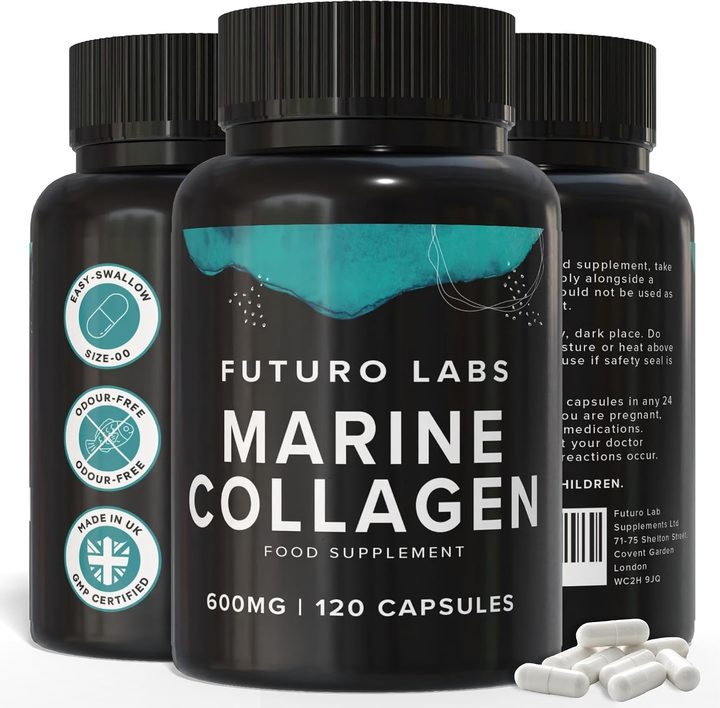
Our brand: the worked example on this page
Futuro Labs Marine Collagen
- 28p a day
- 120 capsules, 2 capsules daily
- Lab tested
- Made in the UK
On its true terms, no weight sentence: Futuro Labs Marine Collagen on Amazon UK, 2 capsules, 1200mg hydrolysed type 1 marine collagen with 12mg vitamin C at 15% NRV plus zinc, 120 for £16.99, 28p a day, lab tested and UK made, around five calories, taken at whatever hour the habit holds for vitamin C's collagen formation sentence. Full label breakdown. The marketing chain link by link is on the does collagen help weight loss page; the calorie ledger on the does collagen make you gain weight page; night itself on the before bed page.
The two claims multiplied: what night does to a dose, and what collagen does to fat
Does collagen at night help with weight loss is a sentence built by multiplying two claims, and the honest page takes them one at a time because each is zero and a reader who sees that needs no further argument. Claim one is that night changes what a collagen dose does. The collagen trials that exist gave 2.5 to 15 grams a day for eight weeks to a year and specified no hour, fasted or fed, morning or night, measuring skin by instrument at eight to twelve weeks, joints by questionnaire at twelve and twenty-four, and bone density at a year, so the evidence has no bedtime in it and no daytime either, and the only collagen protocol with a clock is the tendon one, fifteen grams with vitamin C an hour before loading, which has nothing to do with night or with weight. The tissues collagen is aimed at turn over on clocks of weeks and months, so a dose at eleven at night joins the same slow pool as a dose at eight in the morning, and night adds nothing to it and takes nothing from it. Claim one is zero. Claim two is that collagen changes fat loss. Collagen holds no weight-loss claim in the UK register, since no evidence has been submitted that could support one; no trial has shown hydrolysed collagen moving body fat, waist circumference or weight against placebo in a way that survives its calories; and the one mechanism the marketing chain leans on, that protein is satiating and collagen is protein, is true and weakened at every link, since collagen is an incomplete protein lacking tryptophan and low in leucine, is less satiating per gram than whey in the comparisons that exist, and holds no muscle-preserving role in a deficit because it does not drive muscle protein synthesis, which is the reason higher protein is studied in weight management at all. Claim two is zero. Multiply the two and the product is the marketing sentence, collagen at night for weight loss, which is what a zero times a zero looks like when it is written on a tub, and a reader who wanted a night-time habit that touched fat loss has been sold two things that do not, joined by an and.
What actually happens overnight, the small true thing, and the worked example without a weight sentence
What actually happens overnight is worth describing because the marketing borrows its plausibility from it. Fat leaves the body when energy expenditure exceeds energy intake over weeks, the energy balance rule that runs around the clock and does not know the hour, so a reader in a deficit burns fat overnight and a reader not in one does not, and nothing in a collagen dose changes which reader they are except its own 36 calories at a dessertspoon or 72 at a scoop, which land on the intake side of the ledger at any hour. Sleep itself matters to weight, since short sleep disturbs the appetite hormones and raises next-day intake in the trials, but collagen is not sleep, and the glycine in a ten-gram dose, around three grams, is a footnote from small trials on subjective sleep quality with no claim and no bridge to fat. The small true thing at the bottom of the multiplication is this: a protein serving in the evening blunts appetite a little, so a reader whose problem is the night snack, the biscuits at ten, might replace the snack with a protein drink and come out ahead by the difference in calories, and that is a real and modest strategy, and it works better with whey or a complete protein than with collagen, because complete protein is more satiating per gram and preserves muscle in the deficit that is doing the actual work, so even the small true thing points at a different tub. The honest night routine for a reader who wants collagen in it is the one on the before-bed pages: a dessertspoon in a warm caffeine-free drink or two capsules with the last glass of water, anchored to the routine so the habit survives, taken for the trials' reasons or the vitamin C line, with no weight expectation attached because none exists. The register's line closes it: collagen may carry no weight-loss sentence at any hour, and a tub that implies one has left the register behind. The worked example is stated on its true terms with no weight sentence: two capsules, 1200mg hydrolysed type 1 marine collagen with 12mg vitamin C plus zinc, 120 for £16.99 at 28p a day, lab tested and UK made, around five calories, below the research band, taken at whatever hour the habit holds for vitamin C's collagen formation sentence, and adding nothing to the ledger fat is decided on. Does collagen at night help with weight loss: night does nothing to the dose, the dose does nothing to fat, and the deficit that does is built at the table and not at the pillow.
| The item | The claim | The evidence | The verdict |
|---|---|---|---|
| Claim one: the hour | Night changes what collagen does | Trials set no hour; tissues run on weeks and months; only the tendon protocol is timed | Zero |
| Claim two: the fat | Collagen changes fat loss | No claim; no body fat trial; satiety weaker per gram than whey; no muscle-preserving role | Zero |
| The product | Collagen at night for weight loss | Zero times zero | The marketing sentence |
| What happens overnight | Fat is burned while you sleep | Only in a deficit that runs around the clock; the dose adds 36 to 72 calories | The deficit, not the dose |
| The small true thing | A night protein serving blunts a snack | Real and modest; complete protein does it better and preserves muscle | Points at whey |
| Sleep and glycine | Collagen improves sleep and so weight | Short sleep raises intake; collagen is not sleep; ~3g glycine is a footnote with no claim | Not a bridge to fat |
| The worked exampleOurs | None | Two capsules, 1200mg marine collagen with 12mg vitamin C, 28p a day, ~5 calories | No weight sentence; on its true terms |
What to check on the label
- Separate the two claims: the hour and the fat are both zero.
- Build the deficit at the table: it runs around the clock.
- Replace the night snack with complete protein: if that is the problem.
- Count the dose's calories: 36 to 72, at any hour.
- Take collagen at night for the habit: not for the scales.
Our brand
The worked example: Futuro Labs Marine Collagen
Futuro Labs Marine Collagen: 2 capsules daily, 1200mg hydrolysed type 1 marine collagen with 12mg vitamin C and 1.5mg zinc (15% NRV each), 120 capsules for £16.99, 60 days at 28p a day, lab-tested, UK GMP made. Slim veggie-shell capsules, odour free. Fish derived: pescatarian, not vegetarian or vegan.
- Collagen per serving
- 1200mg hydrolysed type 1 marine (fish)
- Co-factors
- vitamin C 12mg (15% NRV), zinc 1.5mg (15% NRV)
- Serving
- 2 capsules a day
- Bottle
- 120 capsules, 60 days
- Price
- £16.99 (28p a day)
- Capsule
- slim size 00, veggie shell, odour free
Questions people also ask
Does taking collagen before bed burn fat?
No: fat is burned in a calorie deficit that runs around the clock and does not know the hour, collagen has no fat-burning mechanism, no weight-loss claim and no body fat trial, and a bedtime dose adds 36 to 72 calories to the intake side of the ledger like a dose at any other time.
Is collagen good for weight loss at all?
Not in any way it can claim: collagen holds no weight-loss sentence, its only mechanism is protein's satiety, where it is weaker per gram than whey because it is incomplete, and it does not preserve muscle in a deficit because it does not drive muscle protein synthesis, so the reader using protein for fullness is better served by a complete one.
Will a collagen drink at night stop me snacking?
A little, as any protein drink would: an evening protein serving blunts appetite modestly, so replacing the ten o'clock biscuits with a protein drink can come out ahead by the difference in calories, and a whey or complete protein drink does that job better and preserves muscle in the deficit that is doing the work.
Does collagen help you sleep and therefore lose weight?
Neither link holds: the glycine in a ten-gram dose, around three grams, comes from small trials on subjective sleep quality with no claim, short sleep does raise next-day intake but collagen is not sleep, and no trial connects a collagen dose to a change in body fat through any route.
What is the best time to take collagen for weight loss?
There is no time, because there is no effect to time: collagen holds no weight-loss claim at any hour and the trials set none, so the honest hour is the one the habit survives at, taken for the trials' reasons or the vitamin C line, with the deficit built at the table.
Sources
- The energy balance literature: body weight changes when energy intake and expenditure diverge over weeks, protein providing around four kilocalories a gram, with higher protein intakes tending to increase satiety and the thermic effect of feeding, so adding a protein supplement leads to weight gain only when its calories are added on top of intake rather than displacing other food. PubMed record
- The protein and energy-restriction literature: higher protein intakes during a calorie deficit are studied for satiety and for preserving lean mass, the guard rails of sensible weight management. PubMed record
- The collagen peptide trial literature: randomised controlled studies of hydrolysed collagen supplementation across skin, joint and connective-tissue outcomes, typically at 2.5g to 15g daily, with small effects and frequent industry funding. PubMed record
- The glycine and sleep trial literature: small randomised studies of around 3g glycine before bed reporting subjective sleep-quality changes, with no authorised claim resulting. PubMed record