Ghost Fitness/Collagen/Does collagen make you gain weight?
Does collagen make you gain weight?
The short answer
No, not by itself. Ten grams of collagen is around 36 calories, twenty grams around 72, at four calories a gram; weight moves only if those calories sit on top of your intake. Reported water weight belongs to creatine.
- The ledger~4 calories a gram: 10g is ~36 calories, a 20g scoop ~72, a small apple
- When it adds weightonly as a surplus on top of maintenance over weeks; satiety usually offsets it
- What it does not addmuscle weight: no tryptophan, little leucine, no muscle synthesis; water weight: that is creatine
- The quiet exceptiongummies: 2 to 4g sugar a piece for a fraction of a gram of collagen
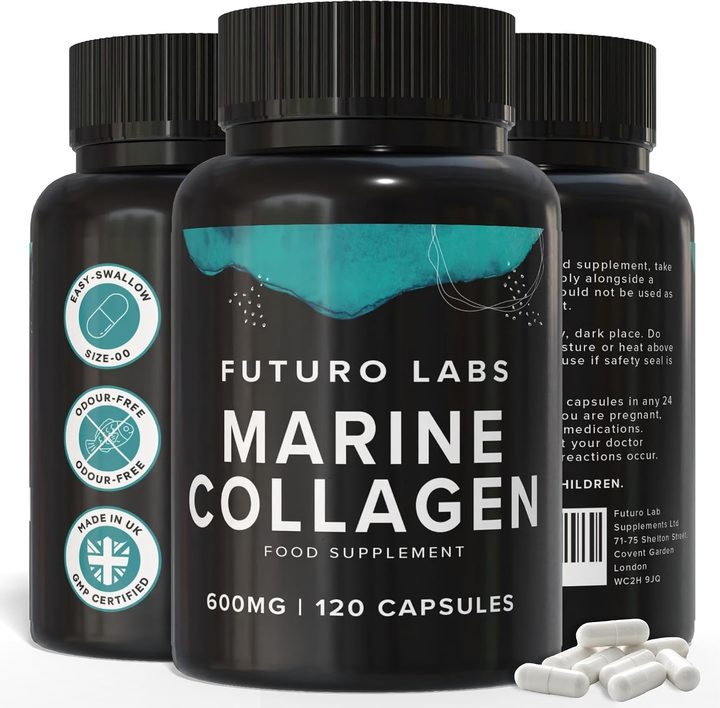
Our brand: the worked example on this page
Futuro Labs Marine Collagen
- 28p a day
- 120 capsules, 2 capsules daily
- Lab tested
- Made in the UK
Two capsules at around five calories: Futuro Labs Marine Collagen on Amazon UK, 2 capsules, 1200mg hydrolysed type 1 marine collagen with 12mg vitamin C at 15% NRV plus zinc, 120 for £16.99, 28p a day, lab tested and UK made, no sugar, no scoop, a dose below the 2.5 to 15g research band taken for the vitamin C line. Full label breakdown. The reverse question is on the does collagen help weight loss page; the creatine water weight on the creatine and collagen side effects page.
The calorie ledger, and when a collagen dose adds weight
Does collagen make you gain weight is answered by a ledger rather than a study, because the study would only confirm what the arithmetic already says, and the honest page runs the arithmetic. Protein provides around four kilocalories a gram, collagen included, so ten grams of hydrolysed collagen is around 36 calories, a twenty-gram scoop around 72, and two capsules of 600mg around five, and for scale a small apple is around 70 calories and a tablespoon of olive oil around 120. Body weight changes when energy intake and energy expenditure diverge over weeks, the energy balance literature's rule that no supplement escapes, so a collagen dose adds weight only in one case: when its calories are added on top of an intake that was already at maintenance, nothing else in the day changes to make room for them, and the surplus runs for weeks. A daily scoop added that way is around 500 calories a week, which is a fraction of a kilogram a month at most if nothing offsets it, and something usually does, because protein is the most satiating of the three macronutrients and has the highest thermic effect of feeding, so a protein serving tends to reduce what is eaten later and to burn a little of itself in digestion, the protein and energy-restriction literature's reason that higher protein intakes are studied in weight management rather than blamed for weight gain. A reader who takes collagen in place of something, the scoop in the morning coffee instead of a pastry, or the capsules with water, has added nothing to the ledger or has taken something off it. So the answer to the question as asked is no, not by itself, and the answer to the question the reader meant, will I gain weight if I add a scoop to my current diet, is a fraction of a kilo a month at the very most if the scoop is pure surplus and the satiety does not offset it, which for most readers it does.
What collagen does not add, the format that adds calories quietly, and the ledger closed
Two kinds of weight the question sometimes means and collagen does not add. Muscle weight: collagen is protein by the nitrogen test and protein of the wrong shape for muscle, lacking tryptophan entirely, scoring near zero on the completeness scale and carrying around a third of whey's leucine, the amino acid that triggers muscle protein synthesis, so the whey versus collagen trials show whey raising synthesis where collagen barely moves it, and a reader hoping collagen would add muscle weight, or fearing it would, has the wrong protein for either. Water weight: lifters who start a supplement stack and gain one to two kilograms in the first fortnight are describing creatine, which draws water into muscle as the stores fill and is the best documented water weight in the aisle, and since creatine and collagen are so often started together and even mixed in the same glass, the water weight gets attributed to the collagen that did not cause it; a reader who wants to know which is which stops one and not the other, and the creatine's kilogram stays as long as the creatine does. The one collagen format that adds calories quietly is the gummy, and the honest page names it because it is where the weight gain question has a real answer: a collagen gummy carries two to four grams of sugar per piece for a fraction of a gram of collagen, so a reader taking the label's two to four gummies a day is taking a small sweet with a trace of collagen in it, ten to fifteen grams of sugar and forty to sixty calories a day for a collagen dose too small to appear in any trial, the gummy format's arithmetic, and that reader has found the one way a collagen habit adds calories without adding collagen. The ledger closed: collagen at four calories a gram adds weight only as a surplus on top of maintenance over weeks, and satiety usually offsets it; it adds no muscle weight, being incomplete; the water weight is creatine's; and the gummy is the format to avoid if the calories matter. The worked example sits at the bottom of the ledger: two capsules, 1200mg hydrolysed type 1 marine collagen with 12mg vitamin C plus zinc, 120 for £16.99 at 28p a day, lab tested and UK made, around five calories, no sugar and no scoop, a dose below the 2.5 to 15g research band taken for vitamin C's collagen formation sentence, the register's only collagen line, and a dose that no ledger will notice. Does collagen make you gain weight: not by itself, not as muscle, not as water, and only as a gummy or a surplus.
| The item | The calories | The weight effect |
|---|---|---|
| Two capsules, 1200mg | ~5 | None a ledger can see |
| A dessertspoon, ~10g | ~36 | Surplus only if added on top of maintenance |
| A scoop, ~20g | ~72, a small apple | A fraction of a kilo a month at most as pure surplus; satiety usually offsets |
| Muscle weight | Not a calorie question | None: no tryptophan, little leucine, no muscle synthesis |
| Water weight | Not a calorie question | Creatine's one to two kilograms, misattributed to collagen |
| Gummies, 2 to 4 a day | 40 to 60, with 10 to 15g sugar | The one format that adds calories without adding collagen |
| The worked exampleOurs | Two capsules, 1200mg marine collagen with 12mg vitamin C, 28p a day | Around five calories, no sugar, on its true terms |
What to check on the label
- Count it as calories: four a gram, 36 in a dessertspoon, 72 in a scoop.
- Take it in place of something: or accept a small surplus.
- Do not expect muscle weight: wrong protein.
- Blame the creatine for the water: stop one to find out.
- Skip the gummies if calories matter: sugar with a trace of collagen.
Our brand
The worked example: Futuro Labs Marine Collagen
Futuro Labs Marine Collagen: 2 capsules daily, 1200mg hydrolysed type 1 marine collagen with 12mg vitamin C and 1.5mg zinc (15% NRV each), 120 capsules for £16.99, 60 days at 28p a day, lab-tested, UK GMP made. Slim veggie-shell capsules, odour free. Fish derived: pescatarian, not vegetarian or vegan.
- Collagen per serving
- 1200mg hydrolysed type 1 marine (fish)
- Co-factors
- vitamin C 12mg (15% NRV), zinc 1.5mg (15% NRV)
- Serving
- 2 capsules a day
- Bottle
- 120 capsules, 60 days
- Price
- £16.99 (28p a day)
- Capsule
- slim size 00, veggie shell, odour free
Questions people also ask
How many calories are in collagen powder?
Around four a gram like any protein: ten grams is around 36 calories, a twenty-gram scoop around 72, roughly a small apple, and two 600mg capsules around five, so the weight effect is the surplus effect of those calories over weeks and nothing specific to collagen.
Does collagen cause bloating and weight gain?
Fullness and mild bloating can follow a twenty-gram scoop, especially fasted, and pass with the meal; weight gain follows only if the scoop's calories sit on top of maintenance intake for weeks, a fraction of a kilo a month at most and usually offset by protein's satiety effect, so the two are different questions with different answers.
Why did I gain weight after starting collagen?
Check what started alongside it: creatine adds one to two kilograms of water in the first fortnight as muscle stores fill, and it is so often started with collagen that the collagen takes the blame; stopping one and not the other tells which, and collagen alone at four calories a gram cannot add a kilogram in a fortnight.
Does collagen make you gain muscle?
No: collagen lacks tryptophan, scores near zero on the completeness scale and carries about a third of whey's leucine, so it does not drive muscle protein synthesis in the trials that compare them, and a reader wanting muscle weight uses complete protein at 1.6 grams per kilo with training.
Do collagen gummies make you gain weight?
They are the format most likely to: two to four grams of sugar per gummy for a fraction of a gram of collagen means the label's daily serving is ten to fifteen grams of sugar and forty to sixty calories for a collagen dose below any trial, a small sweet with a trace of collagen, so a reader who cares about calories takes capsules or a measured powder.
Sources
- The energy balance literature: body weight changes when energy intake and expenditure diverge over weeks, protein providing around four kilocalories a gram, with higher protein intakes tending to increase satiety and the thermic effect of feeding, so adding a protein supplement leads to weight gain only when its calories are added on top of intake rather than displacing other food. PubMed record
- The protein and energy-restriction literature: higher protein intakes during a calorie deficit are studied for satiety and for preserving lean mass, the guard rails of sensible weight management. PubMed record
- Comparative protein research: the leucine content of a protein drives its muscle protein synthesis response, with whey outperforming collagen in direct comparisons. PubMed record
- The gummy supplement format literature: gummies carry small active doses per piece, typically a fraction of a gram of collagen, alongside two to four grams of sugar or sugar alcohols each, with dose accuracy and stability lower than tablets and capsules and the serving needed to reach a research dose of collagen running to dozens of pieces. PubMed record