Ghost Fitness/Collagen/Does the molecular weight of marine collagen matter?
Does the molecular weight of marine collagen matter?
The short answer
Barely: hydrolysis already made every peptide product low molecular weight, so smaller-still numbers buy marketing, not absorption. The inversion worth knowing: the one product where weight truly matters, undenatured type 2, wants it high, not low.
- The scalenative collagen ~300kDa; gelatine long chains; hydrolysates ~2-5kDa
- What low MW meansthe definition of hydrolysed: the spec is the product, not a tier
- The diminishing returnsdi- and tripeptide uptake is real, and ordinary hydrolysates deliver it
- The inversionundenatured type 2's mechanism needs its weight kept high
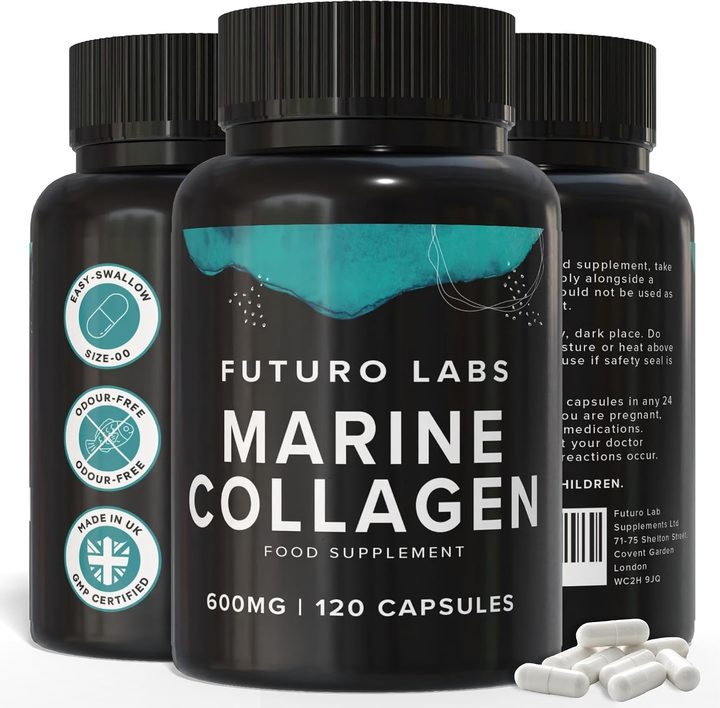
Our brand: the worked example on this page
Futuro Labs Marine Collagen
- 28p a day
- 120 capsules, 2 capsules daily
- Lab tested
- Made in the UK
A hydrolysate sold on its file, not its daltons: Futuro Labs Marine Collagen on Amazon UK, 1200mg hydrolysed type 1 marine with vitamin C and zinc at 15% NRV, £16.99 for 60 days at 28p. Full label breakdown. The absorption theatre is on the absorption page; the quality lines on the quality page.
The full teach: what the numbers mean, and why every hydrolysate already sits at the bottom of the scale
Give the daltons their one complete lesson, because half this aisle's premium copy leans on numbers most shoppers have never had defined. Molecular weight measures the size of a protein chain, and collagen's processing story is a descent down that scale: native collagen in tissue sits around 300 kilodaltons, three long chains wound together; extraction to gelatine breaks the weave into long free strands still heavy enough to tangle and gel; and enzymatic hydrolysis, the factory tour's defining station, cuts those strands into peptides typically in the 2-to-5 kilodalton band, sometimes lower, which is what the words hydrolysed, peptides and low molecular weight all mean, one process described three ways, so every peptide tub on the shelf, marine or bovine, budget or boutique, already sits at the scale's practical bottom, the spec being the product rather than a tier of it. The absorption science underneath is real and worth stating straight: the gut does absorb small di- and tripeptides efficiently through dedicated transporters, hydroxyproline-containing fragments do appear in blood after a collagen drink, and none of this distinguishes products, ordinary hydrolysates delivering that uptake as standard, the digestive tract finishing whatever cutting the enzymes left, which is why trials run on unremarkable commercial hydrolysates without weighing them to the dalton, and why a label shouting 2000Da or ultra-low-molecular-weight is advertising the category's entry requirement in a premium font.
Where weight honestly matters, the inversion that reverses the pitch, and the buy restated
Honesty requires the short list of places weight genuinely earns attention, and the list reverses the marketing twice. Entry one, gelatine versus hydrolysate, the one everyday consequence: gelatine's heavy strands will not dissolve in cold liquid and will set a jelly, hydrolysates dissolve cold and never gel, a kitchen-behaviour difference the protocol's budget lane trades on, pennies for gelatine against convenience for peptides, weight mattering here as texture, never as nutrition. Entry two, the inversion, and this page's keeper: the single collagen product whose mechanism truly depends on molecular state is undenatured type 2, the 40mg oral-tolerance story, and it needs its weight high, the proposed mechanism requiring the intact triple-helix structure that hydrolysis destroys, so the one shelf where daltons decide anything wants the opposite of what the low-MW pitch sells, small numbers on a type 2 label being the five-tells card's disqualifier rather than a feature. Entry three, honourable mention, the marine-specific pitch this query names: marine peptides marketed as smaller and better-absorbed than bovine, retired by the same teach, both sources hydrolysing into the same band, the daltons decode's standing verdict, a specification restated as a species tier. The buy restated with the numbers in their place: choose the product by its file, stated dose at true scale, vitamin C at 15% NRV carrying the lawful sentences, source named with fish declared, per-batch heavy-metals and microbiology certificates, honest dates, pence divided, and read any molecular weight boast as the one thing this lesson licenses, a manufacturer describing, at length, what the word hydrolysed already told you.
| The item | The number or state | What it honestly means |
|---|---|---|
| Native collagen | ~300kDa, triple helix | Tissue-bound: nobody sells this |
| Gelatine | Long free strands | Gels, won't dissolve cold: the protocol's budget lane |
| Hydrolysates | ~2-5kDa peptides | The definition of the product: every tub, every brand |
| Di- and tripeptide uptake | Real, documented | Delivered by ordinary hydrolysates as standard |
| The low-MW premium | Smaller-still numbers | The entry requirement in a premium font |
| The inversion | Undenatured type 2 | The one shelf where weight matters wants it high |
The verdict, weighed and filed
Does the molecular weight of marine collagen matter: barely, hydrolysis having already placed every peptide product in the low band that the premium copy resells, di- and tripeptide absorption being real, standard and undistinguishing, with weight earning honest attention only twice, in the kitchen, where gelatine gels and hydrolysates dissolve, and in the inversion, where undenatured type 2, the one mechanism that cares, needs its weight high and treats hydrolysis as destruction. The worked example is sold on the paperwork the daltons never were: Futuro Labs Marine Collagen, 1200mg hydrolysed type 1 with 12mg vitamin C and 1.5mg zinc at 15% NRV, heavy-metal tested per batch, UK made, £16.99 for 60 days at 28p a day, low molecular weight in exactly the way every honest hydrolysate is, which is to say, unremarkably.
What to check on the label
- Hydrolysed means low MW already: the spec is the product.
- Small-peptide uptake is standard: ordinary hydrolysates deliver it.
- Ultra-low premiums buy fonts: the entry requirement, resold.
- The inversion: type 2 wants weight high: hydrolysis destroys its story.
- Buy the file, not the daltons: dose, cofactors, testing, pence.
Our brand
The worked example: Futuro Labs Marine Collagen
Futuro Labs Marine Collagen: 2 capsules daily, 1200mg hydrolysed type 1 marine collagen with 12mg vitamin C and 1.5mg zinc (15% NRV each), 120 capsules for £16.99, 60 days at 28p a day, lab-tested, UK GMP made. Slim veggie-shell capsules, odour free. Fish derived: pescatarian, not vegetarian or vegan.
- Collagen per serving
- 1200mg hydrolysed type 1 marine (fish)
- Co-factors
- vitamin C 12mg (15% NRV), zinc 1.5mg (15% NRV)
- Serving
- 2 capsules a day
- Bottle
- 120 capsules, 60 days
- Price
- £16.99 (28p a day)
- Capsule
- slim size 00, veggie shell, odour free
Questions people also ask
Is lower molecular weight marine collagen better absorbed?
Not meaningfully: hydrolysis already places every peptide product in the low band, di- and tripeptide uptake is standard across ordinary hydrolysates, and smaller-still numbers buy marketing.
What do the dalton numbers on labels actually mean?
Chain size: native collagen sits near 300kDa, gelatine keeps long strands, and hydrolysates run roughly 2 to 5kDa, which is simply what hydrolysed means.
When does molecular weight genuinely matter?
Twice: gelatine versus hydrolysate in the kitchen, heavy strands gelling where peptides dissolve cold, and undenatured type 2, whose mechanism needs its weight kept high.
Are marine peptides smaller than bovine ones?
Not usefully: both sources hydrolyse into the same band, and the smaller-and-better-absorbed pitch is a specification restated as a species tier.
What should decide between two marine tubs then?
The file: stated dose, vitamin C at 15% NRV, fish declared, per-batch heavy-metals and microbiology certificates, honest dates and the pence divided per day.
Sources
- The peptide molecular weight literature: hydrolysed collagens run low molecular weight by definition, with di- and tripeptide absorption documented across ordinary hydrolysates rather than unique to ultra-low fractions. PubMed record
- The collagen manufacturing literature: raw hides and fish skins are cleaned, extracted to gelatine and enzymatically hydrolysed into low molecular weight peptides before filtration and spray-drying. PubMed record
- The undenatured type II collagen (UC-II) trial literature: small randomised studies at 40mg daily against joint outcomes, a different mechanism and dose to hydrolysed collagen, with no authorised claim resulting. PubMed record
- The collagen peptide trial literature: randomised controlled studies of hydrolysed collagen supplementation across skin, joint and connective-tissue outcomes, typically at 2.5g to 15g daily, with small effects and frequent industry funding. PubMed record