Ghost Fitness/Collagen/Is taking collagen before bed good?
Is taking collagen before bed good?
The short answer
Good in three senses. For the dose, no: the trials set no hour. For sleep, a footnote: ten grams carries around three grams of glycine, small trials, no claim. For the habit, yes, if the cup is anchored.
- Good for the doseno: the trials set no hour; skin measured at 8 to 12 weeks, joints over months
- Good for sleepa footnote: ~10g collagen is ~3g glycine, the small-trial dose, no claim
- Good for the habityes: an anchored bedtime cup is still being drunk in week ten
- The capsule versiontwo capsules with the last glass of water, below the band, the vitamin C line
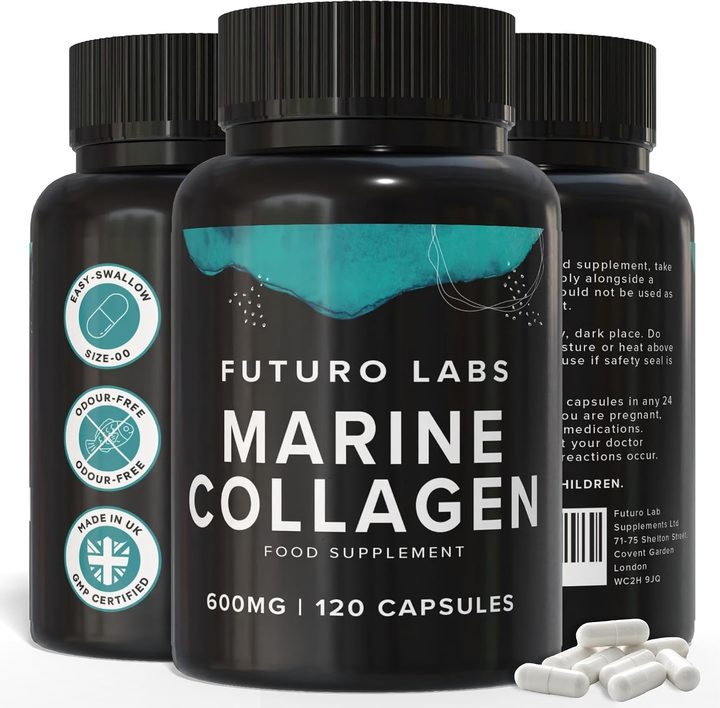
Our brand: the worked example on this page
Futuro Labs Marine Collagen
- 28p a day
- 120 capsules, 2 capsules daily
- Lab tested
- Made in the UK
The bedtime version without the powder: Futuro Labs Marine Collagen on Amazon UK, 2 capsules, 1200mg hydrolysed type 1 marine collagen with 12mg vitamin C at 15% NRV plus zinc, 120 for £16.99, 28p a day, lab tested and UK made, a dose below the 2.5 to 15g research band taken with the last glass of water for the vitamin C line. Full label breakdown. The method is on the how to take collagen before bed page; the five night-powder mistakes on the powder at night page; the fed-or-fasted footnote on the after-dinner page.
The first meaning, good for the dose, and the second, good for sleep
Is taking collagen before bed good is three questions wearing one word, and the honest page separates them, because good for the dose, good for sleep and good for the habit have three different answers and the shelf sells all three as one. The first meaning, good for the dose: does collagen taken before bed do more than collagen taken at breakfast? No, and the reason is in the trial designs. The oral collagen skin trials gave 2.5 to 10 grams a day for eight to twelve weeks and measured elasticity and hydration by instrument; the joint comfort trials gave around ten grams a day for twelve to twenty-four weeks; the tendon pre-loading trial timed its dose an hour before loading and is the only collagen protocol with a clock in it at all. None of the daily trials specified an hour, fasted or fed, morning or evening, so the evidence has no bedtime in it, and the tissues the trials measured run on clocks of weeks, the epidermis turning over in around four and the dermis, tendon and cartilage more slowly, the skin turnover literature's timescale, so a dose that arrives at eleven at night joins the same slow pool as a dose that arrived at eight in the morning. Good for the dose: no, and not bad for it either; the hour is simply not a variable the evidence recognises. The second meaning, good for sleep: this is where the benefits of taking collagen at night, the secondary search, come from, and it is a footnote worth reading properly. Collagen is around a third glycine by weight, so a ten-gram dose carries around three grams of glycine, and three grams of glycine before bed is the dose a handful of small trials gave for subjective sleep quality, reporting a slightly easier onset and a fresher morning on questionnaires, trials too small and too few for any authority to have authorised a claim, and no such claim exists for glycine or for collagen. So a reader taking ten grams of collagen at night is taking the glycine trial dose by coincidence, which is interesting and is not a reason, since the same reader could take three grams of glycine for a few pence if the sleep footnote were the point, and the honest page files it as a footnote and not as a benefit.
The third meaning, good for the habit, and the three meanings totalled
The third meaning, good for the habit, and here the answer is yes with a condition. The one variable every collagen trial controlled was consistency: the dose was taken every day for eight to twelve weeks or for months, and the measurements happened at the end, so a reader who wants the trial result has to be taking the dose in week ten, and the habit literature is clear about how doses survive ten weeks, which is by being anchored to something already fixed in the day rather than floating. Bedtime is one of the two most fixed points a day has, and a cup that belongs to the bedtime routine, with the last drink, after brushing, as the kettle boils for the evening's last cup, is the cup still being drunk in week ten, where the dose taken whenever a reader remembered has lapsed by week three. So taking collagen before bed is good for the habit if the cup is anchored, and no better than breakfast if breakfast is where the reader's anchor already lives, which is why the honest advice is to pick the fixed point that exists and not to move the dose to bedtime because the shelf said the night does something. The three meanings totalled: for the dose, no, the trials set no hour; for sleep, a footnote, three grams of glycine in ten grams of collagen and no claim; for the habit, yes, if the cup is anchored. Two practical notes for the reader who chooses bedtime. A twenty-gram scoop in a warm drink at the pillow sits heavily in some readers, so the bedtime powder is a dessertspoon, around ten grams, the middle of the research band, or the full dose after dinner rather than at the pillow. And a reader who dislikes a night powder takes the capsule version with the last glass of water: two capsules, 1200mg hydrolysed type 1 marine collagen with 12mg vitamin C plus zinc, 120 for £16.99 at 28p a day, lab tested and UK made, a dose below the 2.5 to 15g band on its true terms, taken for vitamin C's collagen formation sentence, the only collagen sentence the register allows, and sitting lightly at any hour. Is taking collagen before bed good: for the habit, yes; for the dose, the hour is invisible to the evidence; for sleep, a coincidence of three grams of glycine that the honest page prints as a footnote and the shelf prints as a benefit.
| Good for | The answer | The evidence |
|---|---|---|
| The dose | No, and not bad either | Skin trials 8 to 12 weeks, joint trials months, no hour specified; tissues run on weeks |
| Sleep | A footnote, not a benefit | ~10g collagen carries ~3g glycine, the small-trial dose; no claim exists |
| The habit | Yes, if anchored | Consistency was the trials' variable; a bedtime anchor survives to week ten |
| The scoop at the pillow | A dessertspoon, or after dinner | Twenty grams late sits heavily in some readers |
| The only timed protocol | An hour before loading, not bedtime | The tendon pre-loading trial, ~15g with ~50mg vitamin C |
| The capsule versionOurs | Two capsules with the last glass of water | 1200mg marine collagen with 12mg vitamin C, 28p a day, below the band |
What to check on the label
- Expect nothing from the hour: the trials set none.
- File the glycine as a footnote: three grams in ten, no claim.
- Anchor the cup: bedtime works because it is fixed.
- Keep the bedtime scoop modest: a dessertspoon, or after dinner.
- Take the capsules with the last glass: if the powder is a chore.
Our brand
The worked example: Futuro Labs Marine Collagen
Futuro Labs Marine Collagen: 2 capsules daily, 1200mg hydrolysed type 1 marine collagen with 12mg vitamin C and 1.5mg zinc (15% NRV each), 120 capsules for £16.99, 60 days at 28p a day, lab-tested, UK GMP made. Slim veggie-shell capsules, odour free. Fish derived: pescatarian, not vegetarian or vegan.
- Collagen per serving
- 1200mg hydrolysed type 1 marine (fish)
- Co-factors
- vitamin C 12mg (15% NRV), zinc 1.5mg (15% NRV)
- Serving
- 2 capsules a day
- Bottle
- 120 capsules, 60 days
- Price
- £16.99 (28p a day)
- Capsule
- slim size 00, veggie shell, odour free
Questions people also ask
Does collagen work better if you take it at night?
No: the skin trials ran eight to twelve weeks and the joint trials months with no hour specified, and the tissues they measured turn over on clocks of weeks, so a bedtime dose joins the same slow pool as a breakfast one and the hour is not a variable the evidence recognises.
Does taking collagen before bed help you sleep?
As a footnote only: collagen is around a third glycine, so ten grams carries around three grams, the dose a few small trials gave before bed for subjective sleep quality, results too small and too few for any authorised claim, and a reader who wanted the glycine could take it alone for pence.
Is it better to take collagen in the morning or at night?
Whichever is anchored: consistency across weeks was the one variable the trials controlled, so the good hour is the one fixed to something already in the routine, breakfast or bedtime, and moving a working breakfast habit to the night because the shelf says night does something gains nothing.
How much collagen should I take before bed?
A dessertspoon, around ten grams, the middle of the 2.5 to 15 gram research band, since a twenty-gram scoop shortly before lying down sits heavily in some readers, who otherwise take the full dose after dinner rather than at the pillow.
Can I take collagen capsules before bed instead?
Yes: two capsules with the last glass of water carry 1200mg hydrolysed marine collagen with 12mg vitamin C plus zinc at 28p a day, sit lightly at any hour, and are stated on their true terms as a dose below the research band taken for vitamin C's collagen formation sentence.
Sources
- The collagen peptide trial literature: randomised controlled studies of hydrolysed collagen supplementation across skin, joint and connective-tissue outcomes, typically at 2.5g to 15g daily, with small effects and frequent industry funding. PubMed record
- The skin biology literature: the epidermis turns over in around four weeks while dermal collagen, the layer supplements target, turns over far more slowly, so the oral collagen skin trials measured elasticity and hydration after eight to twelve weeks of daily intake with no timing of day specified, consistency across weeks rather than time of day being the variable the trials controlled. PubMed record
- The glycine and sleep trial literature: small randomised studies of around 3g glycine before bed reporting subjective sleep-quality changes, with no authorised claim resulting. PubMed record
- The habit formation literature: anchoring a new behaviour to an existing daily routine is the best-documented adherence strategy, with consistency outperforming timing choices. PubMed record