Ghost Fitness/Collagen/What does taking collagen before bed do?
What does taking collagen before bed do?
The short answer
What collagen does at any hour: digests to peptides peaking in blood within two hours, joins the amino acid pool overnight, feeds tissues that work on a clock of weeks. It does not move the sleep growth hormone pulse.
- Hours zero to twodigested to amino acids and small peptides; prolyl-hydroxyproline peaks in blood within an hour or two
- Hours two to eightthe amino acid pool, used wherever protein is made overnight; no address for skin or tendon
- The tissues' clockfibroblasts have no night shift: dermis and tendon remodel over weeks and months; the trials set no hour
- Growth hormone and glycinethe sleep-onset pulse runs on sleep, unmoved by a protein serving; ~3g glycine in 10g is a footnote with no claim
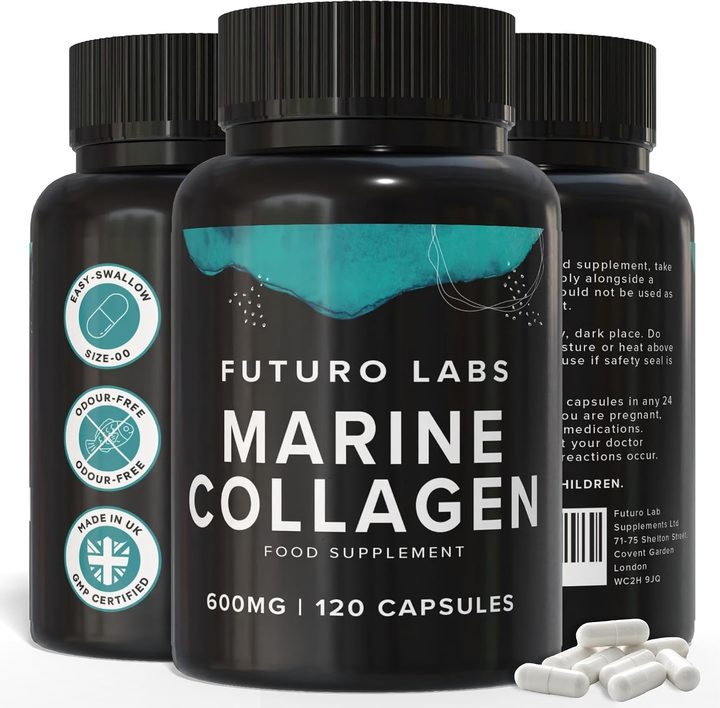
Our brand: the worked example on this page
Futuro Labs Marine Collagen
- 28p a day
- 120 capsules, 2 capsules daily
- Lab tested
- Made in the UK
The bedtime version on its true terms: Futuro Labs Marine Collagen on Amazon UK, 2 capsules, 1200mg hydrolysed type 1 marine collagen with 12mg vitamin C at 15% NRV plus zinc, 120 for £16.99, 28p a day, lab tested and UK made, taken with the last glass of water for vitamin C's collagen formation sentence and a habit that holds at that hour, below the research band and stated so. Full label breakdown. The method is on the how to take collagen before bed page; the three meanings of good on the is it good page; the night side effects on the side effects at night page.
Hours zero to eight: what happens to a collagen dose between the last glass of water and the alarm
What does taking collagen before bed do is a definition question and the honest page answers it as a timeline, following a dose from the last glass of water to the alarm, because the shelf's answer, that it works while you sleep, is a sentence with no physiology in it and the physiology is more interesting. Hours zero to two. A collagen dose, whether a dessertspoon of powder in a warm drink or two capsules with water, meets stomach acid and then pancreatic and brush-border enzymes, which cut the already-hydrolysed peptides further into free amino acids, a third of them glycine, and into small di- and tripeptides, prolyl-hydroxyproline and hydroxyprolyl-glycine among them, which the gut absorbs intact; these peak in the blood within an hour or two of the dose and clear over the following hours, the collagen peptide absorption literature's kinetics, and they do so identically at eleven at night and at eight in the morning, since digestion does not keep office hours. Hours two to eight. The amino acids join the body's free amino acid pool, the same pool every meal's protein enters, and are drawn from it wherever protein is being synthesised overnight: the muscle repair that follows a training day, the gut lining that turns over every few days, the enzymes and transporters that are made continuously, the skin, the tendon, with no address on the parcel and no preference for the tissues collagen is sold for, the amino acid pharmacokinetics literature's plain point that a swallowed protein becomes the body's protein and not the tub's. The small peptides that survive digestion are the one part of the dose with a proposed specificity, since in cell and animal work prolyl-hydroxyproline acts on fibroblasts and chondrocytes, a hypothesis with human marker data behind it, and they circulate for hours whichever hours those are. The fibroblasts they might reach have no night shift. Dermal collagen turns over on a clock of months, tendon and cartilage more slowly, and the epidermis above them in around four weeks, so a fibroblast that is making collagen tonight was making it this afternoon and will be making it next month at the same rate, and the trials that measured skin at eight to twelve weeks and joints at twelve to twenty-four specified no hour because the tissue's clock runs in weeks and cannot tell a bedtime dose from a breakfast one. That is most of the timeline: a dose digested and pooled like any protein, on tissues that run on weeks.
The two things the night is supposed to add, growth hormone and sleep, and what the bedtime dose honestly does
The night is supposed to add two things to the timeline and the honest page tests both. The first is growth hormone. The largest growth hormone pulse of the day arrives in the first hours of sleep, with slow-wave sleep, and the shelf's implication is that collagen taken before bed rides that pulse into the skin; the physiology says the pulse is driven by the sleep itself, arriving whether or not a reader ate, and that oral amino acids alter it only at pharmacological doses of specific amino acids, several grams of arginine in the older studies and inconsistently even then, while an ordinary protein serving and a collagen dose in particular have no measurable effect on the nocturnal pulse, so the growth hormone story is a true fact about sleep attached to a false one about collagen, and taking collagen before bed does nothing to the pulse and the pulse does nothing special with the collagen. The second is sleep itself, and here there is a footnote rather than nothing: collagen is around a third glycine by weight, a ten-gram dose carries around three grams, and three grams of glycine before bed is the dose a handful of small trials gave for subjective sleep quality, reporting an easier onset and a fresher morning on questionnaires, trials too small and too few for any claim and none exists for glycine or collagen, so a reader who feels they sleep better on a bedtime collagen drink may be feeling the glycine, the warm drink or the routine, and is in any case describing a coincidence of dose that the honest page prints as a footnote. What taking collagen before bed honestly does, then: it does what taking collagen does, at the tissues' pace, plus a glycine footnote, in a slot where the habit may hold better than at breakfast, which is the one real advantage the hour has, since the trials' one controlled variable was consistency and a dose anchored to the last glass of water is still being taken in week twelve. Two practical notes from the night's side effect page: a twenty-gram drink at the pillow can reflux in a reader prone to it, so the powder dose is a dessertspoon or taken after dinner, and the coffee stays in the morning. The register's line is unchanged by the hour, no collagen claim, vitamin C's collagen formation sentence beside it. The worked example is the bedtime version on its true terms: two capsules, 1200mg hydrolysed type 1 marine collagen with 12mg vitamin C plus zinc, 120 for £16.99 at 28p a day, lab tested and UK made, taken with the last glass of water for vitamin C's sentence and the habit, below the research band, adding around a gram of protein to the night's pool and asking nothing of the growth hormone pulse. What does taking collagen before bed do: it digests, it pools, it feeds slow tissues at their own pace, it leaves the sleep hormones alone, and it carries three grams of glycine and a habit into the night.
| The hour | What happens | What the shelf implies | The honest note |
|---|---|---|---|
| Zero to two | Digested to amino acids and small peptides; prolyl-hydroxyproline peaks in blood | Absorbed specially at night | Identical at any hour |
| Two to eight | Amino acids join the pool; used wherever protein is made overnight | Goes to the skin while you sleep | No address on the parcel |
| The tissues' clock | Fibroblasts make collagen on a clock of weeks and months; no night shift | Repairs overnight | The trials set no hour for this reason |
| The growth hormone pulse | Driven by slow-wave sleep; moved only by pharmacological amino acid doses | Collagen rides the pulse | A protein serving does not move it |
| The glycine | ~3g in a 10g dose; small trials on subjective sleep; no claim | A sleep benefit | A footnote and a coincidence |
| The habit | A dose at the last glass of water survives to week twelve | Not mentioned | The hour's one real advantage |
| The worked exampleOurs | Two capsules, 1200mg marine collagen with 12mg vitamin C plus zinc, 28p a day, with the last glass of water | None | The vitamin C line; nothing asked of the night |
What to check on the label
- Expect digestion, not magic: peptides peak within two hours at any hour.
- Remember the tissues run on weeks: no night shift.
- Leave growth hormone out of it: sleep drives the pulse, not protein.
- File the glycine as a footnote: three grams, no claim.
- Use the hour for the habit: the last glass of water holds.
Our brand
The worked example: Futuro Labs Marine Collagen
Futuro Labs Marine Collagen: 2 capsules daily, 1200mg hydrolysed type 1 marine collagen with 12mg vitamin C and 1.5mg zinc (15% NRV each), 120 capsules for £16.99, 60 days at 28p a day, lab-tested, UK GMP made. Slim veggie-shell capsules, odour free. Fish derived: pescatarian, not vegetarian or vegan.
- Collagen per serving
- 1200mg hydrolysed type 1 marine (fish)
- Co-factors
- vitamin C 12mg (15% NRV), zinc 1.5mg (15% NRV)
- Serving
- 2 capsules a day
- Bottle
- 120 capsules, 60 days
- Price
- £16.99 (28p a day)
- Capsule
- slim size 00, veggie shell, odour free
Questions people also ask
Does collagen work better while you sleep?
No: a collagen dose is digested to amino acids and small peptides that peak in blood within two hours at any hour, joins the body's protein pool, and feeds tissues whose fibroblasts work on a clock of weeks and months with no night shift, which is why the skin and joint trials specified no hour and measured at eight to twenty-four weeks.
Does collagen before bed boost growth hormone?
No: the largest growth hormone pulse of the day comes with slow-wave sleep and is driven by the sleep itself, oral amino acids move it only at pharmacological doses of specific ones such as several grams of arginine, and an ordinary protein serving or a collagen dose has no measurable effect on it.
Does collagen before bed help you sleep?
As a footnote: collagen is around a third glycine, so a ten-gram dose carries about three grams, the amount a few small trials gave before bed for subjective sleep quality, results too small and too few for any claim, so a better night on a bedtime collagen drink may be the glycine, the warm drink or the routine.
What happens to collagen in your body overnight?
It is digested in the first two hours to amino acids and small peptides, prolyl-hydroxyproline among them, which peak in blood and clear over hours, and the amino acids join the pool used for whatever protein the body is making overnight, muscle repair, gut lining, enzymes and skin alike, with no preference for the tissues collagen is sold for.
Is there any real reason to take collagen before bed?
The habit: the trials' one controlled variable was daily consistency, and a dose anchored to the last glass of water is still being taken in week twelve where a floating dose has lapsed, so bedtime is a good hour for a reader whose routine is fixed there, with a dessertspoon rather than a scoop for the reflux-prone and the coffee left in the morning.
Sources
- The collagen peptide absorption literature: after oral hydrolysed collagen, small peptides such as prolyl-hydroxyproline and hydroxyprolyl-glycine appear in blood for several hours alongside free amino acids, and in cell and animal work these peptides act on fibroblasts and chondrocytes, the mechanism proposed for why hydrolysed collagen might do more than an equal quantity of its free amino acids, a hypothesis with human marker data behind it and no human outcome claim. PubMed record
- The amino acid kinetics literature: plasma amino acid and peptide levels rise within about 30 minutes of ingesting hydrolysed collagen or gelatine and peak around the hour, the pharmacokinetic basis for pre-loading timing. PubMed record
- The sleep and growth hormone literature: the largest growth hormone pulse of the day occurs in the first hours of sleep with slow-wave sleep, driven by the sleep itself, and oral amino acids alter that pulse only at pharmacological doses of specific amino acids such as several grams of arginine, with ordinary protein servings and collagen having no measurable effect on the nocturnal pulse. PubMed record
- The glycine and sleep trial literature: small randomised studies of around 3g glycine before bed reporting subjective sleep-quality changes, with no authorised claim resulting. PubMed record