Ghost Fitness/Collagen/What does taking too much collagen cause?
What does taking too much collagen cause?
The short answer
Run the causal tests. Fullness and bloating: rise with dose, follow it in hours, have a mechanism: caused. Urinary oxalate: caused, a stone-former footnote. Weight gain: the calories, not collagen. Headaches, rashes: placebo arms too. Organ harm: no mechanism.
- Passes: fullness and bloatingrise from a dessertspoon to a scoop, follow the dose within hours, twenty grams of protein in a glass: caused
- Passes: urinary oxalaterises with the load, hydroxyproline metabolism, specific: caused; matters to calcium oxalate stone formers only
- Fails: weight gain, headaches, rashescalories cause weight, any food would; headaches and rashes appear in placebo arms; the real rash is fish allergy
- Fails: kidney and liver damageno mechanism, no signal at 15g for a year, no case series; no upper level exists
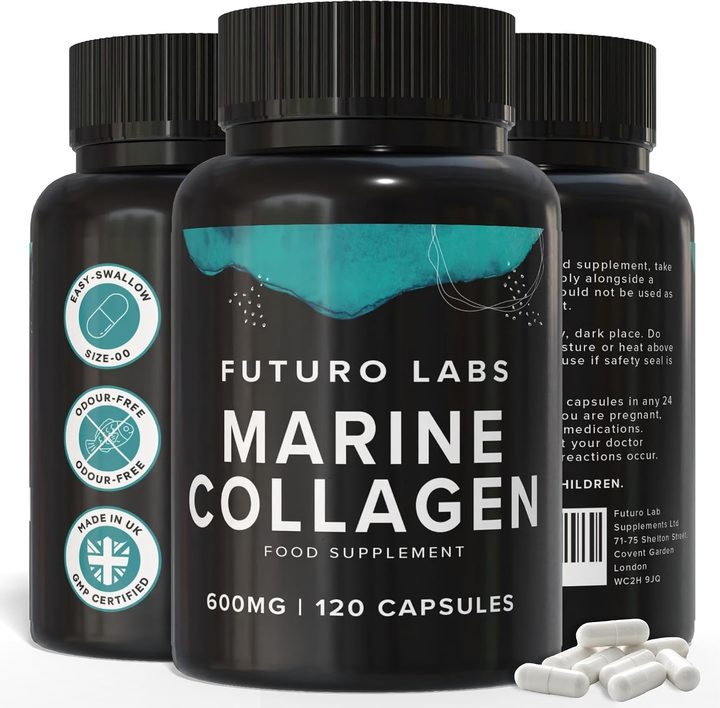
Our brand: the worked example on this page
Futuro Labs Marine Collagen
- 28p a day
- 120 capsules, 2 capsules daily
- Lab tested
- Made in the UK
A dose that causes nothing on this page: Futuro Labs Marine Collagen on Amazon UK, 2 capsules, 1200mg hydrolysed type 1 marine collagen with 12mg vitamin C at 15% NRV plus zinc, 120 for £16.99, 28p a day, lab tested and UK made, below the research band, no scoop to sit heavily, taken for vitamin C's collagen formation sentence; marine, so bovine for fish allergy. Full label breakdown. Too much by reason is on the how much is too much page; the symptom audit on the symptoms page; the four safety layers on the is collagen safe page.
The four causal tests, and the two alleged effects that pass them
What does taking too much collagen cause is a question whose verb is doing more work than the shelf notices, because cause is a causal word and epidemiology has spent a century working out how to tell an effect that is caused from one that merely happened nearby, so the honest page borrows its tests, a light version of the Bradford Hill considerations, and runs each alleged effect of too much collagen through them: does the effect rise with the dose, does it follow the exposure in time, is there a plausible mechanism, and is it specific to the collagen rather than to whatever else the reader did or ate that week. Two alleged effects pass all four. Fullness and bloating first: they rise with the dose, faint at a dessertspoon of ten grams and marked at a scoop of twenty, absent at a capsule; they follow the dose in time, arriving within the hour and passing within a few; they have a mechanism, twenty grams of any protein in a glass of water distending a stomach that was not expecting a meal, more so fasted or late; and they are specific to the drink, since a reader who drops the scoop loses the symptom and a reader who swaps to whey keeps it. Fullness and bloating are caused by too much collagen, fading over a fortnight as the gut adapts, the supplement tolerance literature's mild end. Raised urinary oxalate second: it rises with the load, the gelatin feeding studies showing urinary oxalate climbing after large gelatin doses; it follows the dose in time, over the hours and day after; it has a mechanism, hydroxyproline, a tenth of collagen and found almost nowhere else, being metabolised in the liver through glyoxylate to oxalate; and it is specific to collagen and gelatin, since no other common protein carries the hydroxyproline. Raised urinary oxalate is caused by too much collagen, and it is a footnote rather than a harm for every reader except one group, calcium oxalate kidney stone formers, for whom urinary oxalate is a variable already being watched and a daily twenty grams of collagen pushes it the wrong way, so that reader keeps collagen and gelatin modest and asks whoever manages the stones. Two effects caused, one a discomfort and one a footnote, and the rest of the list fails.
The alleged effects that fail the tests, the toxicity question, and the worked example
Weight gain fails on specificity. It has a mechanism, but the mechanism is calories, four a gram like any protein, thirty-six in a dessertspoon and seventy-two in a scoop, and calories from collagen cause weight gain exactly as calories from anything else do, only when they sit on top of maintenance intake over weeks, so the cause is the surplus and not the collagen, which fails the test of being specific to the exposure; the water weight lifters report in the first fortnight of a new stack is creatine's, and a reader who wants to know which stops one and not the other. Headaches and rashes fail on temporality and specificity together: both appear in the placebo arms of the collagen trials as often as in the collagen arms over twelve weeks, the signature of a symptom people have anyway and attribute to whatever they started, so neither follows the collagen in any way a placebo does not, and the one real rash on this page is an allergy rather than an excess, hives after starting a marine collagen being fish allergy, which is caused by any dose and not by too much, and is a reason to stop and choose bovine. Kidney and liver damage fail every test: there is no mechanism, since the liver handles collagen's nitrogen through the urea cycle as it handles any protein's and the kidney excretes urea and oxalate as it always has, the trials at up to fifteen grams a day for a year show no kidney or liver marker moving above placebo, and collagen appears in none of the supplement-associated liver injury case series, which name botanical extracts and excess vitamin A instead, so a reader worried that too much collagen damages the kidneys or liver is worried about an effect with no cause behind it, the one honest kidney note being the oxalate footnote above for stone formers and the one honest exception being a reader with existing kidney disease, whose protein intake is set clinically and who asks the team before any protein supplement. Toxicity fails by absence: no authority has set an upper level for collagen or gelatin because no toxic dose has been found, so too much collagen does not cause poisoning at any intake a person could swallow, and above fifteen grams the honest word is unstudied rather than unsafe. The tests totalled: too much collagen causes fullness and bloating, which pass on every count, and a rise in urinary oxalate, which passes and matters to stone formers, and it does not cause weight gain, headaches, rashes, kidney damage, liver damage or toxicity, each of which fails at least one test and most of which fail all four, with weight gain caused by the calories, the rash by fish allergy and the rest by nothing. The worked example causes nothing on this page: two capsules, 1200mg hydrolysed type 1 marine collagen with 12mg vitamin C plus zinc, 120 for £16.99 at 28p a day, lab tested and UK made, just over a gram of protein with no scoop to distend anything and around 120mg of hydroxyproline, below the research band, taken for vitamin C's collagen formation sentence, marine, so the fish-allergic reader chooses bovine. What does taking too much collagen cause: fullness, and in stone formers an oxalate load, and nothing else that survives being asked how it knows.
| The alleged effect | Dose-response | Temporality | Mechanism | Specificity | Verdict |
|---|---|---|---|---|---|
| Fullness and bloating | Yes: dessertspoon to scoop | Within the hour | Twenty grams of protein in a glass | Yes: dropping the scoop removes it | Caused; fades over a fortnight |
| Raised urinary oxalate | Yes: with the gelatin load | Hours to a day | Hydroxyproline to glyoxylate to oxalate | Yes: hydroxyproline is collagen's | Caused; a footnote for calcium stone formers |
| Weight gain | With calories only | Over weeks of surplus | Four calories a gram, as any food | No: the calories, not the collagen | Not caused by collagen; caused by surplus |
| Headaches | No | As often in placebo arms | None | No | Not caused |
| Rash | No | As often in placebo arms | Fish allergy for marine | Allergy at any dose, not excess | Not caused by too much; an allergy |
| Kidney or liver damage | No | No signal at 15g for a year | None: urea cycle and excretion as any protein | Absent from liver injury case series | Not caused |
| Toxicity | No upper level set | None found | None | None | Unstudied above 15g, not unsafe |
| The worked exampleOurs | Two capsules, 1200mg marine collagen with 12mg vitamin C, 28p a day | A gram of protein; ~120mg hydroxyproline | No scoop | Bovine for fish allergy | Causes nothing on this page |
What to check on the label
- Ask how it knows: dose, time, mechanism, specificity.
- Accept fullness as caused: drop the scoop, wait a fortnight.
- Stone formers watch the oxalate: the one footnote that passes.
- Blame the calories for weight: not the collagen.
- Drop headaches, rashes and organ damage from the list: placebo arms and no mechanism.
Our brand
The worked example: Futuro Labs Marine Collagen
Futuro Labs Marine Collagen: 2 capsules daily, 1200mg hydrolysed type 1 marine collagen with 12mg vitamin C and 1.5mg zinc (15% NRV each), 120 capsules for £16.99, 60 days at 28p a day, lab-tested, UK GMP made. Slim veggie-shell capsules, odour free. Fish derived: pescatarian, not vegetarian or vegan.
- Collagen per serving
- 1200mg hydrolysed type 1 marine (fish)
- Co-factors
- vitamin C 12mg (15% NRV), zinc 1.5mg (15% NRV)
- Serving
- 2 capsules a day
- Bottle
- 120 capsules, 60 days
- Price
- £16.99 (28p a day)
- Capsule
- slim size 00, veggie shell, odour free
Questions people also ask
What are the side effects of too much collagen?
Two survive the causal tests: fullness and bloating at scoop doses, which rise with the dose, follow it within hours, have a mechanism in twenty grams of protein in a glass and fade over a fortnight, and raised urinary oxalate from hydroxyproline metabolism, a footnote for calcium oxalate stone formers, while headaches, rashes, weight gain and organ damage fail the tests.
Can too much collagen damage your kidneys or liver?
No test is passed: there is no mechanism beyond the urea cycle and excretion any protein uses, the trials at up to fifteen grams a day for a year show no kidney or liver marker moving above placebo, and collagen appears in no liver injury case series, with the honest kidney note being the oxalate footnote for stone formers and the exception a reader with existing kidney disease, who asks the team.
Does too much collagen cause weight gain?
The calories do, not the collagen: at four calories a gram a scoop is around seventy-two, and those cause weight gain exactly as any food's calories do, only as a surplus over maintenance for weeks, so collagen fails the specificity test and the first-fortnight water weight lifters report belongs to creatine.
Why do I get headaches after taking collagen?
The trials say look elsewhere: headaches appear in the placebo arms of the collagen trials as often as in the collagen arms over twelve weeks, the signature of a symptom people have anyway and attribute to whatever they started, so a headache after collagen fails the causal tests of temporality and specificity and has another cause.
Is it possible to overdose on collagen?
Not in any toxic sense: no authority has set an upper level for collagen or gelatin because no toxic dose has been found, the trials ran to fifteen grams a day for a year without an adverse event above placebo beyond early fullness, and above fifteen grams the honest word is unstudied rather than unsafe, with fullness the gut's own ceiling around a scoop.
Sources
- The causal inference criteria in epidemiology: attributing an effect to an exposure rests on strength and consistency of association, a dose-response gradient, temporality, biological plausibility, specificity and experimental evidence, the Bradford Hill considerations, against which anecdotal side effects are tested before being accepted as caused. PubMed record
- The supplement gastrointestinal tolerance literature: oral iron produces nausea, constipation and upper abdominal pain in a large share of users, magnesium oxide and high magnesium doses loosen stools, zinc taken fasted causes nausea, creatine at loading doses causes bloating in some, whey concentrate causes lactose symptoms, and fish oil at standard doses causes belching and, rarely, nausea when taken fasted, with loose stools only at gram doses. PubMed record
- The hydroxyproline and urinary oxalate literature: gelatin and collagen are rich in hydroxyproline, which the liver metabolises partly to oxalate, and feeding studies show a rise in urinary oxalate after large gelatin loads, a note for people who form calcium oxalate kidney stones and no concern at ordinary intakes in others. PubMed record
- The dietary protein and liver literature: the liver deaminates surplus amino acids and disposes of the nitrogen through the urea cycle, urea production rising with protein intake as a normal adaptive response, with higher protein intakes in adults without liver disease showing no evidence of liver injury, and protein intake in liver disease set clinically rather than restricted by default. PubMed record