Ghost Fitness/Collagen/Is collagen supplement safe?
Is collagen supplement safe?
The short answer
Four layers. The molecule: a food protein, no upper level, nothing above placebo at 15g. The dose: 2.5 to 15g studied; above is unstudied, not unsafe. Manufacturing: demand the lab certificate. The person: fish allergy, stones, kidneys, pregnancy ask first.
- Layer one, the moleculea food protein: no upper level, no accumulation, no documented drug interactions, nothing above placebo at up to 15g for a year
- Layer two, the dose2.5 to 15g studied; above it unstudied and expensive rather than dangerous
- Layer three, the manufacturingmarine: heavy-metals panel; bovine: traceability; every tub: an independent lab certificate and a UK food-hygiene standard
- Layer four, the personfish allergy with marine; calcium oxalate stones; kidney disease; pregnancy; no guidance under eighteen
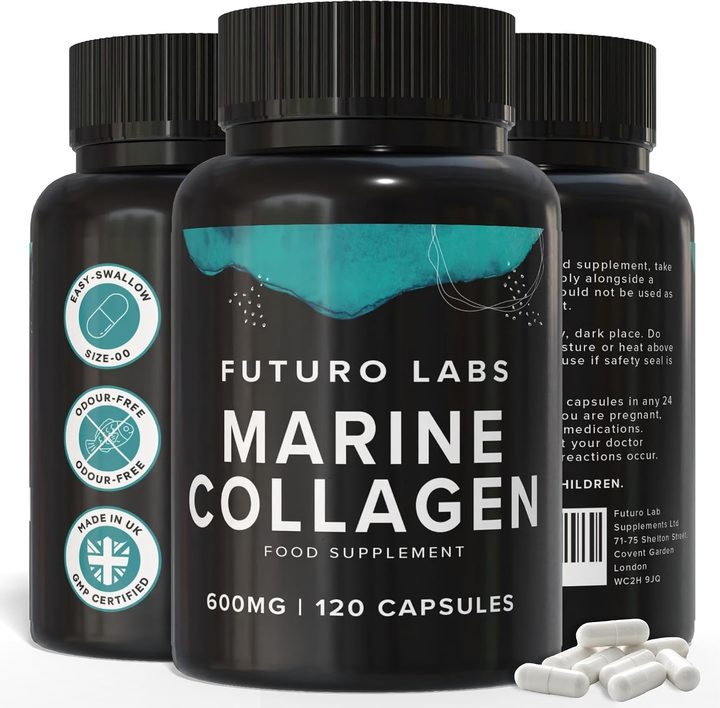
Our brand: the worked example on this page
Futuro Labs Marine Collagen
- 28p a day
- 120 capsules, 2 capsules daily
- Lab tested
- Made in the UK
A tub that passes layer three in the open: Futuro Labs Marine Collagen on Amazon UK, 2 capsules, 1200mg hydrolysed type 1 marine collagen with 12mg vitamin C at 15% NRV plus zinc, 120 for £16.99, 28p a day, independently lab tested for purity and made in the UK to a food-hygiene standard, the dose below the research band and stated plainly, marine, so bovine for fish allergy. Full label breakdown. The safe ceiling is on the how many mg is safe page; who should not on the who should not take collagen page; the safest form on the safest form page.
Layers one and two: the molecule and the dose
Is a collagen supplement safe is a question that sounds like one question and is four, because safe for any supplement has four layers, the molecule, the dose, the manufacturing and the person, and a tub can pass the first two on the strength of the trials and fail the third on the strength of a missing certificate, so the honest page takes the layers in order and says which one the trials can vouch for and which one a reader has to check themselves. Layer one is the molecule. Hydrolysed collagen is a food protein, gelatin taken further by enzymes into peptides of a few hundred to a few thousand daltons, digested like any protein into amino acids and small peptides and used or burned, and on this layer the evidence is as clean as the aisle gets: no authority has set an upper level for collagen because no toxicity has been found to set one against; it does not accumulate, having no store and no half-life beyond that of any dietary protein; it has no documented interaction with any medicine, since a digested protein does not touch the liver enzymes that drive drug interactions or the mineral chelation that drives the others; and the randomised trials that gave it at 2.5 to 15 grams a day for eight weeks to a year recorded nothing above placebo in their adverse event tables beyond the fullness and mild bloating of scoop doses in the early weeks, and no liver, kidney or blood marker moving. Collagen appears in none of the supplement-associated liver injury case series, which name botanicals and excess vitamin A, and the one metabolic footnote, hydroxyproline to oxalate, belongs to layer four. So the molecule is safe in the sense a food is, which is the highest standard a supplement can meet. Layer two is the dose, and here the honest word is the map rather than the cliff. The research band runs from 2.5 grams, the low end of the skin trials, to 15 grams, the tendon protocol and the top of the joint trials, and within it the trials speak; above it they fall silent, so a reader taking thirty grams a day is not in danger, since the protein is the protein and the calories are calories, but is off the map, paying for grams no trial tested and no tissue is known to use, with fullness as the only reliable effect and displacement of complete protein as the practical cost. The dose layer's verdict is that 2.5 to 15 grams is studied and safe, and above it is unstudied and expensive, which is a different thing from unsafe and should be said as one.
Layers three and four: the manufacturing the trials cannot vouch for, and the person
Layer three is the manufacturing, and it is the layer that separates one tub from another, because the trials vouch for the molecule and the dose and cannot vouch for what a particular factory put in a particular batch. Collagen is made from animal tissue, fish skin and scale for marine, hide and bone for bovine, and the raw material carries what the animal carried: fish concentrate the heavy metals in the sea they swam in, so a marine collagen's safety document is a heavy-metals panel, lead, cadmium, mercury and arsenic quantified by inductively coupled plasma mass spectrometry against the regulatory maximum levels, and a marine tub that cannot show one has not passed layer three whatever its dose; bovine carries the post-BSE questions, so its safety document is a traceability statement, country of origin, controlled herds, specified risk materials excluded, and the processing steps assessed as reducing infectivity. Every tub of either animal has a third document, the batch certificate from an independent laboratory confirming that what is in the capsule is what the label says at the amount it says, free of the contaminants the panel screens for, and a fourth behind it, the food-hygiene standard the factory runs to, hazard analysis and critical control points with traceability and recall procedures, which in the UK is the regulatory basis of good manufacturing practice for food supplements and is what a UK-made claim should mean. This is the layer where transparency is the safety feature: a brand that publishes its testing, names its laboratory and states its manufacturing standard has given a reader the means to check layer three, and a brand that offers a photograph of a salmon has not. Layer four is the person, and the footnotes here are the ones every honest collagen page carries. Fish allergy with marine collagen is a must-not, since marine collagen is the fish protein itself. Calcium oxalate stone formers keep collagen modest and ask, since hydroxyproline is metabolised partly to oxalate. Anyone with kidney disease asks the kidney team before any protein supplement, since protein intake there is set clinically. Pregnant and breastfeeding readers ask the midwife or doctor, since collagen has no pregnancy trials and supplements in pregnancy are discussed rather than assumed. And this site gives no supplement guidance to anyone under eighteen. The secondary question, is it safe to take collagen every day, is answered by all four layers at once: yes, because every trial took it every day, the molecule does not accumulate, the dose band is daily, the certificate covers the batch and the person's footnotes are the same on Tuesday as on Monday. The worked example passes layer three in the open and states the rest: two capsules, 1200mg hydrolysed type 1 marine collagen with 12mg vitamin C plus zinc, 120 for £16.99 at 28p a day, independently lab tested for purity and made in the UK to a food-hygiene standard, the dose below the research band and printed plainly, marine, so the fish-allergic reader chooses bovine on the same four layers. Is a collagen supplement safe: the molecule yes, the dose yes within the band, the manufacturing only when the certificate is shown, and the person yes with four footnotes and one age rule.
| The layer | The question | The evidence | The verdict |
|---|---|---|---|
| The molecule | Is hydrolysed collagen itself safe | A food protein; no upper level; no accumulation; no documented drug interactions; nothing above placebo at up to 15g for a year | Safe as a food is |
| The dose | Is this many grams safe | 2.5 to 15g studied; above it no data; fullness the only effect | Safe within the band; unstudied and expensive above it |
| The manufacturing | Is this tub what it says | Marine: heavy-metals panel by ICP-MS; bovine: post-BSE traceability; every tub: independent batch certificate and a UK food-hygiene standard | Safe only when the documents are shown |
| The person | Is it safe for me | Fish allergy with marine; calcium oxalate stones; kidney disease; pregnancy and breastfeeding; under-18s | Must-not, ask-first, and no guidance for minors |
| Every day | Is daily safe | Every trial dosed daily; no accumulation; the certificate covers the batch | Yes, on all four layers |
| The worked exampleOurs | Two capsules, 1200mg marine collagen with 12mg vitamin C plus zinc, 28p a day | Independently lab tested; UK made to a food-hygiene standard; dose printed plainly | Passes layer three in the open; bovine for fish allergy |
What to check on the label
- Trust the molecule: a food protein, no upper level.
- Stay on the map: 2.5 to 15g is studied; above is unstudied.
- Demand the documents: metals panel, traceability, lab certificate, standard.
- Read your footnote: fish, stones, kidneys, pregnancy, age.
- Take it daily as the trials did: nothing accumulates.
Our brand
The worked example: Futuro Labs Marine Collagen
Futuro Labs Marine Collagen: 2 capsules daily, 1200mg hydrolysed type 1 marine collagen with 12mg vitamin C and 1.5mg zinc (15% NRV each), 120 capsules for £16.99, 60 days at 28p a day, lab-tested, UK GMP made. Slim veggie-shell capsules, odour free. Fish derived: pescatarian, not vegetarian or vegan.
- Collagen per serving
- 1200mg hydrolysed type 1 marine (fish)
- Co-factors
- vitamin C 12mg (15% NRV), zinc 1.5mg (15% NRV)
- Serving
- 2 capsules a day
- Bottle
- 120 capsules, 60 days
- Price
- £16.99 (28p a day)
- Capsule
- slim size 00, veggie shell, odour free
Questions people also ask
Is it safe to take collagen every day?
Yes, on all four layers: every collagen trial dosed daily for eight weeks to a year, the molecule is a food protein that does not accumulate, the 2.5 to 15 gram band is a daily band, a batch certificate covers the tub, and the person's footnotes, fish allergy, stones, kidneys, pregnancy and age, are the same every day.
What are the risks of collagen supplements?
Almost none from the molecule, which is a food protein with no upper level and nothing above placebo in trials, and real ones from the manufacturing, heavy metals in a marine collagen without a metals panel, an untraceable bovine source, or a label that does not match the capsule, which is why the certificate and the standard are the safety documents a reader checks.
How do I know if a collagen supplement is safe to buy?
By the documents rather than the picture: a heavy-metals panel by ICP-MS for marine collagen, a traceability statement for bovine, a batch certificate from an independent laboratory confirming content and purity, a stated UK food-hygiene manufacturing standard, and a dose printed plainly in grams or milligrams with the type and source named.
Can you take too much collagen safely?
Above fifteen grams a day the trials have no data, so a larger dose is unstudied and expensive rather than unsafe: the protein is still a protein at four calories a gram, fullness is the only reliable effect, and complete protein displaced from the day is the practical cost, with no upper level set by any authority.
Who should be careful with collagen supplements?
Four groups and one rule: fish-allergic readers must not take marine collagen, calcium oxalate stone formers keep it modest and ask, anyone with kidney disease asks their kidney team before any protein supplement, pregnant and breastfeeding readers ask the midwife or doctor, and this site gives no supplement guidance to anyone under eighteen.
Sources
- The collagen peptide trial literature: randomised controlled studies of hydrolysed collagen supplementation across skin, joint and connective-tissue outcomes, typically at 2.5g to 15g daily, with small effects and frequent industry funding. PubMed record
- The heavy metals analysis literature: inductively coupled plasma mass spectrometry is the standard method for quantifying lead, cadmium, mercury and arsenic in dietary supplements against regulatory maximum levels. PubMed record
- The UK food hygiene framework: food businesses, including supplement manufacturers, must operate hazard analysis and critical control point procedures with prerequisite programmes covering premises, equipment, personnel, cleaning, traceability and recall, the regulatory basis of good manufacturing practice for foods. https://www.food.gov.uk/business-guidance/hazard-analysis-and-critical-control-point-haccp
- The hydroxyproline and urinary oxalate literature: gelatin and collagen are rich in hydroxyproline, which the liver metabolises partly to oxalate, and feeding studies show a rise in urinary oxalate after large gelatin loads, a note for people who form calcium oxalate kidney stones and no concern at ordinary intakes in others. PubMed record