Ghost Fitness/Collagen/Who should not take collagen?
Who should not take collagen?
The short answer
Three columns. Must not: fish allergy with marine collagen. Should ask first: calcium oxalate stone formers, anyone with kidney disease, pregnant or breastfeeding readers, under-18s get no guidance here. Need not: anyone expecting muscle or a claim; collagen holds none.
- Must notfish allergy with marine; a diet or faith that excludes the source animal
- Should ask firstcalcium oxalate stone formers; kidney disease; pregnancy and breastfeeding; nobody under eighteen advised here
- Need nota reader expecting muscle; a reader expecting a claim; a reader who has not pulled the larger levers
- The label line that settles column onethe source: marine, bovine or porcine, printed
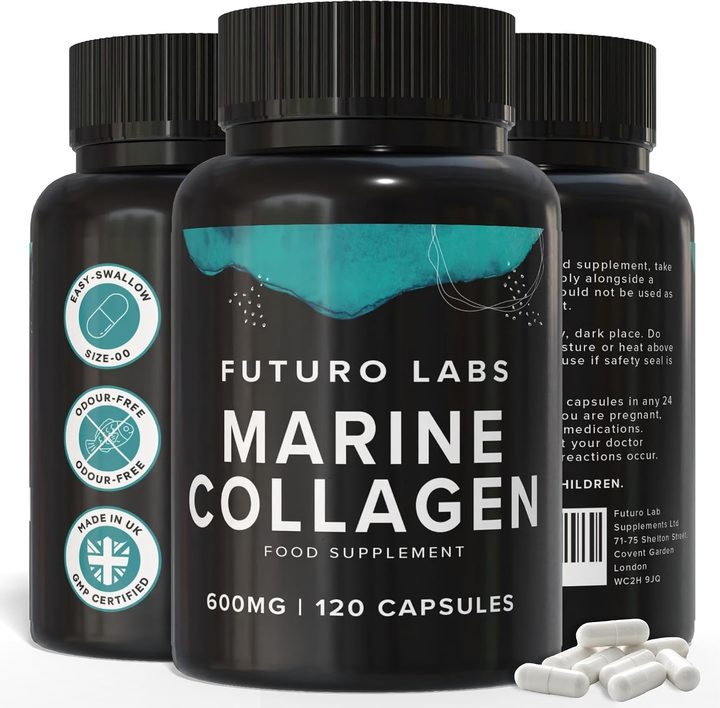
Our brand: the worked example on this page
Futuro Labs Marine Collagen
- 28p a day
- 120 capsules, 2 capsules daily
- Lab tested
- Made in the UK
Marine, on its true terms: Futuro Labs Marine Collagen on Amazon UK, 2 capsules, 1200mg hydrolysed type 1 marine collagen with 12mg vitamin C at 15% NRV plus zinc, 120 for £16.99, 28p a day, lab tested and UK made, below the research band and taken for the vitamin C line, so the fish-allergic reader and the reader avoiding fish pass it by. Full label breakdown. The kidney half is on the collagen and kidney page; the five columns of what to avoid on the what to avoid page.
Column one, must not, and column two, should ask first
Who should not take collagen is a question the shelf answers with a single list that mixes an allergy with a preference with a budget, and the honest page sorts the list into three columns, because must not, should ask and need not are different instructions with different urgency. Column one, must not, has two entries. The first is allergy: a reader with fish allergy must not take marine collagen, which is hydrolysed fish skin and scale protein, the protein a fish allergy reacts to, unlike refined fish oil, which carries little protein and is tolerated by most fish-allergic people, so the marine tub is the allergen in a capsule, and the fish-allergic reader chooses bovine or nothing and a reader unsure of their allergy asks an allergist before trying it. The second is the source itself: collagen is an animal protein with no plant version, so a vegan takes none and the vegan collagen products on the shelf are vitamin C and amino acid blends with no collagen in them; a reader who avoids beef or pork for any reason takes neither bovine nor porcine, which is what most of the gelatin and many of the trial peptides are; a pescatarian takes marine and nothing else; and a reader observing kosher or halal rules checks the source and the certification, since bovine gelatin and collagen vary in how they are slaughtered and processed. The label's source line, marine, bovine or porcine, settles column one for every reader in it, and a tub that will not print the source is a tub column one cannot buy. Column two, should ask first, has four entries and none of them is a prohibition. A reader who has formed calcium oxalate kidney stones asks whoever manages the stones, because hydroxyproline, a tenth of collagen, is metabolised partly to oxalate and urinary oxalate rises after large gelatin loads, so a daily scoop is a variable on that reader's ledger. A reader with kidney disease asks the kidney team before any protein supplement, collagen included, because protein intake in kidney disease is set clinically and a scoop is protein, while a healthy reader has no kidney question, higher protein intakes showing adaptation and not harm in the trials. A pregnant or breastfeeding reader asks the midwife or doctor, not because collagen is known to be a problem, it is a food protein, but because it has no pregnancy trials and the standing position is that any supplement in pregnancy is discussed rather than assumed. And anyone under eighteen gets no supplement guidance from this site at all, collagen included, which is a rule and not a footnote.
Column three, need not, and the columns totalled
Column three, need not, is the column the shelf never prints and the one most readers of a lifting site belong in, because it is about reasons rather than risks. The reader expecting muscle need not take collagen: hydrolysed collagen lacks tryptophan entirely, scores near zero on the protein completeness scale and carries around a third of whey's leucine, the amino acid that triggers muscle protein synthesis, so it does not build muscle in the trials that compare it with whey and does not count toward the 1.6 grams per kilo a lifter eats for it, and a reader who bought collagen because the tub said protein has bought the wrong protein for the job. The reader expecting a claim need not take collagen: it holds no authorised health claim in the UK for skin, joints, bones, hair, nails or anything else, so every sentence on a tub is either vitamin C's collagen formation line, zinc and biotin's normal skin and hair lines borrowed from the ingredients beside it, or a phrasing the register does not permit, and a reader who wants a supplement that says what it does buys vitamin D or creatine, which have sentences. The reader who has not pulled the larger levers need not take collagen yet: for bones and joints the levers are load, protein at 1.6 grams per kilo, calcium from food and vitamin D through the winter, and for skin they are sunscreen and sleep, and collagen is fourth on every such list, research at 2.5 to 15 grams over weeks and months with modest, instrument-measured results, so a reader on a budget spends the first pounds on the first levers. Who should, then, for symmetry: a reader in none of the columns who wants the research, the tendon protocol at fifteen grams with vitamin C an hour before loading, the joint comfort trials at ten grams over months, the skin trials at 2.5 to 10 grams over eight to twelve weeks, or who wants the habit and the vitamin C line in a capsule and knows that is what they are buying. The columns totalled: must not, fish allergy with marine and the source a diet or faith excludes; should ask, stone formers, kidney disease, pregnancy and breastfeeding, and no one under eighteen advised here; need not, the muscle reader, the claim reader and the reader with larger levers unpulled. The worked example is marine and says so on its true terms: two capsules, 1200mg hydrolysed type 1 marine collagen with 12mg vitamin C plus zinc, 120 for £16.99 at 28p a day, lab tested and UK made, below the research band, taken for vitamin C's collagen formation sentence, a fish protein the fish-allergic and the fish-avoiding reader pass by for bovine or for nothing. Who should not take collagen: one allergy, one set of dietary lines, four conversations, and three reasons that were never good ones.
| The column | Who | Why | What instead |
|---|---|---|---|
| Must not | Fish allergy, with marine collagen | Marine collagen is fish skin and scale protein, the allergen itself | Bovine, or nothing; an allergist if unsure |
| Must not | A diet or faith that excludes the source | Collagen is animal protein with no plant version; bovine, porcine and marine differ | Read the source line; vegans take none |
| Should ask first | Calcium oxalate stone formers | Hydroxyproline raises urinary oxalate after large loads | Keep it modest; ask whoever manages the stones |
| Should ask first | Kidney disease | Protein intake is set clinically; collagen is protein | The kidney team, before any protein supplement |
| Should ask first | Pregnant or breastfeeding | No pregnancy trials; supplements are discussed, not assumed | The midwife or doctor |
| No guidance here | Anyone under eighteen | This site gives no supplement guidance to minors | None from this site |
| Need not | Expecting muscle, or a claim, or with larger levers unpulled | No tryptophan, little leucine; no UK claim; collagen is fourth | Whey and complete protein; vitamin D, creatine; load and sunscreen |
| The worked exampleOurs | Two capsules, 1200mg marine collagen with 12mg vitamin C plus zinc, 28p a day | Marine: the fish-allergic and fish-avoiding reader pass it by | On its true terms for everyone else |
What to check on the label
- Fish allergy: never marine: bovine or nothing.
- Read the source line: vegan, beef, pork, fish, kosher, halal.
- Stones, kidneys, pregnancy: ask first: the specialist, the team, the midwife.
- Under eighteen: no guidance here: a rule.
- Muscle, claims or an empty first rung: need not: spend elsewhere first.
Our brand
The worked example: Futuro Labs Marine Collagen
Futuro Labs Marine Collagen: 2 capsules daily, 1200mg hydrolysed type 1 marine collagen with 12mg vitamin C and 1.5mg zinc (15% NRV each), 120 capsules for £16.99, 60 days at 28p a day, lab-tested, UK GMP made. Slim veggie-shell capsules, odour free. Fish derived: pescatarian, not vegetarian or vegan.
- Collagen per serving
- 1200mg hydrolysed type 1 marine (fish)
- Co-factors
- vitamin C 12mg (15% NRV), zinc 1.5mg (15% NRV)
- Serving
- 2 capsules a day
- Bottle
- 120 capsules, 60 days
- Price
- £16.99 (28p a day)
- Capsule
- slim size 00, veggie shell, odour free
Questions people also ask
Who should not take marine collagen?
Anyone with fish allergy, since marine collagen is hydrolysed fish skin and scale protein, the allergen itself rather than a refined oil, and anyone whose diet excludes fish, with bovine the alternative for the first and nothing or bovine for the second, and an allergist consulted by a reader unsure of their allergy.
Can I take collagen if I have kidney stones?
Ask first: hydroxyproline, around a tenth of collagen, is metabolised partly to oxalate and urinary oxalate rises after large gelatin loads, so a reader who has formed calcium oxalate stones keeps collagen and gelatin modest and asks whoever manages the stones before adding a daily dose, while a reader without stones has no footnote.
Is collagen safe in pregnancy?
It is a food protein with no known problem and no pregnancy trials, so the standing position applies: any supplement in pregnancy or breastfeeding is discussed with the midwife or doctor rather than assumed, folic acid and vitamin D being the ones routinely advised and high-dose vitamin A the one avoided.
Can teenagers take collagen?
This site gives no supplement guidance to anyone under eighteen, collagen included, so the question goes to a doctor or dietitian rather than to a tub or a page, and a young lifter's tendons and joints are served by progressive load and adequate food.
Is there anyone who simply does not need collagen?
Three kinds of reader: the one expecting muscle, since collagen lacks tryptophan and most of whey's leucine and builds none; the one expecting a claim, since collagen holds no authorised UK claim; and the one who has not yet pulled load, protein, vitamin D and sunscreen, for whom collagen is fourth on every list.
Sources
- The fish allergy and fish oil literature: fish allergy is to fish proteins, and refined fish oil contains little or no protein, so most fish-allergic people tolerate fish oil supplements, but the allergy guidance is to discuss it with an allergist and to prefer an algal oil where doubt exists. PubMed record
- The hydroxyproline and urinary oxalate literature: gelatin and collagen are rich in hydroxyproline, which the liver metabolises partly to oxalate, and feeding studies show a rise in urinary oxalate after large gelatin loads, a note for people who form calcium oxalate kidney stones and no concern at ordinary intakes in others. PubMed record
- The dietary protein and kidney function literature: meta-analyses of randomised trials in adults without kidney disease find that higher protein intakes raise glomerular filtration rate slightly, a normal adaptive response, without evidence of harm to kidney function, while in established chronic kidney disease protein intake is restricted and set clinically, so the two populations are answered separately. PubMed record
- The supplements in pregnancy position: folic acid and vitamin D are the supplements routinely advised, high-dose vitamin A is avoided, and other supplements including protein and collagen products have no pregnancy trials behind them, so the standing advice is to discuss any supplement with the midwife or doctor rather than assume a food protein is a settled question. PubMed record