Ghost Fitness/Collagen/What to avoid when taking collagen?
What to avoid when taking collagen?
The short answer
Avoid nothing in the glass: collagen has no documented drug interactions. Avoid counting it as protein, labels that hide grams, taking it if you form calcium oxalate stones or react to fish, and any claim on the tub.
- Column one, the glassnothing to avoid: no documented interactions; coffee, dairy and heat do not matter
- Column two, the habitavoid counting the scoop toward 1.6g per kilo: no tryptophan, little leucine
- Column three, the labelavoid proprietary blends, milligrams dressed as grams, missing type and source
- Columns four and five, the person and the hopestone formers, fish allergy, kidney disease, under-18s; and any claim, since collagen holds none
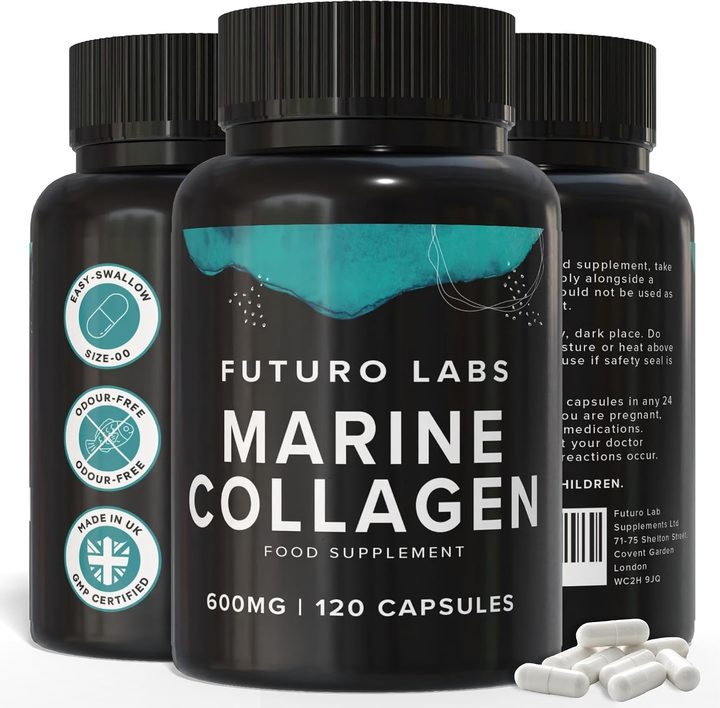
Our brand: the worked example on this page
Futuro Labs Marine Collagen
- 28p a day
- 120 capsules, 2 capsules daily
- Lab tested
- Made in the UK
A label that passes column three: Futuro Labs Marine Collagen on Amazon UK, 2 capsules, 1200mg hydrolysed type 1 marine collagen with 12mg vitamin C at 15% NRV plus zinc, 120 for £16.99, 28p a day, lab tested and UK made, the dose printed plainly and below the 2.5 to 15g research band, taken for the vitamin C line. Full label breakdown. The vitamin C pairing is on the collagen and vitamin C side effects page; the safe ceiling on the how many mg is safe page.
Columns one to three: the glass, the habit and the label
What to avoid when taking collagen produces a shelf answer that is mostly wrong, a list of foods and drinks supposedly blocking it, and the honest page replaces the list with five columns, because the things worth avoiding are not in the glass at all. Column one, the glass: avoid nothing. Collagen is a food protein, digested like any other into peptides and amino acids, and it has no documented interactions with medicines, no absorption fights with minerals or other proteins, and no sensitivity to the things forum lists warn about, since coffee does not denature a peptide that has already been hydrolysed, dairy does not bind it, sugar does not glycate it in a cup, and the heat of a hot drink does nothing to fragments that were made by heat and enzymes in the first place, while the vitamin C the lists sometimes warn against is the cofactor for the enzymes that cross-link collagen and the one ingredient a collagen label is allowed a sentence about. Column two, the habit: avoid counting the scoop as the day's protein. A twenty-gram scoop is protein on the label by the nitrogen test and protein of the wrong shape for muscle, lacking tryptophan entirely, near zero on the completeness scale and carrying around a third of whey's leucine, so a reader who books it toward a 1.6 grams per kilo target has under-eaten complete protein by a scoop, and the habit to avoid is that arithmetic, the fix being to book collagen separately as connective tissue protein and eat the day's complete protein as usual. Column three, the label: avoid three things. A proprietary blend that lists collagen in a mix with a total weight and no breakdown, so the grams of collagen cannot be read; a milligram dose, 500mg or 1000mg in a capsule, presented in language borrowed from the trials at 2.5 to 15 grams, as if the two were the same thing, which the honest label avoids by printing the dose plainly and describing it on its true terms; and a tub that will not state the type and the source, type 1 or 2, bovine, marine or porcine, since the type decides whether it is the tendon and skin molecule or the small-dose undenatured type II one, and the source decides whether a fish-allergic or pescatarian or observant reader can take it.
Columns four and five: the person and the hope, and the columns totalled
Column four, the person: four groups have something to avoid, and none of them is the general reader. A reader who has formed calcium oxalate kidney stones avoids treating collagen and gelatin as a daily twenty grams, because hydroxyproline is metabolised partly to oxalate and large gelatin loads raise urinary oxalate in the feeding studies, so that reader keeps it modest and asks whoever manages the stones. A fish-allergic reader avoids marine collagen, which is hydrolysed fish skin and scale protein, the allergen itself rather than a refined oil, and chooses bovine. A reader with kidney disease avoids adding any protein supplement without asking the kidney team, since protein intake in kidney disease is set clinically and a collagen scoop is protein, the general population's reassurance that higher protein has not harmed healthy kidneys in trials being an answer for a different population. And a reader under eighteen avoids supplement advice from this site altogether, which gives none for that age. Column five, the hope: avoid the claim. Collagen holds no authorised claim in the UK for skin, joints, hair, nails, bones, muscle or anything else, so a tub promising any of those is either borrowing vitamin C's collagen formation sentence or zinc and biotin's normal skin lines from the ingredients beside it, or saying something the register does not permit, and the reader who avoids the hope buys collagen for what the trials showed at 2.5 to 15 grams, instrument gains in skin at 2.5 to 10 grams over two to three months, modest joint comfort at ten grams over months, synthesis markers at fifteen grams with vitamin C before loading, and expects nothing a mirror will show in a fortnight. The columns totalled: nothing in the glass, one habit, three label faults, four groups of person, and one hope, which is a shorter and more useful list than the foods to avoid the shelf offers, none of which matter. The worked example passes column three by printing its dose plainly and describing it on its true terms: two capsules, 1200mg hydrolysed type 1 marine collagen with 12mg vitamin C plus zinc, 120 for £16.99 at 28p a day, lab tested and UK made, the type and source stated, the dose below the research band and taken for the vitamin C line, and marine, so the fish-allergic reader in column four passes it by for bovine. What to avoid when taking collagen: not the coffee, not the dairy, not the heat, but the arithmetic, the blend, the milligrams dressed as grams, the footnotes for four groups, and the claim that does not exist.
| The column | What to avoid | Why |
|---|---|---|
| The glass | Nothing: coffee, dairy, heat, vitamin C are all fine | No documented interactions; a hydrolysed peptide is not damaged by a cup |
| The habit | Counting the scoop toward 1.6g per kilo | No tryptophan, little leucine, near zero completeness |
| The label | Proprietary blends; milligrams dressed as grams; no type or source | The grams, the trial comparison and the source must be readable |
| The person | Stone formers at large doses; marine if fish-allergic; any protein supplement in kidney disease without asking; under-18s | Oxalate; fish protein; clinically set protein; no guidance for minors |
| The hope | Any claim on the tub | Collagen holds none; vitamin C's sentence is the only collagen line |
| The worked exampleOurs | Two capsules, 1200mg type 1 marine collagen with 12mg vitamin C plus zinc, 28p a day | Passes the label column; states its true terms; marine, so bovine for fish allergy |
What to check on the label
- Put it in whatever you like: coffee, milk, heat, all fine.
- Do not count it as the day's protein: book it separately.
- Refuse blends and dressed-up milligrams: grams, type and source printed.
- Read your footnote: stones, fish, kidneys, age.
- Ignore every claim on the tub: collagen holds none.
Our brand
The worked example: Futuro Labs Marine Collagen
Futuro Labs Marine Collagen: 2 capsules daily, 1200mg hydrolysed type 1 marine collagen with 12mg vitamin C and 1.5mg zinc (15% NRV each), 120 capsules for £16.99, 60 days at 28p a day, lab-tested, UK GMP made. Slim veggie-shell capsules, odour free. Fish derived: pescatarian, not vegetarian or vegan.
- Collagen per serving
- 1200mg hydrolysed type 1 marine (fish)
- Co-factors
- vitamin C 12mg (15% NRV), zinc 1.5mg (15% NRV)
- Serving
- 2 capsules a day
- Bottle
- 120 capsules, 60 days
- Price
- £16.99 (28p a day)
- Capsule
- slim size 00, veggie shell, odour free
Questions people also ask
What should you not mix collagen with?
Nothing on the evidence: collagen has no documented interactions with medicines or foods, coffee does not damage an already hydrolysed peptide, dairy does not bind it and heat does not destroy it, so the forum lists of blockers can be ignored and the drink is whatever the reader will keep taking.
Who should avoid taking collagen?
Four groups with a footnote: calcium oxalate stone formers keep it modest and ask, fish-allergic readers avoid marine collagen and choose bovine, anyone with kidney disease asks their kidney team before any protein supplement, and this site gives no supplement guidance for anyone under eighteen.
Should I avoid taking collagen with coffee?
No: the heat of a coffee does nothing to a peptide made by heat and enzymes in the first place, and the caffeine does not interact with it, so coffee is the most common vehicle for a collagen powder and a perfectly good one.
What should I avoid on a collagen label?
A proprietary blend that hides the grams of collagen inside a total weight, a milligram capsule dose described in the language of the 2.5 to 15 gram trials as if they were the same, and a tub that will not state type and source, since type decides the molecule and source decides who can take it.
Is there anything I should avoid expecting from collagen?
The claim: collagen holds no authorised UK claim for skin, joints, hair, nails or anything else, so every promise on a tub is borrowed from vitamin C, zinc or biotin beside it or is not permitted, and the honest expectation is the trial result at trial doses, instrument gains over months and nothing in a mirror in a fortnight.
Sources
- The amino acid kinetics literature: plasma amino acid and peptide levels rise within about 30 minutes of ingesting hydrolysed collagen or gelatine and peak around the hour, the pharmacokinetic basis for pre-loading timing. PubMed record
- The protein quality literature: scoring systems such as PDCAAS and DIAAS rate proteins by essential amino acid completeness and digestibility, with collagen scoring at or near zero for lacking tryptophan. PubMed record
- The hydroxyproline and urinary oxalate literature: gelatin and collagen are rich in hydroxyproline, which the liver metabolises partly to oxalate, and feeding studies show a rise in urinary oxalate after large gelatin loads, a note for people who form calcium oxalate kidney stones and no concern at ordinary intakes in others. PubMed record
- Retained Regulation (EC) No 1924/2006 on nutrition and health claims made on foods, and the Great Britain nutrition and health claims register. https://www.gov.uk/government/publications/great-britain-nutrition-and-health-claims-nhc-register