Ghost Fitness/Collagen/What to avoid while taking collagen?
What to avoid while taking collagen?
The short answer
Three lists. Pharmacist: nothing interacts; cautions are source allergy and oxalate stones; empty-stomach rules belong to certain medicines. Physio: avoid resting instead of loading, and smoking. Dermatologist: avoid unprotected sun and smoking. Common item: smoking. No food or drink.
- The pharmacist's listno documented drug interactions; cautions: allergy to the source animal, oxalate stones at large doses; take levothyroxine and bisphosphonates apart from any food or supplement, a rule about those drugs
- The physiotherapist's listavoid resting a tendon or joint instead of loading it; avoid smoking
- The dermatologist's listavoid unprotected sun and smoking; keep the retinoid and the sunscreen
- The common itemsmoking, on all three lists; no food or drink on any
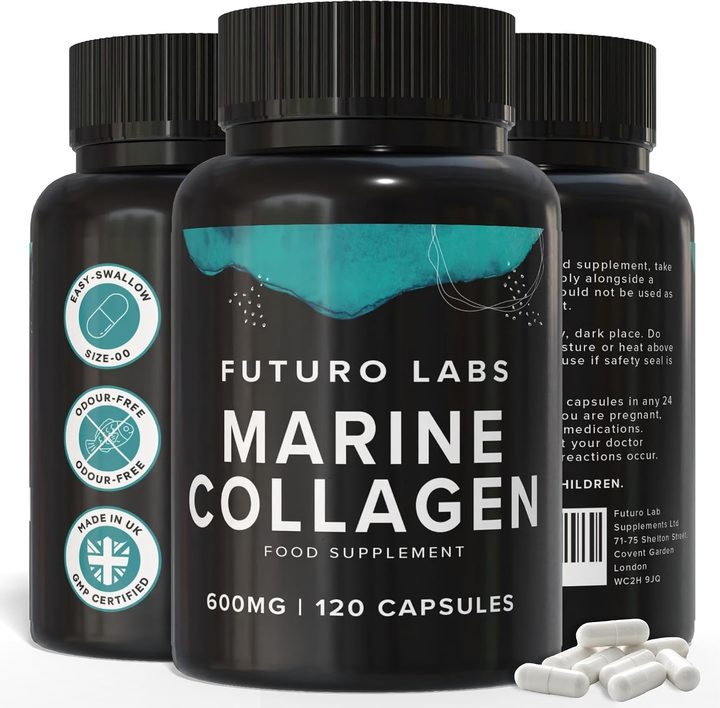
Our brand: the worked example on this page
Futuro Labs Marine Collagen
- 28p a day
- 120 capsules, 2 capsules daily
- Lab tested
- Made in the UK
A tub with nothing on the lists to avoid beside it: Futuro Labs Marine Collagen on Amazon UK, 2 capsules, 1200mg hydrolysed type 1 marine collagen with 12mg vitamin C at 15% NRV plus zinc, 120 for £16.99, 28p a day, lab tested and UK made, marine so not for a fish allergy, and stated as below the 2.5 to 15g research band. Full label breakdown. The glass version of the list is on the avoid when taking collagen page; the oxalate pathway on the collagen and kidney side effects page; the retinoid comparison on the retinol or collagen page.
The pharmacist's list, which is almost empty, and the two cautions that are on it
What to avoid while taking collagen is a question most pages answer with a list of foods and drinks, sugar, coffee, alcohol, as if the capsule were a delicate thing that other intakes could spoil, and the honest way to test that list is to ask the three professionals who would actually be asked the question to write their own. The pharmacist writes first and the list is almost empty. Hydrolysed collagen is a food protein, digested to amino acids and small peptides like any other protein, and it has no documented interactions with any medicine: it does not induce or inhibit the liver enzymes that drug interactions usually run through, it does not bind other drugs in the gut the way dietary minerals can, and it does not change stomach acidity or transit in a way that would alter another medicine's absorption. The empty-stomach rule that readers half remember and apply to collagen belongs to a short list of specific medicines, levothyroxine, the bisphosphonates and a few antibiotics among them, which must be taken apart from food and supplements because food or minerals reduce their absorption; the rule is about those drugs and applies to collagen only in the sense that it applies to toast, so a reader on levothyroxine takes it as prescribed, on an empty stomach, and takes collagen with breakfast an hour or more later, exactly as they would any other food. The pharmacist's two real cautions are specific and worth the whole list. The first is allergy to the source animal: marine collagen is made from fish skin and scales and carries fish protein, so a fish allergy excludes it, and a bovine collagen is excluded by a beef allergy, rare but real; the UK label must declare fish as an allergen and a reader with the allergy reads for it. The second is the hydroxyproline to oxalate pathway: collagen and gelatin are rich in hydroxyproline, which the liver metabolises partly to oxalate, and feeding studies show urinary oxalate rising after large gelatin doses, so a reader who forms calcium oxalate kidney stones treats a high-dose collagen habit as something to raise with their doctor and keeps to the low end if they take it at all, a caution that does not apply to someone with no stone history. That is the pharmacist's list: no interactions, two cautions, and no food or drink on it, since protein digestion is not spoiled by coffee, sugar or a glass of wine, whatever those do elsewhere.
The physiotherapist's and the dermatologist's lists, the one common item, and the tub
The physiotherapist writes the second list for the reader taking collagen for a tendon or a joint, and it has two items, neither of them a food. The first is avoid resting a sore tendon or joint instead of loading it, because progressive loading is the treatment of tendinopathy and the signal that tells tendon cells to build, and the collagen protocol, 15g with vitamin C an hour before the session, has its marker trial and its one small outcome trial beside loading and no evidence at all in a tendon that is being rested; a reader who takes the capsule and skips the rehab has kept the part with the weaker evidence and dropped the part with the stronger. The second is avoid smoking, which impairs blood flow and oxygen delivery and slows healing across tendon, ligament and bone, one of the best-documented brakes on connective tissue repair and one that no supplement offsets. The dermatologist writes the third list for the reader taking collagen for skin, and it has two items too. The first is avoid unprotected sun: ultraviolet exposure drives the enzymes that break down dermal collagen and is the largest single cause of visible skin ageing, so an unprotected afternoon undoes more collagen than a capsule's few percent instrument change supplies, and the sunscreen is the more powerful collagen intervention of the two. The second is, again, smoking, which degrades skin collagen and elastin directly and through blood flow. The dermatologist adds a line about not dropping things: a reader who starts collagen and stops a retinoid has swapped the intervention with the stronger skin collagen evidence for the weaker, and the capsule should sit beside the retinoid and the sunscreen, not replace them. Read the three lists together and one item appears on all of them, smoking, and nothing edible appears on any; the foods and drinks the shelf tells readers to avoid, sugar, coffee, alcohol, dairy, do not interfere with the digestion or absorption of a protein, and the sugar line, which rests on glycation of collagen in the skin, is an argument about long-term diet and skin ageing and not about anything that happens to a capsule. The practical list is therefore short: keep smoking off the table, keep the sun off the skin, keep the rehab on, and take the capsule with any meal, apart from any medicine that itself demands an empty stomach. The worked example has nothing on the lists to avoid beside it: two capsules, 1200mg hydrolysed type 1 marine collagen with 12mg vitamin C plus zinc, 120 for £16.99 at 28p a day, lab tested and UK made, marine and therefore not for a fish allergy, below the 2.5 to 15g research band and said to be, with vitamin C's collagen formation sentence as its lawful line. What to avoid while taking collagen: smoking, unprotected sun and resting instead of loading, and nothing in the glass.
| Who writes it | Avoid | Why | A food or drink? |
|---|---|---|---|
| Pharmacist | Nothing by interaction: collagen has no documented drug interactions | A food protein, digested like any other | No |
| Pharmacist | Marine collagen with a fish allergy; bovine with a beef allergy | Source animal protein is present and declared | No |
| Pharmacist | Large doses if you form calcium oxalate stones | Hydroxyproline is metabolised partly to oxalate | No |
| Pharmacist | Taking it alongside levothyroxine or bisphosphonates | Those medicines need an empty stomach; a rule about them, not collagen | No |
| Physiotherapist | Resting a tendon or joint instead of loading it | Loading is the treatment; the protocol only has evidence beside it | No |
| Physiotherapist and dermatologist | Smoking | Slows connective tissue repair and degrades skin collagen | No |
| Dermatologist | Unprotected sun; dropping the retinoid or sunscreen | UV breaks down dermal collagen faster than a capsule builds it | No |
| The worked exampleOurs | Nothing on the lists beside it | Two capsules, 1200mg marine collagen with 12mg vitamin C plus zinc, 28p a day; marine, so not for a fish allergy | No |
What to check on the label
- Expect no drug interactions: a food protein.
- Check the two cautions: source allergy and oxalate stones.
- Keep empty-stomach medicines apart from all food: a rule about them.
- Keep loading, sunscreen and the retinoid: the stronger interventions.
- Avoid smoking: the one item on every list.
Our brand
The worked example: Futuro Labs Marine Collagen
Futuro Labs Marine Collagen: 2 capsules daily, 1200mg hydrolysed type 1 marine collagen with 12mg vitamin C and 1.5mg zinc (15% NRV each), 120 capsules for £16.99, 60 days at 28p a day, lab-tested, UK GMP made. Slim veggie-shell capsules, odour free. Fish derived: pescatarian, not vegetarian or vegan.
- Collagen per serving
- 1200mg hydrolysed type 1 marine (fish)
- Co-factors
- vitamin C 12mg (15% NRV), zinc 1.5mg (15% NRV)
- Serving
- 2 capsules a day
- Bottle
- 120 capsules, 60 days
- Price
- £16.99 (28p a day)
- Capsule
- slim size 00, veggie shell, odour free
Questions people also ask
Can I drink coffee while taking collagen?
Yes. Coffee does not interfere with the digestion or absorption of a protein, and the collagen peptide studies measured peptides in blood after ordinary meals; the coffee line on the shelf has no mechanism behind it, and many readers stir collagen powder into the coffee itself.
Should I avoid sugar while taking collagen?
Not for the capsule's sake: sugar does not affect protein digestion. The sugar argument rests on glycation, in which sugars attach to collagen in the skin over years and stiffen it, a long-term diet and skin ageing point that holds whether or not a supplement is taken, and not a reason the capsule stops working.
Can I take collagen with my medication?
Collagen has no documented drug interactions, so for most medicines yes, with any meal. Medicines that require an empty stomach, such as levothyroxine and bisphosphonates, should be taken apart from all food and supplements including collagen, which is a rule about those medicines; a pharmacist confirms the gap for a specific prescription.
Who should not take collagen at all?
Someone allergic to the source animal, fish for marine or beef for bovine, since the protein is present; someone who forms calcium oxalate kidney stones should raise a high-dose habit with their doctor because of the hydroxyproline to oxalate pathway; and anyone under eighteen, for whom no supplement guidance is given here.
Does smoking cancel out collagen?
Smoking does more damage to collagen than any supplement adds: it impairs blood flow and healing in tendon, ligament and bone and degrades skin collagen and elastin directly, which is why it is the one item on the pharmacist's, physiotherapist's and dermatologist's lists alike, and stopping it is the larger intervention.
Sources
- The food-effect pharmacology literature: certain medicines require an empty stomach for defined mechanisms, acid-labile drugs, drugs bound by food, and drugs chelated by dietary minerals such as levothyroxine and bisphosphonates, mechanisms absent for food supplements like mushroom extracts. PubMed record
- The hydroxyproline and urinary oxalate literature: gelatin and collagen are rich in hydroxyproline, which the liver metabolises partly to oxalate, and feeding studies show a rise in urinary oxalate after large gelatin loads, a note for people who form calcium oxalate kidney stones and no concern at ordinary intakes in others. PubMed record
- The smoking and tissue healing literature: smoking impairs blood flow, oxygen delivery and healing across bone, tendon, ligament and wound repair, one of the best-documented modifiable brakes on recovery. PubMed record
- The oral collagen safety record: hydrolysed collagen has been given at 2.5 to 15 grams a day in trials of up to a year with adverse events no different from placebo, is consumed in gram quantities from meat, skin and gelatin in ordinary diets, carries no tolerable upper intake level because it is a food protein rather than a nutrient with toxicity, and the recorded cautions are allergy to the source animal and the hydroxyproline to oxalate pathway in those who form calcium oxalate stones. PubMed record