Ghost Fitness/Collagen/Is collagen worth taking for tendonitis?
Is collagen worth taking for tendonitis?
The short answer
Worth depends on what it replaces: inside a physio-led programme, the pre-loading protocol is a defensible pennies-a-session adjunct with flat expectations. Bought instead of the assessment and rehab, it is worth less than nothing, because it delays the treatment.
- The real costnot the pennies: the risk of substituting for the appointment
- What it might buysynthesis-marker changes in small studies: maybe-something, never a treatment
- 3 readers, 3 verdictsin-programme adjunct, appointment-avoider, prophylactic browser
- The type variantanswered elsewhere in one line: tendons and the shelf are both type 1
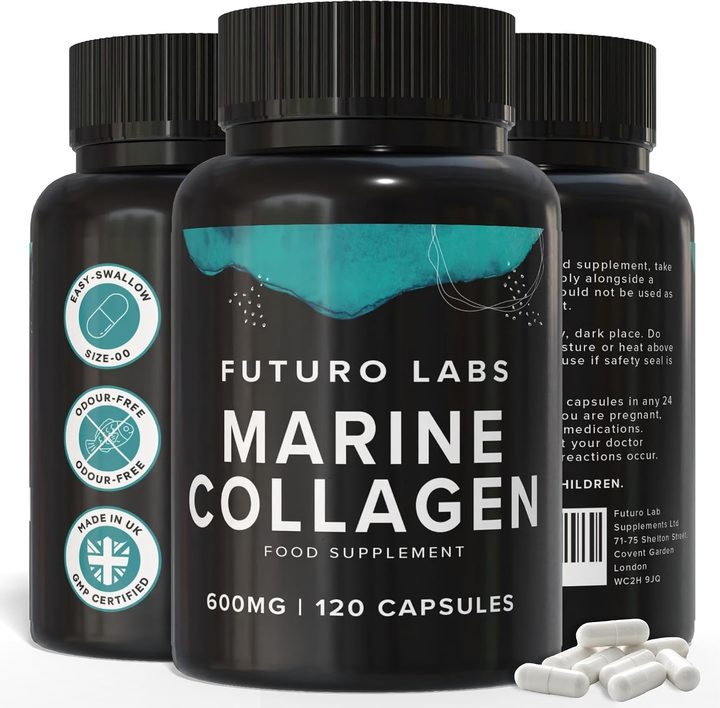
Our brand: the worked example on this page
Futuro Labs Marine Collagen
- 28p a day
- 120 capsules, 2 capsules daily
- Lab tested
- Made in the UK
For the in-programme reader, honestly labelled: Futuro Labs Marine Collagen on Amazon UK, 1200mg hydrolysed type 1 with vitamin C at 15% NRV, stated plainly below the protocol band, £16.99 for 60 days at 28p. Full label breakdown. The condition frame is on the tendonitis page; the type variant on the tendon repair page.
The ledger run honestly: what it costs, what it might buy
Worth is a ledger, so run both columns without flinching. The credit column, what collagen might buy a tendonitis reader: participation in the pre-loading research pattern, roughly 15g of gelatin or hydrolysate with vitamin C about an hour before a loading session, whose small studies reported rises in collagen-synthesis markers, surrogate outcomes from little samples, no healed-tendon trials, no authorised claim, a maybe-something honestly priced at the level of an interesting bet rather than an intervention; plus, at capsule scale, the ordinary lawful label, vitamin C's collagen-formation sentences met for 28p. The debit column is where this page earns its keep, because the money is the trivial entry: pennies a session at powder scale, a coffee a week. The real cost is substitution risk, the well-documented pattern where buying something that feels like action postpones the action that works, and for tendinopathy the action that works is specific, assessment then a progressive loading programme, months of graded work that reviews consistently rank above rest and above every passive option, so a purchase that quietly stands in for the physio appointment does not merely waste its pennies, it spends weeks of the tendon's slow clock on nothing, which is a negative return no marker study offsets.
Three readers, three verdicts, and the variant answered in passing
Worth resolves by reader, and this query has exactly three. Reader one, diagnosed and in a programme: a physiotherapist has graded the tendon and prescribed the loading, and the question is whether to add the pre-session protocol alongside; verdict, defensibly yes if the physio is happy, at powder scale, expectations flat, the adjunct doing whatever it does while the programme does the treating, the one configuration in which the credit column is real and the debit column is empty. Reader two, self-diagnosing to avoid the appointment: the ache has a name from a search engine and the basket is open; verdict, worth less than nothing, because the purchase is functioning as the appointment's replacement, the substitution risk in its pure form, and the honest instruction is to close the basket and book the assessment, after which reader two becomes reader one and the answer improves. Reader three, no tendon problem, browsing prophylactically: no prevention evidence exists for collagen, tendinopathy prevention living in load management, progression rates and recovery, the training variables, not the aisle; verdict, spend nothing here, spend attention on the programme design instead. And the variant question, which type is best for tendonitis, takes its one line: tendons are type 1 and so is virtually the whole shelf, the routing breaks in digestion regardless, and the tendon repair page holds the full decode. Three verdicts, one constant: the rehab is the treatment, and worth is measured by distance from that fact.
| The reader | The verdict | Why |
|---|---|---|
| Diagnosed, inside a physio programme | Defensible adjunct: pennies, flat expectations | Credit column real, debit column empty |
| Self-diagnosing instead of booking | Worth less than nothing | The purchase substitutes for the treatment |
| No problem, browsing prophylactically | Spend nothing here | Prevention lives in load management, not the aisle |
| The money itself | Pennies a session, 28p a day at capsule scale | Never the real cost |
| The substitution risk | The real cost | Weeks of the tendon's slow clock spent on nothing |
| Which type is best | Type 1, like the tendon and the shelf | One line: the repair page holds the decode |
The verdict, and worth defined by what stands beside it
Is collagen worth taking for tendonitis: yes, narrowly and honestly, for the reader inside a physio-led programme who adds the pre-loading protocol with the clinician's blessing and expectations set by marker studies; no, emphatically, for the reader whose purchase would stand where the assessment should, the substitution that converts pennies of cost into weeks of delayed treatment; and not at all for the prophylactic browser, whose prevention budget belongs in programme design. The worked example serves the first reader's capsule lane and no one else's hopes: Futuro Labs Marine Collagen, 1200mg hydrolysed type 1 stated plainly below the protocol band, 12mg vitamin C at 15% NRV, lab tested, UK made, £16.99 for 60 days at 28p a day, worth exactly what it claims, which is the vitamin C sentence and nothing about tendons at all.
What to check on the label
- The money is never the real cost: substitution for the appointment is.
- In-programme, adjunct is defensible: physio's blessing, powder scale, flat expectations.
- Instead of assessment, worth is negative: weeks of the slow clock spent on nothing.
- Prevention lives in load management: not in any aisle.
- Type is a one-line answer: everything is type 1, and routing breaks anyway.
Our brand
The worked example: Futuro Labs Marine Collagen
Futuro Labs Marine Collagen: 2 capsules daily, 1200mg hydrolysed type 1 marine collagen with 12mg vitamin C and 1.5mg zinc (15% NRV each), 120 capsules for £16.99, 60 days at 28p a day, lab-tested, UK GMP made. Slim veggie-shell capsules, odour free. Fish derived: pescatarian, not vegetarian or vegan.
- Collagen per serving
- 1200mg hydrolysed type 1 marine (fish)
- Co-factors
- vitamin C 12mg (15% NRV), zinc 1.5mg (15% NRV)
- Serving
- 2 capsules a day
- Bottle
- 120 capsules, 60 days
- Price
- £16.99 (28p a day)
- Capsule
- slim size 00, veggie shell, odour free
Questions people also ask
Is collagen actually worth it for tendonitis?
Only as an adjunct inside a physio-led loading programme, at pennies a session with flat expectations: bought instead of the assessment, it delays the treatment and is worth less than nothing.
What is the biggest risk of buying collagen for a sore tendon?
Substitution: a purchase that feels like action postponing the action that works, the graded rehab that reviews rank above rest and every passive option.
Which type of collagen is best for tendonitis?
The one-line answer: tendons are type 1 and so is virtually the whole shelf, and digestion breaks the routing regardless. Dose, vitamin C and testing decide.
Can collagen prevent tendonitis in the first place?
No prevention evidence exists: tendinopathy prevention lives in load management, sensible progression and recovery, the training variables rather than the aisle.
What should I do before buying anything?
Book the assessment: a GP or physiotherapist grades the tendon and builds the programme that is the treatment. The adjunct conversation comes after, if at all.
Sources
- Review literature on tendinopathy management: progressive, load-based rehabilitation is the established core of treatment, typically guided by a physiotherapist, with passive approaches and complete rest performing worse. PubMed record
- The gelatin and vitamin C pre-exercise research (Shaw, Baar and colleagues): 15g gelatin with vitamin C taken about an hour before loading, studied for markers of collagen synthesis, the protocol behind the tendon-training conversation. PubMed record
- Futuro Labs Marine Collagen listing and label: 1200mg hydrolysed type 1 marine collagen per 2-capsule serving with 12mg vitamin C and 1.5mg zinc at 15% NRV each, 120 capsules, independently lab tested, UK made. https://www.amazon.co.uk/dp/B0C2J7N364
- EFSA Panel on Dietetic Products, Nutrition and Allergies. Scientific Opinion on the substantiation of health claims related to magnesium. EFSA Journal 2010;8(10):1807. https://efsa.onlinelibrary.wiley.com/doi/10.2903/j.efsa.2010.1807