Ghost Fitness/Collagen/Who should not take bovine collagen?
Who should not take bovine collagen?
The short answer
Bovine's own list: alpha-gal syndrome, the tick-borne mammalian meat allergy; faiths and diets that exclude beef or require certification; vegetarians. Collagen's general list: stone formers, kidney disease, pregnancy ask first; no guidance under eighteen. Fish allergy is marine's list.
- Bovine's allergyalpha-gal syndrome: delayed reaction to mammalian meat, gelatin and collagen; rare in the UK; absent from marine
- Bovine's faith and diet lineskosher and halal only with certification; excluded by beef-avoiding diets; vegetarians and vegans take no collagen
- Collagen's general listcalcium oxalate stones, kidney disease, pregnancy and breastfeeding: ask first; under-18s: no guidance here
- The BSE questionpost-BSE sourcing controls: read the traceability line rather than avoid
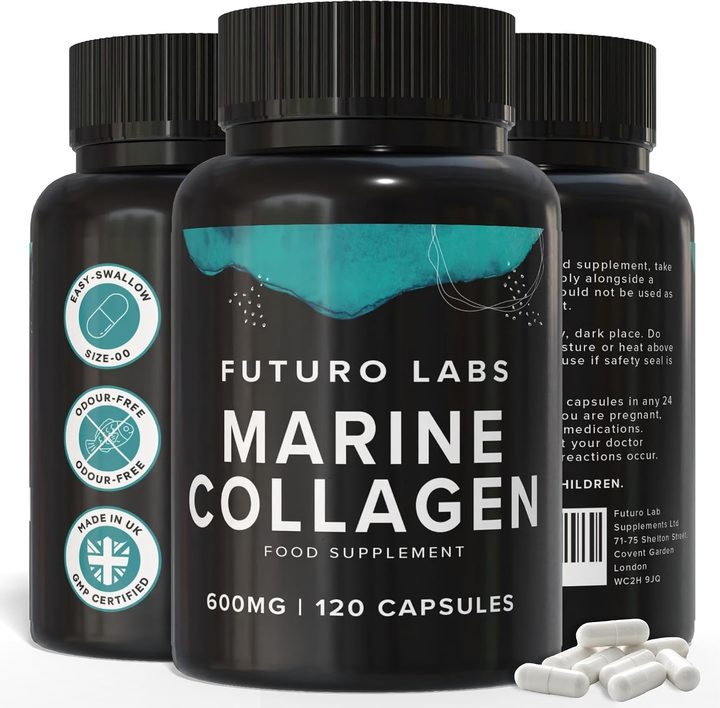
Our brand: the worked example on this page
Futuro Labs Marine Collagen
- 28p a day
- 120 capsules, 2 capsules daily
- Lab tested
- Made in the UK
The marine alternative for bovine's own list: Futuro Labs Marine Collagen on Amazon UK, 2 capsules, 1200mg hydrolysed type 1 marine collagen with 12mg vitamin C at 15% NRV plus zinc, 120 for £16.99, 28p a day, lab tested and UK made, fish-derived, so acceptable where beef is not and unsuitable where fish allergy is; below the research band and stated so. Full label breakdown. The general three columns are on the who should not take collagen page; bovine's skin file on the bovine collagen for skin page.
Bovine's own list: the alpha-gal allergy, the faith and diet lines, and the mistaken evidence reason
Who should not take bovine collagen has two answers layered on top of each other, the list that belongs to bovine specifically and the list that belongs to collagen generally, and the honest page separates them, because a reader avoiding bovine for a marine reason or avoiding collagen altogether for a bovine reason has the lists confused. Bovine's own list first, and its first entry is an allergy most readers have never heard of. Alpha-gal syndrome is a delayed allergy to mammalian meat, beef, pork and lamb, and to mammalian-derived products including gelatin, bovine and porcine collagen, and some medicines with gelatin capsules, sensitised through the bite of certain ticks, the lone star tick in the United States above all, so it is rare in the UK and commoner in readers who have lived or travelled where those ticks are; it presents unusually, hours after eating rather than minutes, with hives, gut symptoms or in some cases anaphylaxis, and a reader with the diagnosis avoids bovine and porcine collagen and gelatin entirely, while marine collagen, from a fish, carries no alpha-gal and is the alternative. That is the one allergy that belongs to bovine rather than to marine, and its mirror is fish allergy, which belongs to marine and not to bovine, so the two animals cover each other's allergic reader. The second entry is faith and diet. Bovine collagen is acceptable under kosher and halal rules only when the source animal, the slaughter and the processing meet the certifying body's standards, and porcine never is, so an observant reader relies on a certification mark and not on the word bovine, and a bovine tub without one is a tub that reader does not buy; beef is excluded by Hindu dietary practice and by many readers' personal choice; and vegetarians and vegans take no collagen of any animal, the vegan collagen products on the shelf being vitamin C and amino acid blends with no collagen in them, so for those readers the question is not bovine or marine but collagen or nothing, and fish-derived collagen is generally acceptable across the kosher and halal rules for the observant reader who does want collagen. The third entry is a mistaken reason worth correcting rather than honouring: a reader who avoids bovine because they believe marine has the skin evidence has the record backwards, since the best-known skin trials used porcine or bovine peptides with fish in fewer, and no trial has compared the animals for skin, so evidence is not a reason to avoid bovine and the animal is chosen by the lists above and by the file below.
Collagen's general list applied to bovine, the BSE question, and the two lists totalled
Collagen's general list applies to bovine exactly as it applies to marine, because the molecule is the same hydrolysed type 1 collagen from a different animal, with bovine adding type 3 from the hide, and the footnotes attach to the collagen rather than the cow. A reader who has formed calcium oxalate kidney stones keeps bovine collagen and gelatin modest and asks whoever manages the stones, since hydroxyproline, a tenth of any collagen, is metabolised partly to oxalate and urinary oxalate rises after large gelatin loads. A reader with kidney disease asks the kidney team before any protein supplement, bovine collagen included, since protein intake there is set clinically and a scoop is protein. A pregnant or breastfeeding reader asks the midwife or doctor, since collagen of any animal has no pregnancy trials and supplements in pregnancy are discussed rather than assumed. And this site gives no supplement guidance to anyone under eighteen, whatever the animal. The BSE question is the one bovine-specific worry that is not on either list, and it deserves its own paragraph because it is the reason many readers reach for marine without saying so. Bovine gelatin and collagen are sourced under the controls introduced after the BSE era: specified risk materials, the tissues in which the agent concentrated, are excluded from the raw material, hides and bones come from animals in controlled herds and countries, and the processing steps of alkaline or acid treatment, extraction, filtration and hydrolysis have been assessed as reducing any infectivity, the framework under which bovine gelatin and collagen are regarded as safe food ingredients by the food safety authorities, so the honest response to the BSE question is not to avoid bovine but to read the traceability line, country of origin and manufacturing standard, and to pass on a bovine tub that does not print one, which is the same standard of transparency this site asks of a marine tub's heavy-metals panel. The two lists totalled: bovine's own has an allergy, alpha-gal, a set of faith and diet lines settled by certification and personal rule, and a mistaken evidence reason to set aside; collagen's general list has the stone, kidney, pregnancy and age footnotes that follow the molecule; and the BSE question is answered by a line on the label. The worked example is the marine alternative for bovine's own list and says so: two capsules, 1200mg hydrolysed type 1 marine collagen with 12mg vitamin C plus zinc, 120 for £16.99 at 28p a day, lab tested and UK made, fish-derived, so acceptable to the alpha-gal reader and to most observant readers where beef is not, unsuitable for the fish-allergic reader who is bovine's customer, below the research band and taken for vitamin C's collagen formation sentence. Who should not take bovine collagen: the alpha-gal reader, the reader whose faith or diet says no or asks for a mark the tub lacks, the vegetarian, and everyone on collagen's general list, with the BSE worry answered by traceability rather than by the fish.
| The list | Who | Why | What instead |
|---|---|---|---|
| Bovine's own | Alpha-gal syndrome | Delayed allergy to mammalian meat, gelatin and collagen; tick-sensitised; rare in the UK | Marine collagen, which carries no alpha-gal |
| Bovine's own | Kosher or halal observance without certification | Bovine is acceptable only with certified source, slaughter and processing; porcine never | A certified bovine tub, or fish-derived collagen |
| Bovine's own | Beef-avoiding diets; vegetarians and vegans | Beef excluded; collagen is animal protein with no plant version | Marine for the beef-avoider; nothing for the vegan |
| Bovine's own, mistaken | Readers who think marine holds the skin evidence | Most skin trials used mammalian peptides; no head-to-head | Choose by the lists and the file, not by this |
| Collagen's general | Calcium oxalate stone formers; kidney disease; pregnancy and breastfeeding | Oxalate footnote; protein set clinically; no pregnancy trials | Ask first, whatever the animal |
| Collagen's general | Under-18s | No supplement guidance here | None from this site |
| The BSE question | Anyone who reaches for marine because of it | Post-BSE sourcing and processing controls | Read the traceability line; pass on a tub without one |
| The worked exampleOurs | Two capsules, 1200mg marine collagen with 12mg vitamin C plus zinc, 28p a day | Fish-derived: the alternative for bovine's own list | Unsuitable for fish allergy; on its true terms otherwise |
What to check on the label
- Alpha-gal: no mammalian collagen: marine instead.
- Kosher or halal: look for the mark: not the word bovine.
- Vegetarian or vegan: no collagen: the vegan versions contain none.
- Stones, kidneys, pregnancy: ask first: the molecule's list, any animal.
- BSE: read the traceability line: avoid the untraceable tub, not the cow.
Our brand
The worked example: Futuro Labs Marine Collagen
Futuro Labs Marine Collagen: 2 capsules daily, 1200mg hydrolysed type 1 marine collagen with 12mg vitamin C and 1.5mg zinc (15% NRV each), 120 capsules for £16.99, 60 days at 28p a day, lab-tested, UK GMP made. Slim veggie-shell capsules, odour free. Fish derived: pescatarian, not vegetarian or vegan.
- Collagen per serving
- 1200mg hydrolysed type 1 marine (fish)
- Co-factors
- vitamin C 12mg (15% NRV), zinc 1.5mg (15% NRV)
- Serving
- 2 capsules a day
- Bottle
- 120 capsules, 60 days
- Price
- £16.99 (28p a day)
- Capsule
- slim size 00, veggie shell, odour free
Questions people also ask
Can you be allergic to bovine collagen?
Yes, through alpha-gal syndrome: a delayed allergy to mammalian meat and to mammalian-derived gelatin and collagen, sensitised by certain tick bites, rare in the UK and commoner where the lone star tick lives, presenting hours after eating with hives, gut symptoms or worse, and answered by marine collagen, which carries no alpha-gal.
Is bovine collagen halal or kosher?
Only with certification: bovine collagen is acceptable under kosher and halal rules when the source animal, slaughter and processing meet the certifying body's standards, porcine never is, so an observant reader relies on the certification mark rather than the species, and fish-derived collagen is generally acceptable across those rules.
Is bovine collagen safe given BSE?
Bovine gelatin and collagen are sourced under the post-BSE controls, specified risk materials excluded, controlled herds and countries, and processing steps assessed as reducing infectivity, and are regarded as safe food ingredients on that basis, so the honest response is to read the tub's traceability line and pass on one that does not print it.
Should I avoid bovine collagen if I have kidney stones?
Ask first, as with any collagen: hydroxyproline, a tenth of bovine and marine collagen alike, is metabolised partly to oxalate and urinary oxalate rises after large gelatin loads, so a calcium oxalate stone former keeps collagen modest and asks whoever manages the stones, the footnote following the molecule rather than the animal.
Is marine collagen better than bovine for people who cannot take bovine?
It is the alternative rather than the better: marine carries no alpha-gal and is generally acceptable where beef is not, while carrying fish allergy as its own exclusion, and the two animals share the same type 1 hydrolysate, the same trials' terms and collagen's general footnotes, so each covers the other's excluded reader.
Sources
- The alpha-gal syndrome literature: a delayed allergy to mammalian meat and mammalian-derived products including gelatin and bovine or porcine collagen, sensitised through tick bites, presenting hours after ingestion with hives, gut symptoms or anaphylaxis, rare in the UK and commoner where the lone star tick is found, and the one allergy specific to bovine rather than marine collagen. PubMed record
- The gelatin and collagen certification literature: bovine and porcine gelatin and collagen are acceptable under kosher and halal rules only when the source animal and slaughter and processing meet the certifying body's standards, porcine never, so observant consumers rely on certification marks rather than the species alone, and fish-derived collagen is generally acceptable across those rules. PubMed record
- The bovine gelatin and collagen safety framework: hides and bones used for gelatin and collagen are sourced under the controls introduced after the BSE era, specified risk materials excluded, animals from controlled herds and countries, and the processing steps of alkaline or acid treatment, extraction, filtration and hydrolysis assessed as reducing infectivity, the basis on which bovine gelatin and collagen are regarded as safe food ingredients. PubMed record
- The hydroxyproline and urinary oxalate literature: gelatin and collagen are rich in hydroxyproline, which the liver metabolises partly to oxalate, and feeding studies show a rise in urinary oxalate after large gelatin loads, a note for people who form calcium oxalate kidney stones and no concern at ordinary intakes in others. PubMed record