Ghost Fitness/Collagen/Is bovine collagen good for skin?
Is bovine collagen good for skin?
The short answer
Yes, on the same terms as marine: most collagen skin trials used bovine or porcine peptides, at 2.5 to 10g for eight to twelve weeks, and found a few percent by instrument. Bovine's file is traceability; types 1 and 3.
- The animal columnthe best-known skin trials used porcine or bovine peptides; fish in fewer
- The terms2.5 to 10g for 8 to 12 weeks: a few percent in elasticity and hydration by instrument, small industry-funded trials
- Bovine's profiletypes 1 and 3, the two skin collagens; marine is type 1
- Bovine's safety filepost-BSE sourcing and processing controls; no head-to-head against marine for skin
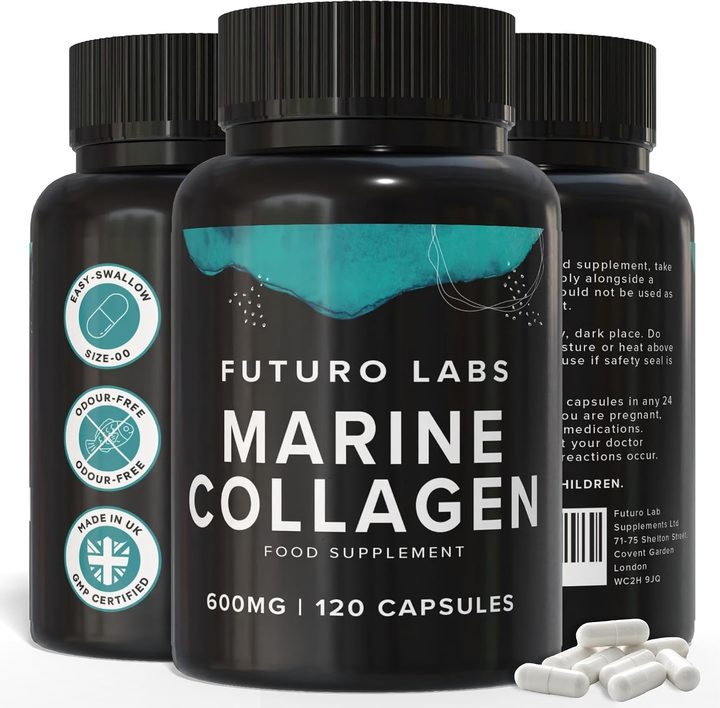
Our brand: the worked example on this page
Futuro Labs Marine Collagen
- 28p a day
- 120 capsules, 2 capsules daily
- Lab tested
- Made in the UK
The marine version on the same terms: Futuro Labs Marine Collagen on Amazon UK, 2 capsules, 1200mg hydrolysed type 1 marine collagen with 12mg vitamin C at 15% NRV plus zinc, 120 for £16.99, 28p a day, lab tested and UK made, below the 2.5 to 10g the skin trials gave, taken for vitamin C's collagen formation sentence for skin and zinc's normal skin line. Full label breakdown. The bovine spec is on the best bovine collagen page; the species comparison for skin on the marine versus bovine for skin page.
The animal column: which species the skin trials actually used
Is bovine collagen good for skin is a question the marketing answers with the word marine, since the shelf has spent a decade selling fish collagen as the skin one, and the honest page answers it from the methods sections of the trials instead, because the methods section names the animal and the animal column is not what the shelf implies. The oral collagen skin trials that produced the results every tub quotes, the elasticity gains by cutometer, the hydration gains by corneometer, the dermal density by ultrasound and the eye wrinkle depth by profilometry, mostly used specific collagen peptides of porcine or bovine origin: the eight-week wrinkle depth trial and the elasticity trials behind the best-known branded peptide used a porcine hydrolysate, several of the other well-cited trials used bovine, and fish-derived peptides appear in a smaller number of trials and in mixed-source products where the species cannot be separated out. So the species behind most of the published skin data is mammalian, and a reader asking whether bovine collagen is good for skin is asking about the collagen the skin trials mostly tested, which makes the answer yes on exactly the terms the trials set: 2.5 to 10 grams a day for eight to twelve weeks, gains of a few percent in elasticity and hydration measured by instrument rather than eye, in trials that were small, mostly funded by the peptide's manufacturer and read by devices, changes generally below what a mirror shows. The species does not change those terms in either direction. Bovine hydrolysate and marine hydrolysate are both type 1 collagen broken by enzymes into peptides of overlapping molecular weight ranges, both produce the same small peptides in blood after a dose, prolyl-hydroxyproline among them, and no trial has compared bovine against marine head to head for skin, so the claim that marine is the skin collagen rests on a molecular weight story the ranges do not support and on marketing, while the claim that bovine is good for skin rests on the trials that used it. Neither holds an authorised claim: collagen has no UK health claim for skin whatever the animal, and the register's skin sentences belong to vitamin C, which contributes to normal collagen formation for the normal function of skin, and to zinc and biotin, which contribute to the maintenance of normal skin.
Bovine's own file: types 1 and 3, the safety framework, and the choice between the animals
Bovine has two entries in its own file that the animal column does not cover, and the honest page prints both. The first is the type profile. Bovine hide yields collagen types 1 and 3 together, which are the two collagens of the dermis, type 1 the bulk fibre and type 3 the finer reticular fibre more abundant in young and healing skin, while marine collagen from fish skin is type 1 alone, and the shelf sometimes sells this as bovine's skin advantage; the honest reading is that once hydrolysed into peptides the type distinction is largely dissolved, since the body receives peptides and amino acids and not intact type 3 fibres, and the trials did not separate type 1 from types 1 and 3 hydrolysates by outcome, so the profile is a fact about the raw material and not a proven advantage. The second is the safety framework, which is where bovine differs from marine in a way that matters: hides and bones used for gelatin and collagen are sourced under the controls introduced after the BSE era, specified risk materials excluded, animals from controlled herds and countries, and the processing steps of alkaline or acid treatment, extraction, filtration and hydrolysis assessed as reducing any infectivity, the framework under which bovine gelatin and collagen are regarded as safe food ingredients, and the reason a bovine label worth buying states its country of origin and its manufacturing standard, while a marine label's equivalent file is the heavy-metals panel, since fish concentrate what the sea carries. Between the animals, then, the choice is not skin evidence, which is shared and mostly mammalian, but the reader: fish allergy chooses bovine; a reader avoiding beef, or observing kosher or halal rules without a certified bovine source, chooses marine; a pescatarian chooses marine; a reader with no constraint chooses by the file, the traceability statement on the bovine tub or the metals panel on the marine one, and by pence per gram at the trial dose, since a reader testing the skin trials buys 2.5 to 10 grams a day for three months and the animal changes the price more than the result. The worked example is marine and is stated on the same terms bovine would be: two capsules, 1200mg hydrolysed type 1 marine collagen with 12mg vitamin C plus zinc, 120 for £16.99 at 28p a day, lab tested and UK made, below the 2.5 to 10 grams the skin trials gave, taken for vitamin C's collagen formation sentence for skin and zinc's normal skin line, a fish protein the fish-allergic reader swaps for a bovine on the same honest terms. Is bovine collagen good for skin: yes, on the terms of the trials that mostly used it, a few percent by instrument at 2.5 to 10 grams over eight to twelve weeks, with types 1 and 3 as its raw material, the post-BSE controls as its safety file, and no head-to-head against marine to make either animal the skin one.
| The item | The fact | What it means for skin |
|---|---|---|
| The animal column | The best-known skin trials used porcine or bovine peptides; fish in fewer | Bovine is the species behind most of the published skin data |
| The terms | 2.5 to 10g a day for 8 to 12 weeks; a few percent in elasticity and hydration by instrument | The same terms for bovine and marine; small, industry-funded trials |
| Head to head | No trial has compared bovine against marine for skin | Neither animal is the skin one by evidence |
| Bovine's type profile | Types 1 and 3, the two dermal collagens; marine is type 1 | A raw material fact; largely dissolved once hydrolysed; not a proven advantage |
| Bovine's safety file | Post-BSE sourcing and processing controls; country of origin and standard stated | Regarded as a safe food ingredient; read the traceability line |
| The register | No collagen skin claim for any animal | Vitamin C's collagen formation for skin; zinc and biotin's normal skin |
| The worked exampleOurs | Two capsules, 1200mg type 1 marine collagen with 12mg vitamin C plus zinc, 28p a day | The same honest terms; bovine for fish allergy |
What to check on the label
- Read the methods section: most skin trials used mammalian peptides.
- Expect the same terms as marine: 2.5 to 10g, 8 to 12 weeks, an instrument's few percent.
- Treat types 1 and 3 as raw material: not a proven advantage.
- Check bovine's traceability line: origin and standard.
- Choose the animal by the reader: allergy, diet, faith, price per gram.
Our brand
The worked example: Futuro Labs Marine Collagen
Futuro Labs Marine Collagen: 2 capsules daily, 1200mg hydrolysed type 1 marine collagen with 12mg vitamin C and 1.5mg zinc (15% NRV each), 120 capsules for £16.99, 60 days at 28p a day, lab-tested, UK GMP made. Slim veggie-shell capsules, odour free. Fish derived: pescatarian, not vegetarian or vegan.
- Collagen per serving
- 1200mg hydrolysed type 1 marine (fish)
- Co-factors
- vitamin C 12mg (15% NRV), zinc 1.5mg (15% NRV)
- Serving
- 2 capsules a day
- Bottle
- 120 capsules, 60 days
- Price
- £16.99 (28p a day)
- Capsule
- slim size 00, veggie shell, odour free
Questions people also ask
Is bovine or marine collagen better for skin?
Neither by trial: the best-known skin trials used porcine or bovine peptides, fish appears in fewer, no trial has compared the two head to head for skin, and both are type 1 hydrolysates producing the same peptides in blood, so the choice is fish allergy, diet, faith, the traceability or metals file and the price per gram at the trial dose.
What type of collagen is bovine collagen?
Types 1 and 3 together, the two collagens of the dermis, from hide, where marine from fish skin is type 1 alone, a raw material fact that is largely dissolved once the collagen is hydrolysed into peptides and that the trials did not separate by outcome.
Is bovine collagen safe?
Regarded as a safe food ingredient under the post-BSE framework: hides and bones sourced with specified risk materials excluded, from controlled herds and countries, and processed through alkaline or acid treatment, extraction, filtration and hydrolysis assessed as reducing infectivity, the reason a bovine label states its origin and standard.
How much bovine collagen should I take for skin?
The trials' dose: 2.5 to 10 grams a day for eight to twelve weeks, measured by cutometer and corneometer for gains of a few percent in small, mostly industry-funded trials, so a reader testing the trials buys a powder and measures grams, and a capsule dose below the range is taken for the vitamin C and zinc lines.
Does bovine collagen hold a skin claim?
No collagen does, whatever the animal: the UK register's skin sentences belong to vitamin C, which contributes to normal collagen formation for the normal function of skin, and to zinc and biotin, which contribute to the maintenance of normal skin, so a bovine tub's skin line is borrowed from an ingredient beside the collagen.
Sources
- The oral collagen trial sourcing record: the best-known skin trials used specific collagen peptides of porcine or bovine origin, with fish-derived peptides in a smaller number of trials and in mixed-source products, so the species behind most of the published skin data is mammalian, and no trial has compared marine against bovine head to head for skin. PubMed record
- The collagen and skin trial literature: randomised studies of oral collagen peptides on skin elasticity and hydration, mostly small, short and industry funded, with no authorised claim resulting. PubMed record
- The bovine gelatin and collagen safety framework: hides and bones used for gelatin and collagen are sourced under the controls introduced after the BSE era, specified risk materials excluded, animals from controlled herds and countries, and the processing steps of alkaline or acid treatment, extraction, filtration and hydrolysis assessed as reducing infectivity, the basis on which bovine gelatin and collagen are regarded as safe food ingredients. PubMed record
- The collagen manufacturing literature: raw hides and fish skins are cleaned, extracted to gelatine and enzymatically hydrolysed into low molecular weight peptides before filtration and spray-drying. PubMed record