Ghost Fitness/Collagen/What medications should you not take with collagen?
What medications should you not take with collagen?
The short answer
Collagen itself, a food protein, has no established drug interactions: the screening belongs to the formula's passengers, added vitamins, minerals and botanicals, and to the label's own gate. On any medication, the pharmacist conversation comes first.
- The protein's fileno established drug interactions: digested like dietary protein
- Where screening movesthe passengers: added vitamins, minerals, botanicals
- The known mineral patterncalcium and iron famously space from certain medicines
- The standing gateon medication: advice first, the label's own words
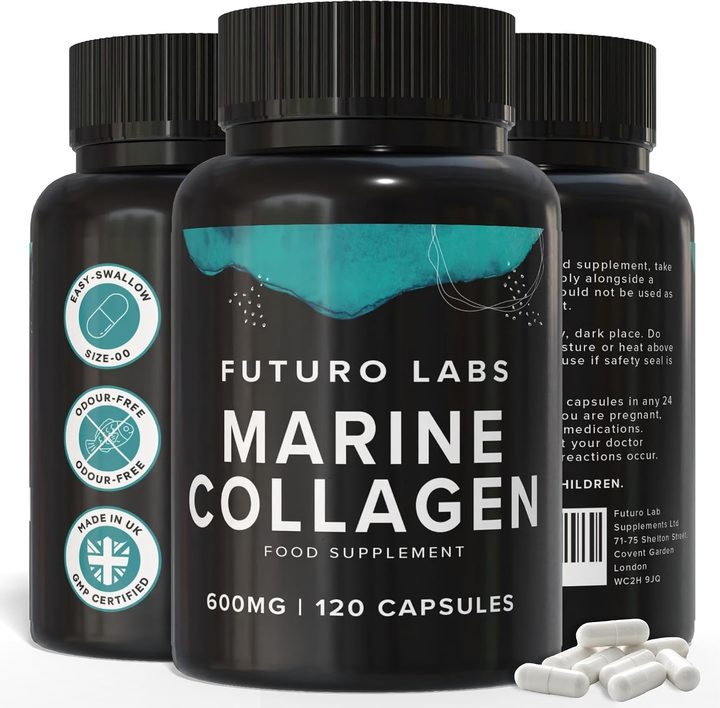
Our brand: the worked example on this page
Futuro Labs Marine Collagen
- 28p a day
- 120 capsules, 2 capsules daily
- Lab tested
- Made in the UK
A short passenger list, easy to screen: Futuro Labs Marine Collagen on Amazon UK, 1200mg hydrolysed type 1 with vitamin C and zinc at 15% NRV and nothing else aboard, warning printed, £16.99 for 60 days at 28p. Full label breakdown. The safety register is on the safest-form page; the label's geography on the label walk page.
The protein cleared first, and why the honest screening moves to the passenger list
Start with the reassurance the question deserves, stated at its true size: hydrolysed collagen itself, a food-grade protein digested into the same amino pool as a chicken breast, has no established interactions with medications, no drug class it is documented to block, boost or race, which is what you would expect of dietary protein and why no interaction checker lists the peptides themselves, the honest headline being that collagen is not the thing to screen. The screening is real, though, and it moves one line down the label, to the passengers, because almost no collagen product is collagen alone, and the formula's additions are where every known pattern in this territory actually lives. Passenger class one, added vitamins: the common C is generously tolerated but worth naming at high doses for anyone with specific conditions their clinician manages, and the beauty-blend hazard is vitamin A, retinol riding hair-skin-nails formulas, where the standing cautions are hard ones, counted total A across all products and excluded in pregnancy at high doses per the stacking pages. Passenger class two, added minerals: the famous, well-documented pattern, calcium and iron in multivitamin-style blends reducing the absorption of specific medicines, levothyroxine and tetracycline-class antibiotics being the textbook examples, managed by the dose-spacing a pharmacist will specify, hours apart rather than abandonment, a pattern that has nothing to do with collagen and everything to do with what was blended around it. Passenger class three, added botanicals: turmeric and curcumin the most relevant here, carrying the anticoagulant-adjacent caution their own page states, plus whatever else a beauty-blend formulator reached for, each botanical bringing its own file.
The special-population lines, the screening protocol anyone can run, and the last word given away
Two population lines belong on this page beyond the passenger audit. First, the label's own gate, printed on every honest tub and quoted on every page of this site: not for pregnant or nursing women, or anyone on medication, without advice first, the category's standing instruction that already contains this whole article in one sentence, advice-first being the rule precisely because individual circumstances outrun any general page. Second, the protein-load line for one specific group: anyone with diagnosed kidney disease manages total protein intake as a clinical matter, and collagen's grams, like any protein's, belong inside that managed total, a conversation with the renal team rather than a supplement decision. The screening protocol any medicated reader can run in two minutes: turn the tub, read the full ingredients line, and sort it, the collagen and its shell cleared, each added vitamin checked against your own conditions and any A counted across products, each added mineral checked against the spacing-sensitive medicine list your pharmacist holds, each botanical looked up by name, and the product's simplicity graded as a safety feature, a short passenger list being easier to clear than a twenty-ingredient beauty blend, which is the quiet argument for formulas like the worked example's, peptides, C and zinc, nothing else to screen. And the last word given away deliberately, because it is the only medically honest ending: this page sorts categories, your pharmacist sorts you, the two-minute conversation with the person who can see your actual medication list outranking every general article ever written, this one included, and costing nothing at any counter in the country.
| The line | The finding | The action |
|---|---|---|
| The collagen itself | No established drug interactions | Cleared: digested like dietary protein |
| Added vitamin A | The beauty-blend hazard | Count total A across products; pregnancy excludes high doses |
| Added calcium or iron | Documented spacing with levothyroxine, tetracyclines | Hours apart, as the pharmacist specifies |
| Added botanicals | Curcumin's anticoagulant-adjacent caution and kin | Look up each by name; pharmacist on any medication |
| Kidney disease | Protein totals are clinical | Collagen's grams inside the renal team's plan |
| The last word | The label's advice-first gate | Two minutes with the pharmacist who sees your list |
The verdict, signed over to the counter
What medications should you not take with collagen: none are documented against the protein itself, the honest headline, and the real screening runs down the passenger list, vitamin A counted and pregnancy-excluded at height, calcium and iron spaced from their textbook medicines, botanicals looked up by name, kidney patients folding the grams into a clinical protein plan, and the label's advice-first gate standing over it all. The worked example keeps its list short enough to screen in seconds: Futuro Labs Marine Collagen, 1200mg hydrolysed type 1 with 12mg vitamin C and 1.5mg zinc at 15% NRV and nothing else aboard, warning printed plainly, lab tested, UK made, £16.99 for 60 days at 28p a day, and the last word belongs where this page deliberately left it, with the pharmacist who can see your actual list, two minutes, no charge, every counter in the country.
What to check on the label
- The protein clears: no established interactions for collagen itself.
- Screen the passengers: added vitamins, minerals and botanicals.
- Space the textbook pairs: calcium and iron from their sensitive medicines.
- Count any vitamin A: across products, pregnancy excluded at height.
- The pharmacist gets the last word: two minutes, your actual list.
Our brand
The worked example: Futuro Labs Marine Collagen
Futuro Labs Marine Collagen: 2 capsules daily, 1200mg hydrolysed type 1 marine collagen with 12mg vitamin C and 1.5mg zinc (15% NRV each), 120 capsules for £16.99, 60 days at 28p a day, lab-tested, UK GMP made. Slim veggie-shell capsules, odour free. Fish derived: pescatarian, not vegetarian or vegan.
- Collagen per serving
- 1200mg hydrolysed type 1 marine (fish)
- Co-factors
- vitamin C 12mg (15% NRV), zinc 1.5mg (15% NRV)
- Serving
- 2 capsules a day
- Bottle
- 120 capsules, 60 days
- Price
- £16.99 (28p a day)
- Capsule
- slim size 00, veggie shell, odour free
Questions people also ask
Does collagen interact with any medications?
The protein itself has no established drug interactions, being digested like dietary protein: the screening belongs to a formula's added vitamins, minerals and botanicals, passenger by passenger.
Can I take collagen with thyroid medication?
Plain collagen raises no documented issue: the textbook caution is added calcium or iron in blended products, which space hours from levothyroxine as a pharmacist specifies.
Is collagen safe with blood thinners?
The peptides carry no known interaction: the relevant caution rides added botanicals, curcumin most cited, so read the full ingredients line and clear any blend with the pharmacist.
Should anyone avoid collagen entirely?
The label's gate names the groups for advice-first: pregnant and nursing women and anyone on medication, with kidney patients folding any protein supplement into their clinical protein plan.
What is the fastest way to check my own situation?
Two minutes at any pharmacy counter: bring the tub, the pharmacist reads the passenger list against your actual medications, and that conversation outranks every general article, this one included.
Sources
- The mineral-drug interaction literature: calcium and iron supplements are documented to reduce absorption of medicines such as levothyroxine and tetracyclines, managed by dose spacing. PubMed record
- The curcumin bioavailability literature: plain curcumin is poorly absorbed, which is why formulations and piperine co-administration dominate the research, and why label milligrams overstate what arrives. PubMed record
- Futuro Labs Marine Collagen listing and label: 1200mg hydrolysed type 1 marine collagen per 2-capsule serving with 12mg vitamin C and 1.5mg zinc at 15% NRV each, 120 capsules, independently lab tested, UK made. https://www.amazon.co.uk/dp/B0C2J7N364
- EFSA Panel on Dietetic Products, Nutrition and Allergies. Scientific Opinion on the substantiation of health claims related to magnesium. EFSA Journal 2010;8(10):1807. https://efsa.onlinelibrary.wiley.com/doi/10.2903/j.efsa.2010.1807