Ghost Fitness/Collagen/Who cannot take collagen supplements?
Who cannot take collagen supplements?
The short answer
Strictly, four lines. Fish allergy cannot take marine collagen. Alpha-gal syndrome cannot take bovine or porcine. A diet or faith excluding the source, or lacking certification, cannot take that source. Under-18s get no guidance here. Everyone else asks or can.
- Line onefish allergy: marine collagen is fish skin and scale protein, the allergen itself; bovine or nothing
- Line twoalpha-gal syndrome: mammalian meat, gelatin and collagen; marine or nothing
- Line threevegan, beef-avoiding, kosher, halal, pescatarian: the source line and the mark decide
- Line four and the other listsno guidance under eighteen; should-ask: stones, kidney disease, pregnancy, clinical diets; need-not: muscle, claims
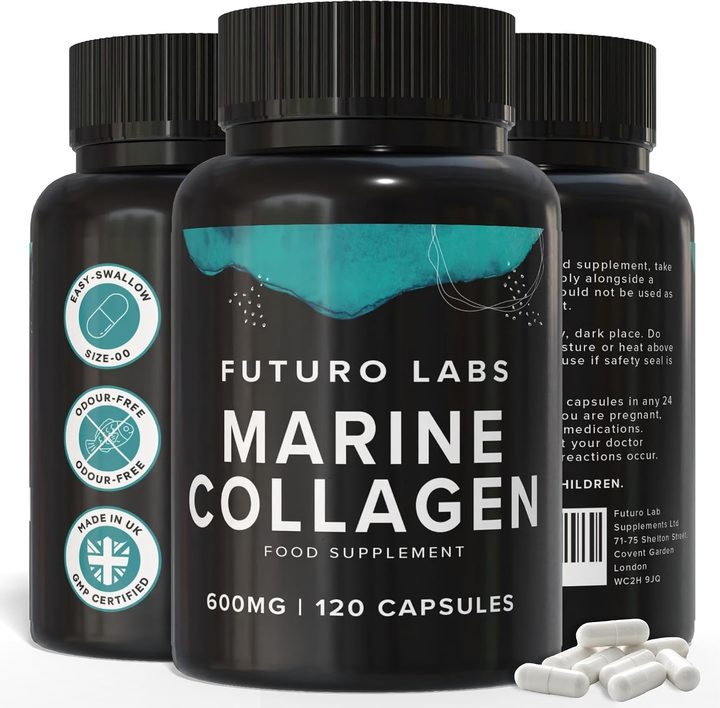
Our brand: the worked example on this page
Futuro Labs Marine Collagen
- 28p a day
- 120 capsules, 2 capsules daily
- Lab tested
- Made in the UK
The marine source stated plainly for line one and line three: Futuro Labs Marine Collagen on Amazon UK, 2 capsules, 1200mg hydrolysed type 1 marine collagen with 12mg vitamin C at 15% NRV plus zinc, 120 for £16.99, 28p a day, lab tested and UK made, fish-derived, so not for fish allergy and acceptable where beef is not, below the research band and stated so. Full label breakdown. The three columns of should not are on the who should not take collagen page; bovine's own list on the who should not take bovine collagen page.
The strict cannot list, four lines long, and why each line is a cannot rather than a should not
Who cannot take collagen supplements is a question with a stronger word in it than the usual who should not, and the honest page takes the word at its strength, because cannot means a reader for whom the supplement is off the table by allergy, by rule or by conviction rather than by caution, and that list is shorter than the shelf's warnings imply, four lines long. Line one is fish allergy and marine collagen. Marine collagen is hydrolysed fish skin and scale protein, which is the protein a fish allergy reacts to, so unlike refined fish oil, which carries little protein and is tolerated by most fish-allergic people, a marine collagen capsule is the allergen itself, and a reader with fish allergy cannot take it in the plain sense that it may cause hives, swelling or worse; that reader takes bovine collagen or none, and a reader unsure of their allergy asks an allergist before trying marine. Line two is alpha-gal syndrome and mammalian collagen. Alpha-gal syndrome is a delayed allergy to mammalian meat and to mammalian-derived products, gelatin and bovine and porcine collagen among them, sensitised through the bite of certain ticks, rare in the UK and commoner in readers who have lived where the lone star tick is found, presenting hours after ingestion with hives, gut symptoms or anaphylaxis, and a reader with the diagnosis cannot take bovine or porcine collagen or gelatin and takes marine collagen, which carries no alpha-gal, or none; the two allergies are mirror images, each animal covering the other's excluded reader. Line three is diet and faith, a cannot of conviction rather than immunology and no less binding: a vegan cannot take any collagen, since it is animal protein with no plant version and the vegan collagen products on the shelf contain none; a reader avoiding beef cannot take bovine; a reader observing kosher or halal rules cannot take porcine at all or bovine without a certification of source, slaughter and processing, and relies on the mark rather than the word; a pescatarian cannot take anything but marine. The label's source line, marine, bovine or porcine, and its certification mark settle line three for every reader in it, and a tub that will not print the source is a tub line three cannot buy. Line four is this site's own rule: it gives no supplement guidance to anyone under eighteen, collagen included, so a minor cannot take collagen on its advice and takes any question to a doctor or dietitian instead.
The should-ask list, the need-not list, and everyone else, who can
Everyone who is not on the cannot list is on one of three others, and the honest page keeps them separate because a reader who confuses should ask with cannot either avoids a food protein they could take or takes one they should have asked about. The should-ask list holds readers for whom collagen is not excluded but is a conversation first. A reader who has formed calcium oxalate kidney stones asks whoever manages the stones, because hydroxyproline, a tenth of collagen, is metabolised partly to oxalate and urinary oxalate rises after large gelatin loads, a footnote that scales with the dose. A reader with kidney disease asks the kidney team before any protein supplement, collagen included, since protein intake there is set clinically and a scoop is protein, while a healthy reader has no kidney question at all. A pregnant or breastfeeding reader asks the midwife or doctor, since collagen has no pregnancy trials and supplements in pregnancy are discussed rather than assumed. And a reader on a metabolic diet set by a clinic, a protein-restricted or amino-acid-controlled regime for an inherited condition, asks the metabolic team before adding any protein source, since collagen's unusual amino acid profile is exactly the kind of thing such a diet accounts for gram by gram. The need-not list holds readers who can take collagen and have no reason to: the reader expecting muscle, since collagen lacks tryptophan and most of whey's leucine and counts toward nothing at 1.6 grams per kilo; and the reader expecting a claim, since collagen holds no authorised health claim in the UK and every sentence on a tub belongs to vitamin C, zinc or biotin beside it. Everyone else can, in the plainest sense: collagen is a food protein digested to amino acids and peptides, with no upper level set by any authority, no accumulation, no documented drug interactions and nothing above placebo in trials at up to fifteen grams a day for a year, so a healthy adult not on the four lines above may take it, on its true terms, for the connective tissue research at trial doses or for the vitamin C line and the habit at a modest one, and the only questions left are which animal, settled by lines one to three, and which dose, settled by the reason. The worked example states its source plainly for the lines that need it: two capsules, 1200mg hydrolysed type 1 marine collagen with 12mg vitamin C plus zinc, 120 for £16.99 at 28p a day, lab tested and UK made, fish-derived, so not for the fish-allergic reader on line one and acceptable to the alpha-gal reader on line two and to most observant readers on line three where beef is not, below the research band and taken for vitamin C's collagen formation sentence. Who cannot take collagen supplements: the fish-allergic reader with marine, the alpha-gal reader with bovine or porcine, the reader whose diet or faith excludes the source, and the minor on this site's rule, with everyone else asking, passing, or taking it as the food protein it is.
| The list | Who | Why | What instead |
|---|---|---|---|
| Cannot | Fish allergy, with marine collagen | Marine collagen is fish skin and scale protein, the allergen itself | Bovine, or nothing; an allergist if unsure |
| Cannot | Alpha-gal syndrome, with bovine or porcine collagen | Delayed allergy to mammalian meat, gelatin and collagen; tick-sensitised | Marine, or nothing |
| Cannot | A diet or faith excluding the source or lacking its certification | Vegan: no collagen exists; beef-avoiding; kosher or halal without a mark; pescatarian | The source line and the mark decide |
| Cannot | Anyone under eighteen, on this site's rule | No supplement guidance for minors here | A doctor or dietitian |
| Should ask | Calcium oxalate stone formers; kidney disease; pregnancy and breastfeeding; clinic-set metabolic diets | Oxalate footnote; clinically set protein; no pregnancy trials; gram-by-gram amino acid accounting | The specialist, the team, the midwife, the metabolic team |
| Need not | Expecting muscle; expecting a claim | No tryptophan, little leucine; no UK claim | Whey; vitamin D or creatine, which have sentences |
| Can | Every other healthy adult | A food protein, no upper level, no interactions, nothing above placebo at 15g for a year | On its true terms, at the reason's dose |
| The worked exampleOurs | Two capsules, 1200mg marine collagen with 12mg vitamin C plus zinc, 28p a day | Fish-derived: not for line one; fine for line two and most of line three | Below the research band; the vitamin C line |
What to check on the label
- Fish allergy: never marine: bovine or nothing.
- Alpha-gal: never bovine or porcine: marine or nothing.
- Read the source line and the mark: diet and faith decide line three.
- Under eighteen: no guidance here: a doctor or dietitian.
- Stones, kidneys, pregnancy, clinic diets: ask first: should ask is not cannot.
Our brand
The worked example: Futuro Labs Marine Collagen
Futuro Labs Marine Collagen: 2 capsules daily, 1200mg hydrolysed type 1 marine collagen with 12mg vitamin C and 1.5mg zinc (15% NRV each), 120 capsules for £16.99, 60 days at 28p a day, lab-tested, UK GMP made. Slim veggie-shell capsules, odour free. Fish derived: pescatarian, not vegetarian or vegan.
- Collagen per serving
- 1200mg hydrolysed type 1 marine (fish)
- Co-factors
- vitamin C 12mg (15% NRV), zinc 1.5mg (15% NRV)
- Serving
- 2 capsules a day
- Bottle
- 120 capsules, 60 days
- Price
- £16.99 (28p a day)
- Capsule
- slim size 00, veggie shell, odour free
Questions people also ask
Is there anyone who genuinely cannot take collagen?
Four lines: a reader with fish allergy cannot take marine collagen, a reader with alpha-gal syndrome cannot take bovine or porcine collagen, a reader whose diet or faith excludes the source or requires a certification the tub lacks cannot take that source, and this site gives no supplement guidance to anyone under eighteen; everyone else is on a should-ask, need-not or can list.
Can vegans take collagen supplements?
No, because none exists for them: collagen is animal protein from hide, skin or scales with no plant version, and the products sold as vegan collagen are vitamin C and amino acid blends containing no collagen, so a vegan's question is not which collagen but whether the vitamin C and zinc sentences on such a blend are worth the price.
Can I take collagen if I have kidney disease?
That is a should-ask rather than a cannot: protein intake in kidney disease is set clinically and a collagen scoop is protein, so the kidney team is asked before any protein supplement, while a healthy adult has no kidney question, higher protein intakes showing adaptation and not harm in trials.
Can pregnant women take collagen?
A should-ask: collagen is a food protein with no known problem and no pregnancy trials, so the standing position applies that any supplement in pregnancy or breastfeeding is discussed with the midwife or doctor rather than assumed, folic acid and vitamin D being the ones routinely advised.
Can someone with a fish allergy take any collagen?
Bovine, yes, marine, no: marine collagen is hydrolysed fish skin and scale protein, the allergen itself rather than a refined oil, so the fish-allergic reader takes bovine collagen or none, and the mirror case is alpha-gal syndrome, where bovine and porcine are excluded and marine is the alternative.
Sources
- The fish allergy and fish oil literature: fish allergy is to fish proteins, and refined fish oil contains little or no protein, so most fish-allergic people tolerate fish oil supplements, but the allergy guidance is to discuss it with an allergist and to prefer an algal oil where doubt exists. PubMed record
- The alpha-gal syndrome literature: a delayed allergy to mammalian meat and mammalian-derived products including gelatin and bovine or porcine collagen, sensitised through tick bites, presenting hours after ingestion with hives, gut symptoms or anaphylaxis, rare in the UK and commoner where the lone star tick is found, and the one allergy specific to bovine rather than marine collagen. PubMed record
- The gelatin and collagen certification literature: bovine and porcine gelatin and collagen are acceptable under kosher and halal rules only when the source animal and slaughter and processing meet the certifying body's standards, porcine never, so observant consumers rely on certification marks rather than the species alone, and fish-derived collagen is generally acceptable across those rules. PubMed record
- The dietary protein and kidney function literature: meta-analyses of randomised trials in adults without kidney disease find that higher protein intakes raise glomerular filtration rate slightly, a normal adaptive response, without evidence of harm to kidney function, while in established chronic kidney disease protein intake is restricted and set clinically, so the two populations are answered separately. PubMed record