Ghost Fitness/Collagen/Does collagen help with weight loss and loose skin?
Does collagen help with weight loss and loose skin?
The short answer
Split the welded question. Weight loss: no, collagen is calories with weaker satiety than whey and no claim. Loose skin: no evidence, the skin trials being in weight-stable people. The levers: rate of loss, the barbell, protein, sunscreen, time.
- Question one, weight lossfour calories a gram; satiety weaker than whey; no muscle preservation; no claim: the deficit does the losing
- Question two, loose skinskin trials in weight-stable people at 2.5 to 10g; nothing during a loss; the deciding variables are amount, speed, age, sun, smoking, genetics, time
- Why the weldtwo questions in one sentence let a tub imply one product solves the cut and its consequence
- The honest andcollagen on a cut for the habit, calories booked; half to one percent a week, lifting, 1.6 to 2.2g protein per kilo, sunscreen, a year
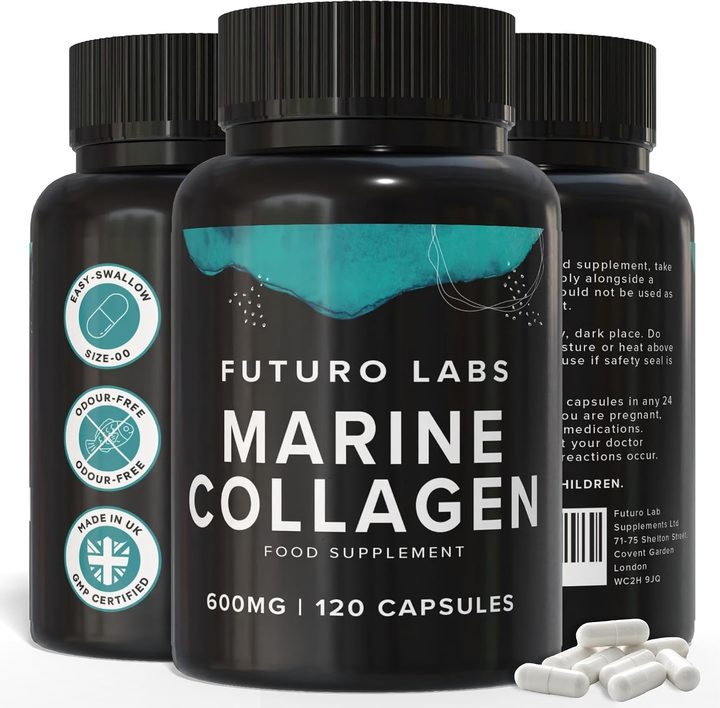
Our brand: the worked example on this page
Futuro Labs Marine Collagen
- 28p a day
- 120 capsules, 2 capsules daily
- Lab tested
- Made in the UK
On its true terms inside a cut: Futuro Labs Marine Collagen on Amazon UK, 2 capsules, 1200mg hydrolysed type 1 marine collagen with 12mg vitamin C at 15% NRV plus zinc, 120 for £16.99, 28p a day, lab tested and UK made, around five calories booked inside the deficit, below the skin trial doses, taken for vitamin C's collagen formation sentence for skin and for neither question. Full label breakdown. The variables ranked are on the loose skin during weight loss page; the two rumours on the collagen cause weight loss page; the shelf pairing on the skin tightening weight loss page.
Why the weld matters, and question one cut free: does collagen help weight loss
Does collagen help with weight loss and loose skin is a question made of two questions welded together, and the weld is worth noticing before either half is answered, because a sentence that asks two things at once lets a tub answer both with one implication, that the product which helps the cut also handles the cut's consequence, when in fact each half has its own evidence and its own no, and a reader who cuts the weld can see both. Question one cut free: does collagen help weight loss. No, and the reason is the ledger every weight page on this site keeps. Collagen is protein at four calories a gram, around thirty-six in a dessertspoon and seventy-two in a scoop, with no fat-burning mechanism, no hormonal action and no fat-targeting, so its calories sit on the intake side of a deficit like any food's and the deficit does the losing. The one thread the weight loss half can hold is protein's satiety, a protein serving blunting the next meal a little and burning a little of itself in digestion, and collagen is weaker on that thread than whey, being an incomplete protein that lacks tryptophan and most of whey's leucine, less satiating per gram in the comparisons that exist and unable to drive the muscle protein synthesis that preserves lean mass in a deficit, which is the larger reason protein is raised in a cut at all. So a reader who wants protein to help a cut is right about protein and wrong about which, and whey or a complete protein at 1.6 to 2.2 grams per kilo is the tub for that job, with collagen's calories booked and its satiety a weaker echo. Collagen holds no weight claim in the UK register and may not imply one, and the first half of the welded question gets a plain no with the deficit credited for whatever the scales show.
Question two cut free: does collagen help loose skin, and the honest and that replaces the weld
Question two cut free: does collagen help loose skin. No evidence, which is a different answer from no and the honest page says why. The oral collagen skin trials were run in weight-stable people, mostly women aged thirty-five to sixty-five, and measured skin elasticity and hydration by cutometer and corneometer at 2.5 to 10 grams a day over eight to twelve weeks, finding gains of a few percent in small, mostly industry-funded trials, and no trial has given collagen to people during or after a weight loss and measured skin laxity, retraction or excess, so collagen's skin evidence, such as it is, does not touch the loose skin question at all. What does touch it is a known list of variables: the amount lost, since skin remodelled over fifty kilograms for a decade does not retract like skin stretched over ten for a year; the speed, since slower loss with adequate protein and resistance training preserves lean mass and gives the skin time to follow; age, since dermal collagen and elastin decline across the decades and after menopause; sun history and smoking, which degrade the elastic fibres skin needs to recoil; genetics; and time, since retraction continues for a year or more after weight stabilises. Collagen is not on that list and no trial has put it there, so the second half of the welded question gets no evidence, with the levers named. The honest and that replaces the weld is modest and useful: a reader can take collagen on a cut, for the vitamin C line and the habit, with its five to seventy-two calories booked inside the deficit and its grams booked outside the protein target, while the work on both halves of the question is done by other things, the deficit built at the table for the weight, and for the skin the rate of loss at half to one percent of body weight a week, resistance training so muscle fills the space the fat leaves, protein at 1.6 to 2.2 grams per kilo from complete sources to keep that muscle, daily sunscreen to protect the elastic fibres, and a year of time before judging what is loose and what is still retracting, with significant excess after that a doctor's conversation rather than a tub's. The register's skin sentences on the collagen label are vitamin C's and zinc's, and its weight sentence does not exist. The worked example sits inside the cut on its true terms: two capsules, 1200mg hydrolysed type 1 marine collagen with 12mg vitamin C plus zinc, 120 for £16.99 at 28p a day, lab tested and UK made, around five calories booked inside the deficit, below the skin trial doses, taken for vitamin C's collagen formation sentence for skin and for neither half of the welded question. Does collagen help with weight loss and loose skin: cut the weld and each half answers itself, no and no evidence, with the levers for both lying outside the tub.
| The half | The claim | The evidence | The answer and the lever |
|---|---|---|---|
| Weight loss | Collagen helps you lose weight | Four calories a gram; satiety weaker than whey; no muscle preservation; no claim | No; the deficit at the table |
| Loose skin | Collagen tightens skin after loss | Skin trials in weight-stable people at 2.5 to 10g; nothing during or after a loss | No evidence; the rate, the barbell, protein, sunscreen, time |
| The weld | One product for the cut and its consequence | Two questions in one sentence | Cut it; answer each |
| The deciding variables for loose skin | Not collagen | Amount lost, speed, age, sun, smoking, genetics, time | Lose at half to one percent a week; lift; 1.6 to 2.2g protein per kilo; sunscreen; a year |
| The better protein for a cut | Fullness and muscle | Whey or a complete protein | Collagen booked outside the protein target |
| The register | A skin or weight sentence | No collagen claim for either | Vitamin C's and zinc's skin sentences only |
| The worked exampleOurs | Two capsules, 1200mg marine collagen with 12mg vitamin C plus zinc, 28p a day | ~5 calories inside the deficit; below the skin trial doses | For neither half; the vitamin C line and the habit |
What to check on the label
- Cut the weld: two questions, two answers.
- Credit the deficit: collagen is calories with a weak satiety.
- Pull the loose skin levers: rate, barbell, protein, sunscreen, time.
- Book collagen outside the protein target: and inside the calories.
- Wait a year before judging skin: then a doctor for significant excess.
Our brand
The worked example: Futuro Labs Marine Collagen
Futuro Labs Marine Collagen: 2 capsules daily, 1200mg hydrolysed type 1 marine collagen with 12mg vitamin C and 1.5mg zinc (15% NRV each), 120 capsules for £16.99, 60 days at 28p a day, lab-tested, UK GMP made. Slim veggie-shell capsules, odour free. Fish derived: pescatarian, not vegetarian or vegan.
- Collagen per serving
- 1200mg hydrolysed type 1 marine (fish)
- Co-factors
- vitamin C 12mg (15% NRV), zinc 1.5mg (15% NRV)
- Serving
- 2 capsules a day
- Bottle
- 120 capsules, 60 days
- Price
- £16.99 (28p a day)
- Capsule
- slim size 00, veggie shell, odour free
Questions people also ask
Does collagen help with weight loss and skin at the same time?
The question is two welded together and each gets its own answer: no for weight loss, since collagen is calories with a weaker satiety than whey and no claim, and no evidence for loose skin, since the skin trials were run in weight-stable people and nothing has tested collagen during or after a loss.
What is the best supplement for loose skin after weight loss?
None has evidence: the variables that decide loose skin are the amount lost, the speed, age, sun history, smoking, genetics and time, and the levers a reader holds are a rate of half to one percent of body weight a week, resistance training to fill the space, protein at 1.6 to 2.2 grams per kilo, daily sunscreen and a year before judging, with significant excess a doctor's conversation.
Can I take collagen while cutting?
Yes, on its true terms: book its calories inside the deficit, around five in a capsule dose and thirty-six in a dessertspoon, keep it outside the protein target since it lacks tryptophan and most of whey's leucine, use whey or a complete protein for fullness and muscle preservation, and take collagen for the vitamin C line and the habit rather than for either half of the question.
Why do collagen tubs promise both weight loss and tighter skin?
Because welding two questions into one sentence lets a product imply it solves a cut and the cut's consequence together, when collagen holds no weight claim, no skin claim and no evidence about loose skin at all, and the register's sentences on the tub belong to vitamin C and zinc beside it.
Does losing weight slowly stop loose skin?
It helps more than anything swallowed: slower loss at around half to one percent of body weight a week with adequate protein and resistance training preserves lean mass and gives the skin's slow remodelling time to follow the shrinking volume, though the amount lost, age, sun history, smoking and genetics decide the rest, and retraction continues for a year or more.
Sources
- The energy balance literature: body weight changes when energy intake and expenditure diverge over weeks, protein providing around four kilocalories a gram, with higher protein intakes tending to increase satiety and the thermic effect of feeding, so adding a protein supplement leads to weight gain only when its calories are added on top of intake rather than displacing other food. PubMed record
- The literature on excess skin after major weight loss: skin adaptation varies with age, amount and speed of loss and genetics, and significant excess skin is managed medically and surgically, not nutritionally. PubMed record
- The rate of weight loss and body composition literature: slower loss of around half to one percent of body weight a week with adequate protein and resistance training preserves more lean mass than rapid loss, and skin retraction after weight loss depends on the amount lost, the speed, age, sun exposure, smoking and genetics, continuing for a year or more after weight stabilises before any surgical assessment. PubMed record
- The collagen and skin trial literature: randomised studies of oral collagen peptides on skin elasticity and hydration, mostly small, short and industry funded, with no authorised claim resulting. PubMed record