Ghost Fitness/Collagen/Can taking collagen cause weight loss?
Can taking collagen cause weight loss?
The short answer
No, nor belly fat; both rumours fail for one reason. Collagen is protein at four calories a gram with no fat-burning or fat-storing mechanism: in a deficit its calories join the deficit, in a surplus the surplus.
- The one reason both failfour calories a gram; no fat-burning, fat-storing, hormonal or regional mechanism
- Inside a deficit36 to 72 calories that are part of the deficit; the deficit loses the weight
- Inside a surplusthe same calories as part of the surplus; the surplus gains it; no region targeted
- The one real mechanism and the misattributionprotein's satiety, weaker than whey's; the first-fortnight water weight is creatine's
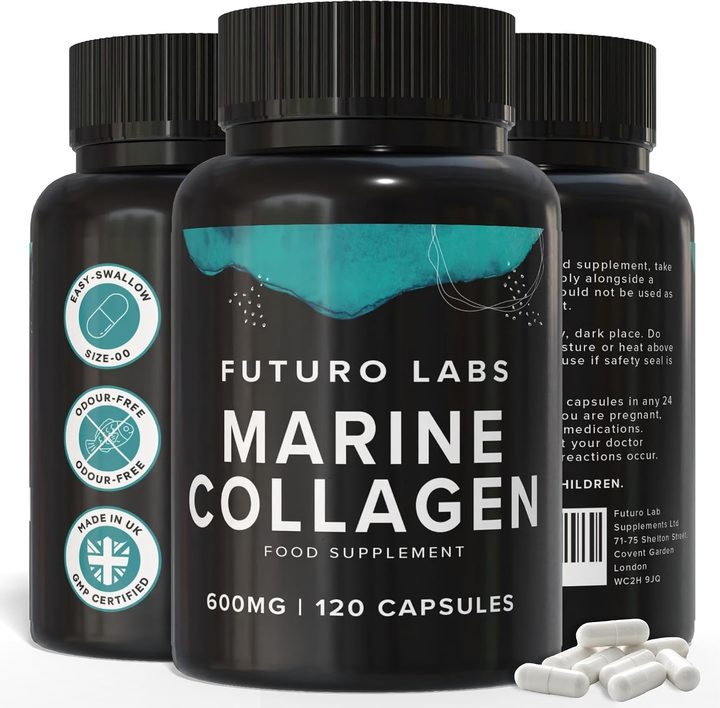
Our brand: the worked example on this page
Futuro Labs Marine Collagen
- 28p a day
- 120 capsules, 2 capsules daily
- Lab tested
- Made in the UK
Around five calories on either side of the ledger: Futuro Labs Marine Collagen on Amazon UK, 2 capsules, 1200mg hydrolysed type 1 marine collagen with 12mg vitamin C at 15% NRV plus zinc, 120 for £16.99, 28p a day, lab tested and UK made, below the research band, taken for vitamin C's collagen formation sentence with no weight sentence in either direction. Full label breakdown. The gain side of the ledger is on the does collagen make you gain weight page; the marketing chain for loss on the does collagen help weight loss page; the two fats on the belly fat page.
Two opposite rumours and the one reason both fail
Can taking collagen cause weight loss is a question that arrives beside its own opposite, since the same shelf that sells collagen for weight loss hosts a rumour that collagen causes belly fat, and the honest page answers both at once, because they fail for one reason and a reader who sees the reason is immune to both. The reason is that collagen is protein and nothing else. Hydrolysed collagen is a food protein at four calories a gram, so a ten-gram dessertspoon is around thirty-six calories and a twenty-gram scoop around seventy-two, roughly a small apple, and it carries no mechanism of any kind that would make those calories behave differently from any other food's: no fat-burning action, no thermogenic compound beyond protein's ordinary thermic effect of feeding, which collagen shares with every protein, no hormonal effect on insulin, cortisol or anything that governs where fat is stored, no fat-targeting, since no swallowed substance targets a region of the body, and no fat-storing action either, since a protein that is digested to amino acids and used or burned does not deposit itself anywhere. The energy balance rule then does the rest. Inside a calorie deficit, energy out exceeding energy in over weeks, a reader loses weight, and collagen's thirty-six or seventy-two calories are simply part of the intake side of that deficit, no more responsible for the loss than the apple would be, so the weight loss rumour has the arithmetic right and the credit wrong, the deficit having done it. Inside a surplus, a reader gains weight, and collagen's calories are part of the surplus, no more responsible for the gain than the apple and no more able to direct it to the belly, so the belly fat rumour has no mechanism at all, and visceral fat in particular responds to a deficit, aerobic exercise, sleep and alcohol and not to which protein a reader drank. Two rumours, one ledger, and collagen on neither side of it except as calories.
The one real mechanism, the misattribution, the register, and the worked example
One mechanism gives the weight loss rumour a thread to hold, and the honest page measures it. Protein is the most satiating of the three macronutrients and has the highest thermic effect of feeding, so a protein serving blunts the next meal a little and burns a little of itself in digestion, which is why higher protein intakes are studied in weight management rather than blamed for weight gain, and collagen, being protein, has a share of that; but collagen's share is smaller than whey's on both counts, since it is an incomplete protein lacking tryptophan and most of whey's leucine, is less satiating per gram in the comparisons that exist, and does not drive the muscle protein synthesis that preserves lean mass in a deficit, which is the second and larger reason protein is raised in a cut. So a reader using protein as a fullness strategy is right about protein and should reach for whey or a complete protein, with collagen contributing its calories and a weaker version of the one effect it borrows. The misattribution that feeds both rumours is creatine: lifters who start a stack and gain one to two kilograms in the first fortnight are describing creatine drawing water into muscle as the stores fill, the best-documented water weight in the aisle, and because creatine and collagen are so often started together and even mixed in the same glass, the kilogram lands on the collagen, which cannot add a kilogram of anything in a fortnight at four calories a gram; a reader who wants to know which stops one and keeps the other. The register closes the ledger: collagen holds no weight claim in either direction, may not say it burns fat or aids weight loss, and a tub that implies it has left the register behind, while the honest sentences on a collagen label are vitamin C's and zinc's. The worked example is around five calories on either side of the ledger: two capsules, 1200mg hydrolysed type 1 marine collagen with 12mg vitamin C plus zinc, 120 for £16.99 at 28p a day, lab tested and UK made, below the research band, taken for vitamin C's collagen formation sentence, adding nothing a deficit or a surplus would notice and claiming nothing about either. Can taking collagen cause weight loss: no, and it cannot cause belly fat, for the same reason, which is that it is protein and the ledger is kept in calories.
| The rumour | The claim | The mechanism offered | The verdict |
|---|---|---|---|
| Weight loss | Collagen burns fat or causes weight loss | Protein's satiety and thermic effect | Real but weaker than whey's; the deficit does the losing; collagen's calories are part of it |
| Belly fat | Collagen causes belly fat | None: no food targets a region | The surplus does the gaining; visceral fat answers to deficit, cardio, sleep, alcohol |
| The one reason both fail | Collagen is protein at four calories a gram | No fat-burning, fat-storing, hormonal or regional mechanism | Calories on the ledger, nothing else |
| The misattribution | A kilogram gained in the first fortnight | Creatine drawing water into muscle | Stop one, keep the other, to see which |
| The register | A weight sentence on the tub | None exists for collagen in either direction | Vitamin C's and zinc's sentences only |
| The better protein for the one mechanism | Fullness and muscle preservation in a cut | Whey or a complete protein at ~1.6g per kilo | Collagen adds calories and a weaker satiety |
| The worked exampleOurs | Two capsules, 1200mg marine collagen with 12mg vitamin C plus zinc, 28p a day | ~5 calories | No weight sentence in either direction |
What to check on the label
- Keep the ledger in calories: four a gram, nothing else.
- Credit the deficit for loss: and the surplus for gain.
- Use whey for satiety: collagen's version is weaker.
- Blame creatine for the fortnight's kilogram: water, not collagen.
- Ignore both rumours: they fail for the same reason.
Our brand
The worked example: Futuro Labs Marine Collagen
Futuro Labs Marine Collagen: 2 capsules daily, 1200mg hydrolysed type 1 marine collagen with 12mg vitamin C and 1.5mg zinc (15% NRV each), 120 capsules for £16.99, 60 days at 28p a day, lab-tested, UK GMP made. Slim veggie-shell capsules, odour free. Fish derived: pescatarian, not vegetarian or vegan.
- Collagen per serving
- 1200mg hydrolysed type 1 marine (fish)
- Co-factors
- vitamin C 12mg (15% NRV), zinc 1.5mg (15% NRV)
- Serving
- 2 capsules a day
- Bottle
- 120 capsules, 60 days
- Price
- £16.99 (28p a day)
- Capsule
- slim size 00, veggie shell, odour free
Questions people also ask
Does collagen cause belly fat?
No: no food targets a region of the body, collagen is protein at four calories a gram with no fat-storing or hormonal mechanism, and visceral fat responds to a calorie deficit, aerobic exercise, sleep and alcohol, so collagen's calories are part of a surplus if a reader is in one and the surplus does the gaining, nowhere in particular.
Can collagen make you lose weight without dieting?
No: collagen has no fat-burning mechanism and its only route to the scales is protein's satiety, blunting the next meal a little, where it is weaker than whey because it is incomplete, so weight is lost only in a calorie deficit built at the table, with collagen's thirty-six to seventy-two calories simply part of the intake.
Why do I weigh more after starting collagen?
Check what started with it: creatine draws one to two kilograms of water into muscle in the first fortnight and is so often started alongside collagen that the collagen takes the blame, while collagen at four calories a gram cannot add a kilogram of anything in a fortnight; stopping one and keeping the other tells which.
Is collagen good or bad for weight?
Neither: it is calories on the ledger, around thirty-six in a dessertspoon and seventy-two in a scoop, part of a deficit or part of a surplus depending on the rest of the day, with no claim in either direction and a weaker version of protein's satiety than whey offers.
Should I take collagen while trying to lose weight?
On its true terms if you like: book its calories inside the deficit, do not count it toward the protein target, since it lacks tryptophan and most of whey's leucine, use whey or a complete protein for fullness and muscle preservation, and take collagen for the vitamin C line or the connective tissue research rather than for the scales.
Sources
- The energy balance literature: body weight changes when energy intake and expenditure diverge over weeks, protein providing around four kilocalories a gram, with higher protein intakes tending to increase satiety and the thermic effect of feeding, so adding a protein supplement leads to weight gain only when its calories are added on top of intake rather than displacing other food. PubMed record
- The protein and energy-restriction literature: higher protein intakes during a calorie deficit are studied for satiety and for preserving lean mass, the guard rails of sensible weight management. PubMed record
- The visceral fat literature: fat around the organs is reduced by a sustained calorie deficit, by aerobic exercise even without weight loss, by adequate sleep and by less alcohol, while trials of omega-3 supplementation measuring waist circumference and visceral fat by imaging find no consistent reduction. PubMed record
- Comparative protein research: the leucine content of a protein drives its muscle protein synthesis response, with whey outperforming collagen in direct comparisons. PubMed record