Ghost Fitness/Collagen/Does collagen help you lose belly fat?
Does collagen help you lose belly fat?
The short answer
No. Belly fat is two fats and collagen touches neither: subcutaneous fat leaves only in a sustained deficit; visceral fat leaves with a deficit, aerobic exercise, sleep and less alcohol. Collagen's only route is protein's satiety, weaker than whey's.
- Fat one, subcutaneousleaves only in a sustained deficit; no food or supplement targets a region
- Fat two, visceralleaves with a deficit, aerobic exercise, sleep, less alcohol; supplement trials found little
- Collagen's only routeprotein's satiety, weaker per gram than whey; no fat claim, no fat trial
- The word it gets right by accidentthe abdominal wall is connective tissue and muscle: trained, not swallowed
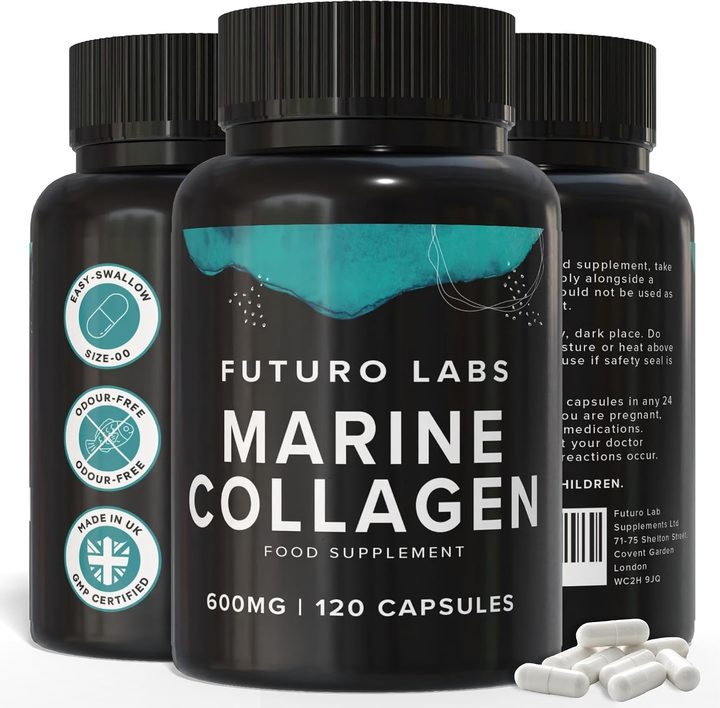
Our brand: the worked example on this page
Futuro Labs Marine Collagen
- 28p a day
- 120 capsules, 2 capsules daily
- Lab tested
- Made in the UK
No fat sentence, on its true terms: Futuro Labs Marine Collagen on Amazon UK, 2 capsules, 1200mg hydrolysed type 1 marine collagen with 12mg vitamin C at 15% NRV plus zinc, 120 for £16.99, 28p a day, lab tested and UK made, around five calories, below the research band and taken for vitamin C's collagen formation sentence. Full label breakdown. The flat stomach question in full is on the does collagen help weight loss page; the night version on the collagen at night for weight loss page; the calorie ledger on the gain weight page.
The two fats, and why neither can be reached by a scoop
Does collagen help you lose belly fat is a question with a wrong assumption inside it, that belly fat is one thing a food could reach, and the honest page starts by splitting it in two, because the two fats leave by different routes and collagen is on neither. Fat one is subcutaneous, the layer under the skin that a reader can pinch at the waist, and it leaves in one way only: when a sustained calorie deficit, energy out exceeding energy in over weeks, obliges the body to draw on its stores, at which point fat is released from all over the body according to a pattern set by sex, genetics and hormones and not by the reader's preferences, the belly usually among the last places to thin in men and the hips and thighs in women. No food, supplement or exercise targets one region, the spot-reduction idea having failed in every trial that tested it, from abdominal exercise programmes that changed abdominal strength and not abdominal fat to any number of creams and pills, so a reader who wants the pinch to shrink builds a deficit at the table and waits for the body to choose the order. Fat two is visceral, the fat packed around the organs inside the abdominal wall that pushes the belly forward without being pinchable, and it is the one that carries the metabolic risk. It leaves with a deficit like the other, and it responds independently to aerobic exercise, which reduces visceral fat even without weight loss in the trials, to adequate sleep, since short sleep shifts fat storage toward the abdomen, and to less alcohol, while the supplement trials that measured visceral fat directly, the omega-3 trials among them, found little or nothing. Neither fat has a receptor for collagen, a pathway collagen enters, or a trial in which collagen changed it, and the reason is not that collagen is a poor fat-burner but that no swallowed protein is a fat-burner at all: protein at four calories a gram lands on the intake side of the ledger like any food, and the only way a protein serving reduces fat is by reducing what is eaten later, the satiety route, which is the paragraph the marketing is built on.
The satiety route weighed, the word the question gets right by accident, and the worked example without a fat sentence
The satiety route is real and the honest page weighs it, because it is the whole of collagen's case. Protein is the most satiating of the three macronutrients and has the highest thermic effect of feeding, so a protein serving blunts the next meal a little and burns a little of itself in digestion, the reason higher protein intakes are studied in weight management and the reason a protein drink before a meal is a legitimate fullness strategy for some readers. Collagen is protein by the nitrogen test and weaker on this route at every step: it is less satiating per gram than whey in the comparisons that exist, lacks tryptophan and most of whey's leucine, and does not preserve muscle in a deficit because it does not drive muscle protein synthesis, which is the second reason protein is raised in a cut and the one that decides whether the weight lost is fat or muscle. So a reader who wants protein to help with belly fat is right about protein and wrong about which one, and the tub that serves the strategy is whey or a complete protein at 1.6 grams per kilo, with collagen adding its calories and little of its satiety. Collagen holds no weight or fat claim in the register, since no evidence could support one, and a tub that implies otherwise has left the register behind. The one word the question gets right, by accident, is collagen: a flat stomach depends partly on the abdominal wall, the sheets of connective tissue and muscle that hold the organs in and can be trained to hold them in tighter, with loaded core work, breathing mechanics and posture doing what a scoop cannot, since swallowed collagen is digested to amino acids distributed wherever the body needs protein and does not arrive at the linea alba with instructions; and a reader who has lost a great deal of weight and is left with loose skin at the belly has a medical and sometimes surgical matter, since skin adaptation after major loss varies with age, amount and speed and is not fixed by any nutrient, the loose skin literature's plain finding. The honest plan for belly fat, then, has no collagen in it: a sustained deficit built at the table for both fats, aerobic exercise, sleep and less alcohol for the visceral one, complete protein at 1.6 grams per kilo to keep the muscle while the fat goes, loaded core work for the wall, and time for the body to choose its order. The worked example carries no fat sentence and states its terms: two capsules, 1200mg hydrolysed type 1 marine collagen with 12mg vitamin C plus zinc, 120 for £16.99 at 28p a day, lab tested and UK made, around five calories, below the research band, taken for vitamin C's collagen formation sentence, adding nothing to the belly's ledger in either direction. Does collagen help you lose belly fat: two fats, two routes, and collagen on neither, with the satiety it borrows from protein belonging to a better protein.
| The item | How it leaves | Where collagen is | What to do |
|---|---|---|---|
| Subcutaneous fat | A sustained calorie deficit; the body chooses the order; no regional targeting | Nowhere: no receptor, pathway or trial | Build the deficit at the table |
| Visceral fat | A deficit; aerobic exercise; sleep; less alcohol | Nowhere: supplement trials found little | Cardio, sleep, drink less |
| The satiety route | Protein blunts the next meal a little | Weaker per gram than whey; no muscle preservation | Complete protein at ~1.6g per kilo |
| The register | No weight or fat claim for collagen | A tub implying one has left the register | Read the label's sentences as vitamin C's |
| The abdominal wall | Trained: loaded core work, breathing, posture | Swallowed collagen does not arrive with instructions | Train it |
| Loose skin after major loss | Medical and sometimes surgical | Not a nutritional matter | A doctor |
| The worked exampleOurs | Two capsules, 1200mg marine collagen with 12mg vitamin C, 28p a day, ~5 calories | No fat sentence | On its true terms |
What to check on the label
- Split the fat: subcutaneous and visceral leave by different routes.
- Build the deficit: the only route for the pinchable layer.
- Add cardio, sleep and less alcohol: the visceral layer's extras.
- Use complete protein for satiety: whey does collagen's one job better.
- Train the wall: connective tissue is loaded, not swallowed.
Our brand
The worked example: Futuro Labs Marine Collagen
Futuro Labs Marine Collagen: 2 capsules daily, 1200mg hydrolysed type 1 marine collagen with 12mg vitamin C and 1.5mg zinc (15% NRV each), 120 capsules for £16.99, 60 days at 28p a day, lab-tested, UK GMP made. Slim veggie-shell capsules, odour free. Fish derived: pescatarian, not vegetarian or vegan.
- Collagen per serving
- 1200mg hydrolysed type 1 marine (fish)
- Co-factors
- vitamin C 12mg (15% NRV), zinc 1.5mg (15% NRV)
- Serving
- 2 capsules a day
- Bottle
- 120 capsules, 60 days
- Price
- £16.99 (28p a day)
- Capsule
- slim size 00, veggie shell, odour free
Questions people also ask
Will collagen help you lose belly fat?
No: belly fat is subcutaneous fat, which leaves only in a sustained calorie deficit and cannot be targeted by any food, and visceral fat, which leaves with a deficit, aerobic exercise, sleep and less alcohol, and collagen holds no fat claim, has no fat-burning mechanism and appears in no trial that changed either.
Does collagen reduce visceral fat?
No trial shows it: visceral fat responds to a calorie deficit, to aerobic exercise even without weight loss, to adequate sleep and to less alcohol, while the supplement trials that measured it directly, omega-3 among them, found little or nothing, and collagen has not been tested for it at all.
Is collagen or whey better for losing belly fat?
Neither targets the belly, but whey serves the one legitimate route better: protein's satiety and its muscle preservation in a deficit, where whey is more satiating per gram and drives muscle protein synthesis while collagen lacks tryptophan and most of whey's leucine and does neither as well.
Can collagen tighten a loose belly?
Not by swallowing it: the abdominal wall is connective tissue and muscle trained with loaded core work and breathing mechanics, swallowed collagen is digested and distributed wherever the body needs protein, and loose skin after major weight loss is a medical and sometimes surgical matter that no nutrient fixes.
What actually helps lose belly fat?
A sustained calorie deficit built at the table for both fats, aerobic exercise, sleep and less alcohol for the visceral fat, complete protein at around 1.6 grams per kilo to keep muscle while the fat goes, loaded core work for the abdominal wall, and time for the body to choose the order in which it releases fat.
Sources
- The visceral fat literature: fat around the organs is reduced by a sustained calorie deficit, by aerobic exercise even without weight loss, by adequate sleep and by less alcohol, while trials of omega-3 supplementation measuring waist circumference and visceral fat by imaging find no consistent reduction. PubMed record
- The body composition and abdominal appearance literature: a flat abdomen depends on subcutaneous fat, which a sustained calorie deficit reduces, visceral fat, which a deficit, aerobic exercise, sleep and less alcohol reduce, abdominal distension from gut contents, gas and fluid, which diet and timing govern, and the tone and posture of the abdominal wall, which training governs, with no supplement shown to reduce any of the four. PubMed record
- The protein and energy-restriction literature: higher protein intakes during a calorie deficit are studied for satiety and for preserving lean mass, the guard rails of sensible weight management. PubMed record
- The energy balance literature: body weight changes when energy intake and expenditure diverge over weeks, protein providing around four kilocalories a gram, with higher protein intakes tending to increase satiety and the thermic effect of feeding, so adding a protein supplement leads to weight gain only when its calories are added on top of intake rather than displacing other food. PubMed record