Ghost Fitness/Collagen/Does collagen help you poop?
Does collagen help you poop?
The short answer
No. The bowel's levers are fibre, fluid and movement; collagen is none of them, a protein with no fibre. At scoop doses it can loosen stools for a fortnight as the gut adapts. Magnesium has a laxative effect; collagen none.
- Lever one, fibrecollagen is a protein with no fibre: it adds nothing a pear or psyllium would
- Lever two, fluidthe glass of water the powder is stirred into helps; the collagen in it does not
- Lever three, movementactivity moves the bowel; no protein does
- Collagen's actual stool effectfullness and sometimes a looser stool at scoop doses in the first fortnight; nothing at capsule doses; no gut claim
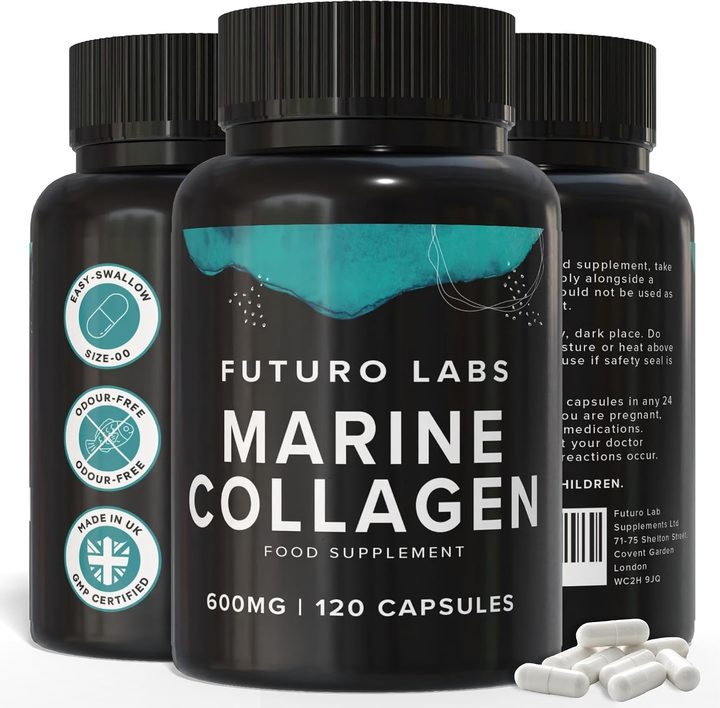
Our brand: the worked example on this page
Futuro Labs Marine Collagen
- 28p a day
- 120 capsules, 2 capsules daily
- Lab tested
- Made in the UK
A dose that does nothing to the bowel either way: Futuro Labs Marine Collagen on Amazon UK, 2 capsules, 1200mg hydrolysed type 1 marine collagen with 12mg vitamin C at 15% NRV plus zinc, 120 for £16.99, 28p a day, lab tested and UK made, below the research band and taken for vitamin C's collagen formation sentence. Full label breakdown. The mineral with the real laxative question is on the glycinate laxative effect page; collagen's gut side effects on the side effects go away page.
The three levers and why a protein pulls none of them
Does collagen help you poop is a question the shelf sometimes answers yes, with a story about gut health, and the honest page answers by naming the three levers that actually move a bowel and checking whether collagen has a hand on any of them, because the constipation guidance is plain about what works before any laxative and a protein appears nowhere in it. Lever one is fibre. Stool bulk, softness and transit time respond to dietary fibre, the soluble kind that holds water and the insoluble kind that adds bulk, and the first thing any guidance recommends for a sluggish bowel is more of it, wholegrains, beans, vegetables, fruit with the skin on, or a spoon of psyllium husk, with a target around thirty grams a day that most adults miss by a third. Collagen is a protein, hydrolysed collagen is a purified protein with no carbohydrate and no fibre at all, and a twenty-gram scoop adds exactly nothing to the fibre lever, so a reader who swaps a bowl of porridge for a collagen coffee has moved the lever the wrong way. Lever two is fluid. Stool softness depends on the water the colon leaves in it, and total fluid intake is the second recommendation in every guidance, around two litres a day from all sources, so here the collagen habit does something by accident: a powder is stirred into a glass of water or a mug of something, and a reader who adds a daily glass they were not drinking before may find themselves more regular and credit the collagen, when the glass did it and would have done it empty. Lever three is movement. Physical activity stimulates bowel motility, which is why a walk after a meal, a run or a lifting session gets things moving and why bed rest and long sitting stop them, and no protein, collagen included, has any effect on motility in either direction, so the third lever is pulled with the legs and not with a scoop. Three levers, and collagen's hand is on none of them, which is the whole of the answer to the question as asked; the rest of the page is about what collagen does do to stools, which is small, and about the two stories that got it a reputation it did not earn.
What collagen actually does to stools, the gut health story traced, and the mineral that really does it
What collagen actually does to a stool is the ordinary effect of a new protein load, and it runs the other way from the question. At scoop doses of around twenty grams, especially taken fasted or in a glass of water on its own, some readers get fullness, mild bloating and sometimes a looser stool in the first few days, the gastrointestinal adaptation literature's one-to-two-week settling as motility, enzyme output and the microbiome adjust, and it fades by the fortnight and is absent at a dessertspoon or a capsule; the trials at up to fifteen grams a day for a year recorded nothing in either direction above placebo. So collagen can briefly loosen rather than help, and a reader whose constipation improved in the first week of a collagen powder has most likely met the adaptation effect, the extra glass, or both, neither of which lasts. The gut health story deserves tracing because it is where the question comes from. Bone broth, gelatin and collagen are sold online for a leaky gut, on the basis that gelatin and glycine-rich protein improve markers of intestinal barrier integrity in animal and cell models, which they do; the human evidence is thin and confined to small studies in specific conditions, no trial supports the bone broth for leaky gut claim in healthy adults, leaky gut is not a diagnosis a doctor makes in the form the shelf uses, and no gut claim of any kind is authorised for collagen or gelatin in the UK register, so the story is an animal result wearing a human sentence, and it says nothing about regularity even in the animals. The second story is simpler: collagen gets confused with the one supplement aisle ingredient that really does move a bowel, magnesium, whose oxide, hydroxide and citrate forms hold water in the colon and have a licensed medicinal use as osmotic laxatives in the constipation guidance, and whose glycinate form is chosen by people who want the mineral without that effect, so a reader who wants a supplement for regularity is in the magnesium aisle with a pharmacist's advice and not in the collagen aisle at all. The honest bowel plan has no collagen in it: thirty grams of fibre, two litres of fluid, a daily walk, and a doctor if a change in bowel habit is new, persistent, painful or bloody, since those are not supplement questions. The worked example does nothing to the bowel in either direction: two capsules, 1200mg hydrolysed type 1 marine collagen with 12mg vitamin C plus zinc, 120 for £16.99 at 28p a day, lab tested and UK made, just over a gram of protein with no scoop to loosen anything and no fibre to help, below the research band and taken for vitamin C's collagen formation sentence. Does collagen help you poop: no, the levers are fibre, fluid and movement, collagen pulls none of them, and the glass it came in did the work.
| The lever | What moves it | Where collagen is |
|---|---|---|
| Fibre | Wholegrains, beans, vegetables, fruit, psyllium; around 30g a day | A protein with no fibre: adds nothing |
| Fluid | Around two litres a day from all sources | The glass helps; the collagen in it does not |
| Movement | A walk, a run, a lifting session; sitting stops it | No protein affects motility |
| Collagen's actual effect | Fullness and sometimes a looser stool at scoop doses in the first fortnight | Adaptation to a new protein load; nothing at capsule doses |
| The gut health story | Gelatin and glycine improve barrier markers in animal and cell models | Thin human evidence; no gut claim for collagen or gelatin |
| The mineral that does it | Magnesium oxide, hydroxide and citrate: licensed osmotic laxatives | Not collagen; glycinate chosen for less of it |
| When to see a doctor | A new, persistent, painful or bloody change in bowel habit | Not a supplement question |
| The worked exampleOurs | Two capsules, 1200mg marine collagen with 12mg vitamin C plus zinc, 28p a day | Nothing to the bowel either way |
What to check on the label
- Eat the fibre: thirty grams a day, which collagen has none of.
- Drink the water, not the collagen: the glass did the work.
- Walk: the third lever has no supplement.
- Expect a loose fortnight at scoop doses: adaptation, not help.
- Take a changed bowel habit to a doctor: never to a tub.
Our brand
The worked example: Futuro Labs Marine Collagen
Futuro Labs Marine Collagen: 2 capsules daily, 1200mg hydrolysed type 1 marine collagen with 12mg vitamin C and 1.5mg zinc (15% NRV each), 120 capsules for £16.99, 60 days at 28p a day, lab-tested, UK GMP made. Slim veggie-shell capsules, odour free. Fish derived: pescatarian, not vegetarian or vegan.
- Collagen per serving
- 1200mg hydrolysed type 1 marine (fish)
- Co-factors
- vitamin C 12mg (15% NRV), zinc 1.5mg (15% NRV)
- Serving
- 2 capsules a day
- Bottle
- 120 capsules, 60 days
- Price
- £16.99 (28p a day)
- Capsule
- slim size 00, veggie shell, odour free
Questions people also ask
Does collagen make you poop more?
Not as a lever: collagen is a protein with no fibre and no effect on motility, so it does not move a bowel the way fibre, fluid and activity do, though at scoop doses it can loosen stools for the first fortnight as the gut adapts to a new protein load, an adaptation effect rather than a benefit and absent at capsule doses.
Is collagen good for gut health?
The story comes from animal and cell models in which gelatin and glycine-rich protein improve markers of intestinal barrier integrity; human evidence is thin and confined to small studies in specific conditions, no trial supports the leaky gut claim in healthy adults, and no gut claim is authorised for collagen or gelatin in the UK register.
Can collagen cause constipation?
No mechanism and no trial signal: collagen has no effect on transit in either direction beyond the looser stools of a new protein load in the first days, so a reader who became constipated after starting a collagen powder looks at what the powder replaced, usually a fibre-containing breakfast, rather than at the powder.
Which supplement actually helps with constipation?
Magnesium in its oxide, hydroxide or citrate form, which holds water in the colon and has a licensed medicinal use as an osmotic laxative in the constipation guidance, after fibre, fluid and activity have been tried, and with a pharmacist's advice; the glycinate form is the one people choose to avoid that effect, and collagen is not in the conversation.
Why did I feel more regular after starting collagen?
Most likely the glass: a powder stirred into a daily glass of water adds fluid a reader was not drinking, the second of the bowel's three levers, and the first fortnight's adaptation to a new protein load can loosen stools briefly, so the collagen gets credit for the water and the settling and would do nothing on its own.
Sources
- The constipation self-management literature: stool frequency and consistency respond to dietary fibre, total fluid intake and physical activity, the three measures guidance recommends before any laxative, with protein supplements having no documented effect on transit in either direction beyond the stool changes of a new protein load in the first days. PubMed record
- The gastrointestinal adaptation literature: fullness, bloating and stool changes after a new protein or fibre load are commonest in the first days and diminish over one to two weeks as gut motility, enzyme output and the microbiome adjust, and settle fastest when the dose is introduced gradually and taken with food. PubMed record
- The gelatin and intestinal barrier literature: gelatin and glycine-rich protein improve markers of gut barrier integrity in animal and cell models, with human evidence limited to small studies in specific conditions and no trial supporting the bone broth or collagen for leaky gut claims circulating online, and no authorised gut claim for collagen or gelatin. PubMed record
- The NICE constipation guidance: osmotic laxatives, including magnesium hydroxide, are established treatments for constipation in adults after dietary and fluid measures, magnesium's laxative effect being a licensed medicinal use rather than a supplement claim. https://cks.nice.org.uk/topics/constipation/