Ghost Fitness/Collagen/Do collagen side effects go away?
Do collagen side effects go away?
The short answer
Each has its own half-life. Fullness and bloating pass in hours and fade over days as the dose settles. Aftertaste never fades; change the drink. Heartburn goes with a meal. Hives on marine collagen never go away: fish allergy, stop.
- Fullness and bloatingpass within hours; fade over one to two weeks as the gut adapts; faster at a dessertspoon with food
- Aftertaste and heartburnaftertaste never fades, change the drink; heartburn goes when the dose moves to a meal
- Hives on marinefish allergy: does not go away, may escalate; stop, allergist, bovine
- Urinary oxalatedose-dependent, reverses on stopping: a stone-former footnote
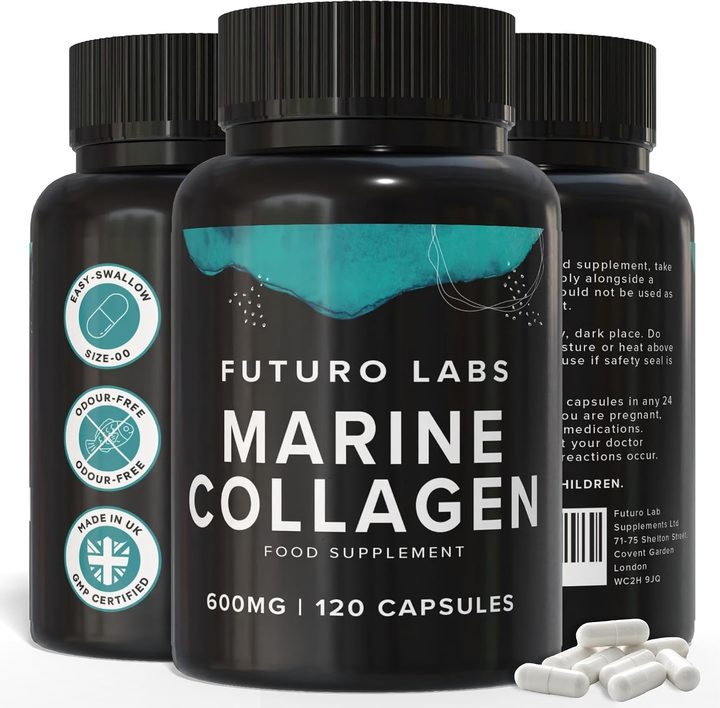
Our brand: the worked example on this page
Futuro Labs Marine Collagen
- 28p a day
- 120 capsules, 2 capsules daily
- Lab tested
- Made in the UK
A dose that produces no line on this page: Futuro Labs Marine Collagen on Amazon UK, 2 capsules, 1200mg hydrolysed type 1 marine collagen with 12mg vitamin C at 15% NRV plus zinc, 120 for £16.99, 28p a day, lab tested and UK made, below the research band, no scoop to sit heavily and no powder to taste; marine, so bovine for fish allergy. Full label breakdown. The symptom audit is on the symptoms of too much collagen page; the ranked downsides on the downside of collagen page.
The ones that go away: fullness and bloating, heartburn, and the one that never arrives at capsule doses
Do collagen side effects go away is a question that assumes they are one thing with one clock, and they are not, so the honest page takes each side effect the trials and the tolerance literature can find and gives it its own half-life, because a reader waiting for the wrong one to pass is either enduring what a change of drink would fix or persisting with what an allergy demands they stop. Fullness and bloating first, the commonest and the ones that do go away. A twenty-gram scoop is twenty grams of protein in a glass of water, and any new protein load produces fullness, a little bloating and sometimes a looser stool in the first days, the gastrointestinal adaptation literature's picture, in which gut motility, enzyme output and the microbiome adjust to a new load over one to two weeks and the symptoms diminish as they do. Within a day, the fullness passes within hours of the dose; across the fortnight, it fades as the gut adapts; and it fades fastest when the dose is introduced at a dessertspoon of around ten grams, the middle of the research band, and taken with or after a meal rather than fasted or at the pillow, so a reader two weeks in and still uncomfortable on a full scoop drops the dose rather than waiting longer, since the tolerance is real but the scoop is a serving size and not a research dose. Heartburn next, in the reader already prone to it: a protein drink taken fasted first thing or late at night can provoke reflux as any protein drink can, and it goes away not with time but with placement, the dose moved to breakfast or after dinner, the same fix as the fullness. And the side effect that never arrives at capsule doses deserves its line, because a reader on two capsules waiting for side effects to pass is waiting for nothing: 1200mg of collagen is just over a gram of protein, produces no fullness, no bloating, no taste and no heartburn in anyone, and the trial adverse event tables at doses up to fifteen grams show nothing else above placebo, so the capsule reader has no half-life to wait out.
The ones that do not go away: the aftertaste, the allergy, and the footnote, and the list filed
Some side effects do not go away with time, and the honest page separates them because waiting is the wrong response to each. The aftertaste first, a comfort matter: some marine collagen powders carry a faint fishy or gelatinous taste in plain water, present from the first mouthful and no fainter at week six, because it is a property of the powder in that liquid and not a reaction the body adapts to, so it is fixed by the vehicle, a coffee, a hot chocolate, a smoothie or a soup, or by the capsule, which has no taste, and never by persistence. The allergy second, and this is the one that matters: hives, itching, lip or facial swelling, a wheezy chest or stomach cramps after starting a marine collagen are the picture of fish allergy, since marine collagen is hydrolysed fish skin and scale protein, the allergen itself, and an allergy does not fade with exposure and may escalate with it, so the response is to stop the product, to treat any breathing difficulty as an emergency, to discuss the reaction with an allergist, and to choose bovine if choosing collagen at all, never to wait for it to go away, because it will not. The footnote third: hydroxyproline, around a tenth of collagen, is metabolised partly to oxalate, and urinary oxalate rises after large gelatin loads in the feeding studies, a change that scales with the dose, reverses when the dose stops, and is not felt by anyone, so it goes away in the sense that it stops when the collagen stops, and it matters only to the reader who has formed calcium oxalate stones, who keeps collagen modest and asks. Then the list filed, with the half-lives attached: fullness and bloating, hours to a fortnight, faster at a dessertspoon with food; heartburn, gone when the dose moves to a meal; aftertaste, never, change the drink; hives on marine, never, stop; urinary oxalate, stops when the dose stops, a footnote. Not on the list: headaches and rashes that were not allergy, which appeared in the placebo arms of the trials as often as the collagen arms and so have nothing to go away from; weight, since collagen is four calories a gram; and anything at all at capsule doses. The worked example produces no line on this page and states its terms: two capsules, 1200mg hydrolysed type 1 marine collagen with 12mg vitamin C plus zinc, 120 for £16.99 at 28p a day, lab tested and UK made, below the research band, taken for vitamin C's collagen formation sentence, no scoop to sit heavily and no powder to taste, marine, so the fish-allergic reader chooses bovine. Do collagen side effects go away: the gut ones do, over a fortnight or with a smaller dose and a meal; the taste does not and the drink fixes it; the allergy does not and stopping is the only answer.
| The side effect | Does it go away | How long or how | The fix |
|---|---|---|---|
| Fullness and bloating | Yes | Hours after a dose; fades over one to two weeks as the gut adapts | A dessertspoon, with food; the capsule |
| Heartburn | Yes, by placement | When the dose moves off a fasted or late slot | Take it with breakfast or after dinner |
| Aftertaste | No, by time | A property of the powder in water | A hot drink, a smoothie, or the capsule |
| Hives on marine collagen | No | Fish allergy; may escalate | Stop; treat breathing difficulty as an emergency; allergist; bovine |
| Raised urinary oxalate | Yes, on stopping | Dose-dependent, unfelt | Stone formers keep it modest and ask |
| Headaches, non-allergic rash | Nothing to go away | Did not beat placebo in the trials | Look elsewhere |
| The worked exampleOurs | No line here | Two capsules, 1200mg marine collagen with 12mg vitamin C, 28p a day | Below the band; no scoop, no powder |
What to check on the label
- Give the gut a fortnight at a dessertspoon: with food.
- Move heartburn to a meal: placement, not patience.
- Change the drink for the taste: it will not fade.
- Stop for hives on marine: allergy does not go away.
- Expect nothing at capsule doses: there is no half-life to wait out.
Our brand
The worked example: Futuro Labs Marine Collagen
Futuro Labs Marine Collagen: 2 capsules daily, 1200mg hydrolysed type 1 marine collagen with 12mg vitamin C and 1.5mg zinc (15% NRV each), 120 capsules for £16.99, 60 days at 28p a day, lab-tested, UK GMP made. Slim veggie-shell capsules, odour free. Fish derived: pescatarian, not vegetarian or vegan.
- Collagen per serving
- 1200mg hydrolysed type 1 marine (fish)
- Co-factors
- vitamin C 12mg (15% NRV), zinc 1.5mg (15% NRV)
- Serving
- 2 capsules a day
- Bottle
- 120 capsules, 60 days
- Price
- £16.99 (28p a day)
- Capsule
- slim size 00, veggie shell, odour free
Questions people also ask
How long does collagen bloating last?
Hours after each dose and one to two weeks overall: a new protein load produces fullness and bloating in the first days while gut motility and enzymes adapt, fading fastest when the dose starts at a dessertspoon of around ten grams and is taken with food, and a reader still uncomfortable on a full scoop after a fortnight drops the dose rather than waiting.
Will the fishy taste of marine collagen go away?
Not with time: the aftertaste some marine powders leave in plain water is a property of the powder in that liquid rather than something the palate adapts to, so it is fixed by the vehicle, a coffee, a smoothie or a soup, or by a capsule, which has no taste.
I got hives after starting marine collagen, will it pass?
Do not wait for it: hives, itching, swelling or a wheezy chest after a marine collagen are the picture of fish allergy, since marine collagen is fish protein, and an allergy does not fade with exposure and may escalate, so stop the product, treat any breathing difficulty as an emergency, see an allergist and choose bovine if choosing collagen.
Do collagen capsules have side effects that need to wear off?
No: two capsules carry just over a gram of protein, which produces no fullness, bloating, taste or heartburn in anyone, and the trial tables at doses up to fifteen grams show nothing else above placebo, so a capsule reader waiting for side effects to pass is waiting for nothing.
Does the oxalate effect of collagen go away when you stop?
Yes: the rise in urinary oxalate after large gelatin or collagen loads scales with the dose and reverses when the dose stops, is not felt by anyone, and matters only to a reader who has formed calcium oxalate stones, who keeps collagen modest and asks whoever manages the stones.
Sources
- The gastrointestinal adaptation literature: fullness, bloating and stool changes after a new protein or fibre load are commonest in the first days and diminish over one to two weeks as gut motility, enzyme output and the microbiome adjust, and settle fastest when the dose is introduced gradually and taken with food. PubMed record
- The supplement gastrointestinal tolerance literature: oral iron produces nausea, constipation and upper abdominal pain in a large share of users, magnesium oxide and high magnesium doses loosen stools, zinc taken fasted causes nausea, creatine at loading doses causes bloating in some, whey concentrate causes lactose symptoms, and fish oil at standard doses causes belching and, rarely, nausea when taken fasted, with loose stools only at gram doses. PubMed record
- The fish allergy and fish oil literature: fish allergy is to fish proteins, and refined fish oil contains little or no protein, so most fish-allergic people tolerate fish oil supplements, but the allergy guidance is to discuss it with an allergist and to prefer an algal oil where doubt exists. PubMed record
- The hydroxyproline and urinary oxalate literature: gelatin and collagen are rich in hydroxyproline, which the liver metabolises partly to oxalate, and feeding studies show a rise in urinary oxalate after large gelatin loads, a note for people who form calcium oxalate kidney stones and no concern at ordinary intakes in others. PubMed record