Ghost Fitness/Collagen/Does collagen shrink belly fat?
Does collagen shrink belly fat?
The short answer
Ask the fat cell. It shrinks by releasing fat under a sustained deficit and the hormones that follow, cannot sense which protein you ate, and no region can be targeted. Collagen has no fat-cell mechanism and no claim. Deficits do.
- How a fat cell shrinkslipolysis under a sustained energy deficit, insulin falling and catecholamines rising; the cell empties rather than disappears
- What it cannot sensewhich protein was eaten; no food or supplement targets a cell or a region, and regional exercise trials show no regional loss
- The two belly depotssubcutaneous: a deficit held for months; visceral: a deficit, aerobic exercise, sleep, less alcohol
- Collagen's positionno fat-cell mechanism, no UK weight or fat claim, satiety trials small and mixed; the quoted trial measured total fat with no protein comparator
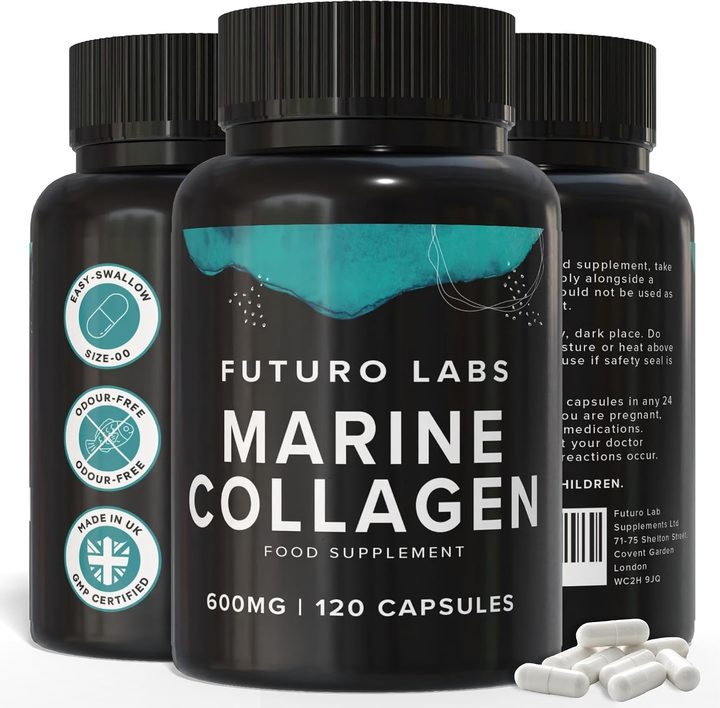
Our brand: the worked example on this page
Futuro Labs Marine Collagen
- 28p a day
- 120 capsules, 2 capsules daily
- Lab tested
- Made in the UK
Taken beside the deficit for its own reasons, never for the belly: Futuro Labs Marine Collagen on Amazon UK, 2 capsules, 1200mg hydrolysed type 1 marine collagen with 12mg vitamin C at 15% NRV plus zinc, 120 for £16.99, 28p a day, lab tested and UK made, with no weight or fat claim and stated as below the 2.5 to 15g research band. Full label breakdown. The two fats are on the collagen and losing belly fat page; the quoted trial read closely on the collagen and reducing belly fat page; collagen interviewed as a diet protein on the collagen protein for weight loss page.
The fat cell's rules: how it shrinks, what it responds to, and what it cannot sense
Does collagen shrink belly fat is a question that uses the right verb for the wrong agent, because shrink is exactly what a fat cell does and the cell has rules about when, and the honest page answers from the cell's point of view before it answers about collagen at all. A fat cell, an adipocyte, is a storage cell holding a single large droplet of triglyceride, and it shrinks in one way: by breaking that triglyceride down into fatty acids and glycerol and releasing them into the blood to be burned elsewhere, a process called lipolysis. The cell does not disappear when it shrinks; the number of fat cells an adult carries is roughly set and a shrunken cell is an emptied one, waiting, which is why fat lost is easily regained and why the belly a reader shrank last year refills first this year. Lipolysis is switched on by a hormonal environment and that environment is created by one thing, a sustained energy deficit: when intake falls below expenditure for days and weeks, insulin falls, the catecholamines rise, and the enzymes in the fat cell that release stored fat are activated across the body's depots, with the fatty acids travelling to muscle and liver to be used. Aerobic exercise raises the catecholamine signal during and after the session and spends the released fat, resistance training preserves the muscle that spends it at rest, sleep keeps the hormonal environment favourable, and alcohol pauses fat oxidation while the liver clears it, which is why those four appear in every honest account of fat loss. What the fat cell cannot do is sense what its owner ate: there is no receptor on an adipocyte for whey, soya, collagen or any other protein, no signal by which a food tells one depot to empty and another to hold, and the controlled trials that had people exercise one arm or one leg for weeks found no more fat lost from the trained limb than the untrained one, the spot reduction result that has been replicated for decades. Regional fat distribution, how much a person stores on the belly rather than the hips or thighs, is set by genetics, sex and age, and a deficit shrinks the cells everywhere in roughly the pattern that filled them, the belly included and the belly often last in those who store there most. Those are the cell's rules, and anything that claims to shrink belly fat has to name which rule it uses.
Belly fat as two depots, collagen's empty hand, and what shrinks it
Belly fat is also two depots rather than one, and the distinction matters for what shrinks it. Subcutaneous fat sits under the skin, pinchable, and follows the general rules above: it leaves through a deficit held for months, in the body's own order, and no faster from the belly than genetics allows. Visceral fat sits inside the abdomen around the organs, is not pinchable, is the depot most linked to metabolic harm, and is the more responsive of the two: it falls with a deficit, with aerobic exercise even when the scale moves little, with better sleep and with less alcohol, so a reader whose waist is large while their pinch is modest is carrying the depot that these four levers move most. Against those rules collagen's hand is empty, and the honest page says so in each of the ways the shelf claims otherwise. Mechanism: collagen is a protein digested to amino acids and small peptides, with no action on the fat cell, no effect on insulin or catecholamines beyond any protein's, and no route into either depot. Claim: no weight, fat or body composition claim is authorised for collagen in the UK, so the belly fat sentence on a tub is unlawful as well as unsupported. Satiety: protein is satiating and a higher-protein deficit is easier to hold, which is collagen's one conceivable route, but the collagen and gelatin satiety trials are small, short and mixed, none measured fat, and complete proteins carry the muscle-preserving duty that collagen cannot. The trial: the one study the shelf quotes gave 15g of collagen peptides to older men with sarcopenia alongside twelve weeks of resistance training and found more fat lost than with a non-protein placebo, which is real and shows that adding protein to under-fed older trainees helps them, with no whey arm to show collagen did anything a complete protein would not, total fat mass measured rather than belly fat, and no region targeted because none can be. The marketing conflation: collagen is sold for loose skin after weight loss, and the skin trials measured elasticity by instrument at 2.5g and above, which is a skin result and not a fat one, so a reader who has read that collagen tightens the belly has read a skin sentence applied to a fat depot. What shrinks belly fat is therefore the list the fat cell wrote: a sustained deficit of a few hundred calories, complete protein at around 1.6 to 2.2g per kilogram to hold muscle, resistance training for the same reason, aerobic exercise for the visceral depot, sleep, and less alcohol, with loss at around half to one percent of body weight a week preserving more muscle than faster loss. Collagen may be taken beside that list for its own reasons, the skin trials, the joint trials, the tendon protocol, with its calories counted and its grams not counted as protein, and never for the belly. The worked example is stated on those terms: two capsules, 1200mg hydrolysed type 1 marine collagen with 12mg vitamin C at 15% of its reference value plus zinc, 120 for £16.99 at 28p a day, lab tested and UK made, below the 2.5 to 15g research band and carrying no weight or fat claim. Does collagen shrink belly fat: no, because the fat cell has never heard of it.
| The question | The fat cell's rule | Collagen's position | What actually moves it |
|---|---|---|---|
| How a fat cell shrinks | Lipolysis under a sustained energy deficit; insulin falls, catecholamines rise; the cell empties, not disappears | No action on the fat cell | A deficit held for weeks and months |
| Can a food target a cell? | No receptor senses which protein was eaten | No mechanism | Nothing; distribution is genetic |
| Can a region be targeted? | Regional exercise trials show no regional loss | No | The body's own order of loss |
| Subcutaneous belly fat | Leaves through a deficit, last where genetics store most | No route | Deficit, complete protein, training, patience |
| Visceral belly fat | Responds to deficit, aerobic exercise, sleep, less alcohol | No route | Those four levers |
| The claim | Not applicable | No UK weight, fat or body composition claim for collagen | None needed for the deficit |
| The quoted trial | Protein helps under-fed older trainees | 15g beside training in men with sarcopenia; total fat; no protein comparator | Shows protein's work |
| The worked exampleOurs | Not applicable | Two capsules, 1200mg marine collagen with 12mg vitamin C plus zinc, 28p a day; no fat claim; below the band | Taken beside the deficit, never for it |
What to check on the label
- Learn the fat cell's one rule: it shrinks under a sustained deficit.
- Drop the idea of targeting: no food reaches a region.
- Separate the two depots: visceral moves with aerobic work, sleep and less alcohol.
- Hold muscle with complete protein and training: collagen does neither.
- Take collagen beside the diet, if at all: for its own reasons, no fat claim.
Our brand
The worked example: Futuro Labs Marine Collagen
Futuro Labs Marine Collagen: 2 capsules daily, 1200mg hydrolysed type 1 marine collagen with 12mg vitamin C and 1.5mg zinc (15% NRV each), 120 capsules for £16.99, 60 days at 28p a day, lab-tested, UK GMP made. Slim veggie-shell capsules, odour free. Fish derived: pescatarian, not vegetarian or vegan.
- Collagen per serving
- 1200mg hydrolysed type 1 marine (fish)
- Co-factors
- vitamin C 12mg (15% NRV), zinc 1.5mg (15% NRV)
- Serving
- 2 capsules a day
- Bottle
- 120 capsules, 60 days
- Price
- £16.99 (28p a day)
- Capsule
- slim size 00, veggie shell, odour free
Questions people also ask
Can collagen target belly fat?
Nothing can: a fat cell has no receptor for which protein was eaten, regional fat distribution is set by genetics, sex and age, and controlled trials of exercising one region found no more fat lost from it than elsewhere; belly fat shrinks when the body's fat cells shrink generally under a sustained deficit, and collagen has no mechanism in that process.
What is the fastest way to lose belly fat?
A sustained deficit of a few hundred calories with complete protein at around 1.6 to 2.2g per kilogram and resistance training to hold muscle, aerobic exercise, sleep and less alcohol for the visceral depot, at a rate of around half to one percent of body weight a week; faster loss costs more muscle, and no supplement adds a lever.
Does collagen help lose visceral fat?
No: visceral fat falls with a deficit, aerobic exercise, sleep and less alcohol, and collagen touches none of those; the one trial the shelf quotes measured total fat mass in older men with sarcopenia adding 15g to training against a non-protein placebo, which shows protein helping under-fed trainees rather than collagen acting on any depot.
Why is collagen sold for belly fat if it does nothing?
Through two conflations: protein's satiety is extended to collagen, whose own satiety trials are small and mixed, and the skin trials' instrument changes in elasticity are read as tightening the belly, a skin result applied to a fat depot; no weight, fat or body composition claim is authorised for collagen in the UK, so the sentence on the tub is unlawful as well as unsupported.
Will I regain belly fat after losing it?
Fat cells shrink rather than disappear, so an emptied belly depot refills first if the deficit ends and intake rises above expenditure again, which is why maintenance is built on the same levers as the loss, complete protein, training, sleep and modest alcohol, and why a supplement cannot hold the result either.
Sources
- The spot reduction and adipocyte literature: fat loss occurs through lipolysis in adipocytes across the body in response to a sustained energy deficit and hormonal signals, adipocytes shrinking rather than disappearing, with regional distribution set by genetics, sex and age, and controlled trials of exercising one region showing no preferential fat loss from that region, so no food, exercise or supplement targets abdominal fat specifically. PubMed record
- The visceral fat literature: fat around the organs is reduced by a sustained calorie deficit, by aerobic exercise even without weight loss, by adequate sleep and by less alcohol, while trials of omega-3 supplementation measuring waist circumference and visceral fat by imaging find no consistent reduction. PubMed record
- The energy balance literature: body weight changes when energy intake and expenditure diverge over weeks, protein providing around four kilocalories a gram, with higher protein intakes tending to increase satiety and the thermic effect of feeding, so adding a protein supplement leads to weight gain only when its calories are added on top of intake rather than displacing other food. PubMed record
- The rate of weight loss and body composition literature: slower loss of around half to one percent of body weight a week with adequate protein and resistance training preserves more lean mass than rapid loss, and skin retraction after weight loss depends on the amount lost, the speed, age, sun exposure, smoking and genetics, continuing for a year or more after weight stabilises before any surgical assessment. PubMed record