Ghost Fitness/Collagen/Does whey protein contain collagen?
Does whey protein contain collagen?
The short answer
No: whey is a milk protein from cheesemaking and milk contains essentially no collagen, which lives in hide and connective tissue. One cow feeds two different industries. Blends that add collagen must declare it on the ingredients line.
- The plain nomilk carries essentially no collagen: whey cannot inherit what milk lacks
- Stream onemilk to cheese to whey: the dairy's liquid protein fraction
- Stream twohide to gelatine to peptides: the tannery-adjacent stream
- The label caveatblends that add collagen must say so: the ingredients line rules
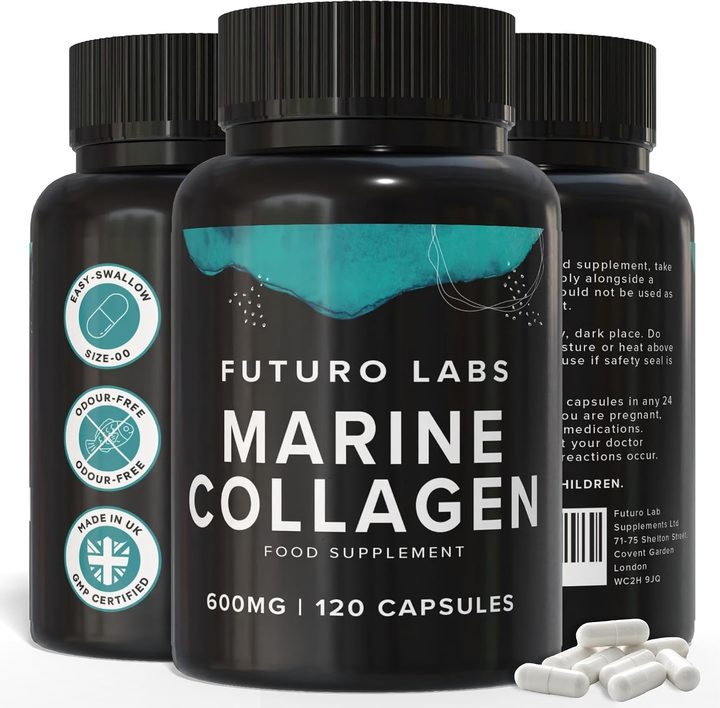
Our brand: the worked example on this page
Futuro Labs Marine Collagen
- 28p a day
- 120 capsules, 2 capsules daily
- Lab tested
- Made in the UK
The other stream's honest product: Futuro Labs Marine Collagen on Amazon UK, 1200mg hydrolysed type 1 marine with vitamin C and zinc at 15% NRV, £16.99 for 60 days at 28p, from fish skin, not from milk. Full label breakdown. The factory tour is on the made-of page; the whey interviews on the two-jobs page.
The one-cow tour: two streams that never meet
The cleanest answer to this question is a tour of one animal, because a single dairy cow feeds both products through two streams that never meet. Stream one runs through the milking parlour: milk is collected, and milk's protein is a two-family affair, caseins, the curdling majority, and the whey fraction, the soluble minority, separated at the cheesemaker's when rennet sets the caseins into curd and the thin yellow-green liquid that drains off, whey, is concentrated and dried into the powder the gym aisle sells, its composition well characterised, beta-lactoglobulin, alpha-lactalbumin and their soluble companions, and its collagen content effectively nil, because collagen is a structural tissue protein and milk is a secretion, the udder exporting nutrition rather than scaffolding, so whey cannot inherit what milk never carried. Stream two begins years later and a building away: when the animal eventually enters the meat supply, its hide goes to the collagen and gelatine industry, washed, loosened, extracted and enzymatically cut per the factory-tour page, the connective tissue that held the animal together becoming the peptides in the beauty aisle's tubs. One cow, two industries, two proteins, zero crossover, and the question's answer is the geography: whey is a milk product, collagen is a hide product, and nothing in cheesemaking puts the second into the first.
The caveats that keep the no honest, and what the answer changes at the shelf
Three caveats keep the plain no precise. First, the blend caveat: while whey itself contains no collagen, blended products exist that add it deliberately, the collagen-plus-whey beauty proteins the dilution pages audit, and the rule is the ingredients line, any added collagen must be declared there by law, so a tub whose panel lists only whey concentrate or isolate is collagen-free, full stop, and a tub listing hydrolysed collagen has told you it is a blend, priced and judged as one. Second, the trace pedantry, handled in a sentence: at analytical extremes, dairy processing is not a cleanroom and vanishing traces of anything bovine are conceivable, but whey's characterised composition contains no meaningful collagen and no honest label would imply otherwise, the practical answer remaining no. Third, the mirror question, since readers arrive from both directions: collagen products likewise contain no whey unless blended, the two streams staying separate on the shelf as in the animal, which matters practically for the dairy-free reader, plain collagen being naturally dairy-free and a legitimate option where whey is excluded, though never, per the family-tree page, a protein-target substitute, its incomplete profile unchanged by the dairy question. What the answer changes at the shelf compresses to two habits: read the ingredients line rather than the front label when purity between the streams matters, allergies and diets living there, and buy each stream for its own job, whey for the targets its completeness serves, collagen for the cofactor habit and the protocol its own pages defend, one cow's two products doing two kinds of work, exactly as the tour drew it.
| The stream | The route | The product's collagen content |
|---|---|---|
| Milk to whey | Parlour, cheesemaker, curds drained, liquid dried | Essentially none: milk is secretion, not scaffold |
| Hide to collagen | Meat supply, hide, extraction, enzymatic hydrolysis | The collagen itself: a different building entirely |
| Plain whey tubs | Whey concentrate or isolate on the panel | Collagen-free, full stop |
| Blend tubs | Hydrolysed collagen declared on the line | A blend by law's own confession: judge it as one |
| Plain collagen tubs | Fish skin or hide, no dairy in the process | Naturally dairy-free: the mirror answer |
| The buying habit | Read the ingredients line, not the front | Allergies, diets and purity all live there |
The verdict, closed at the farm gate
Does whey protein contain collagen: no, by the geography of the animal itself, whey descending from milk through the cheesemaker's drain and milk carrying essentially no collagen to pass on, collagen descending from hide through a different industry entirely, the two streams meeting only in deliberately blended products the ingredients line must confess. The buying habits follow, read the line when stream purity matters, and employ each protein for its own job. The worked example belongs entirely to the second stream and says so: Futuro Labs Marine Collagen, 1200mg hydrolysed type 1 from fish skin with 12mg vitamin C and 1.5mg zinc at 15% NRV, lab tested, UK made, £16.99 for 60 days at 28p a day, naturally dairy-free, never a whey substitute, and one honest half of a tour that started with a single cow.
What to check on the label
- No, by geography: whey comes from milk, collagen from hide.
- Milk carries no scaffold: a secretion cannot pass on structural protein.
- Blends must confess: added collagen appears on the ingredients line.
- The mirror holds too: plain collagen is naturally dairy-free.
- Two streams, two jobs: targets for whey, the habit and protocol for collagen.
Our brand
The worked example: Futuro Labs Marine Collagen
Futuro Labs Marine Collagen: 2 capsules daily, 1200mg hydrolysed type 1 marine collagen with 12mg vitamin C and 1.5mg zinc (15% NRV each), 120 capsules for £16.99, 60 days at 28p a day, lab-tested, UK GMP made. Slim veggie-shell capsules, odour free. Fish derived: pescatarian, not vegetarian or vegan.
- Collagen per serving
- 1200mg hydrolysed type 1 marine (fish)
- Co-factors
- vitamin C 12mg (15% NRV), zinc 1.5mg (15% NRV)
- Serving
- 2 capsules a day
- Bottle
- 120 capsules, 60 days
- Price
- £16.99 (28p a day)
- Capsule
- slim size 00, veggie shell, odour free
Questions people also ask
Is there any collagen in whey protein?
No: whey is milk's soluble protein fraction from cheesemaking, and milk contains essentially no collagen, which is structural tissue protein living in hide and connective tissue.
How would I know if a protein powder had collagen added?
The ingredients line: added collagen must be declared, so a panel listing only whey concentrate or isolate is collagen-free, and one listing hydrolysed collagen has confessed to being a blend.
Is collagen dairy-free then?
Plain collagen is: fish skin or hide, no dairy in the process, a legitimate option where whey is excluded, though never a protein-target substitute, its incomplete profile unchanged.
Do whey and collagen come from the same animal?
They can: one dairy cow feeds both industries through streams that never meet, milk to the cheesemaker, hide eventually to the collagen works.
Should I take whey and collagen together?
As two separate products for two separate jobs, fine: pre-mixed blends dilute the whey's completeness, per the dilution audit, so buy the streams unblended.
Sources
- The milk protein literature: whey is the soluble protein fraction separated during cheesemaking, its composition of beta-lactoglobulin, alpha-lactalbumin and related proteins containing essentially no collagen. PubMed record
- The collagen manufacturing literature: raw hides and fish skins are cleaned, extracted to gelatine and enzymatically hydrolysed into low molecular weight peptides before filtration and spray-drying. PubMed record
- Comparative protein research: the leucine content of a protein drives its muscle protein synthesis response, with whey outperforming collagen in direct comparisons. PubMed record
- EFSA Panel on Dietetic Products, Nutrition and Allergies. Scientific Opinion on the substantiation of health claims related to magnesium. EFSA Journal 2010;8(10):1807. https://efsa.onlinelibrary.wiley.com/doi/10.2903/j.efsa.2010.1807