Ghost Fitness/Collagen/Does collagen reduce belly fat?
Does collagen reduce belly fat?
The short answer
The trial the shelf quotes: older men with sarcopenia adding 15g of collagen to training lost more fat than placebo. It shows protein helps under-fed trainees, not collagen and the belly: no protein comparator, total not belly fat, nothing regional.
- The trial~50 older men with sarcopenia; 15g collagen peptides or silica placebo; 12 weeks of supervised training; more fat-free mass gained and fat mass lost with collagen
- Limit one and twounder-fed older men in whom any added protein helps; an inert comparator, not whey
- Limit three and fourtotal fat mass by bioimpedance, not belly, visceral or waist; no food targets a region
- What it showsprotein added to training helps body composition in under-fed older men; nothing about collagen and the belly; no fat claim exists
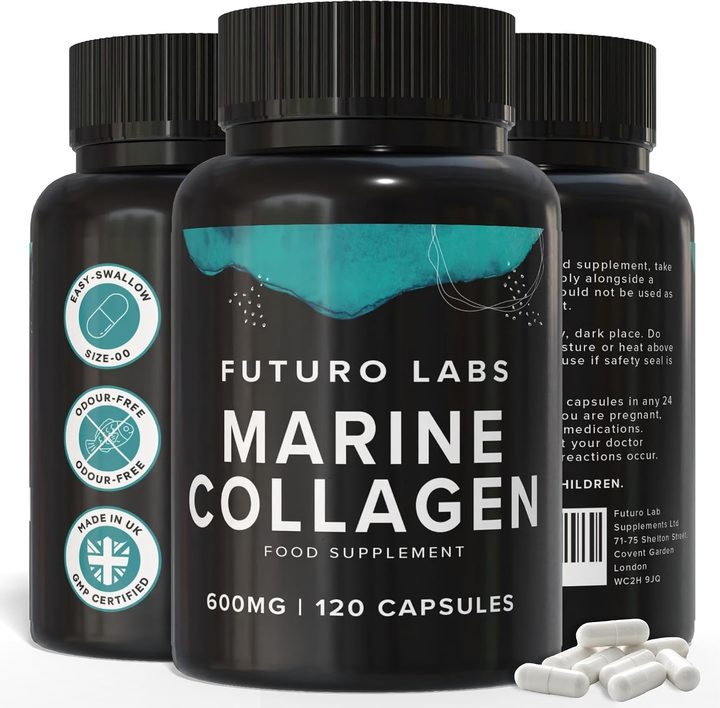
Our brand: the worked example on this page
Futuro Labs Marine Collagen
- 28p a day
- 120 capsules, 2 capsules daily
- Lab tested
- Made in the UK
No fat sentence, on its true terms: Futuro Labs Marine Collagen on Amazon UK, 2 capsules, 1200mg hydrolysed type 1 marine collagen with 12mg vitamin C at 15% NRV plus zinc, 120 for £16.99, 28p a day, lab tested and UK made, around five calories, a twelfth of the trial's dose and not a muscle protein, taken for vitamin C's collagen formation sentence. Full label breakdown. The two fats are on the belly fat page; the trials that tried collagen for muscle on the does collagen help build muscle page; the two rumours on the collagen cause weight loss page.
The one trial the shelf quotes, described exactly
Does collagen reduce belly fat is a question that would be a plain no on every page of this site except that one trial exists which the shelf quotes for it, and the honest page reads that trial closely rather than pretending it is not there, because a reader who has seen it quoted deserves to know what it found and what it did not. The trial randomised around fifty older men with sarcopenia, the age-related loss of muscle mass and strength, to fifteen grams a day of specific collagen peptides or a silica placebo, both groups doing a supervised resistance training programme three times a week for twelve weeks, and measured body composition by bioimpedance and strength at the start and the end. The collagen group gained more fat-free mass and lost more fat mass than the placebo group, and gained more strength, differences that were statistically significant, and the trial was funded by the manufacturer of the peptide. That is a real result in a peer-reviewed journal, it has been followed by trials of the same design in young men and in women reporting the same direction, and it is the honest origin of every tub that says collagen for fat loss or collagen for body composition. The question is what it shows, and reading it closely answers that in four parts. The participants: older men with sarcopenia are, almost by definition, habitually low in protein and new to resistance training, the population in which adding fifteen grams of any protein a day to a supervised programme would be expected to improve body composition, since the muscle built by the training needs amino acids the men were not previously eating, and the fat lost follows the muscle gained and the training done. The comparator: silica, an inert powder, so the trial asked whether fifteen grams of collagen beats nothing beside training and not whether it beats fifteen grams of whey, and the one trial that did compare collagen with whey, in older women during energy restriction, found whey supported muscle protein synthesis where an equal collagen dose did not, so the trial's result is consistent with any protein helping and cannot show collagen helping specially.
The outcome that was not belly fat, the rule no food breaks, and what the trial honestly supports
The third part is the outcome, and it is the one the shelf changes. The trial measured total body fat mass by bioimpedance, the whole-body estimate a scale with electrodes gives, and it did not measure belly fat, visceral fat by imaging, waist circumference or any regional fat at all, so a tub that quotes it for belly fat has quoted a total and written a region, which is a different claim resting on no measurement. The fourth part is the rule no food breaks: no swallowed substance targets a region of the body, the spot-reduction idea having failed in every trial that tested it, and the fat that gathers at the belly is two fats with known levers, subcutaneous fat leaving in a sustained calorie deficit in an order set by sex and genetics, and visceral fat leaving with a deficit, aerobic exercise, sleep and less alcohol, so even a protein that reduced total fat mass more than another would do so everywhere the body chose and not at the waist. Read in full, the trial honestly supports one sentence: adding fifteen grams of protein a day to a supervised resistance training programme in under-fed older men improved their body composition against adding nothing, which is protein's result and training's result, and it supports nothing about collagen in particular, since no protein comparator was run, and nothing about the belly, since no belly was measured. The follow-up trials in young men and women share the design and the limits, silica placebo and total body composition, and so share the reading. The register agrees with the reading, since collagen holds no fat, weight or body composition claim in the UK and may not print one, while protein's authorised muscle-mass sentence attaches to any source of protein by energy, which is the lawful and hollow line a separate page takes apart. The honest belly fat plan has no collagen in it: a sustained deficit at the table, aerobic exercise, sleep and less alcohol for the visceral layer, complete protein at 1.6 grams per kilo to keep muscle while the fat goes, which collagen does not count toward, and resistance training, which is the part of the trial that did the work. The worked example carries no fat sentence: two capsules, 1200mg hydrolysed type 1 marine collagen with 12mg vitamin C plus zinc, 120 for £16.99 at 28p a day, lab tested and UK made, around five calories, a twelfth of the trial's fifteen grams and not a muscle protein in any case, taken for vitamin C's collagen formation sentence beside a day of complete protein. Does collagen reduce belly fat: the one trial quoted for it measured total fat in under-fed older men against an inert powder and found what added protein beside training finds, and nothing in it or anywhere else reaches the belly.
| The item | What the trial did | What the tub says | The honest reading |
|---|---|---|---|
| The participants | ~50 older men with sarcopenia, habitually low in protein, new to training | Collagen burns fat | Any added protein helps this population's body composition |
| The intervention | 15g collagen peptides or silica placebo; 12 weeks of supervised resistance training | Collagen for fat loss | Fifteen grams of protein against nothing, beside training |
| The comparator | Silica, an inert powder | Collagen works | No protein comparator; whey beat collagen on synthesis in the one direct test |
| The outcome | Total fat mass by bioimpedance; fat-free mass; strength | Belly fat | No belly, visceral or waist measurement at all |
| The rule | Not tested | Targets the stomach | No food targets a region; the belly's two fats have their own levers |
| The follow-ups | Young men and women, same design | More proof | The same limits: silica and total composition |
| The register | Not applicable | Fat loss on the label | No collagen fat, weight or composition claim exists |
| The worked exampleOurs | Two capsules, 1200mg marine collagen with 12mg vitamin C, 28p a day | None printed | A twelfth of the trial dose; not a muscle protein; no fat sentence |
What to check on the label
- Read the trial, not the tub: older men, silica, total fat.
- Credit the protein and the training: not the collagen.
- Notice the missing comparator: whey was never in the room.
- Notice the missing waist: total fat is not belly fat.
- Build the deficit and lift: the part of the trial that worked.
Our brand
The worked example: Futuro Labs Marine Collagen
Futuro Labs Marine Collagen: 2 capsules daily, 1200mg hydrolysed type 1 marine collagen with 12mg vitamin C and 1.5mg zinc (15% NRV each), 120 capsules for £16.99, 60 days at 28p a day, lab-tested, UK GMP made. Slim veggie-shell capsules, odour free. Fish derived: pescatarian, not vegetarian or vegan.
- Collagen per serving
- 1200mg hydrolysed type 1 marine (fish)
- Co-factors
- vitamin C 12mg (15% NRV), zinc 1.5mg (15% NRV)
- Serving
- 2 capsules a day
- Bottle
- 120 capsules, 60 days
- Price
- £16.99 (28p a day)
- Capsule
- slim size 00, veggie shell, odour free
Questions people also ask
Is there a study showing collagen reduces fat?
One often quoted: around fifty older men with sarcopenia adding fifteen grams of collagen peptides a day to twelve weeks of supervised resistance training lost more total fat mass and gained more fat-free mass than with a silica placebo, a real, manufacturer-funded result that shows added protein beside training helps under-fed older men, with no protein comparator, no belly measurement and nothing specific to collagen.
Why does that collagen study not prove it burns belly fat?
Four reasons: the participants were under-fed older men in whom any added protein helps body composition, the comparator was an inert powder rather than another protein, the outcome was total fat mass by bioimpedance rather than belly, visceral or waist fat, and no food targets a region of the body in any case.
Would whey have done the same thing in that trial?
Almost certainly more: the one trial that compared whey with collagen directly, in older women during energy restriction, found whey supported muscle protein synthesis where an equal collagen dose did not, consistent with collagen's near-absence of leucine and lack of tryptophan, so fifteen grams of whey beside the same training would be expected to build more muscle and so shift more fat.
Does collagen reduce visceral fat?
No trial shows it: visceral fat responds to a calorie deficit, aerobic exercise, sleep and less alcohol, the collagen body composition trials measured total fat by bioimpedance and never visceral fat by imaging, and collagen holds no fat, weight or body composition claim in the UK register.
What should I take to lose belly fat then?
Nothing targets it: a sustained calorie deficit at the table for the subcutaneous layer, aerobic exercise, sleep and less alcohol for the visceral layer, complete protein at around 1.6 grams per kilo to keep muscle while the fat goes, and resistance training, the part of the quoted trial that did the work, with collagen booked outside the protein target if taken at all.
Sources
- The collagen peptide and resistance training trials: twelve-week randomised trials adding fifteen grams a day of specific collagen peptides to a supervised training programme reported greater gains in fat-free mass and strength than placebo in older men with sarcopenia and in young men, and in premenopausal women, all funded by the peptide's manufacturer, with a placebo of silica rather than another protein, so the trials show that adding fifteen grams of protein to training helps and not that collagen is the protein to add. PubMed record
- The collagen versus whey muscle protein synthesis comparison: a randomised trial in older women during energy restriction and step reduction found whey protein supplementation supported muscle protein synthesis where an equal dose of collagen peptides did not, consistent with collagen's near-absence of leucine and lack of tryptophan, the direct test the training trials lacked. PubMed record
- The visceral fat literature: fat around the organs is reduced by a sustained calorie deficit, by aerobic exercise even without weight loss, by adequate sleep and by less alcohol, while trials of omega-3 supplementation measuring waist circumference and visceral fat by imaging find no consistent reduction. PubMed record
- The energy balance literature: body weight changes when energy intake and expenditure diverge over weeks, protein providing around four kilocalories a gram, with higher protein intakes tending to increase satiety and the thermic effect of feeding, so adding a protein supplement leads to weight gain only when its calories are added on top of intake rather than displacing other food. PubMed record