Ghost Fitness/Collagen/Does collagen help build muscle?
Does collagen help build muscle?
The short answer
The trials that tried: 15g beside training beat a silica placebo for fat-free mass in three manufacturer-funded trials, showing extra protein helps. The one whey comparison: whey drove muscle protein synthesis, collagen did not. Not the protein to add.
- The three training trials15g a day for 12 weeks beside supervised training: more fat-free mass and strength than placebo, in sarcopenic older men, young men and women
- What they compared againsta silica placebo, not another protein; manufacturer-funded; the older men under-fed in protein
- The direct comparisonolder women in energy restriction: whey supported muscle protein synthesis, an equal collagen dose did not
- The readingextra protein helps training; collagen does it worse than whey and counts toward nothing at 1.6g per kilo
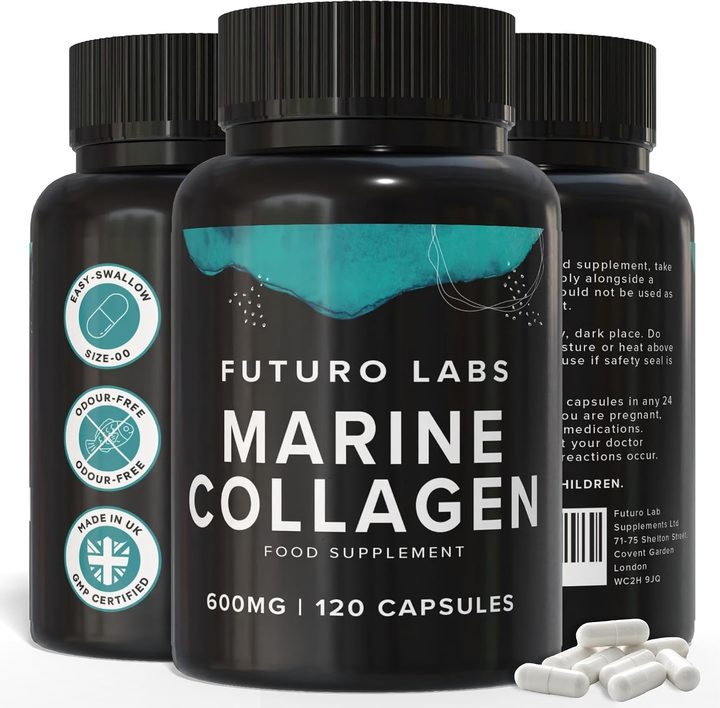
Our brand: the worked example on this page
Futuro Labs Marine Collagen
- 28p a day
- 120 capsules, 2 capsules daily
- Lab tested
- Made in the UK
Not a muscle protein, and stated so: Futuro Labs Marine Collagen on Amazon UK, 2 capsules, 1200mg hydrolysed type 1 marine collagen with 12mg vitamin C at 15% NRV plus zinc, 120 for £16.99, 28p a day, lab tested and UK made, bought for the connective tissue research and vitamin C's collagen formation sentence beside a day of complete protein, never for the muscle. Full label breakdown. Whether you can still build muscle while taking it is on the still build muscle page; the two ledgers on the does collagen count page; the whey comparison on the collagen versus whey for muscle page.
The three trials that tried, read closely
Does collagen help build muscle is usually answered from the amino acid table, no tryptophan and little leucine so no, and the table is right, but the honest page gives the trials that tried it a hearing first, because they exist, they are quoted on tubs, and a reader who has seen them deserves to know what they show. There are three worth naming. The first gave fifteen grams a day of specific collagen peptides to older men with sarcopenia, age-related muscle loss, alongside a supervised resistance training programme three times a week for twelve weeks, and reported that the collagen group gained more fat-free mass and more strength than the training-plus-placebo group. The second ran the same design in young, recreationally active men, fifteen grams a day for twelve weeks beside training, and reported greater gains in fat-free mass and strength again, with a muscle proteomics analysis alongside. The third ran it in premenopausal women with the same dose and duration and reported the same direction. Three trials, one design, one result, and a reader who stops there has a case for collagen building muscle. Read closely, the case narrows. Each trial was funded by the manufacturer of the peptide tested, which does not make a result wrong and does make it a result to weigh with the others. Each compared collagen against a placebo of silica, an inert powder, rather than against another protein, so the trials asked whether fifteen grams of collagen beats nothing beside training and not whether it beats fifteen grams of whey, and the answer to the first question was always going to be yes for any protein in a trainee who was not eating enough of it. The older men were exactly that trainee, sarcopenic and habitually low in protein, so that adding fifteen grams of any protein to their day was likely to help, and the young men and women were not screened for high habitual intake either. And the effect sizes, while statistically significant in the trials, were of the order that fifteen grams of extra protein a day beside a new training programme would be expected to produce in people who were not already eating to target. So the three trials show something real and modest: adding fifteen grams of protein a day to a supervised training programme helps, in people who were not already eating enough, and they cannot show that collagen is the protein to add because none of them tested that.
The one direct comparison, the amino acid table it confirms, and the honest reading
The trial that did test it was smaller and answered the question the three could not. In older women during a period of energy restriction and reduced daily steps, the conditions under which muscle is most at risk, whey protein supplementation supported muscle protein synthesis where an equal dose of collagen peptides did not, the direct comparison the training trials lacked, and the result is the one the amino acid table predicts: muscle protein synthesis is triggered by leucine, of which collagen carries around a third of whey's amount per gram, and cannot be sustained without every essential amino acid, of which collagen lacks tryptophan entirely, so a collagen dose that raises blood amino acids does not raise the signal that builds muscle the way a complete protein does, and the muscle protein synthesis literature's broader comparisons, whey against collagen in several designs, come out the same way. The honest reading of the whole record, then: collagen helps build muscle in the sense that any extra protein helps a trainee who was under-eating it, which is what the three training trials showed and what fifteen grams of whey would have shown more of; collagen does not help build muscle gram for gram against a complete protein, which is what the direct comparison showed; and collagen does not count toward the 1.6 grams per kilo a lifter eats for muscle, since the target is written in complete protein and a scoop of collagen counted toward it is a scoop of muscle protein not eaten. What the three trials do lend collagen honestly is a different sentence: a reader who is already eating complete protein to target and trains loses nothing by adding collagen, the still-build-muscle page's bystander verdict, and the connective tissue research, the tendon protocol and the joint trials, is the reason a lifter buys it, not the muscle. The register agrees, since protein's authorised muscle-mass sentence attaches to foods that are a source of protein and collagen powder qualifies by energy, a lawful and hollow line that a separate page takes apart, while collagen itself holds no claim of its own for muscle or anything else. The worked example is stated as not a muscle protein: two capsules, 1200mg hydrolysed type 1 marine collagen with 12mg vitamin C plus zinc, 120 for £16.99 at 28p a day, lab tested and UK made, just over a gram of incomplete protein that no lifter would count, bought for the connective tissue research and vitamin C's collagen formation sentence beside a day of whey, dairy, meat, fish, eggs or soya at 1.6 grams per kilo, and never instead of any of them. Does collagen help build muscle: the trials that tried show extra protein helps, the trial that compared shows collagen is not the protein, and the table said so all along.
| The trial | Design | Result | What it shows |
|---|---|---|---|
| Older men with sarcopenia | 15g collagen peptides a day beside 12 weeks of supervised training, against silica placebo | More fat-free mass and strength than placebo | Extra protein helps under-fed trainees; manufacturer-funded |
| Young men | The same design | More fat-free mass and strength than placebo | The same; no protein comparator |
| Premenopausal women | The same design | The same direction | The same; no protein comparator |
| Older women in energy restriction | Whey against an equal dose of collagen peptides on muscle protein synthesis | Whey supported synthesis; collagen did not | Collagen is not the protein to add |
| The amino acid table | Leucine a third of whey's; no tryptophan; near zero completeness | Predicts the comparison | Counts toward nothing at 1.6g per kilo |
| The honest sentence | Eat complete protein to target; add collagen for connective tissue reasons | Loses nothing; builds nothing extra | A bystander to growth |
| The worked exampleOurs | Two capsules, 1200mg marine collagen with 12mg vitamin C, 28p a day | Just over a gram of incomplete protein | Not a muscle protein, and stated so |
What to check on the label
- Read the placebo: silica, not whey.
- Read the participants: under-fed in protein, especially the older men.
- Read the one comparison: whey worked, collagen did not.
- Eat 1.6g per kilo of complete protein: collagen counts toward none of it.
- Buy collagen for connective tissue: never for the muscle.
Our brand
The worked example: Futuro Labs Marine Collagen
Futuro Labs Marine Collagen: 2 capsules daily, 1200mg hydrolysed type 1 marine collagen with 12mg vitamin C and 1.5mg zinc (15% NRV each), 120 capsules for £16.99, 60 days at 28p a day, lab-tested, UK GMP made. Slim veggie-shell capsules, odour free. Fish derived: pescatarian, not vegetarian or vegan.
- Collagen per serving
- 1200mg hydrolysed type 1 marine (fish)
- Co-factors
- vitamin C 12mg (15% NRV), zinc 1.5mg (15% NRV)
- Serving
- 2 capsules a day
- Bottle
- 120 capsules, 60 days
- Price
- £16.99 (28p a day)
- Capsule
- slim size 00, veggie shell, odour free
Questions people also ask
Do the studies show collagen builds muscle?
Three twelve-week trials adding fifteen grams of collagen peptides to supervised training reported more fat-free mass and strength than a silica placebo, in sarcopenic older men, young men and women, all manufacturer-funded and none compared with another protein, so they show that extra protein helps under-fed trainees, while the one trial that compared whey with collagen found whey supported muscle protein synthesis and collagen did not.
Does collagen actually do anything for muscle growth?
Not beyond what any protein does for an under-fed trainee: collagen lacks tryptophan and carries around a third of whey's leucine, the amino acid that triggers muscle protein synthesis, so it does not build muscle gram for gram against a complete protein and does not count toward the 1.6 grams per kilo the muscle target is written in.
Is collagen or whey better for building muscle?
Whey, by the direct comparison and the amino acid table: in older women during energy restriction whey supported muscle protein synthesis where an equal dose of collagen peptides did not, whey being complete and leucine-rich and collagen being neither, so whey is the muscle protein and collagen is bought for connective tissue reasons beside it.
Will taking collagen stop me building muscle?
No: collagen is a bystander to growth, neither helping nor blocking it, so a lifter eating complete protein to target and training builds the same muscle with or without it, the only harm being the arithmetic error of counting a collagen scoop toward the protein target and eating a scoop less of the protein that does the building.
Why did the collagen muscle trials work if collagen is incomplete?
Because they tested collagen against nothing: fifteen grams of any protein added to a supervised training programme in people not already eating enough protein, sarcopenic older men above all, would be expected to add fat-free mass against an inert placebo, and the trials could not show collagen was the protein to add because none included a whey arm.
Sources
- The collagen peptide and resistance training trials: twelve-week randomised trials adding fifteen grams a day of specific collagen peptides to a supervised training programme reported greater gains in fat-free mass and strength than placebo in older men with sarcopenia and in young men, and in premenopausal women, all funded by the peptide's manufacturer, with a placebo of silica rather than another protein, so the trials show that adding fifteen grams of protein to training helps and not that collagen is the protein to add. PubMed record
- The collagen versus whey muscle protein synthesis comparison: a randomised trial in older women during energy restriction and step reduction found whey protein supplementation supported muscle protein synthesis where an equal dose of collagen peptides did not, consistent with collagen's near-absence of leucine and lack of tryptophan, the direct test the training trials lacked. PubMed record
- Comparative protein research: the leucine content of a protein drives its muscle protein synthesis response, with whey outperforming collagen in direct comparisons. PubMed record
- The muscle protein synthesis literature: resistance exercise and a leucine-rich protein dose of around 20 to 40 grams stimulate muscle protein synthesis for hours, with total daily protein, energy availability and the training stimulus determining net gain, and no trial of magnesium supplementation on muscle protein synthesis in trained adults. PubMed record