Ghost Fitness/Collagen/Does collagen help muscle repair?
Does collagen help muscle repair?
The short answer
Repair is three processes. Muscle protein synthesis: collagen barely drives it, lacking leucine and tryptophan; whey does. Soreness: small collagen trials are mixed. The muscle's own connective tissue: one proteomic study found changes, a mechanism not an outcome.
- Process one, muscle protein synthesisleucine-triggered, needs every essential amino acid; collagen has a third of whey's leucine and no tryptophan; whey supported synthesis where collagen did not
- Process two, soreness and recoverypeaks at 1 to 3 days, fades by a week; the repeated bout effect; collagen trials mixed, no consistent benefit
- Process three, the muscle's connective tissuean intramuscular collagen matrix transmitting force; proteomic changes in one 12-week trial beside training; a mechanism
- Marine or bovinethe same three answers; the same peptides
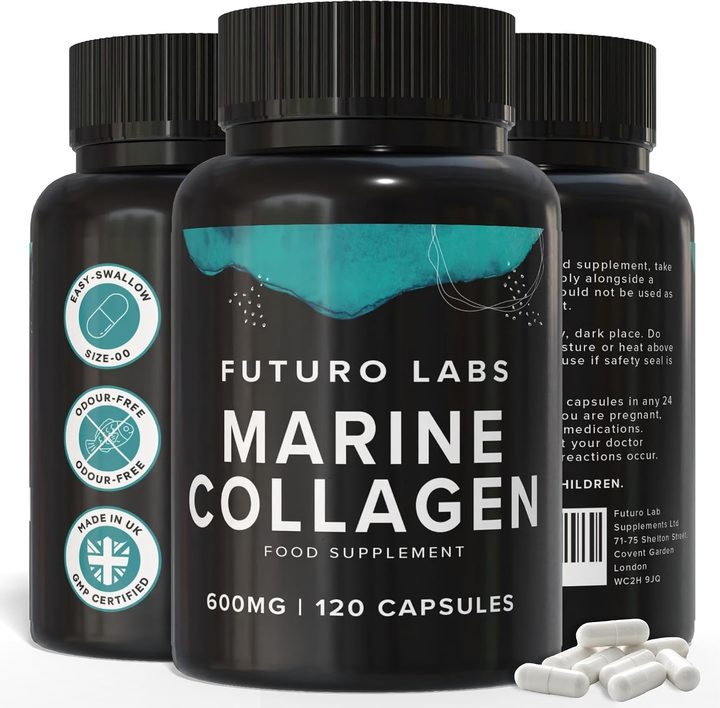
Our brand: the worked example on this page
Futuro Labs Marine Collagen
- 28p a day
- 120 capsules, 2 capsules daily
- Lab tested
- Made in the UK
Not a muscle protein, taken beside one: Futuro Labs Marine Collagen on Amazon UK, 2 capsules, 1200mg hydrolysed type 1 marine collagen with 12mg vitamin C at 15% NRV plus zinc, 120 for £16.99, 28p a day, lab tested and UK made, bought for the connective tissue research and vitamin C's collagen formation sentence beside a day of complete protein, never as the repair protein. Full label breakdown. Recovery decomposed is on the post-workout recovery page; the trials that tried collagen for muscle on the does collagen help build muscle page; the whey comparison on the collagen versus whey page.
Processes one and two: muscle protein synthesis, where collagen fails, and soreness, where the trials are mixed
Does collagen help muscle repair is a question whose noun covers three different processes, and the honest page separates them before answering, because collagen's answer is different for each and the shelf's single yes relies on the reader not noticing which process it means. Process one is muscle protein synthesis, the rebuilding of the contractile proteins, actin and myosin and their scaffolding, that training damages and stimulates, and it is the process most lifters mean by repair. Synthesis after a session or a meal is triggered mainly by leucine, the amino acid that switches on the muscle's building machinery, and it is sustained only when every essential amino acid is present to be built into new protein, which is why a complete, leucine-rich protein such as whey, dairy, meat, eggs or soya drives it and why the muscle protein synthesis literature's dose is twenty to forty grams of such a protein after training. Collagen fails both conditions: it carries around a third of whey's leucine per gram, so the trigger is weak, and it lacks tryptophan entirely, so the build cannot be completed from it, and in the direct comparison, older women during energy restriction given whey or an equal dose of collagen peptides, whey supported muscle protein synthesis and collagen did not. So for process one collagen barely helps, and a lifter who takes it as the post-training repair protein has taken the wrong one. Process two is soreness and the recovery from it, the delayed-onset ache that begins eight to twenty-four hours after unfamiliar or eccentric-heavy training, peaks at one to three days and fades by about a week, and which the repeated bout effect largely prevents the second time the same session is done. Here collagen has been tested, in small trials of collagen peptides around exercise measuring soreness, recovery of strength and markers of muscle damage, and the results are mixed, some trials reporting a little less soreness or faster strength recovery and others nothing, with no consistent benefit established and no claim authorised, so for process two the honest word is inconsistent, with sleep, sensible loading and the repeated bout doing more than any supplement on the shelf.
Process three: the muscle's own connective tissue, where collagen has a mechanism, and the three totalled
Process three is the one most readers do not know exists, and it is where collagen's muscle story has a mechanism. Skeletal muscle is not only contractile fibres; it contains an intramuscular connective tissue, a matrix of collagen that wraps each fibre, each bundle and the whole muscle, transmits the force the fibres produce to the tendon and bone, and remodels with training, thickening and reorganising as the muscle adapts to load, a slower adaptation than the fibres' own and one that the connective tissue literature increasingly sees as part of what makes a trained muscle strong. In a twelve-week trial adding fifteen grams a day of collagen peptides to a supervised resistance training programme in young men, the one that also reported more fat-free mass than a silica placebo, a proteomic analysis of muscle biopsies reported changes in connective tissue proteins and contractile proteins in the collagen group, a mechanism-level finding that the collagen peptides may have influenced the muscle's matrix remodelling alongside the training, in a manufacturer-funded trial with no protein comparator and no outcome a lifter would feel. So for process three collagen helps muscle repair in the sense that it may contribute to the remodelling of the muscle's own collagen, as research, with a proposed mechanism in the small peptides that survive digestion and act on fibroblasts, and no claim. The three totalled: muscle protein synthesis, collagen barely, whey does; soreness, mixed and inconsistent, sleep and loading do more; the muscle's connective tissue, a mechanism in one proteomic study beside training. The secondary searches, collagen for muscle recovery and marine collagen for muscle recovery, have the same three answers, marine and bovine hydrolysates producing the same peptides and having been tested in the same trials' kind. The honest lifter's use follows: complete protein at 1.6 grams per kilo for process one, twenty to forty grams of it after training; sleep and sensible loading for process two; and collagen, if wanted, beside the complete protein and never instead of it, for the connective tissue research and vitamin C's collagen formation sentence, booked outside the protein target. The worked example is that supplement: two capsules, 1200mg hydrolysed type 1 marine collagen with 12mg vitamin C plus zinc, 120 for £16.99 at 28p a day, lab tested and UK made, just over a gram of incomplete protein no lifter would count, taken beside a day of whey, dairy, meat, fish, eggs or soya for the connective tissue research and the vitamin C line. Does collagen help muscle repair: in the muscle's connective tissue, perhaps, as research; in soreness, inconsistently; in the synthesis that rebuilds the contractile muscle, barely, which is the process the word usually means.
| The process | What it is | What drives it | Collagen's evidence |
|---|---|---|---|
| Muscle protein synthesis | Rebuilding contractile protein after training | Leucine as the trigger; every essential amino acid to complete; 20 to 40g of complete protein | Barely: a third of whey's leucine, no tryptophan; whey supported synthesis where collagen did not |
| Soreness and recovery | Delayed-onset ache peaking at 1 to 3 days, fading by a week | The repeated bout effect; sleep; sensible loading | Mixed small trials; no consistent benefit; no claim |
| The muscle's connective tissue | The intramuscular collagen matrix transmitting force and remodelling with training | Training; a slower adaptation than the fibres' | One 12-week proteomic study beside training: connective tissue protein changes; a mechanism, manufacturer-funded |
| Marine or bovine | The same three processes | The same | The same peptides; the same answers |
| The lifter's use | All three | Complete protein at 1.6g per kilo; sleep; loading | Collagen beside the complete protein, never instead; booked outside the target |
| The worked exampleOurs | Not a muscle protein | Two capsules, 1200mg marine collagen with 12mg vitamin C plus zinc, 28p a day | The connective tissue research and the vitamin C line |
What to check on the label
- Name the process: synthesis, soreness or connective tissue.
- Use complete protein for synthesis: 20 to 40g after training.
- Treat soreness with sleep and the repeated bout: not a tub.
- Read the connective tissue finding as a mechanism: one proteomic study.
- Take collagen beside whey, never instead: booked outside the target.
Our brand
The worked example: Futuro Labs Marine Collagen
Futuro Labs Marine Collagen: 2 capsules daily, 1200mg hydrolysed type 1 marine collagen with 12mg vitamin C and 1.5mg zinc (15% NRV each), 120 capsules for £16.99, 60 days at 28p a day, lab-tested, UK GMP made. Slim veggie-shell capsules, odour free. Fish derived: pescatarian, not vegetarian or vegan.
- Collagen per serving
- 1200mg hydrolysed type 1 marine (fish)
- Co-factors
- vitamin C 12mg (15% NRV), zinc 1.5mg (15% NRV)
- Serving
- 2 capsules a day
- Bottle
- 120 capsules, 60 days
- Price
- £16.99 (28p a day)
- Capsule
- slim size 00, veggie shell, odour free
Questions people also ask
Is collagen good for muscle recovery?
Depends which recovery: for rebuilding contractile muscle it barely helps, lacking leucine and tryptophan where whey drives synthesis; for soreness the small collagen trials are mixed with no consistent benefit; and for the muscle's own connective tissue one proteomic study beside resistance training found changes in connective tissue proteins, a mechanism rather than an outcome.
Does marine collagen help with muscle recovery?
The same as any hydrolysate: marine and bovine collagen produce the same small peptides and have the same three answers, barely for muscle protein synthesis, mixed for soreness, and a mechanism-level finding for the muscle's connective tissue in one trial beside training, with no claim for any of them.
Should I take collagen after a workout for repair?
Take complete protein after a workout, twenty to forty grams of whey, dairy, meat, eggs or soya, which carries the leucine that triggers muscle protein synthesis and every essential amino acid to complete it, and take collagen, if at all, beside it for the connective tissue research or an hour before a tendon loading session, never as the post-training repair protein.
Does collagen reduce muscle soreness?
Inconsistently: small trials of collagen peptides around exercise report mixed effects on delayed-onset soreness and strength recovery, some a little less soreness and others nothing, with no consistent benefit established and no claim, while the repeated bout effect, sleep and sensible loading do more than any supplement for the ache that peaks at one to three days.
What is the collagen in muscle for?
Force transmission and structure: skeletal muscle contains an intramuscular collagen matrix that wraps each fibre and bundle, transmits the force the fibres produce to the tendon and bone, and remodels with training on a slower clock than the fibres, the tissue in which one trial beside resistance training reported proteomic changes with collagen peptides.
Sources
- The muscle protein synthesis literature: resistance exercise and a leucine-rich protein dose of around 20 to 40 grams stimulate muscle protein synthesis for hours, with total daily protein, energy availability and the training stimulus determining net gain, and no trial of magnesium supplementation on muscle protein synthesis in trained adults. PubMed record
- The collagen versus whey muscle protein synthesis comparison: a randomised trial in older women during energy restriction and step reduction found whey protein supplementation supported muscle protein synthesis where an equal dose of collagen peptides did not, consistent with collagen's near-absence of leucine and lack of tryptophan, the direct test the training trials lacked. PubMed record
- The collagen and soreness literature: small trials of collagen peptides around exercise report mixed effects on muscle soreness and recovery markers, with no consistent benefit established and no claim authorised. PubMed record
- The muscle extracellular matrix literature: skeletal muscle contains an intramuscular connective tissue of collagen that transmits force and remodels with training, with a resistance training trial adding collagen peptides reporting changes in muscle connective tissue and contractile proteins on proteomic analysis, a mechanism-level finding distinct from muscle protein synthesis and not an outcome claim. PubMed record