Ghost Fitness/Collagen/Does collagen help tendon repair?
Does collagen help tendon repair?
The short answer
Split repair in two. Rupture or surgery: no collagen trial; the specialist's work. Tendinopathy: a marker trial, and one small six-month trial where 2.5g with calf strengthening improved Achilles function against placebo. An adjunct beside loading, in one sense only.
- Repair one, rupture or surgerystages over a year under a specialist; no collagen trial in that setting
- Repair two, the marker trial~15g gelatin with ~50mg vitamin C an hour before loading: a synthesis marker doubled
- Repair two, the clinical trial~20 people, Achilles tendinopathy, 2.5g specific peptides with calf strengthening for six months: better function and pain score than placebo; manufacturer-funded
- The readingan adjunct with one small outcome trial beside the loading that did the work; no claim; marine or bovine the same
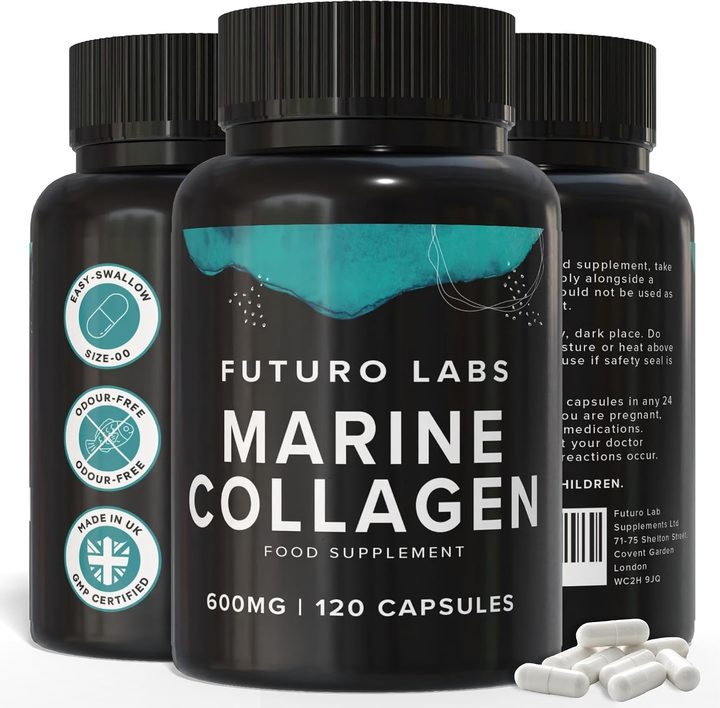
Our brand: the worked example on this page
Futuro Labs Marine Collagen
- 28p a day
- 120 capsules, 2 capsules daily
- Lab tested
- Made in the UK
The adjunct on its true terms: Futuro Labs Marine Collagen on Amazon UK, 2 capsules, 1200mg hydrolysed type 1 marine collagen with 12mg vitamin C at 15% NRV plus zinc, 120 for £16.99, 28p a day, lab tested and UK made, a dose near the clinical trial's 2.5g and below the protocol's 15g, taken for vitamin C's collagen formation sentence beside the programme. Full label breakdown. The Reddit thread audited is on the collagen for tendonitis page; the stages on the tendon healing stages page; the verbs on the supplements for tendonitis repair page.
Repair one: the ruptured or surgically repaired tendon, where collagen is untested
Does collagen help tendon repair is a question whose word repair means two different things to a tendon, and the honest page splits it before answering, because collagen's evidence belongs to one meaning and the shelf borrows it for both. Repair one is the repair of a ruptured or surgically repaired tendon: the Achilles that snapped on a push-off, the biceps tendon that tore at the elbow, the rotator cuff stitched back to the bone, a tendon whose continuity was lost and is being re-established. That healing runs through the three stages the tendon healing literature describes, an inflammatory stage of days, a proliferative stage of weeks laying down disorganised type III collagen and a remodelling stage of months to over a year replacing it with aligned type I, and it runs under a specialist, in a boot or a sling and then a programme, with the decision between surgical repair and non-operative functional rehabilitation made on the tendon and the person, the Achilles literature finding the two routes produce similar function with different risks. In that setting no collagen trial has been run: no randomised trial has given collagen peptides to people with a ruptured or repaired tendon and measured healing, strength, re-rupture or return, so the honest answer for repair one is that collagen is untested, not disproved and not supported, and the healing is the clinician's, with nutrition holding the floor beneath it, protein at 1.6 to 2.2 grams per kilo, adequate energy, no smoking, and a reader who wants to add the pre-loading protocol to the rehabilitation sessions doing so as a mechanism-based adjunct discussed with the physiotherapist and not as a treatment of the rupture. The marketing that sells collagen for tendon repair with a picture of a torn tendon is selling to repair one with evidence from repair two, and the split is the whole of the honesty.
Repair two: the chronically painful tendon, where collagen has a marker trial and one small outcome trial
Repair two is the remodelling of a chronically painful tendon, tendinopathy, the lifter's usual tendon problem, which is not a tendon moving through the stages but healing that stalled, the biopsies showing disorganised collagen, high cellularity, water, new vessels and nerves, a stage-two picture that never progressed, restarted by progressive loading that gives the fibroblasts a tension to align to. Here collagen has two pieces of evidence and the honest page gives both their size. The first is the marker trial: a small crossover study gave around fifteen grams of gelatin with roughly 50mg of vitamin C an hour before six minutes of skipping and roughly doubled a blood marker of collagen synthesis against placebo, with engineered ligaments grown in the participants' serum coming out stiffer and richer in collagen, the basis of the pre-loading protocol, a marker and not an outcome, in a handful of people. The second is the one clinical trial, and it deserves its exact description because it is the only collagen tendon trial with a patient outcome: around twenty people with chronic Achilles tendinopathy were randomised to 2.5 grams a day of specific collagen peptides or placebo, both groups doing a six-month calf-strengthening programme, and the collagen group improved more on a validated Achilles function and pain score and returned to running sooner than the placebo group, a result that was statistically significant, small in participants, six months in duration, funded by the peptide's manufacturer and, crucially, obtained alongside the loading programme that is the established treatment, so that the trial shows collagen may add something to loading and cannot show collagen doing anything without it. That is the whole of repair two's evidence: a mechanism with a marker behind it and one small outcome trial beside exercise, enough for a physiotherapist to call the protocol a reasonable adjunct with flat expectations and nowhere near enough for a claim, of which collagen holds none. Two notes finish the split. The dose in the clinical trial, 2.5 grams, was a fraction of the protocol's fifteen, and the two doses have not been compared, so a reader may run either with the same honest uncertainty. And marine or bovine does not change any of it, the trials having used mammalian peptides and the mechanism being shared, so the animal is chosen by allergy, diet and the tub's file. The worked example is the adjunct on its true terms: two capsules, 1200mg hydrolysed type 1 marine collagen with 12mg vitamin C plus zinc, 120 for £16.99 at 28p a day, lab tested and UK made, a dose near the clinical trial's 2.5 grams and well below the protocol's fifteen, taken for vitamin C's collagen formation sentence beside the programme, while the protocol lifter buys the fifteen grams as powder for the hour before the session. Does collagen help tendon repair: for a rupture, untested and the specialist's work; for a chronically painful tendon, an adjunct with a marker and one small trial, beside the loading that does the repairing.
| The repair | What it is | Collagen's evidence | What does the work |
|---|---|---|---|
| Repair one: rupture or surgery | A tendon whose continuity was lost, healing through three stages over a year | None: no trial in this setting | A specialist, a boot or sling, a programme; nutrition as the floor |
| Repair two: tendinopathy | Healing that stalled in a stage-two picture | A marker trial and one small outcome trial | Progressive loading, physiotherapist-led |
| The marker trial | ~15g gelatin with ~50mg vitamin C an hour before loading | A collagen synthesis marker doubled; engineered ligaments stiffer | The basis of the pre-loading protocol |
| The clinical trial | ~20 people, Achilles tendinopathy, 2.5g peptides or placebo, six months of calf strengthening | Better function and pain score, earlier return to running; manufacturer-funded | The loading in both arms; collagen possibly adding to it |
| The dose question | 2.5g in the clinical trial, 15g in the protocol | Not compared | Either, with the same honest uncertainty |
| The animal | Marine or bovine | Mammalian peptides in the trials; shared mechanism | Chosen by allergy, diet and file |
| The worked exampleOurs | Two capsules, 1200mg marine collagen with 12mg vitamin C, 28p a day | Near the clinical trial's dose, below the protocol | The vitamin C line beside the programme |
What to check on the label
- Ask which repair: a rupture or a painful tendon.
- Rupture: the specialist's: collagen untested there.
- Tendinopathy: load first: the programme is the treatment.
- Know the one trial's size: twenty people, six months, beside exercise.
- Run the adjunct with the sessions: never instead of them.
Our brand
The worked example: Futuro Labs Marine Collagen
Futuro Labs Marine Collagen: 2 capsules daily, 1200mg hydrolysed type 1 marine collagen with 12mg vitamin C and 1.5mg zinc (15% NRV each), 120 capsules for £16.99, 60 days at 28p a day, lab-tested, UK GMP made. Slim veggie-shell capsules, odour free. Fish derived: pescatarian, not vegetarian or vegan.
- Collagen per serving
- 1200mg hydrolysed type 1 marine (fish)
- Co-factors
- vitamin C 12mg (15% NRV), zinc 1.5mg (15% NRV)
- Serving
- 2 capsules a day
- Bottle
- 120 capsules, 60 days
- Price
- £16.99 (28p a day)
- Capsule
- slim size 00, veggie shell, odour free
Questions people also ask
Can collagen repair a ruptured tendon?
No trial says so, because none has been run: a ruptured or surgically repaired tendon heals through its three stages over a year under a specialist, in a boot or sling and then a programme, and collagen is untested in that setting, so its place is as a mechanism-based adjunct discussed with the physiotherapist, with nutrition holding the floor beneath the healing.
Is there any clinical trial of collagen for tendons?
One with a patient outcome: around twenty people with chronic Achilles tendinopathy took 2.5 grams a day of specific collagen peptides or placebo alongside six months of calf strengthening, and the collagen group improved more on a tendon function and pain score and returned to running sooner, a small, manufacturer-funded result obtained beside the loading that is the established treatment.
Should I take collagen for tendon repair?
For a chronically painful tendon, as an adjunct beside a physiotherapist's loading programme if you like, on the strength of a marker trial and one small outcome trial with no claim; for a ruptured tendon, only as a floor-level nutrition decision discussed with the team, since no trial exists there, and never as a substitute for the assessment or the programme.
Is marine collagen good for tendon repair?
The animal does not change the answer: the tendon trials used mammalian peptides and the proposed mechanism, small peptides and vitamin C arriving as the load tells the tissue to build, is shared by marine and bovine hydrolysates, so marine is chosen by fish allergy, diet and the tub's testing file rather than by tendon evidence.
How much collagen for tendon repair?
Two doses have been used and not compared: around fifteen grams of gelatin or hydrolysed collagen with roughly 50mg of vitamin C an hour before loading in the marker trial, and 2.5 grams a day of specific peptides for six months alongside calf strengthening in the one clinical trial, so either is run with the same honest uncertainty and both beside the programme.
Sources
- The Achilles tendinopathy collagen trial: a small randomised placebo-controlled trial giving 2.5 grams a day of specific collagen peptides alongside a calf-strengthening programme for six months reported greater improvement in a tendon function and pain score and earlier return to running than the exercise programme with placebo, around twenty participants, manufacturer-funded, the one collagen tendon trial with a clinical outcome, in tendinopathy alongside loading and not in rupture repair. PubMed record
- The gelatin and vitamin C pre-exercise research (Shaw, Baar and colleagues): 15g gelatin with vitamin C taken about an hour before loading, studied for markers of collagen synthesis, the protocol behind the tendon-training conversation. PubMed record
- The tendon healing literature: after acute injury or surgical repair a tendon heals through an inflammatory stage of days, a proliferative stage of weeks in which fibroblasts lay down disorganised, mostly type III collagen with high cellularity and water, and a remodelling stage of months to over a year in which type I collagen replaces type III, fibres align to load and the tissue approaches but does not fully regain its original strength, with early controlled loading improving the outcome over immobilisation. PubMed record
- The tendinopathy literature: histology of chronic tendon pain shows a degenerative, failed-healing picture rather than a classic inflammatory one, reframing the old tendonitis label and its treatment logic. PubMed record