Ghost Fitness/Collagen/What are the stages of tendon healing?
What are the stages of tendon healing?
The short answer
Three stages: inflammatory, days, clotting, protected; proliferative, weeks, fibroblasts laying disorganised type III collagen, loaded gently; remodelling, months to a year, type I replacing type III and aligning to load, the stage lifters cut short. Tendinopathy is healing that stalled.
- Stage one, inflammatorydays: clotting, clearing, signalling; protected in a boot or brace; movement within limits
- Stage two, proliferativeweeks: fibroblasts lay down disorganised type III collagen, weak and bulky; gentle progressive loading
- Stage three, remodellingmonths to over a year: type I replaces type III, fibres align to load; returned to by tests, not dates
- The rupture timeline and tendinopathyweeks in a boot, months to run, a year for strength; tendinopathy is healing stalled, restarted by load
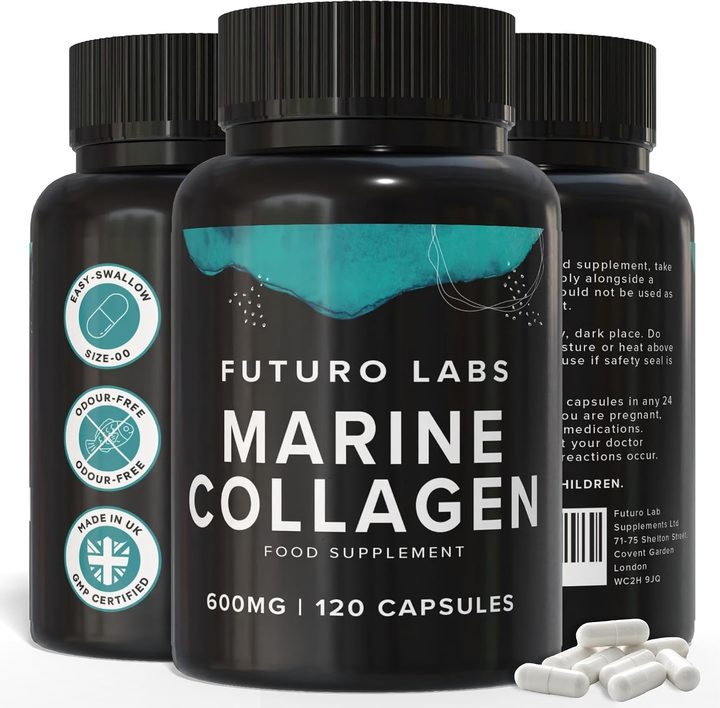
Our brand: the worked example on this page
Futuro Labs Marine Collagen
- 28p a day
- 120 capsules, 2 capsules daily
- Lab tested
- Made in the UK
The adjunct for stages two and three: Futuro Labs Marine Collagen on Amazon UK, 2 capsules, 1200mg hydrolysed type 1 marine collagen with 12mg vitamin C at 15% NRV plus zinc, 120 for £16.99, 28p a day, lab tested and UK made, below the ~15g pre-loading protocol and taken for vitamin C's collagen formation sentence through the months the stages take. Full label breakdown. Whether tendons heal naturally is on the tendons heal naturally page; the ligament phases on the heal ligaments faster page; collagen and tendon repair on the collagen for tendon repair page.
Stages one and two: the inflammatory days and the proliferative weeks
What are the stages of tendon healing is a question with a textbook answer of three stages, and the honest page gives the three with their jobs and their lengths and then adds what the textbook leaves out, which is what a lifter can and cannot do in each and why the third stage is the one lifters get wrong. Stage one is the inflammatory stage, the first days after a tendon is torn, partially or completely, or surgically repaired. The torn ends bleed and the blood clots, forming the scaffold on which the repair will be built; inflammatory cells arrive, clear the damaged tissue and release the signals that summon the fibroblasts of the next stage; the area swells and hurts, which is protective, and the tendon at this point has no mechanical strength of its own beyond what the clot and any suture provide. What the lifter does in stage one is protect: a ruptured Achilles goes into a boot with the foot pointed down, a repaired tendon is protected as the surgeon directs, a partially torn tendon is rested from the movement that tore it, and movement within the limits set is encouraged while any attempt to load through the tear is not, since a tear reopened in stage one restarts the clock. Stage two is the proliferative stage, the following weeks. Fibroblasts multiply in the wound and lay down new collagen at a high rate, but it is the wrong kind and the wrong shape, mostly type III collagen, finer and weaker than the type I a mature tendon is made of, arranged randomly rather than in parallel, with high cellularity and high water content, so the repair is bulky, a palpable lump in a healing Achilles, and weak, and the tendon healing literature's central finding for this stage is that controlled early loading produces a better-organised and stronger repair than immobilisation, because fibroblasts align the collagen they make to the tension they feel. What the lifter does in stage two is begin to load, gently and progressively and under guidance, the boot's wedges coming out over weeks in a rupture, range and isometric work starting in a partial tear, always within the limits the tissue's weakness sets, since stage two collagen tears easily and a lifter who tests it has produced a stage-one wound inside a stage-two repair.
Stage three, the rupture timeline, tendinopathy as healing that stalled, and the adjunct
Stage three is the remodelling stage and it is the one lifters cut short, because it runs for months to over a year and it is largely silent. Type I collagen replaces the type III laid down in stage two, the fibres align progressively to the loads placed on them, cellularity and water content fall toward normal, cross-links mature, and the tendon stiffens and strengthens toward, without fully regaining, its original mechanical properties, the healed tendon remaining somewhat weaker and thicker than the uninjured one for a long time. The pain stops early in stage three, often months before the tissue has remodelled, and a lifter who returns to full loading when the pain stops is loading a scar that looks and feels healed and is not, which is the mechanism of re-rupture and re-injury, so what the lifter does in stage three is progress the loading toward the sport's demands under a programme and return by tests, strength symmetry, capacity, sport-specific movement, rather than by the calendar or the pain, the return-to-sport literature's finding that criteria-based return re-injures less. The rupture timeline puts numbers on the stages for the worst case, an Achilles rupture whether repaired surgically or rehabilitated non-operatively in a boot: weeks in the boot through stages one and two, months to walk normally and then to run as stage three begins, and around a year for strength and calf size to approach the other side, with the two management routes producing similar function and different risks, decided with a specialist. Chronic tendinopathy, the lifter's usual tendon problem, is different in kind and worth separating: it is not a tendon moving through the stages but a healing response that stalled, the biopsies showing a stage-two picture that never progressed, disorganised collagen, high cellularity, water and new vessels and nerves, which is why rest does little and progressive loading, which gives the fibroblasts the tension to align to, is the treatment that restarts the remodelling the tissue failed to finish on its own. Collagen's place across the stages is the pre-loading protocol, around fifteen grams with roughly 50mg of vitamin C an hour before the loading session, which doubled a collagen synthesis marker in a small trial and is used by some physiotherapists as an adjunct in stages two and three, when fibroblasts are making collagen and the loading is telling them where, a marker result with one small clinical trial in tendinopathy behind it and no claim, useless in stage one when there is no loading to time it to and useless at any stage without the programme. The worked example is that adjunct on its true terms: two capsules, 1200mg hydrolysed type 1 marine collagen with 12mg vitamin C plus zinc, 120 for £16.99 at 28p a day, lab tested and UK made, below the protocol's grams, taken for vitamin C's collagen formation sentence through the months the stages take. What are the stages of tendon healing: days of protection, weeks of gentle loading, and a year of remodelling that the pain stops announcing long before it is done.
| The stage | Length | What the tissue does | What the lifter does |
|---|---|---|---|
| One: inflammatory | Days | Clots, clears damaged tissue, signals the repair; no strength of its own | Protect: boot, brace or rest from the tearing movement; move within limits |
| Two: proliferative | Weeks | Fibroblasts lay down disorganised type III collagen, bulky and weak | Gentle progressive loading under guidance; never test it |
| Three: remodelling | Months to over a year | Type I replaces type III; fibres align to load; strength approaches the original | Progress the programme; return by tests, not pain or dates |
| The rupture timeline | Weeks, months, a year | Boot, then walking, then running, then strength | Surgical or non-operative, decided with a specialist |
| Chronic tendinopathy | Stalled | A stage-two picture that never progressed | Progressive loading restarts the remodelling; rest does not |
| The collagen protocol | Stages two and three | ~15g with vitamin C an hour before loading doubled a synthesis marker | An adjunct beside the sessions; nothing in stage one |
| The worked exampleOurs | The months | Two capsules, 1200mg marine collagen with 12mg vitamin C, 28p a day | Below the protocol; the vitamin C line |
What to check on the label
- Protect the days: a reopened tear restarts the clock.
- Load the weeks gently: fibroblasts align to tension.
- Respect the silent year: pain stops long before remodelling does.
- Return by tests: symmetry and capacity, not the calendar.
- Know tendinopathy is a stall: load restarts it.
Our brand
The worked example: Futuro Labs Marine Collagen
Futuro Labs Marine Collagen: 2 capsules daily, 1200mg hydrolysed type 1 marine collagen with 12mg vitamin C and 1.5mg zinc (15% NRV each), 120 capsules for £16.99, 60 days at 28p a day, lab-tested, UK GMP made. Slim veggie-shell capsules, odour free. Fish derived: pescatarian, not vegetarian or vegan.
- Collagen per serving
- 1200mg hydrolysed type 1 marine (fish)
- Co-factors
- vitamin C 12mg (15% NRV), zinc 1.5mg (15% NRV)
- Serving
- 2 capsules a day
- Bottle
- 120 capsules, 60 days
- Price
- £16.99 (28p a day)
- Capsule
- slim size 00, veggie shell, odour free
Questions people also ask
What are the 3 stages of tendon healing?
Inflammatory, days, in which the tear clots and inflammatory cells clear damaged tissue and signal the repair; proliferative, weeks, in which fibroblasts lay down a bulky, weak scar of disorganised type III collagen; and remodelling, months to over a year, in which type I collagen replaces type III, fibres align to load and strength approaches but does not fully regain the original.
How long does a tendon take to heal completely?
Months to over a year for the remodelling stage to mature, with an Achilles rupture as the worst case: weeks in a boot, months to walk and then run, and around a year for strength and calf size to approach the other side, whether repaired surgically or rehabilitated non-operatively.
When can I start loading a healing tendon?
In the proliferative stage, gently and under guidance: the tendon healing literature shows controlled early loading produces a better-organised, stronger repair than immobilisation because fibroblasts align collagen to the tension they feel, so range and isometric work begin within the limits the tissue's weakness sets, and testing it is never the way to find those limits.
Why do tendons re-rupture after they seem healed?
Because the pain stops early in the remodelling stage, months before type I collagen has replaced type III and aligned to load, so a lifter who returns to full loading when the pain stops is loading a scar that looks healed and is not, the reason return is by strength and capacity tests rather than by pain or dates.
Does collagen help the stages of tendon healing?
As an adjunct in stages two and three: around fifteen grams with roughly 50mg of vitamin C an hour before the loading session doubled a collagen synthesis marker in a small trial, with one small clinical trial in tendinopathy alongside loading behind it, so it is timed to the sessions in which fibroblasts are making collagen, does nothing in stage one and nothing without the programme.
Sources
- The tendon healing literature: after acute injury or surgical repair a tendon heals through an inflammatory stage of days, a proliferative stage of weeks in which fibroblasts lay down disorganised, mostly type III collagen with high cellularity and water, and a remodelling stage of months to over a year in which type I collagen replaces type III, fibres align to load and the tissue approaches but does not fully regain its original strength, with early controlled loading improving the outcome over immobilisation. PubMed record
- The tendinopathy literature: histology of chronic tendon pain shows a degenerative, failed-healing picture rather than a classic inflammatory one, reframing the old tendonitis label and its treatment logic. PubMed record
- The return-to-sport literature: criteria-based progression, strength symmetry and capacity tests rather than calendar dates, is associated with lower re-injury after ligament injury. PubMed record
- The gelatin and vitamin C pre-exercise research (Shaw, Baar and colleagues): 15g gelatin with vitamin C taken about an hour before loading, studied for markers of collagen synthesis, the protocol behind the tendon-training conversation. PubMed record