Ghost Fitness/Collagen/What do tendon healing supplements actually do?
What do tendon healing supplements actually do?
The short answer
Three questions. Dose: does each ingredient match its quoted trial? Collagen at 500mg does not. Timing: taken an hour before loading, the only evidenced protocol? A daily capsule is not. Verb: may it say healing? Nothing may. Loading heals.
- Question one, dosecollagen 500mg to 1g against the 15g protocol and 2.5g trial; glucosamine, MSM, turmeric, bromelain, boswellia at joint doses with no tendon trial
- Question two, timingthe only evidenced protocol is an hour before loading; a daily capsule with breakfast cannot be timed
- Question three, the verbhealing is unclaimable; vitamin C's collagen formation, manganese and copper's connective tissue, zinc's protein synthesis are the only sentences
- What the formula doesa token collagen dose, vitamin C a reader has, joint ingredients without tendon evidence, a forbidden verb
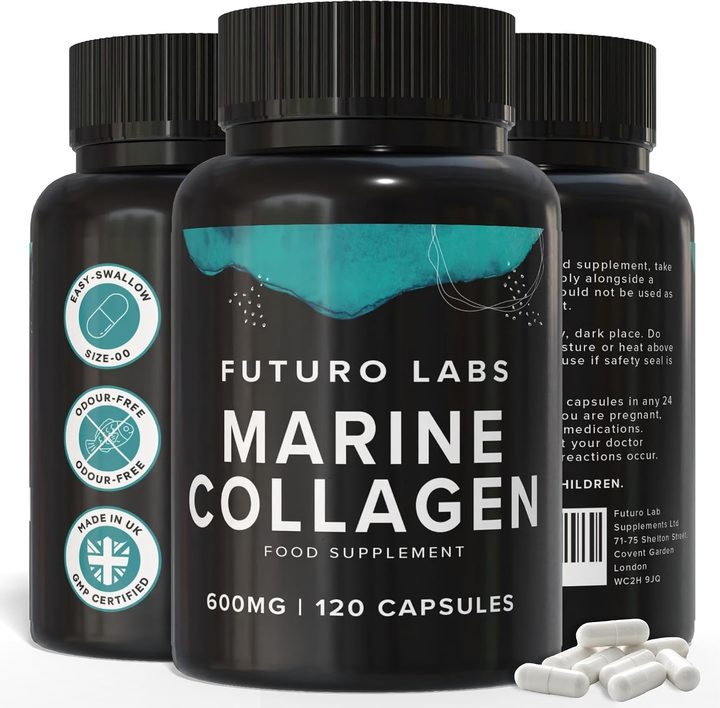
Our brand: the worked example on this page
Futuro Labs Marine Collagen
- 28p a day
- 120 capsules, 2 capsules daily
- Lab tested
- Made in the UK
A label that answers the questions honestly: Futuro Labs Marine Collagen on Amazon UK, 2 capsules, 1200mg hydrolysed type 1 marine collagen with 12mg vitamin C at 15% NRV plus zinc, 120 for £16.99, 28p a day, lab tested and UK made, the dose stated as below the protocol, no timing claim, and vitamin C's collagen formation sentence as the only verb. Full label breakdown. A tendon label autopsied by type is on the type of collagen for tendon healing page; the honest verb per shelf item on the supplements for tendonitis repair page; the cofactors on the vitamin for tendon repair page.
Question one, dose, run ingredient by ingredient
What do tendon healing supplements actually do is a question best answered by taking a typical tendon formula off the shelf and putting it through three questions, because a formula is a list of ingredients and each ingredient either passes or fails on dose, on timing and on the verb, and the three answers together are what the tub does. A typical tendon healing capsule lists hydrolysed collagen, sometimes with a token type II, vitamin C, glucosamine, MSM, turmeric or curcumin extract, bromelain, boswellia, zinc and manganese, in a two-capsule serving. Question one is dose: does the amount of each ingredient match the trial the ingredient is quoted for? Collagen first, since it is the reason the tub is in this aisle: the only tendon protocol with evidence used around fifteen grams of gelatin or hydrolysed collagen, and the one small tendon outcome trial used 2.5 grams a day of specific peptides for six months, while a two-capsule formula sharing its space with eight other ingredients carries perhaps 500mg to a gram of collagen, a fifteenth of the protocol and less than half the trial dose, so the collagen fails the dose question before the tub is opened, and any label that quotes the tendon research beside a sub-gram dose has quoted a study it cannot reproduce. Vitamin C passes, since the protocol used roughly 50mg and a formula carries that or more, though a reader eating fruit already has it. Glucosamine is present at or below its osteoarthritis dose, and has no tendon trial to match at any dose, so it has nothing to pass. MSM, bromelain and boswellia are present at doses borrowed from small joint or inflammation studies, none of which was in tendons, so they too have no trial to match. Turmeric or curcumin extract is present at a fraction of the knee osteoarthritis pain trial doses and has no tendon trial. Zinc and manganese are present at label doses that meet their reference values, which is the right dose for a maintenance sentence and irrelevant to a healing one. So on dose the formula's collagen fails, its vitamin C passes trivially, and its other six ingredients have no tendon trial at any dose, which is a way of failing that the label does not print.
Questions two and three, timing and the verb, and what the formula is left doing
Question two is timing, and the whole formula fails it together. The one collagen approach to tendons with mechanism and marker evidence is timed: around fifteen grams with roughly 50mg of vitamin C an hour before the loading session, so that the small peptides and the cofactor are in the blood as the load tells the fibroblasts where to build, the pre-loading protocol used beside rehabilitation. A daily formula taken with breakfast, or two capsules whenever the reader remembers, is not timed to anything, and its collagen, even if the dose were right, would peak and clear in a bloodstream that was not loading a tendon at the time, while the other ingredients have no timing evidence to fail because they have no tendon evidence at all. Question three is the verb, and it is the question the tub fails most plainly: healing is a medical word, and no food supplement may claim to heal, repair, treat or cure anything, so the words tendon healing on the label are unlawful for every ingredient in it, including the ones that hold sentences of their own. The register's sentences that a tendon formula may lawfully carry are small and specific: vitamin C contributes to normal collagen formation for the normal function of cartilage and bones, manganese contributes to the normal formation of connective tissue, copper, if present, to the maintenance of normal connective tissues, and zinc to normal protein synthesis, all maintenance verbs that describe what the body does with adequate nutrients and not what a formula does to a tendon, and collagen, glucosamine, MSM, turmeric, bromelain and boswellia hold no authorised sentence at all, so the honest version of the label would say four maintenance sentences about four nutrients and nothing about the tendon or the other five ingredients. What the formula is left doing, once the three questions are answered: it supplies a token collagen dose too small for the protocol or the trial and untimed to any loading, a vitamin C dose a reader eating fruit already has, four to six joint and inflammation ingredients with no tendon evidence at joint doses, two minerals that meet their maintenance sentences, and a verb the law forbids, while the tendon itself remodels under the progressive loading a physiotherapist sets over months, which is the only thing that heals it and the one thing not in the capsule. The honest tendon supplement, if a reader wants one, is the protocol's grams as gelatin or powder with vitamin C an hour before the session, or a capsule that states its dose as below the protocol and carries vitamin C's sentence as its only verb. The worked example is that capsule: two capsules, 1200mg hydrolysed type 1 marine collagen with 12mg vitamin C plus zinc, 120 for £16.99 at 28p a day, lab tested and UK made, the dose stated as below the fifteen-gram protocol, no timing claim, and vitamin C's collagen formation sentence as the only verb on it. What do tendon healing supplements actually do: fail the dose question on the ingredient that matters, fail the timing question on all of them, fail the verb question on the name, and leave the healing to the load.
| The ingredient | Dose: matches its quoted trial | Timing: an hour before loading | Verb: what the register allows |
|---|---|---|---|
| Hydrolysed collagen | No: 500mg to 1g against 15g protocol and 2.5g trial | No: a daily capsule | No sentence |
| Vitamin C | Yes, trivially: ~50mg in the protocol | No: untimed | Contributes to normal collagen formation |
| Glucosamine | No tendon trial at any dose | No | No sentence |
| MSM, bromelain, boswellia | No tendon trial; joint or inflammation study doses | No | No sentence |
| Turmeric or curcumin | No tendon trial; below knee pain trial doses | No | No sentence |
| Zinc and manganese | Reference value doses, right for maintenance | Not applicable | Protein synthesis; connective tissue formation |
| The word healing | Not applicable | Not applicable | Unclaimable by any food supplement |
| The honest alternative | ~15g gelatin or powder with ~50mg vitamin C | An hour before the session | Discussed with the physiotherapist |
| The worked exampleOurs | Stated as below the protocol | No timing claim | Two capsules, 1200mg marine collagen with 12mg vitamin C plus zinc, 28p a day; vitamin C's sentence only |
What to check on the label
- Check the collagen dose against 15g: a capsule formula is a fifteenth.
- Check the timing: only an hour before loading has evidence.
- Check the verb: healing is unclaimable.
- Count the ingredients with no tendon trial: usually most of them.
- Buy the protocol's grams or an honest capsule: and do the programme.
Our brand
The worked example: Futuro Labs Marine Collagen
Futuro Labs Marine Collagen: 2 capsules daily, 1200mg hydrolysed type 1 marine collagen with 12mg vitamin C and 1.5mg zinc (15% NRV each), 120 capsules for £16.99, 60 days at 28p a day, lab-tested, UK GMP made. Slim veggie-shell capsules, odour free. Fish derived: pescatarian, not vegetarian or vegan.
- Collagen per serving
- 1200mg hydrolysed type 1 marine (fish)
- Co-factors
- vitamin C 12mg (15% NRV), zinc 1.5mg (15% NRV)
- Serving
- 2 capsules a day
- Bottle
- 120 capsules, 60 days
- Price
- £16.99 (28p a day)
- Capsule
- slim size 00, veggie shell, odour free
Questions people also ask
Do tendon healing supplements work?
Run three questions: the collagen dose in a capsule formula is a fifteenth of the evidenced protocol, a daily capsule cannot be timed to the hour before loading that the protocol requires, and healing is a word no food supplement may claim, so the formula supplies a token dose, a cofactor the reader has, joint ingredients with no tendon trial and a forbidden verb, while loading remodels the tendon.
What ingredients are in tendon supplements and do they help tendons?
Typically hydrolysed collagen, vitamin C, glucosamine, MSM, turmeric, bromelain, boswellia, zinc and manganese; only collagen with vitamin C has tendon evidence, at fifteen grams timed before loading or 2.5 grams in one small trial, glucosamine, MSM, turmeric, bromelain and boswellia have no tendon trial at any dose, and zinc and manganese hold maintenance sentences met from food.
Is it legal for a supplement to say it heals tendons?
No: healing, repairing, treating and curing are medical claims no food supplement may make, and the only sentences a tendon formula may lawfully carry are the register's maintenance ones, vitamin C's collagen formation, manganese and copper's connective tissue and zinc's protein synthesis, none of which mentions a tendon.
What is the honest way to take collagen for a tendon?
As the protocol: around fifteen grams of gelatin or hydrolysed collagen with roughly 50mg of vitamin C about an hour before the physiotherapist's loading session, the one approach with mechanism, marker and one small outcome trial behind it, or a capsule that states its dose as below the protocol and is taken for vitamin C's sentence and the habit.
Why do tendon formulas include glucosamine and turmeric?
Because they are joint-aisle ingredients with osteoarthritis and knee pain research, glucosamine's large trials having failed and curcumin's showing modest pain reductions, and neither has a tendon trial, so they are in a tendon formula by association with joints rather than by any evidence in the tissue the tub is named for.
Sources
- The gelatin and vitamin C pre-exercise research (Shaw, Baar and colleagues): 15g gelatin with vitamin C taken about an hour before loading, studied for markers of collagen synthesis, the protocol behind the tendon-training conversation. PubMed record
- The Achilles tendinopathy collagen trial: a small randomised placebo-controlled trial giving 2.5 grams a day of specific collagen peptides alongside a calf-strengthening programme for six months reported greater improvement in a tendon function and pain score and earlier return to running than the exercise programme with placebo, around twenty participants, manufacturer-funded, the one collagen tendon trial with a clinical outcome, in tendinopathy alongside loading and not in rupture repair. PubMed record
- The glucosamine and chondroitin trial record: large independent randomised trials in osteoarthritis returned results that failed to support the category's promises, a cautionary benchmark for the whole joint shelf. PubMed record
- Retained Regulation (EC) No 1924/2006 on nutrition and health claims made on foods, and the Great Britain nutrition and health claims register. https://www.gov.uk/government/publications/great-britain-nutrition-and-health-claims-nhc-register